 Vietnamnet.vn

 Podcast



At the Government's regular meeting for May, Prime Minister Le Minh Hung delivered a notable directive: "We currently have income tax thresholds for individuals and household businesses. The Ministry of Finance should study options to adjust family deductions or develop new tax thresholds. In the current challenging environment, easing the burden on citizens and supporting businesses remains extremely important."
This was not the first time the Prime Minister has signaled a desire to reduce pressure on household businesses. At the end of April, he directed that the taxable revenue threshold be raised from VND500 million to VND1 billion per year. The discussion has now expanded to include family deductions and revised tax thresholds.
Taken together, these moves convey a clear message: if the economy is to grow, citizens and businesses must first be allowed to retain more resources to invest, spend and expand.
Easing the burden to nurture growth
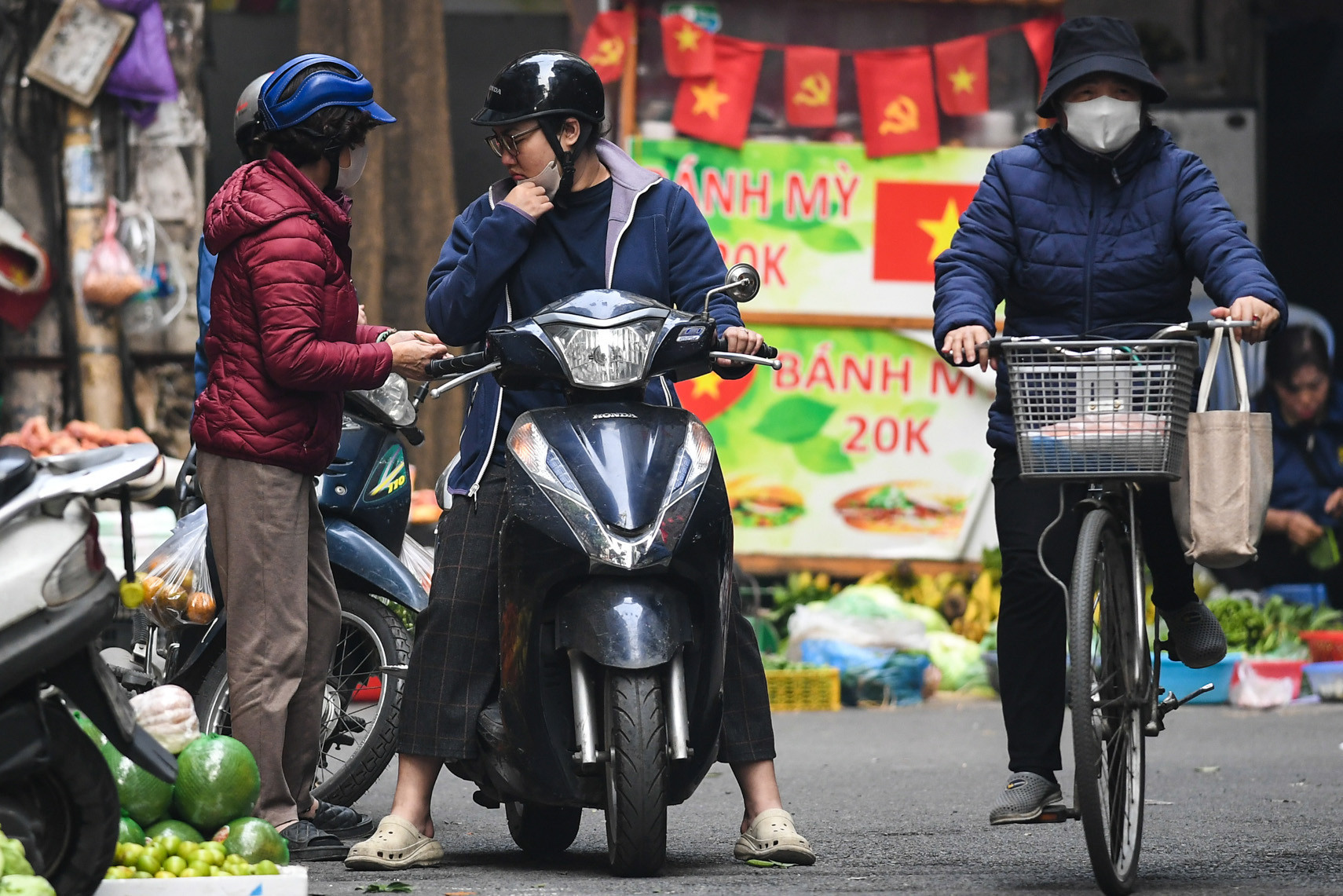
The Prime Minister's directive is not merely about taxation. More broadly, it reflects a strategy for creating stronger economic momentum in the years ahead.
High growth cannot rely solely on public investment or exports. Ultimately, the economy draws its energy from millions of citizens, household businesses and enterprises operating every day.
An economy can hardly remain dynamic if those creating wealth have diminishing incentives to expand their operations, or if entrepreneurs increasingly feel they are viewed primarily as subjects of regulation rather than participants to be encouraged and supported.
Recent figures from the General Statistics Office suggest that easing pressure on citizens is not simply a slogan.
During the first five months of 2026, total retail sales of goods and consumer service revenues rose 11.2 percent compared with the same period a year earlier. However, after adjusting for price increases, real growth was only 6.1 percent, while average consumer inflation reached 4.31 percent.
Most notably, fuel prices rose 17.1 percent year-on-year.
From the perspective of consumers, many families are spending significantly more simply to maintain the same standard of living.
As electricity prices, rental costs and other living expenses continue to rise, household incomes are increasingly being absorbed by higher day-to-day costs.
That means retail sales growth is not entirely the result of stronger consumption. In many cases, consumers are simply paying more for the same products and services.
For this reason, easing the burden on citizens is not only a social support measure. It is also a way to preserve economic growth momentum.
When revenue is not income
Looking more closely, household businesses are among those most directly affected by these issues.
For years, household businesses have often been viewed through the lens of revenue. Large revenue figures can create the impression that a business is thriving. Yet after accounting for rent, labor, utilities and other operating costs, actual earnings are often far more modest than the headline numbers suggest.
According to the Vietnam Association of Small and Medium Enterprises, a retail household business generating around VND1 billion in annual revenue may retain only about VND100 million in profit after expenses.
Many owners open their shops in the morning, close them at night and personally handle much of the work themselves. In reality, many are still relying primarily on their own labor to generate income.
With rents, electricity prices, raw materials and living costs all having risen substantially, tax thresholds designed years ago increasingly appear disconnected from economic realities.
Yet what concerns many household business owners is not only the amount of tax they pay. It is also the perception that they are treated differently from salaried workers.
Two people may both be raising two children and paying for education, housing, electricity and water. Yet one qualifies for family deductions while the other does not, simply because they earn a living in different ways.
This is why proposals to study family deductions for household businesses are not merely a matter of support. They are also a matter of fairness.
From a household perspective, it is difficult to explain why people carrying similar financial responsibilities should receive different treatment simply because they operate in different segments of the economy.
Beyond taxes, many household businesses are increasingly concerned about complex administrative procedures and reporting requirements. If compliance risks outweigh opportunities for growth, there is little reason to expect them to expand or transition into formal enterprises.
Of course, any discussion about reducing taxes inevitably raises a familiar question: will government revenue suffer?
During the first five months of 2026, state budget revenue still increased by 15.3 percent compared with the same period last year.
That suggests the central challenge is not whether government revenues remain available, but how to ensure citizens and businesses retain sufficient resources to generate even greater revenues in the future.
A rapidly growing economy often creates far more fiscal income than efforts to maximize collections from an economy struggling under pressure.
From revenue to real profit
Looking beyond family deductions, the longer-term objective may be a tax system based on actual profits rather than gross revenue.
Two businesses with identical revenue but vastly different profit margins should not necessarily face the same tax burden.
However, such a system is only feasible if invoicing systems, data infrastructure and administrative capacity become sufficiently robust. Otherwise, determining legitimate expenses risks turning into a contest over who can inflate costs most effectively.
Between collecting more from today's economic pie and making that pie larger in the future, recent policy signals suggest the government is leaning toward the latter approach.
Behind every growth figure are millions of ordinary decisions made by ordinary people: opening another shop, hiring another employee, purchasing another shipment of goods or simply continuing to operate a business.
If those small decisions continue to be encouraged rather than eroded by rising costs and growing burdens, the economy will retain the momentum it needs to expand.
Perhaps that is the deeper meaning behind the Prime Minister's call to "ease the burden on citizens."
Tu Giang
.svg)
