 Vietnamnet.vn

 Podcast



Beyond its distinctive taste and simple preparation, this regional specialty from An Giang is also regarded by locals as a natural remedy thanks to its perceived health benefits.
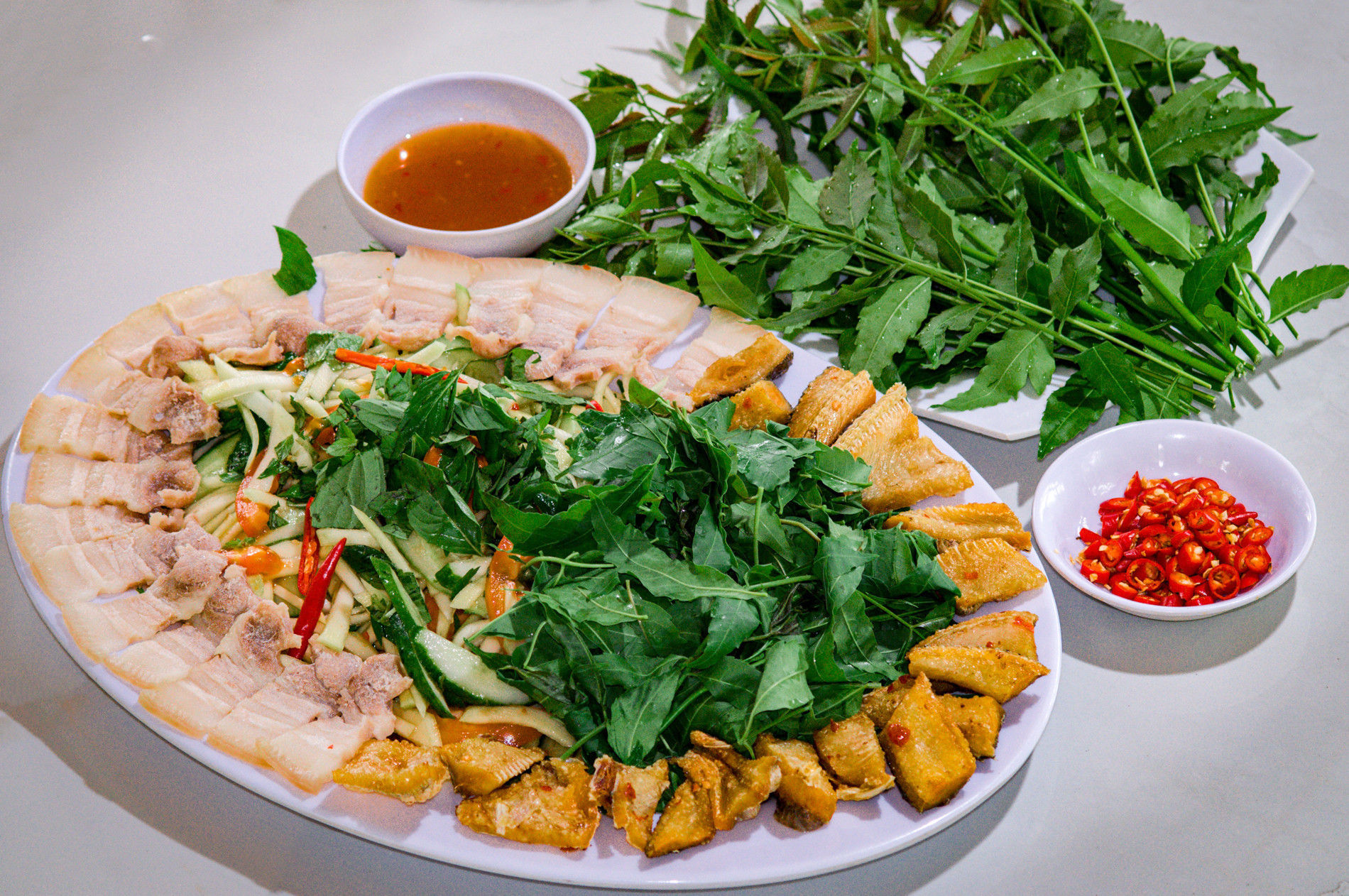
Goi sau dau is a well-known specialty of An Giang province. Photo: Thai Lam
Sau dau, a wild tree that grows naturally in parts of the Mekong Delta, is especially common in areas such as Tri Ton, Chau Doc and Tinh Bien in An Giang province.
Both the leaves and flowers of the tree are used in cooking, but the most popular dish made from this “gift of the wild” is goi sau dau, a unique regional salad.
In 2022, the dish was recognised for achieving an Asian record value under criteria set by the Asia Book of Records Organisation.
It also appeared in the list of the Top 100 Vietnamese specialty dishes for 2021-2022, announced by the Vietnam Records Organisation (VietKings) and the Top Vietnam Organisation (VietTop).
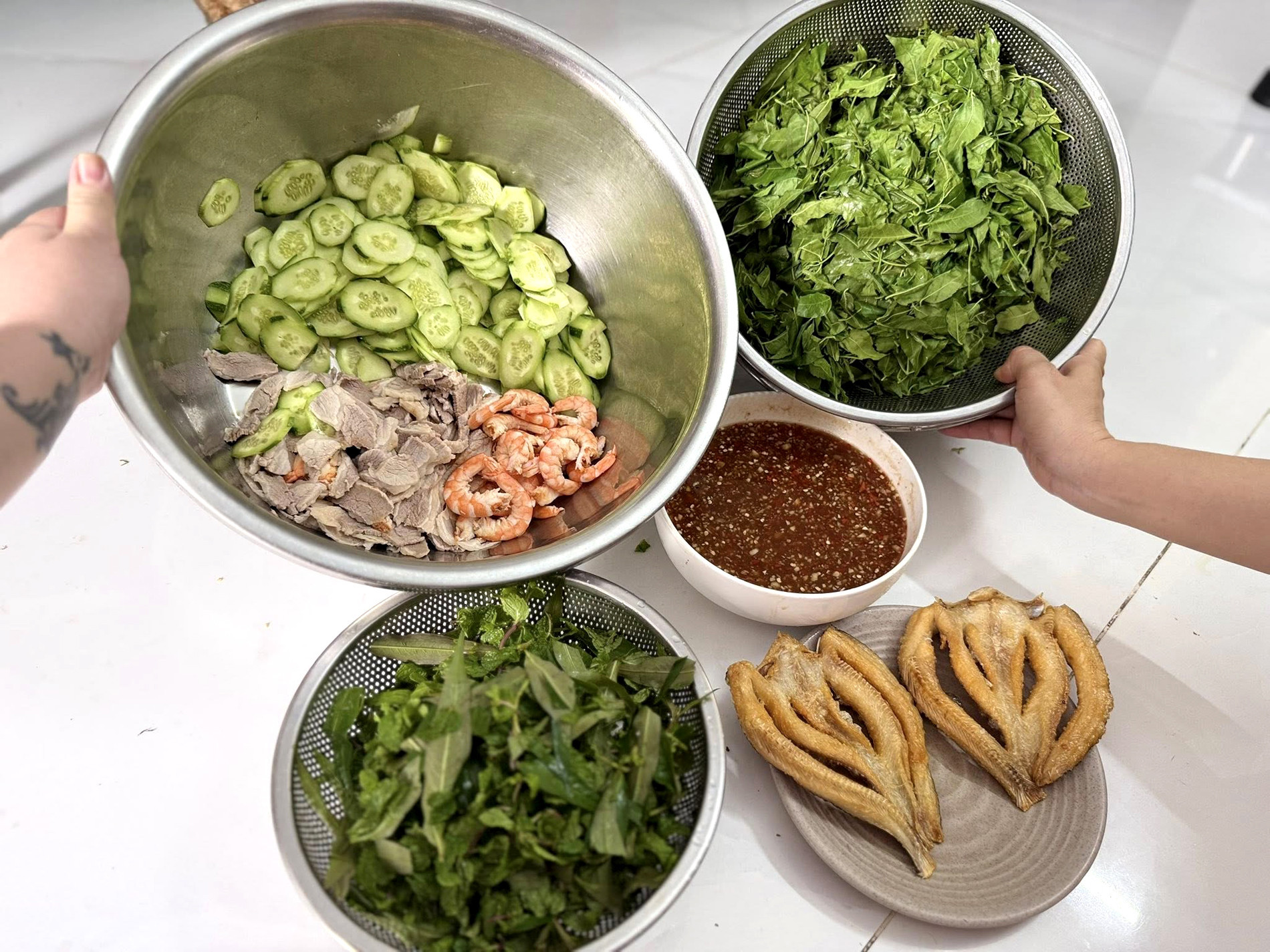
Ingredients for the salad include sau dau leaves and flowers, often combined with boiled pork belly or dried fish. Photo: Nguyen Thy Linh
Thai Lam, a native of Chau Doc with a passion for exploring local cuisine, said that from the tenth lunar month to the second lunar month each year, sau dau trees begin to shed old leaves and produce new buds and blossoms.
During this time, locals often visit markets to buy bundles of young leaves and flowers to prepare the salad. The dish is light and refreshing, making it especially popular after the heavy meals typical of the Lunar New Year season.
According to Lam, to prepare a good salad, the leaves and flowers should be washed thoroughly and briefly blanched in warm water before being drained.
This process helps reveal the subtle sweetness hidden behind the natural bitterness of the leaves while preserving their vibrant green colour, enhancing both the flavour and visual appeal of the dish.
The salad itself has no fixed recipe and can be adapted according to household ingredients or personal preference.
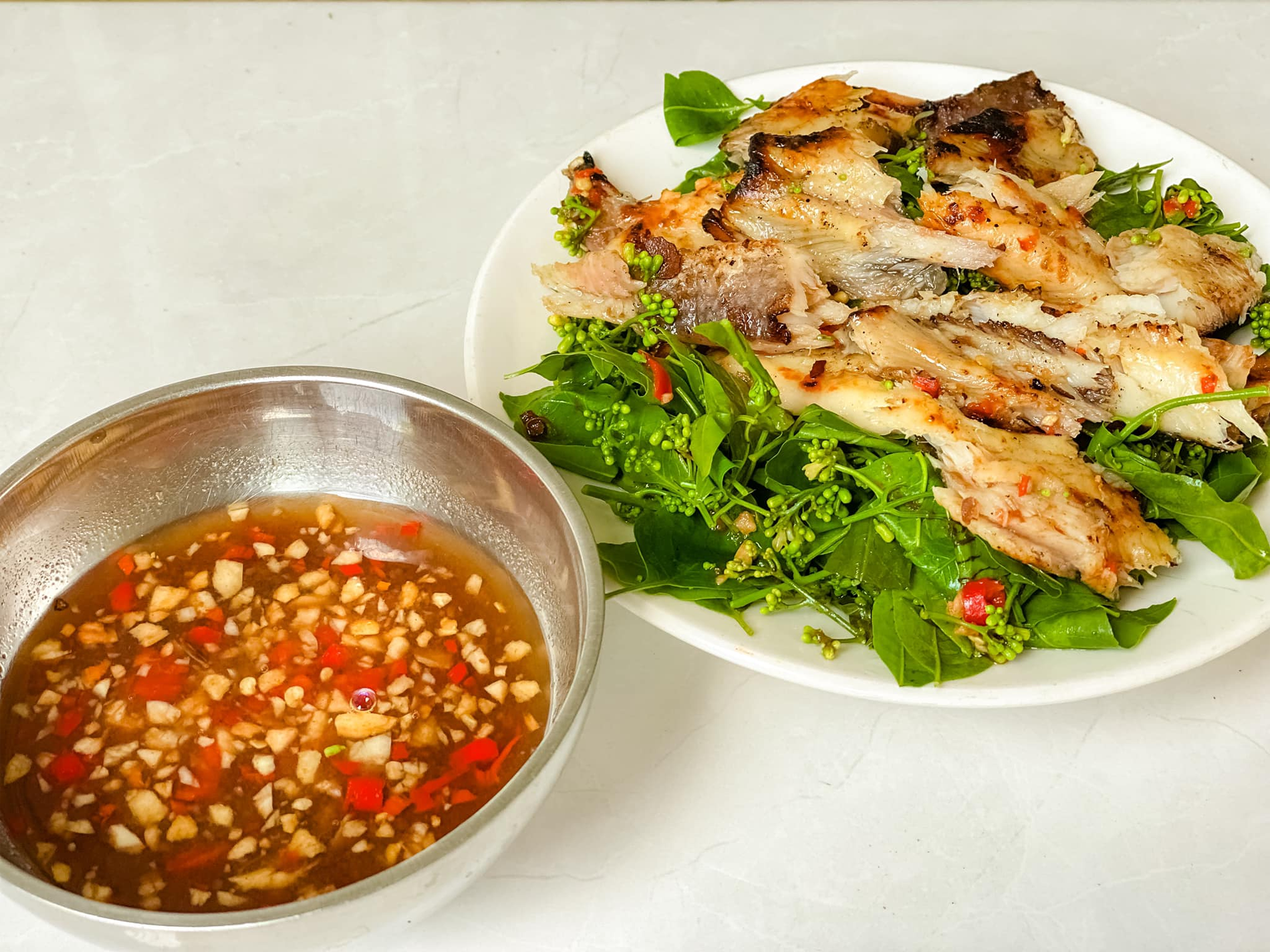
The dressing made from fish sauce and tamarind pulp gives the salad its distinctive flavour. Photo: Duong Viet Anh
It can be combined with thinly sliced boiled pork belly, dried gourami fish or dried snakehead fish. Some people mix it with freshly grilled snakehead or catfish. Side vegetables may include cucumber, green mango, tomato or aromatic herbs.
After blanching the sau dau leaves and flowers, cooks typically slice or shred accompanying ingredients such as pineapple, green mango and cucumber.
Boiled pork belly is thinly sliced, while dried fish is grilled and torn into pieces. Shrimp may also be boiled and peeled before being added. The ingredients can be adjusted depending on taste.
Like many Vietnamese salads, the dressing is considered the soul of the dish. For goi sau dau, it is usually made from fish sauce or fermented fish sauce blended with tamarind extract.
To prepare it, ripe tamarind is simmered in water until it softens and releases its flavour. The liquid is then strained and mixed with fish sauce, a little sugar and minced garlic and chilli.
The resulting sauce is thick and brown, offering a balance of sour, salty, sweet and spicy notes.
All ingredients are mixed with the tamarind fish sauce and left to marinate for about 15 to 20 minutes.
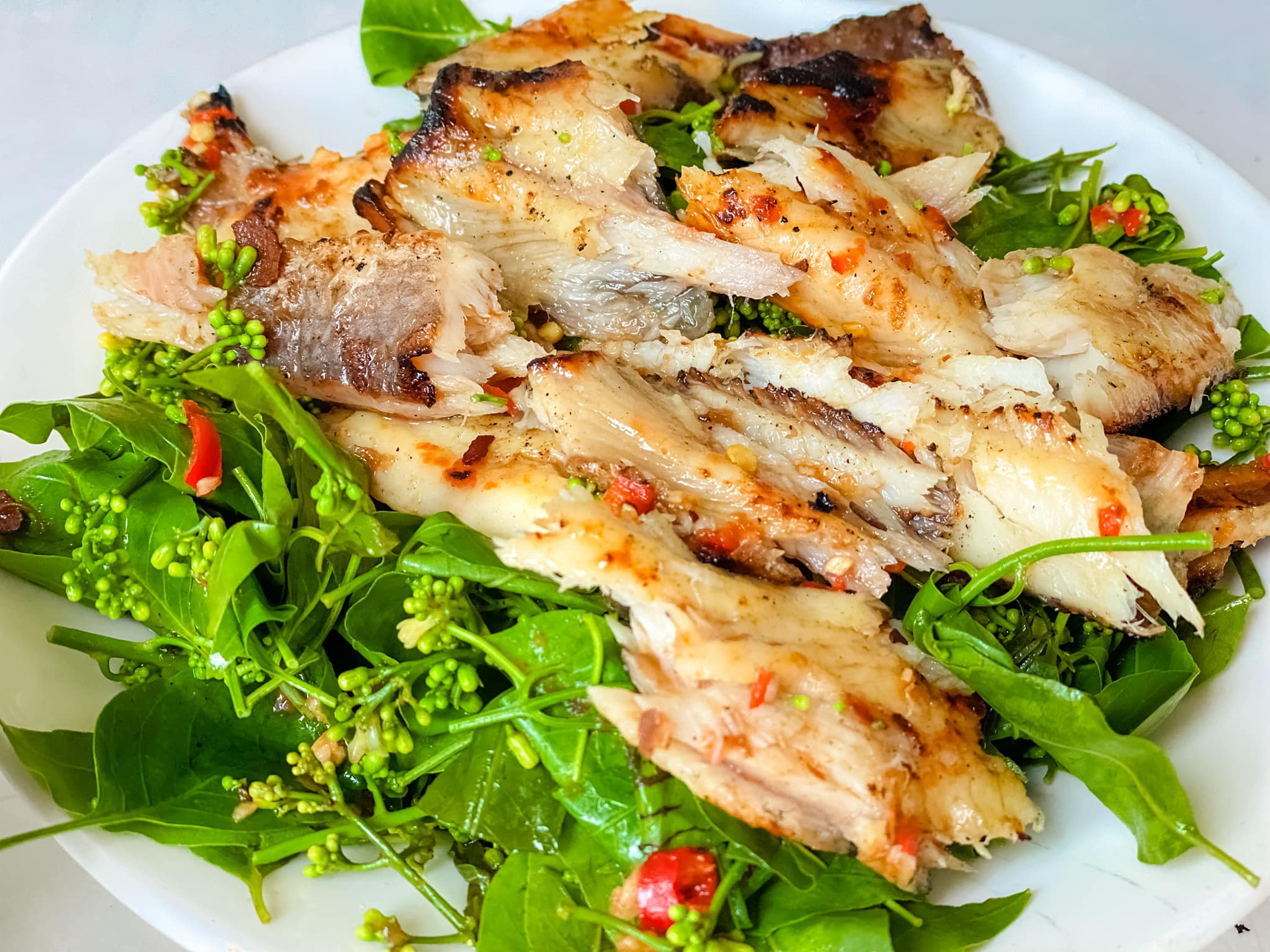
Once the flavours have fully absorbed, the salad is arranged on a plate and topped with herbs, coriander, crushed roasted peanuts and slices of fresh red chilli before serving.
Thanh Mai, a visitor from Ho Chi Minh City who once tried goi sau dau in An Giang, said the leaves bring a gentle bitterness to the dish, while the flowers taste milder and more aromatic.
“People trying it for the first time may find the bitterness unusual, but once you get used to it, you can feel the harmony between the richness of shrimp and pork, the light bitterness of the leaves and the mild sourness of the tamarind dressing,” she said.
Impressed by the flavour, Mai said that in recent years she has often ordered sau dau leaves and flowers after the Lunar New Year to prepare the salad at home, serving it as a refreshing dish for family gatherings and visiting friends.
If travellers visit An Giang, they can easily find goi sau dau at many restaurants and eateries, where the price typically ranges from VND50,000 to VND100,000 per plate.
Beyond its culinary appeal, locals also consider sau dau a valuable medicinal plant.
In the book Medicinal Plants of An Giang, researcher Vo Van Chi documented several traditional uses of the plant passed down through generations.
According to folk knowledge, sau dau is believed to have cooling properties and has long been used in remedies associated with digestive problems, skin conditions and detoxification.
Thao Trinh
.svg)
