 Vietnamnet.vn

 Podcast



After first tasting Shine Muscat grapes bought at a supermarket, a young man in his 30s in Ha Tinh came up with the idea of growing the renowned Japanese variety on hilly land, opening up a new path that combines agricultural development with experiential tourism.
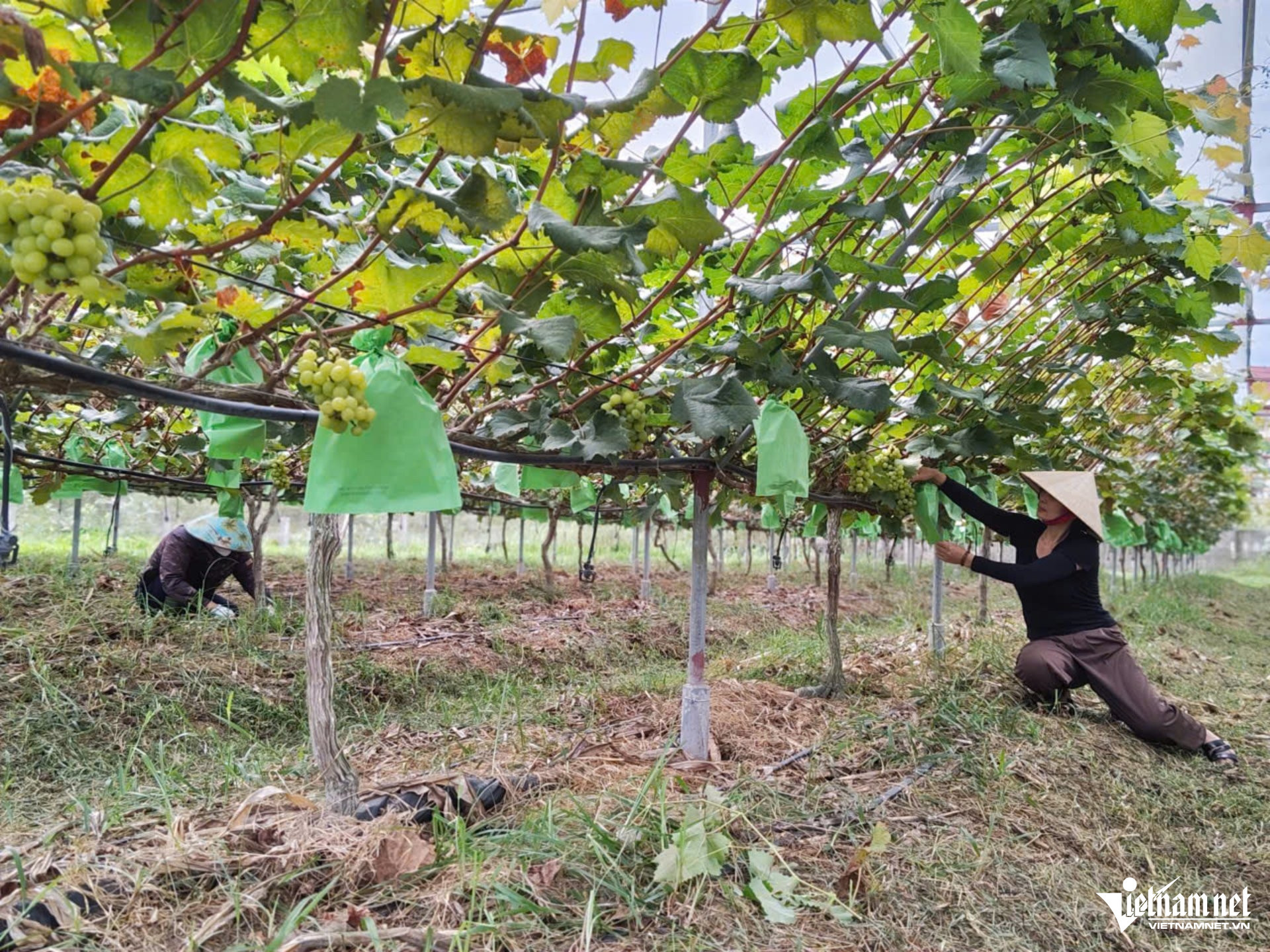
These days, the nearly 2,000-square-meter Shine Muscat vineyard of Nguyen The Hoan in Thanh Binh Village, Mai Hoa Commune, Ha Tinh, is preparing for its second harvest. Beneath lush green trellises, plump bunches of grapes are carefully wrapped and nearly ready for customers.
Few would imagine the pressure Hoan endured to reach this point after deciding to transform a barren hillside into a vineyard for a grape variety considered particularly demanding to cultivate.
Hoan said the idea of growing Shine Muscat grapes on Ha Tinh’s hilly terrain came after he bought some at a supermarket. Impressed by their flavor, he began researching the variety and learned that a number of growers in Ninh Thuan had successfully cultivated it. He decided to learn from their experience and bring the grapes to Ha Tinh for a trial.
In late April 2024, Hoan began improving the hillside plot, investing in a protective greenhouse system and planting Shine Muscat grapes. Originating in Japan, the premium variety is renowned for the quality of its fruit but requires a highly demanding cultivation process.
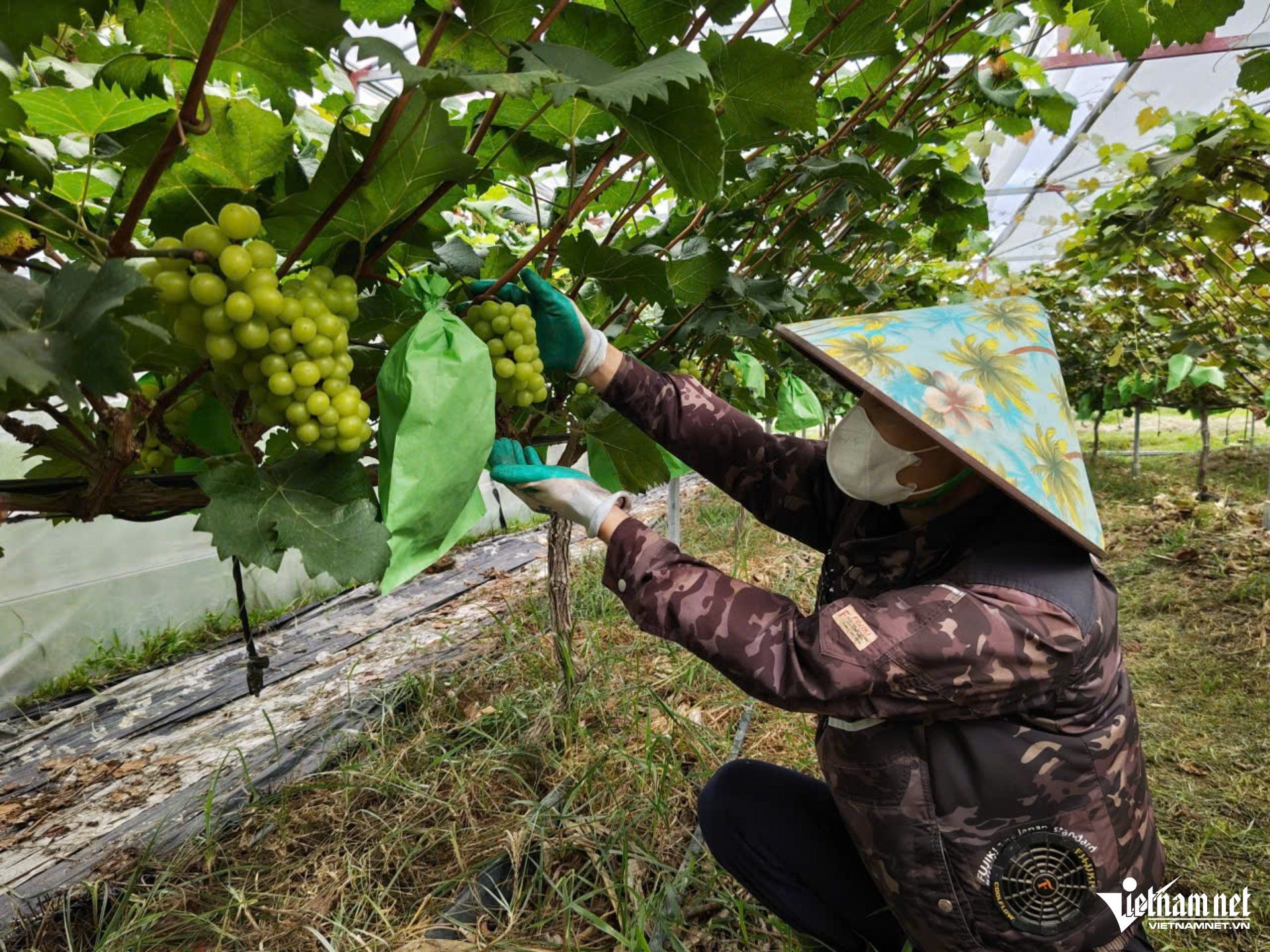
According to Hoan, getting started was far from easy. Finding suitable vines proved difficult, while central Vietnam’s harsh climate posed another major challenge. He spent considerable time studying documents and online resources, learning from other growers and adjusting the greenhouse system and cultivation methods to help the vines adapt to Ha Tinh’s weather conditions.
“I invested about $7,600 in the vineyard. In the beginning, I could barely eat or sleep because of the worry. Central Vietnam has prolonged periods of intense heat followed by continuous humid and rainy weather, while this grape variety is extremely sensitive to temperature and humidity,” Hoan said.
To help the vines adapt, he installed a protective roofing system and designed raised beds to improve drainage. He also adjusted irrigation, fertilization and humidity control for each stage of the plants’ growth.
Through persistence and the application of suitable cultivation techniques, the vineyard produced its first harvest in mid-2025, yielding around 100kg of grapes. They sold for about $7.60 per kilogram and received a positive response from the market.
Now, after more than two years of taking root and adapting well to local soil conditions, the vineyard is preparing for its second harvest, with output expected to reach around 200kg per crop, twice last year’s volume.
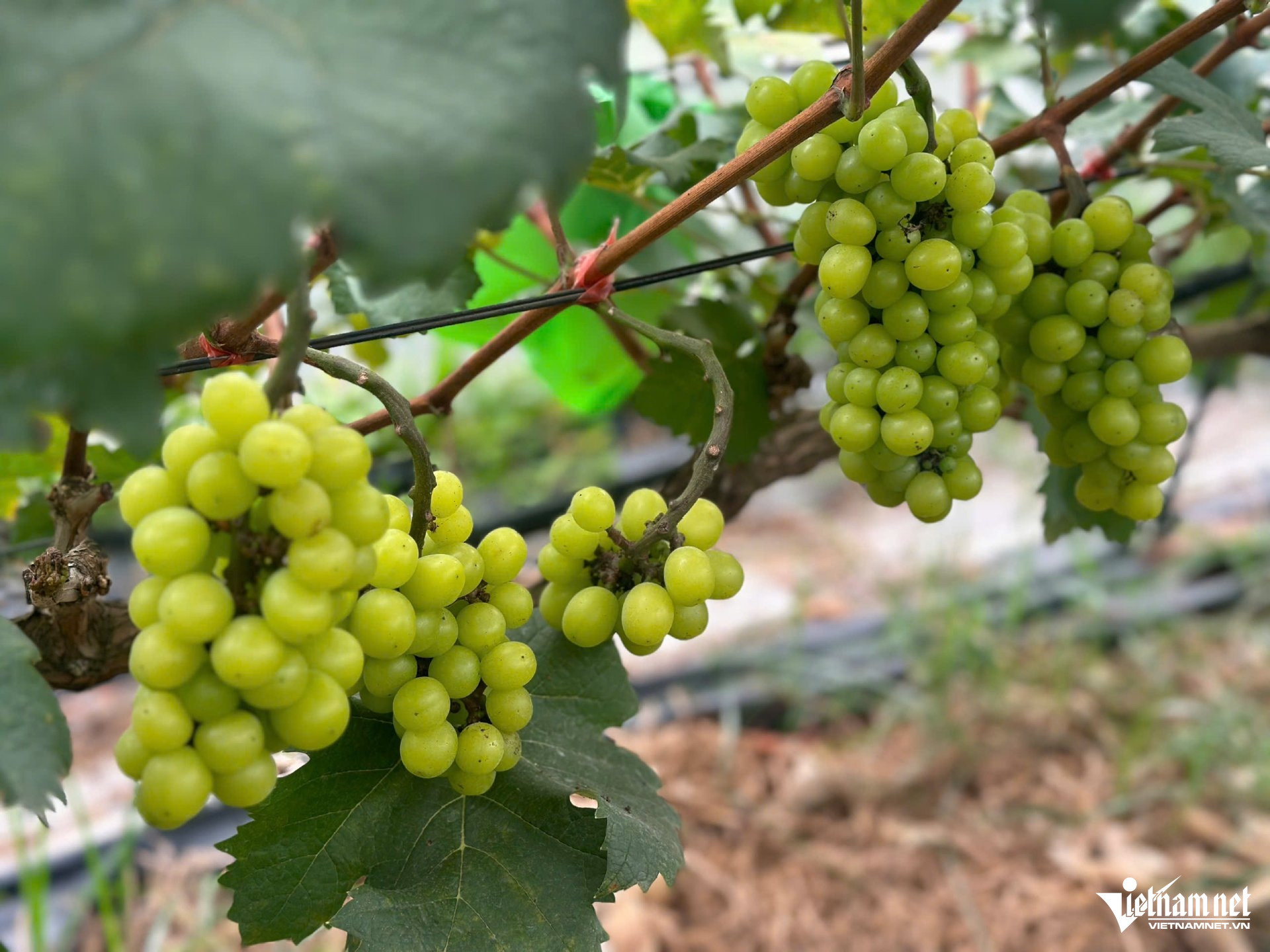
According to Hoan, the quality of this year’s grapes is also notably better, with more uniform fruit, a more attractive appearance and a richer sweetness.
Phan Thi Hue, Hoan’s mother, said many customers had already placed orders before the grapes entered their main harvest period.
Beyond selling the fruit, the vineyard has also attracted large numbers of local residents and visitors who come to tour the grounds, take photos and experience picking grapes directly from the vines.
Hoan said the vineyard produces two crops a year. The first season runs from around March to July, while the second lasts from September through the end of the year. Each crop generates around $2,660 in revenue. According to Hoan, Shine Muscat grapes produce three to four times the income of oranges or pomelos on the same area of hilly land.
“In the coming period, I will continue refining cultivation techniques to improve productivity and quality, gradually expand the growing area and develop this into an ecotourism destination where visitors can enjoy hands-on experiences, helping create additional livelihoods for the local community,” he said.
Tran Manh Hung, Chairman of the Mai Hoa Commune Farmers’ Association, described Hoan’s Shine Muscat vineyard as a new direction for local agriculture, demonstrating the potential for more effective use of hilly land.
Hung said the locality would continue supporting product promotion and market connections while encouraging residents to visit the vineyard and learn from the model, with a view to gradually expanding agricultural development linked with experiential tourism.
Thien Luong
.svg)
