 Vietnamnet.vn

 Podcast



After working abroad, Le Duy Trinh, born in 1996 and a resident of Ta Phan village in Ninh Chau commune, Quang Tri province, returned home looking for ways to make use of abandoned or low-yield farmland.
According to Trinh, many low-lying areas in his community are frequently waterlogged, making conventional farming difficult. Rather than leaving the land unused, he began searching for a crop that could adapt to the conditions while offering the potential for commercial production.
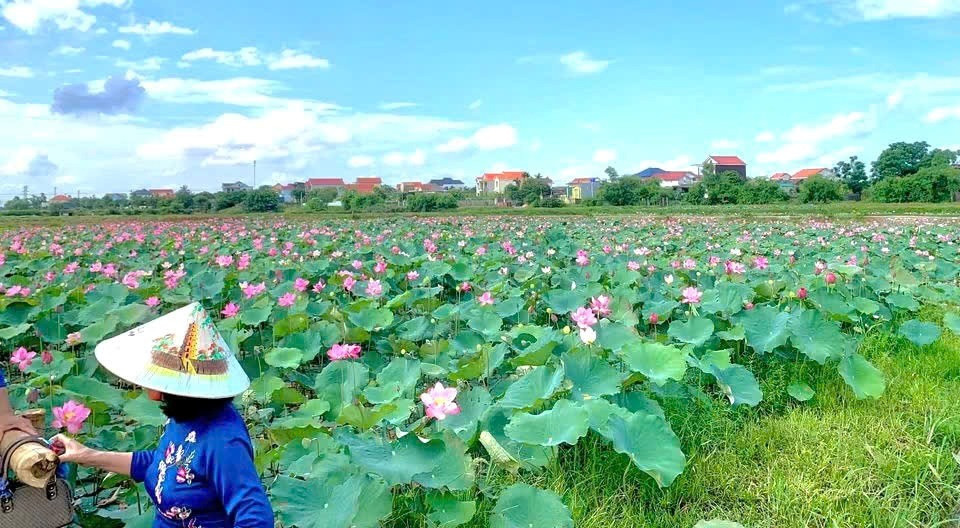
His research led him to lotus, a plant well suited to waterlogged fields. Beyond its seeds, several parts of the plant, including leaves, stems and flowers, can also be used as ingredients for processed products.
In early 2022, Trinh began consolidating farmland, improving the fields and planting his first lotus crops. Because of the low-lying terrain, preparing the growing area required significant investment, with no immediate guarantee of success.
"At first, I was worried because I had to invest money in improving the land without knowing how effective it would be," Trinh said. "But if I did nothing, the land would remain unused, so I decided to take it one step at a time."
Lotus is relatively well suited to low-lying areas, but large-scale cultivation still requires careful water management, crop maintenance, and pest and disease control. More importantly, relying solely on fresh lotus sales would leave the business vulnerable to seasonal fluctuations and market prices.
Trinh therefore planned from the outset to invest in preliminary processing, preservation and further processing to increase the value of his harvest.
From the initial plots, his lotus-growing area expanded to around eight hectares. At the same time, he invested in processing and storage, gradually establishing an integrated production chain stretching from raw material cultivation to the sale of finished products.
"If we only sell fresh lotus, we are easily affected by market prices and dependent on traders," he said. "That's why I invested in preliminary processing, preservation and further processing, gradually building a chain from the growing area through to consumption."
In 2023, Trinh established a lotus cultivation and processing cooperative. In May 2026, he went on to establish the Ninh Chau Lotus Cultivation and Processing Professional Farmers' Association.
Around VND3 billion ($114,000) has so far been invested in the operation, including cold storage, dryers, vacuum-sealing machines, and processing and packaging equipment.
The cooperative currently has two products rated three stars under Vietnam's One Commune One Product, or OCOP, program. Its products carry QR codes for traceability and are sold through social media and e-commerce platforms.
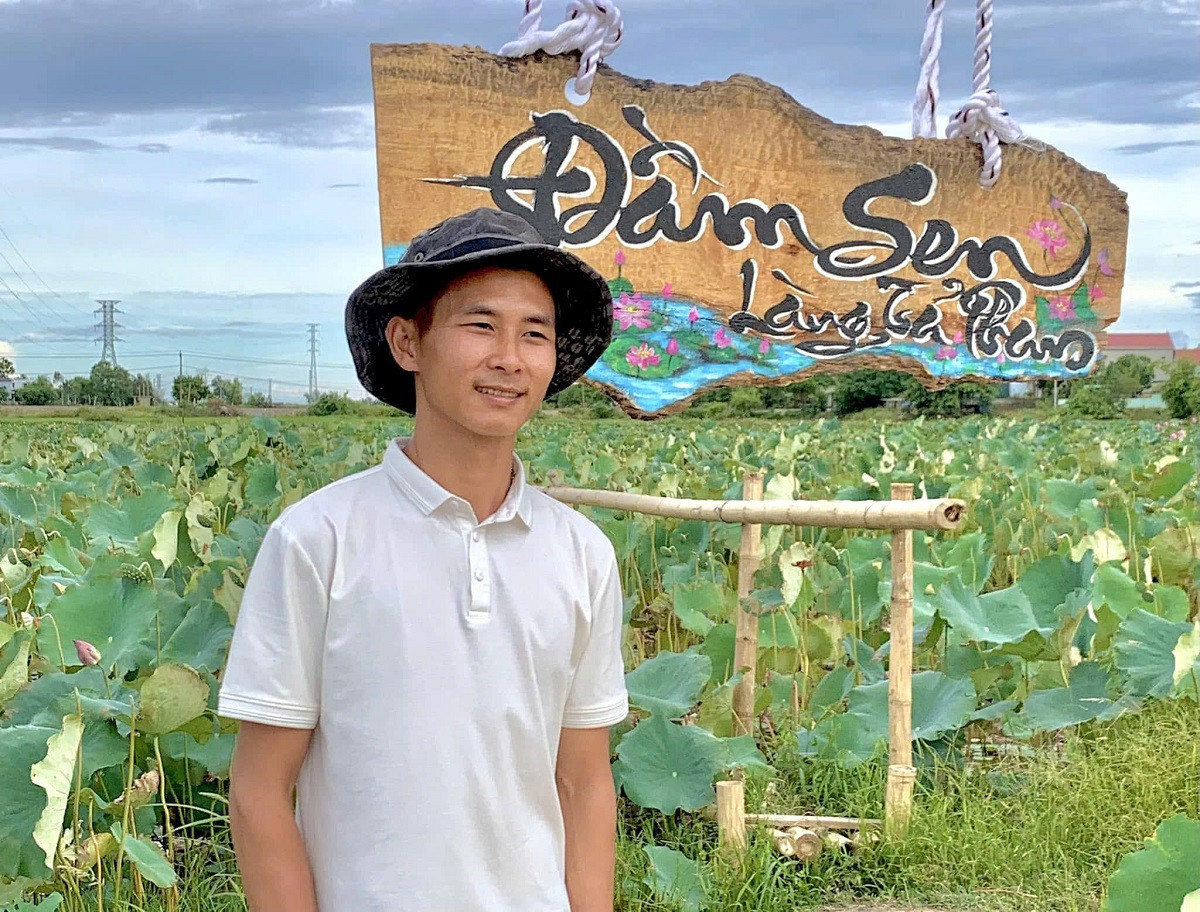
Trinh has also expanded beyond the cooperative's own growing area by developing partnerships with other farmers. The cooperative now works with around 20 lotus-growing households in Ninh Chau and guarantees purchases of their produce.
"With a stable raw material area, the cooperative can take the initiative in production planning, while farmers with a guaranteed market can feel confident maintaining their cultivation areas," Trinh said.
"The households handle planting, care and harvesting, while the cooperative purchases, processes, preserves and sells the products."
Beyond agricultural production, the lotus fields attract local residents and visitors who come to sightsee, take photographs and enjoy the landscape during the flowering season. The cooperative is exploring suitable activities to combine lotus cultivation with rural tourism.
The operation now generates annual revenue of more than VND1 billion ($38,000). It provides regular employment for five to 10 workers, who earn around VND10 million ($380) per month, as well as seasonal work for around 20 people earning approximately VND8 million ($304) per month.
Through its partnerships with 20 local households, the cooperative has also developed a production chain covering cultivation, crop care and harvesting through to the supply of raw materials.
Nguyen Quang Ninh, chairman of the Ninh Chau Farmers' Association, said Trinh's model has shown promising initial results in converting low-yield farmland into more productive agricultural areas.
According to Ninh, developing a stable raw material zone, establishing partnerships with local farmers and creating OCOP products have helped raise the value of agricultural produce while generating additional jobs and income for local residents.
Hai Sam
.svg)
