 Vietnamnet.vn

 Podcast



A nearly 50-year-old sweet soup shop
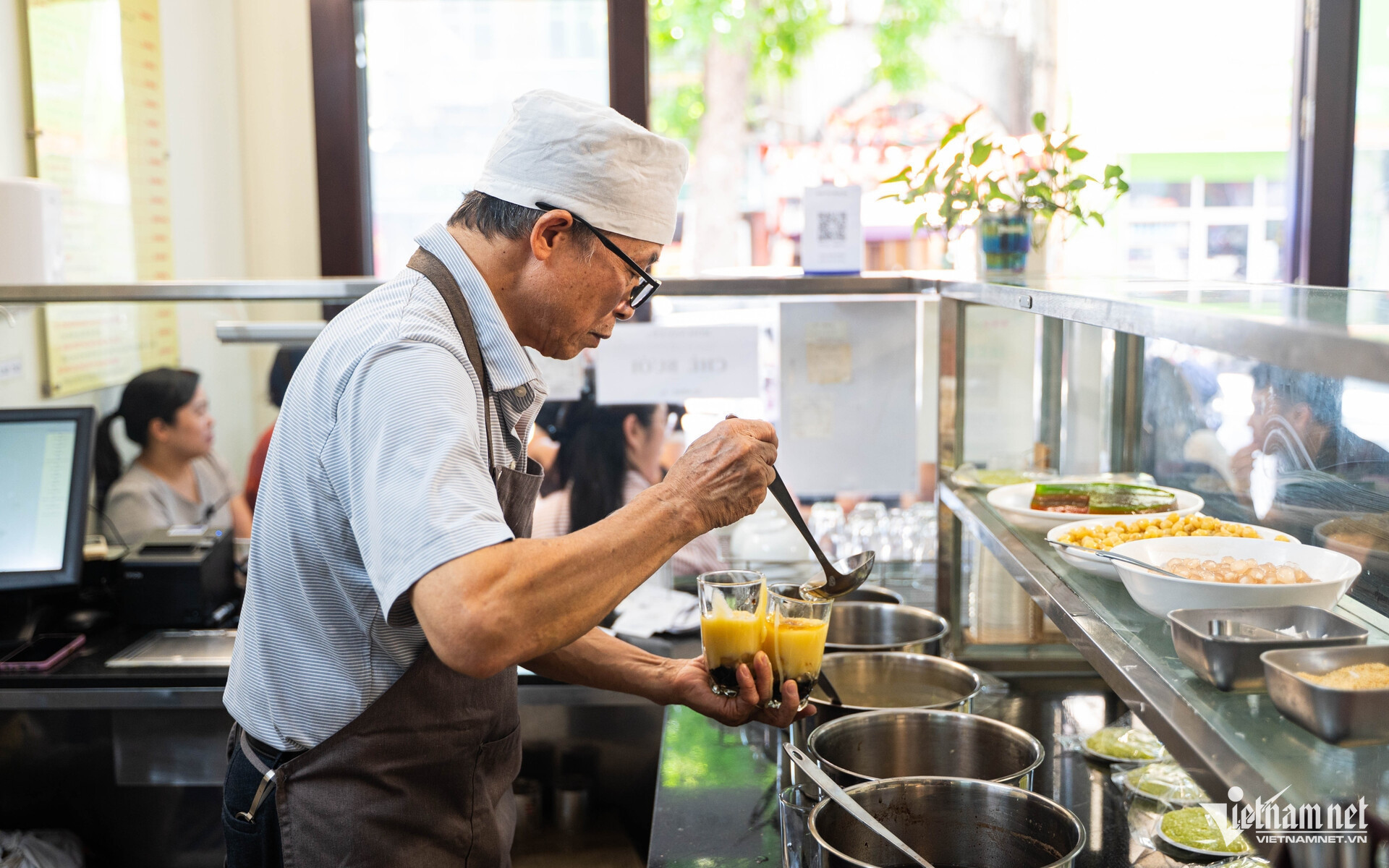
Muoi Sau, run by Pham Xuan Thanh, born in 1950, is one of Hanoi’s best-known traditional sweet soup shops. For nearly half a century, its Vietnamese desserts, known collectively as che, have become part of the culinary memories of generations of diners.
Nearly two years ago, Thanh and his wife opened another location on Lo Duc Street in Hai Ba Trung, while his sister-in-law’s family continued operating the original shop on Ngo Thi Nham Street.
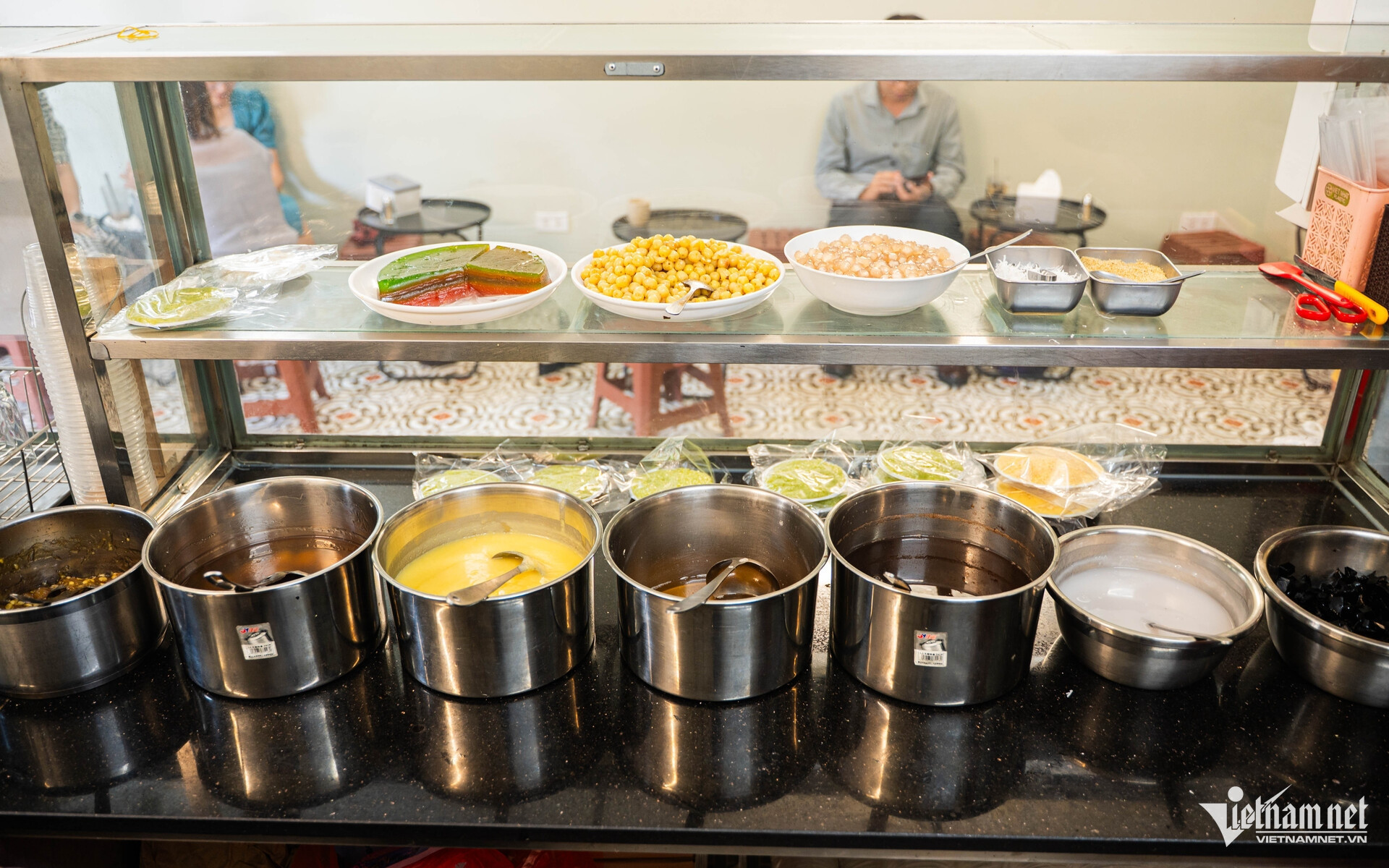
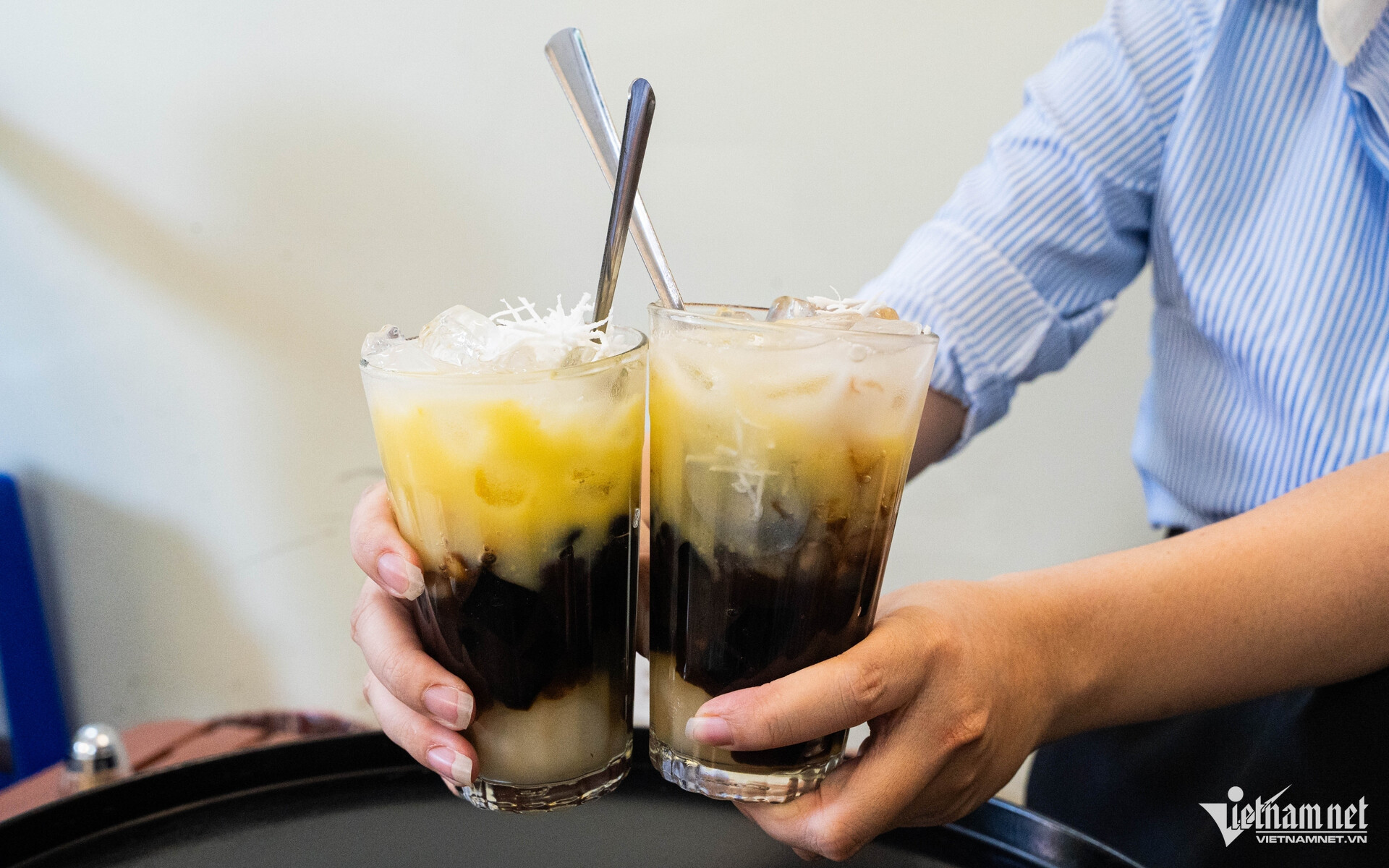
The shop now serves 18 traditional desserts and cakes. Three varieties - hot black bean sweet soup, sweet glutinous rice dumplings and che con ong, a sticky rice dessert with ginger and molasses - are available only in winter.
Red gac sticky rice with mung beans is sold only on the first and 15th days of each lunar month.
Prices range from about $0.60 to $1.10 per serving.
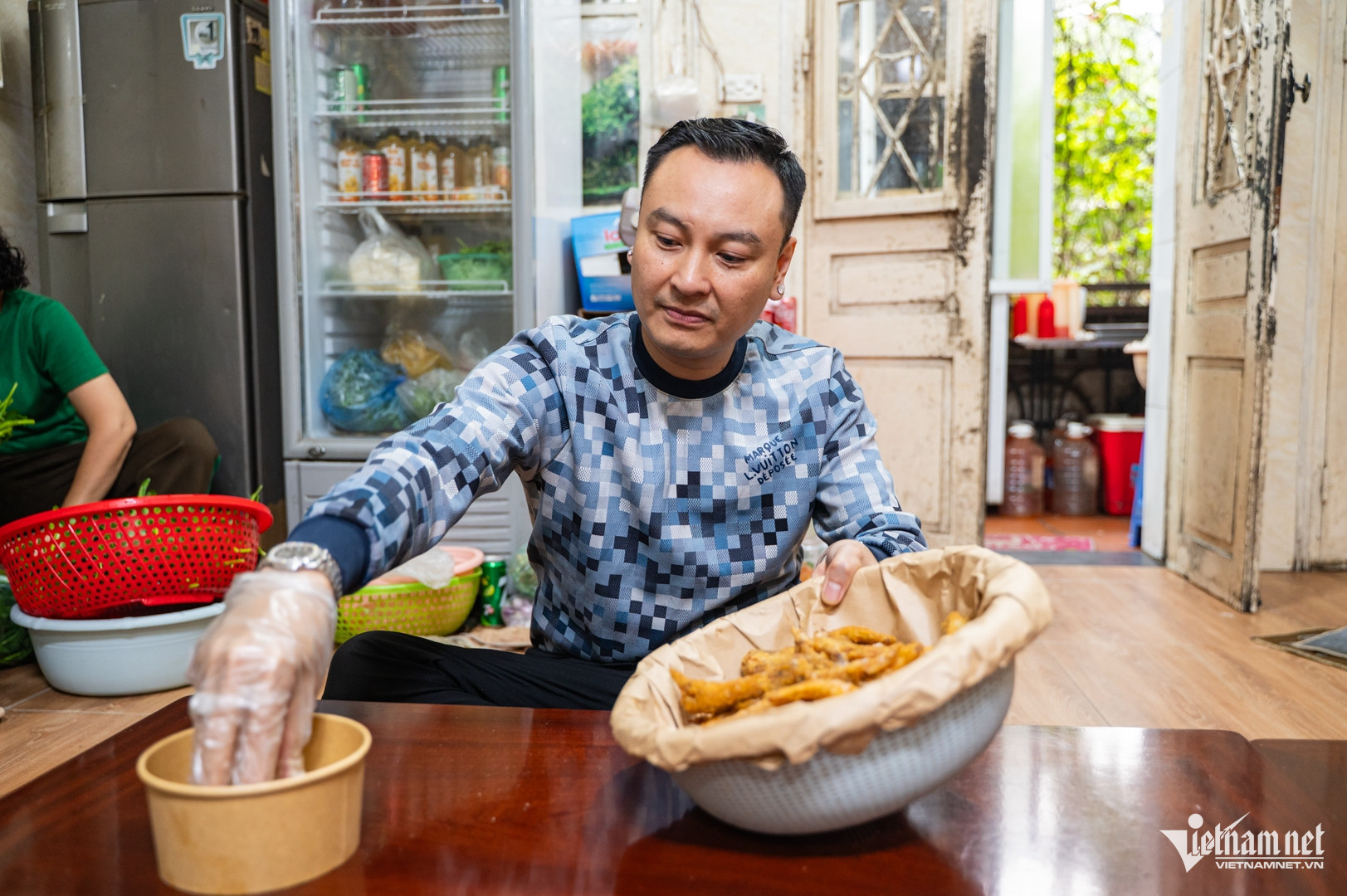
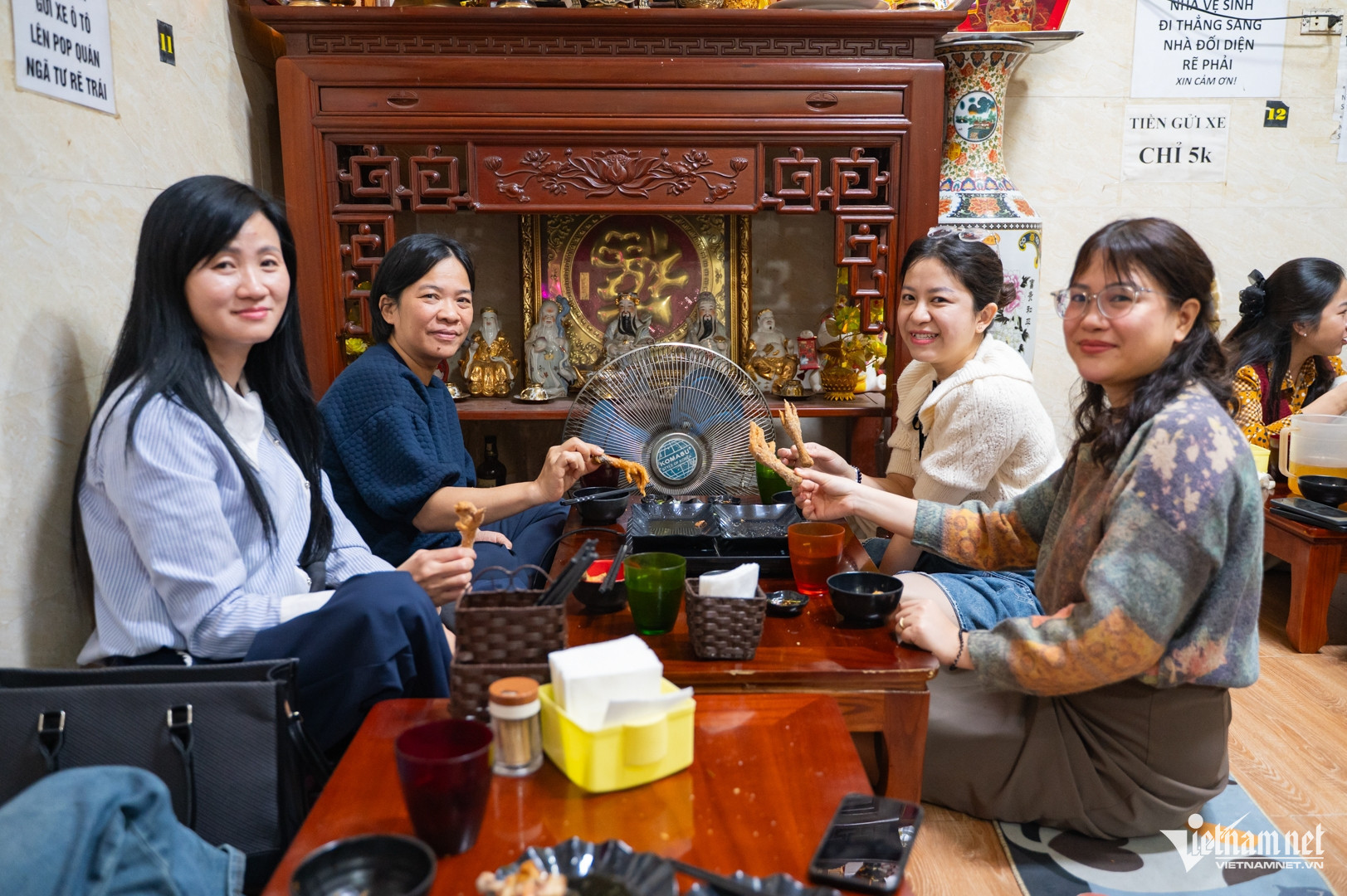
Despite its location down an extremely narrow alley and up an old, cramped staircase, a snack shop run by Do Xuan Quy, 42, and his wife on Pho Hue Street continues to attract large numbers of diners.
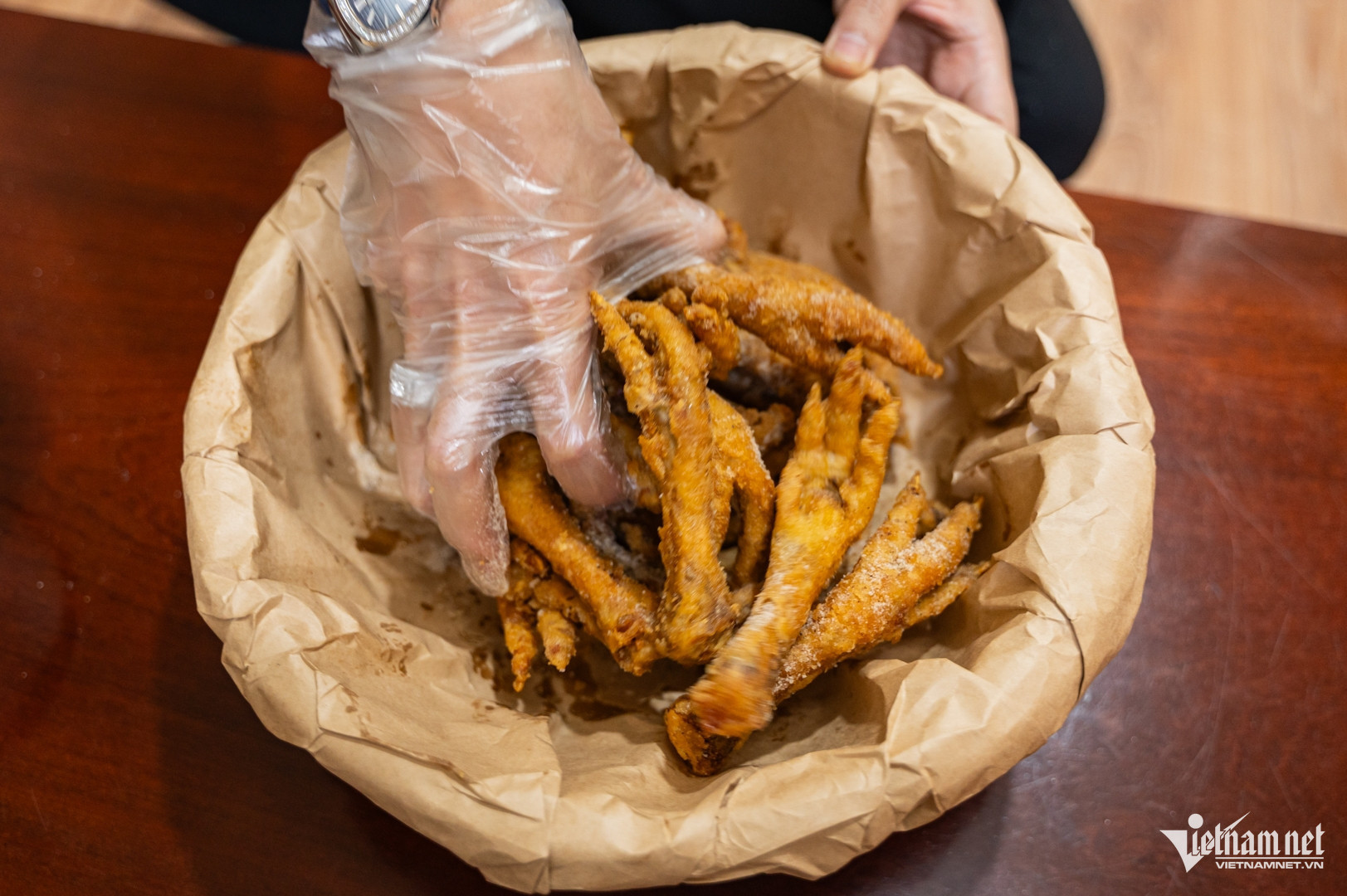
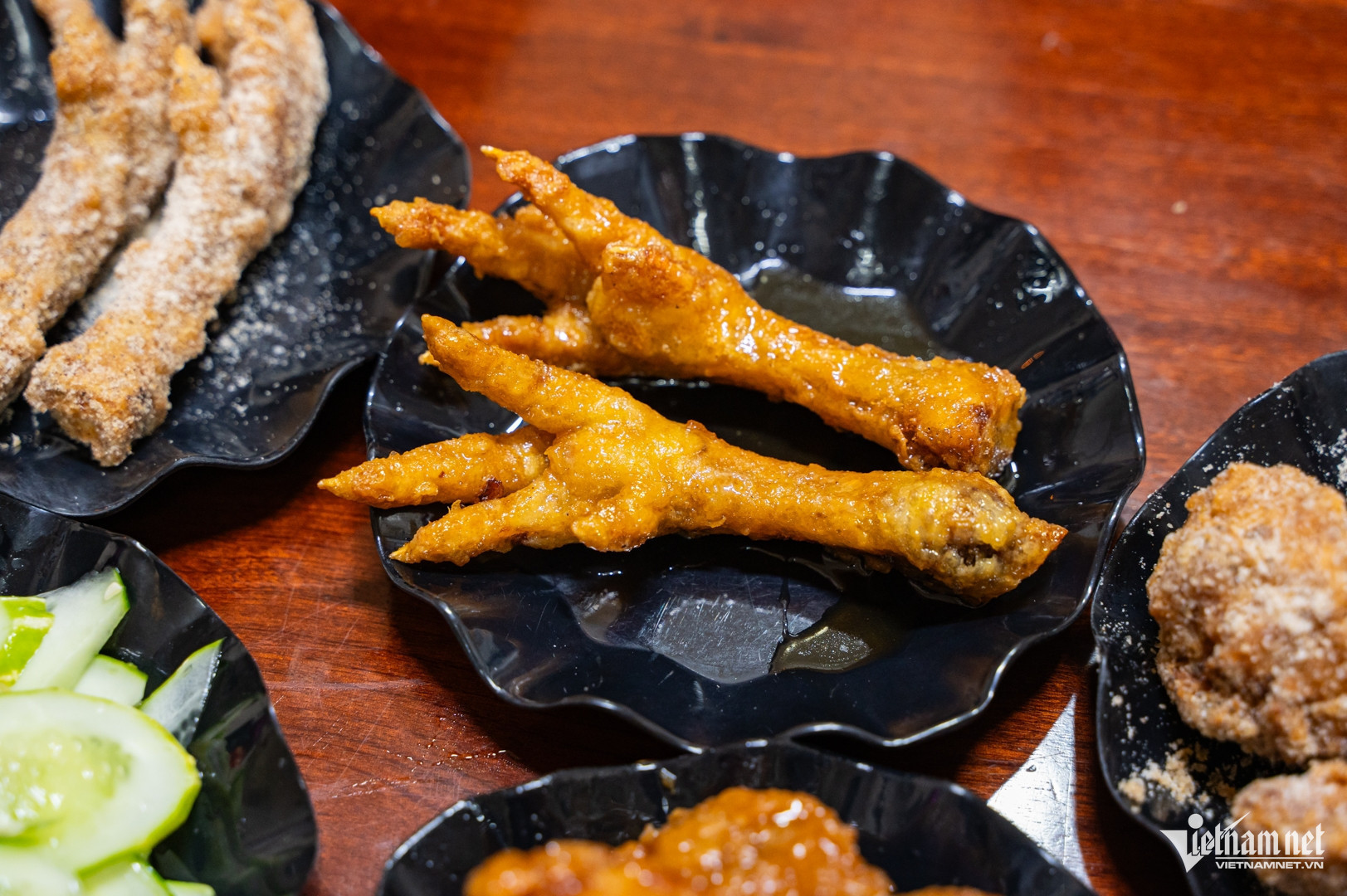
The couple have been serving chicken feet and wings prepared with fish sauce or salt for 10 years, turning their small shop into a familiar Hanoi snacking destination.
When they first opened, the menu consisted mainly of fish sauce fried chicken and salt-roasted chicken, accompanied by simple sides such as pickled cucumber and French fries.
Over time, the couple expanded the menu to include chicken feet with lemongrass and chili, spicy Sichuan-style chicken and Thai hotpot.
A fried dough snack drawing crowds for decades
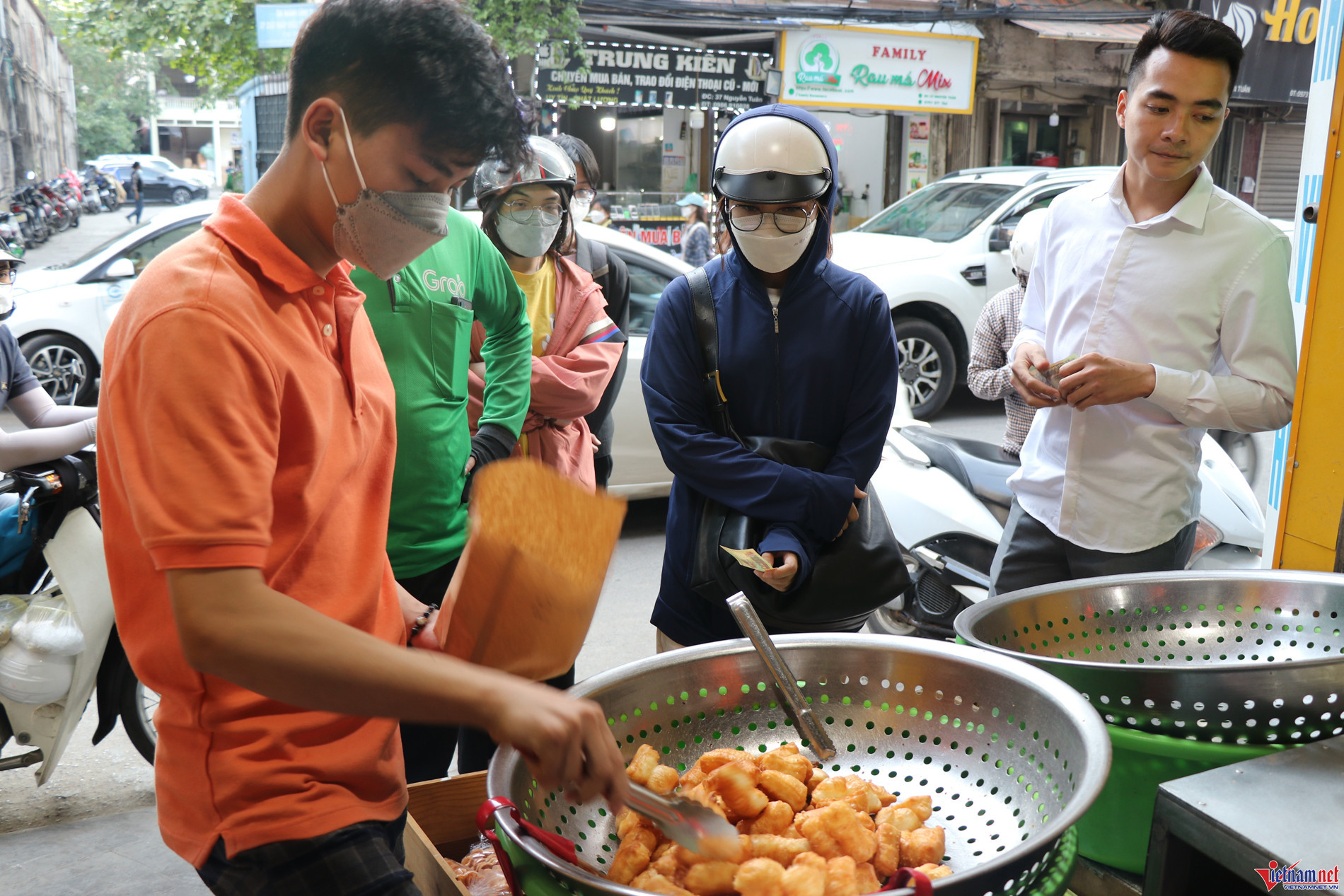
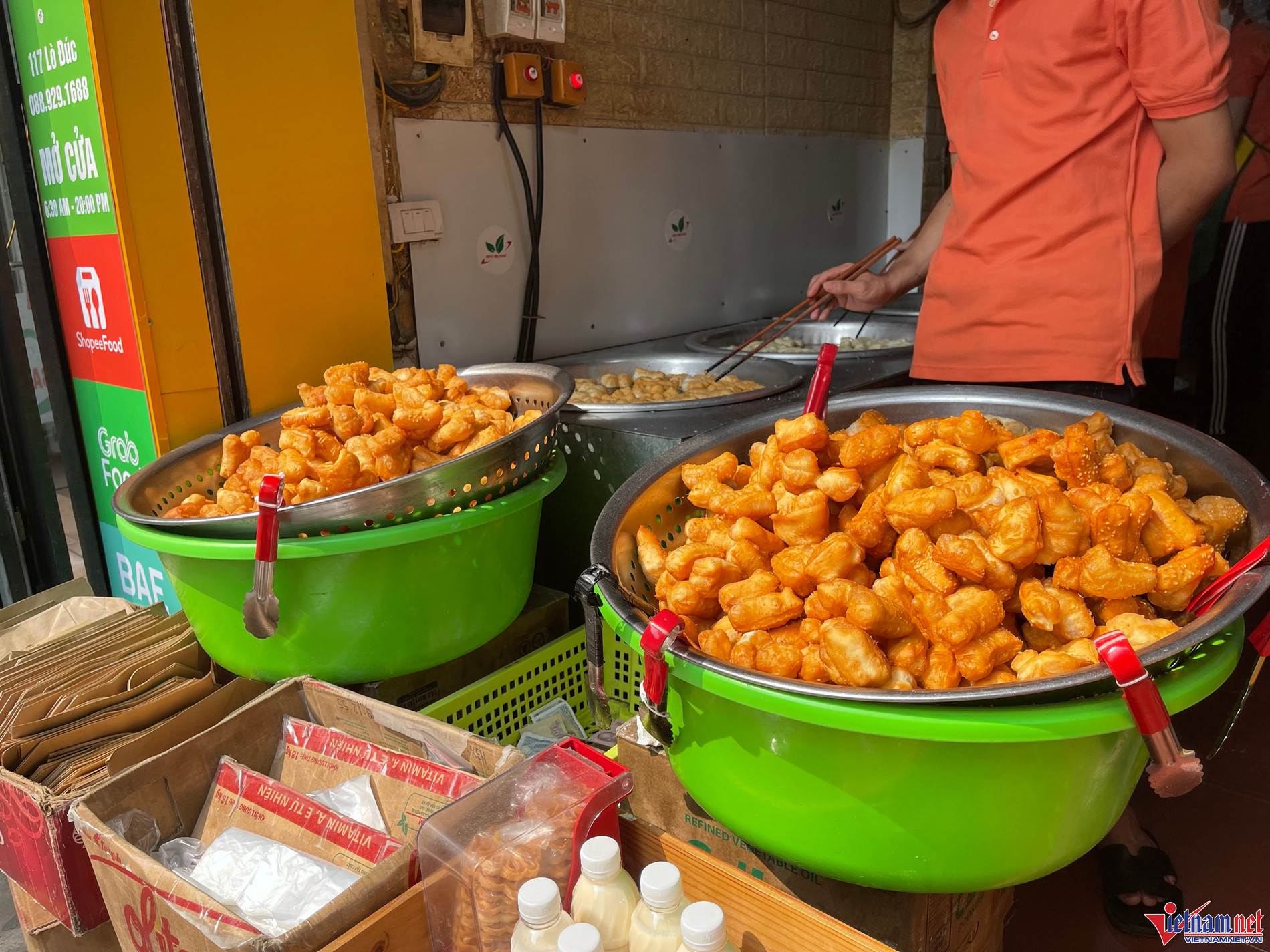
The small fried dough business run by Quang Thai and Thuy Nga opened on Hang Buom Street in late 1998.
After more than two decades, the couple have expanded to several locations, including a busy shop on Lo Duc Street in Hai Ba Trung.
Their signature snack is quay dui ga, literally “chicken thigh fried dough,” named for its shape rather than its ingredients.
Thai said each piece goes through seven stages before reaching customers, from selecting ingredients and mixing and proofing the dough to rolling, cutting and frying it.
For him, maintaining the quality of the ingredients is essential to producing the right flavor and texture.
A good quay dui ga should almost melt in the mouth, balancing the sweetness of sugar with the nutty richness of flour, oil and sesame.
Hanoi’s old-school sizzling banh mi
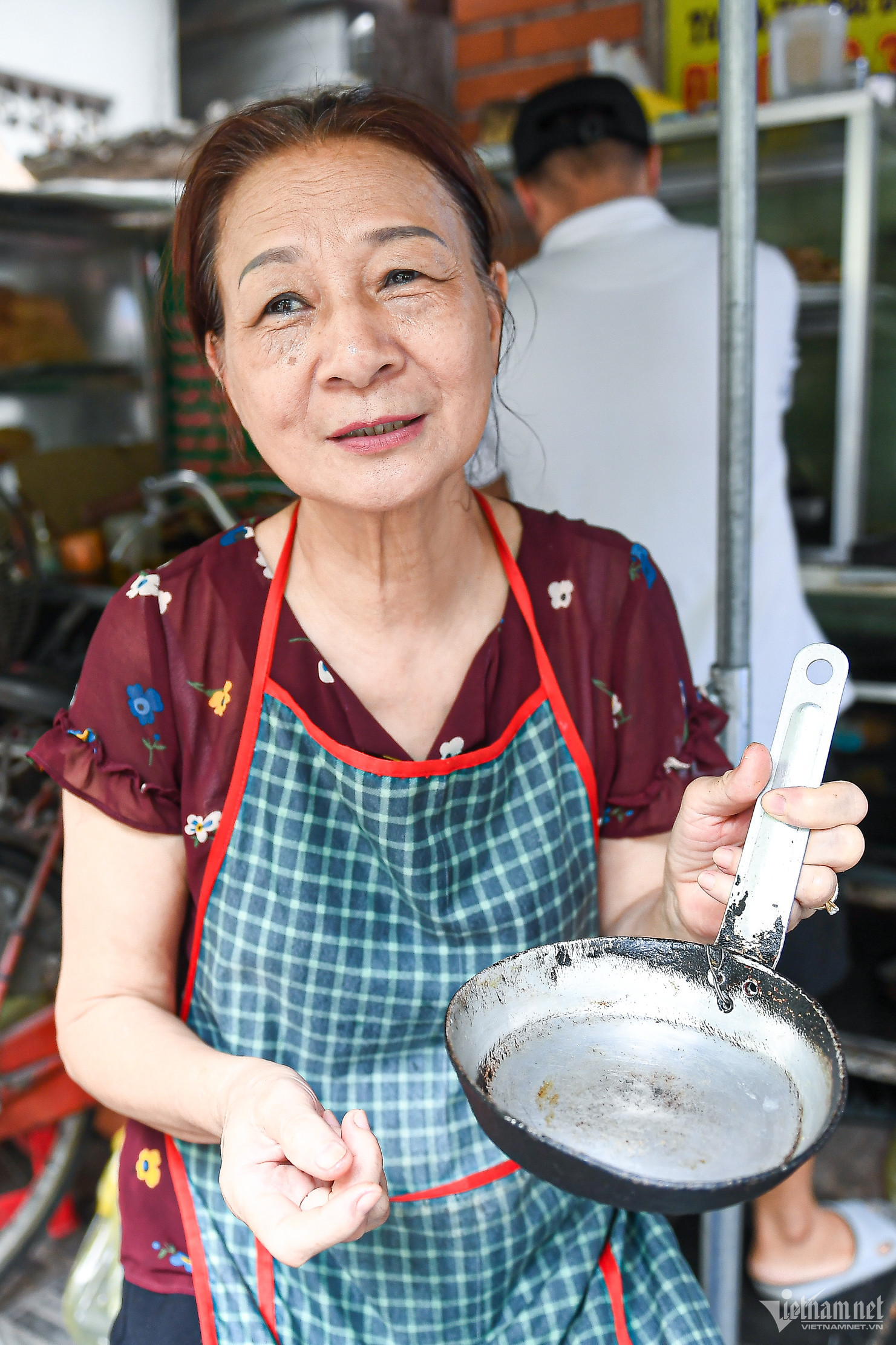
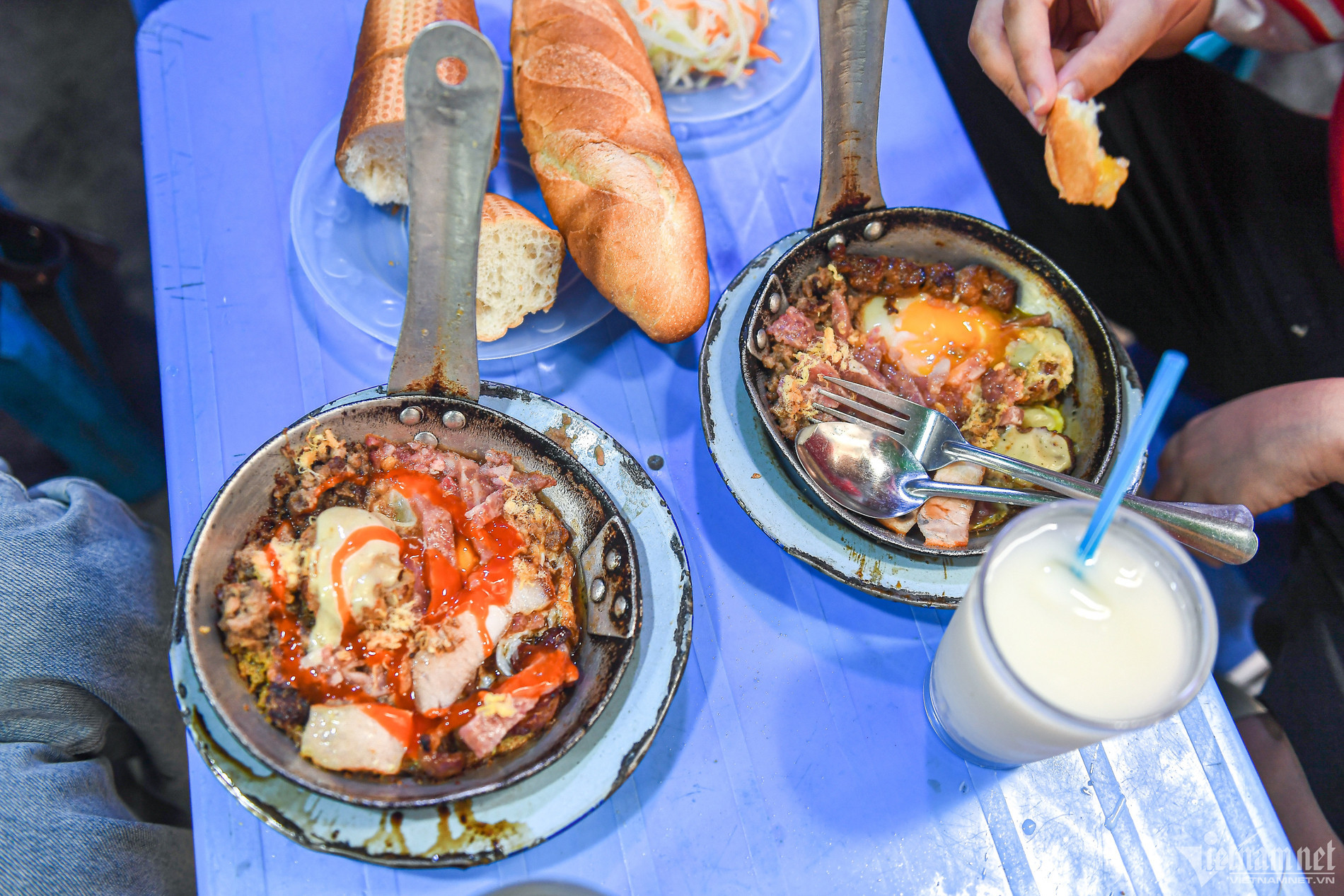
Hong Trang’s banh mi chao, or sizzling skillet banh mi, has been familiar to Hanoi diners for decades.
Owner Do Thi Xuan Hong, 69, previously operated on Mai Hac De Street before moving to Trieu Viet Vuong Street in Hai Ba Trung.
After nearly 50 years in business, Hong has preserved many of the shop’s distinctive features, including its flavors and house-made accompaniments. She also serves the dish without the sauce commonly found in many modern versions.
Her skillet banh mi includes fried egg, grilled pork skewers, pate and red sausage, with a special serving adding Vietnamese-style meatballs.
Hong makes the grilled pork, meatballs, pate and pork floss herself.
She has even kept Soviet-made skillets that are more than 40 years old and have been with her since the shop’s early days. That history has earned the restaurant another nickname among diners: the “Soviet skillet banh mi” shop.
Hong says the old pans are extremely durable and prevent ingredients such as pate and eggs from sticking when heated.
Today, she generally brings them out only when the restaurant is especially crowded and other cookware is unavailable, or when longtime customers want to revisit the flavors and memories of earlier decades.
Three sisters’ seasoned mango and guava
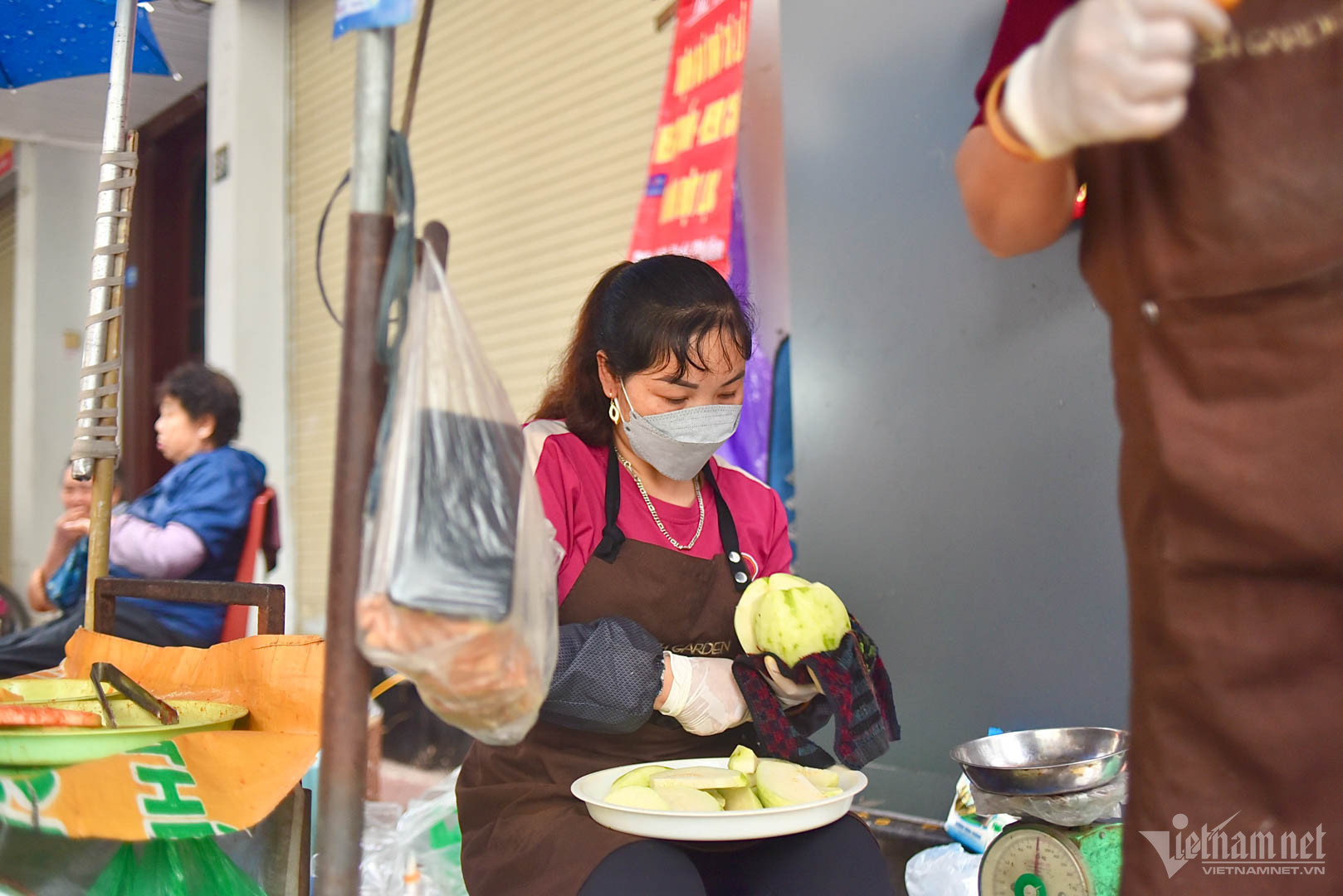
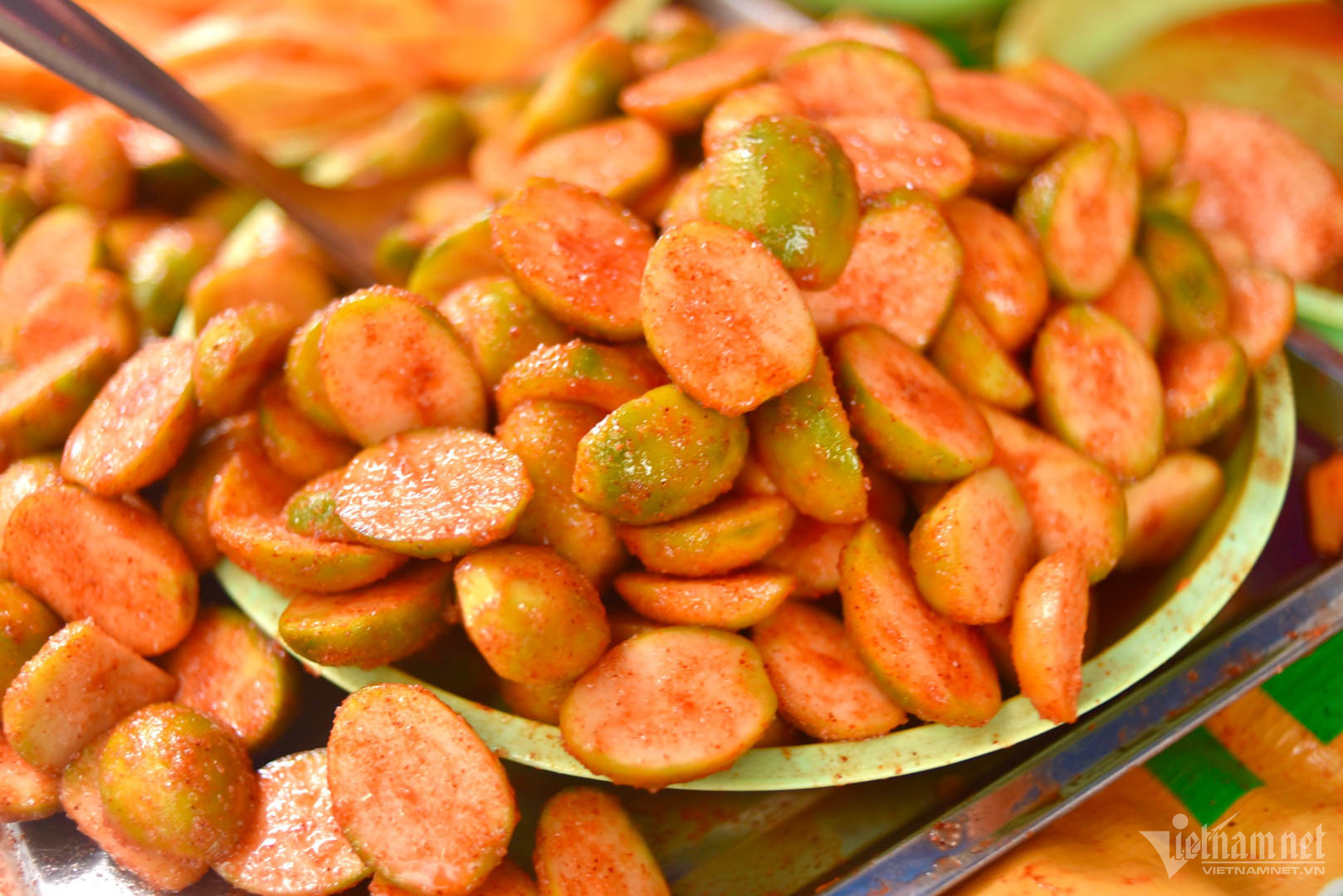
Tucked inside a small alley off Thai Phien Street is a takeaway fruit stall run by three sisters from Vu Thi Loan’s family.
Customers have dubbed it one of Hanoi’s cheapest places for seasoned fresh fruit, and it regularly draws crowds.
The setup is remarkably simple: a few trays piled with seasonal mangoes, guavas and ambarella sit on plastic stools. There is no seating, and everything is sold to go.
The stall has operated for more than 20 years, with the three sisters preparing the fruit to their own recipe and taking turns serving customers.
According to the family, freshness is the key to keeping people coming back.
Alongside mango, ambarella and guava, the stall offers seasonal fruits including pineapple, peaches, plums and sau, a tart fruit widely used in northern Vietnamese cuisine.
The fruit is washed at home but cut fresh at the stall in small batches as needed.
Diners say the seasoning is well balanced, allowing the fruit to remain crunchy while delivering a combination of sour, sweet, salty and spicy flavors.
.svg)
