 Vietnamnet.vn

 Podcast



On the sidewalk at 46 Hang Gai Street in Hanoi’s Old Quarter, a tiny banh mi stall has quietly stood the test of time for nearly half a century. With nothing more than a glass display case, a handmade oven and a few plastic stools, the shop still draws a steady stream of customers every morning.
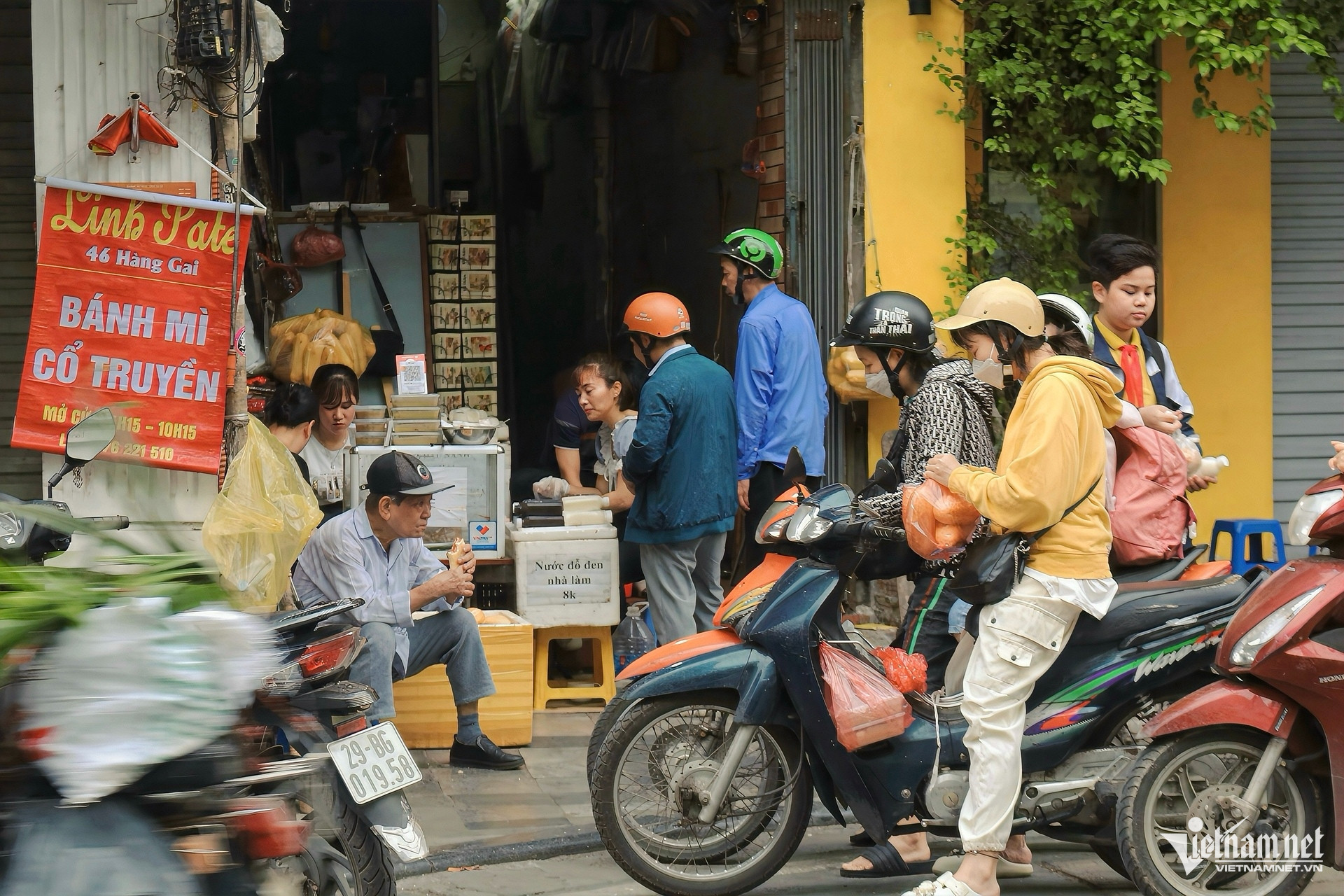
By 7am, more than a dozen people are already waiting in line. Behind the counter, owner Linh works swiftly, assembling sandwiches with practiced ease, wrapping each one before handing it over to eager customers.
The stall was first opened in 1979 by her mother-in-law. After her passing in 2014, Linh took over and has continued the business ever since. For her, it is more than a livelihood - it is a way of preserving a family legacy built over decades.
A recipe that refuses to change
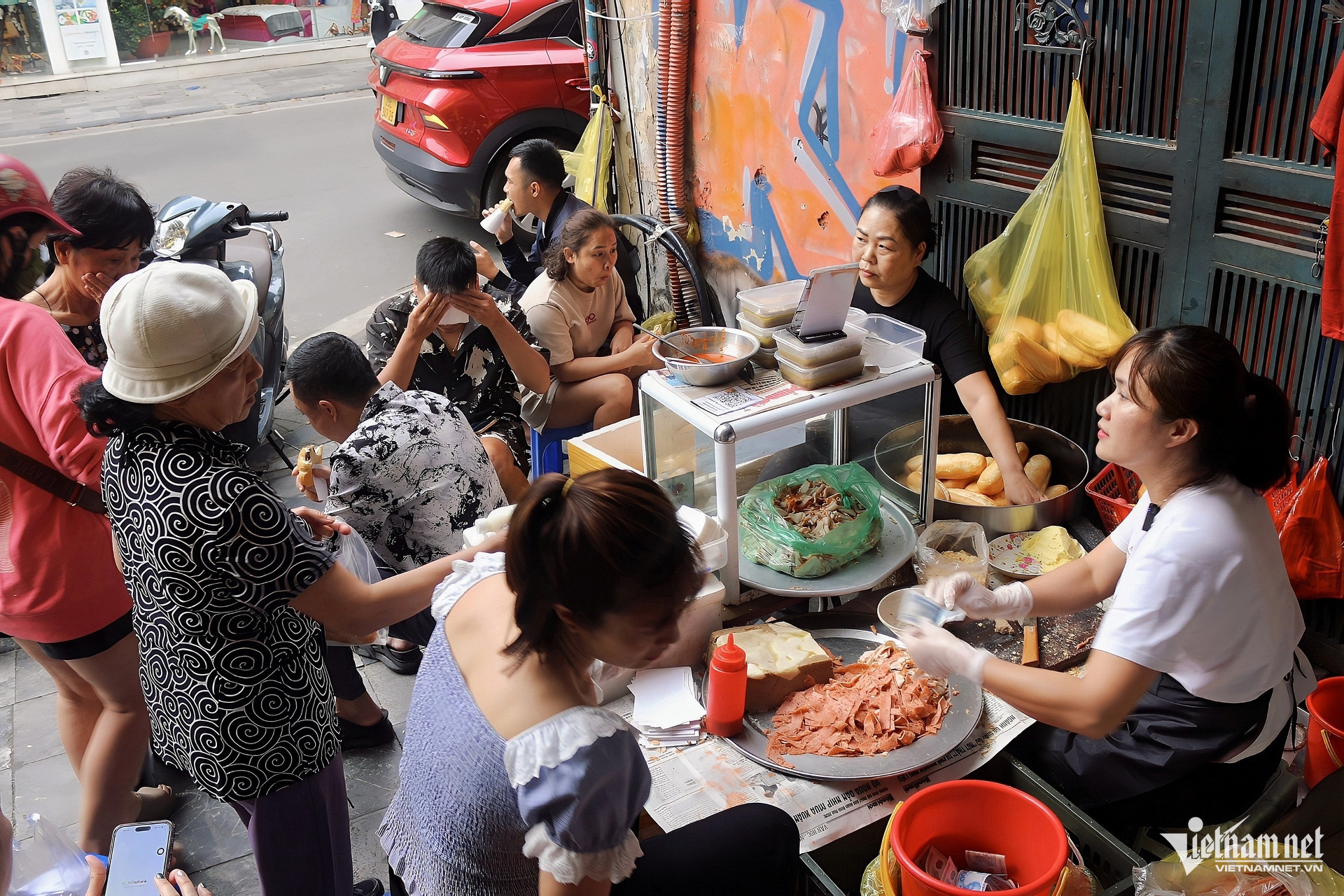
What sets this stall apart is its unwavering commitment to traditional banh mi. There are no modern twists or trendy variations. Every ingredient and every flavor remains faithful to the original recipe, just as it was decades ago.
Except for the butter, everything is made by hand: pâté, char siu pork, red sausage, pork floss and even the chili sauce.
The pâté is smooth and fragrant, with a rich brown color and delicate layers of fat. The char siu is sliced into balanced portions of lean and fat, while the sausage delivers a firm, slightly chewy texture with deep flavor.
A thin layer of butter adds richness, blending with a mildly spicy chili sauce. All of it is tucked into a crispy baguette that crackles on the outside yet remains soft and airy within.
Notably, the stall does not include pickled vegetables or fresh herbs, a choice that has earned it the affectionate nickname of a “stubborn” banh mi shop among regulars.
Crafted with patience and care
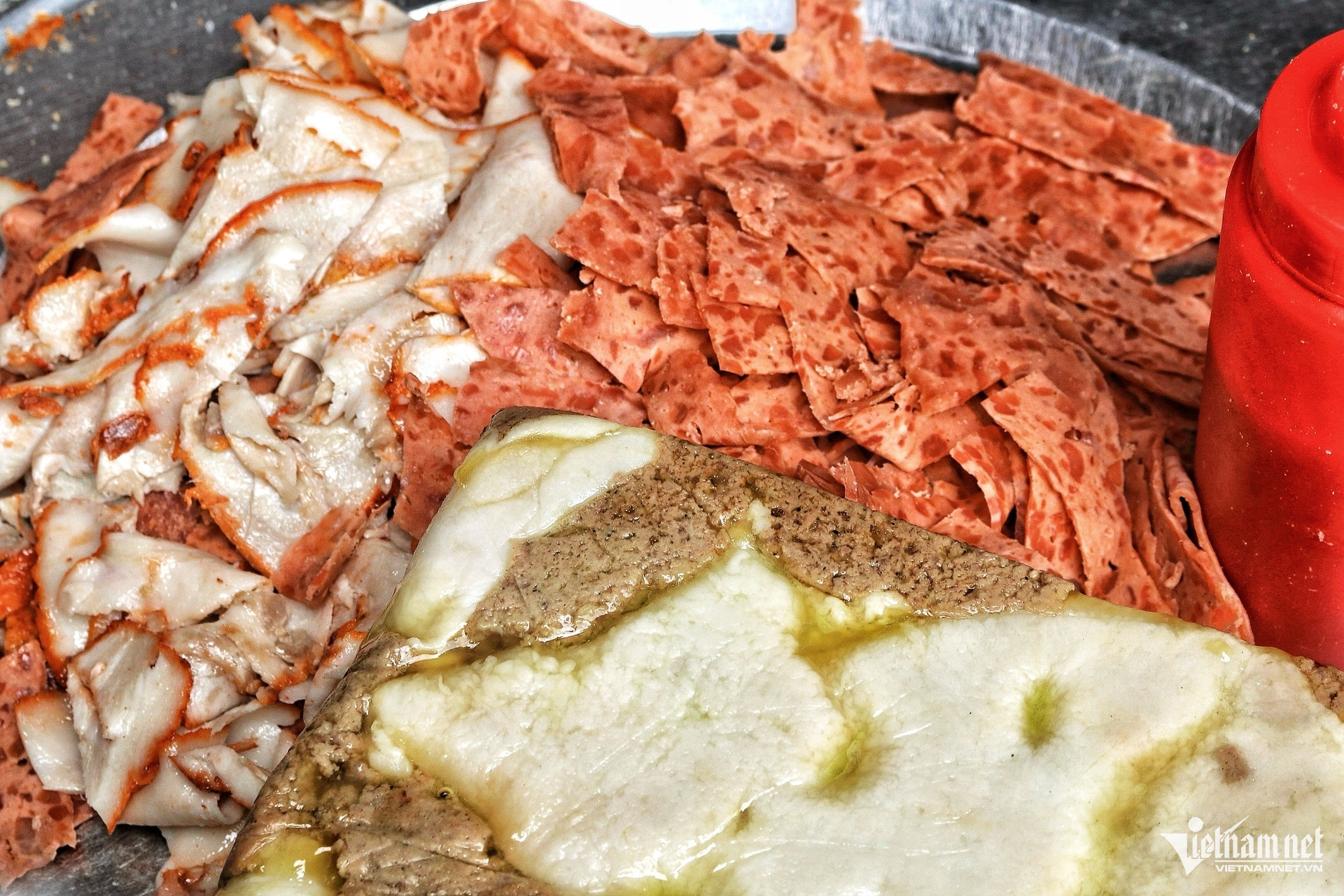
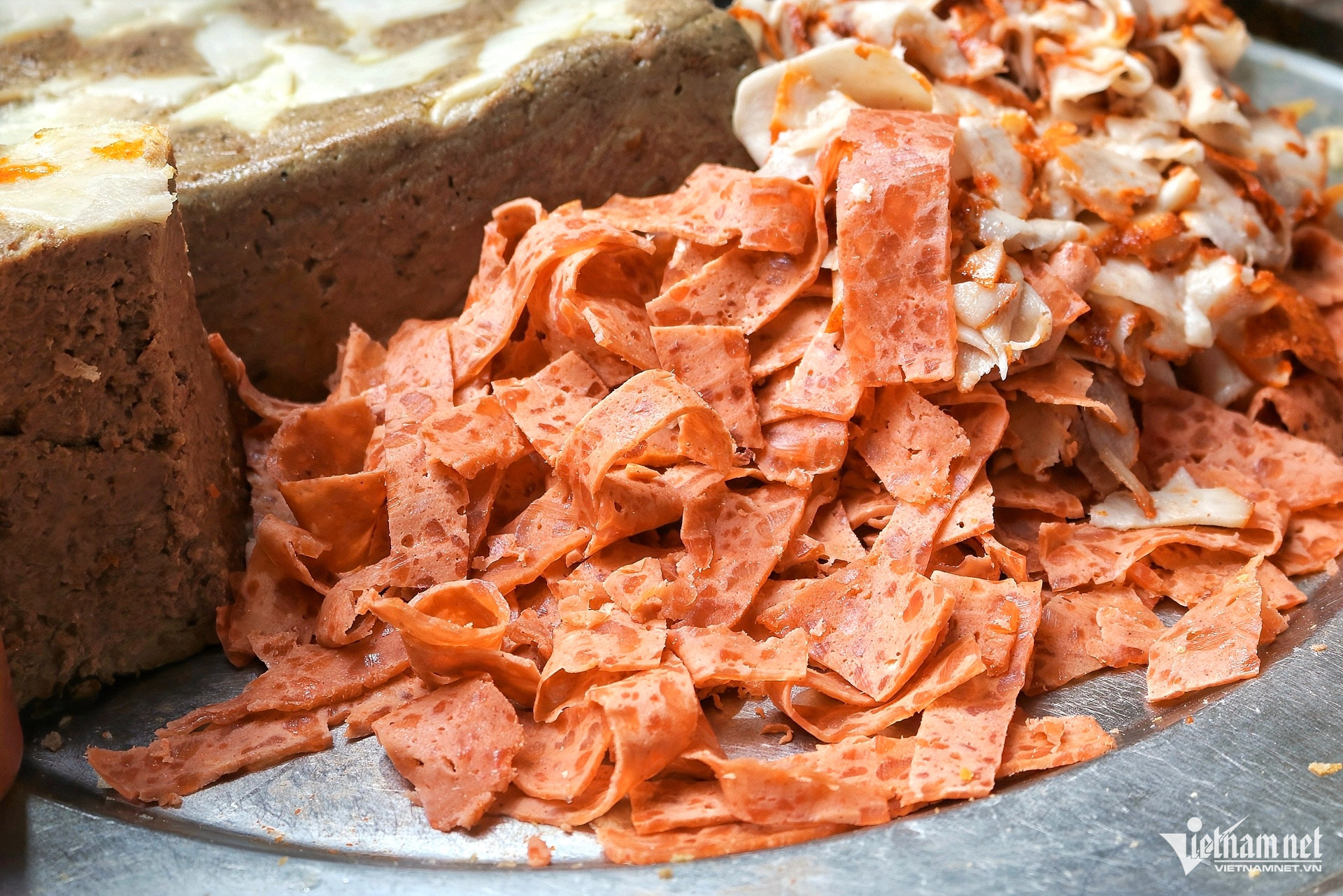
Behind the familiar taste lies a meticulous, time-consuming process.
According to Linh, the most labor-intensive item is the red sausage, which takes around 10 hours to prepare. The process involves careful cleaning, boiling pork skin and meat, steaming and refining the mixture to achieve the desired smoothness and elasticity. Afterward, the sausage is frozen for 5 to 6 hours before being served.
The pâté follows a family recipe passed down from her mother-in-law, made only from liver and meat, without breadcrumbs or ground skin. Instead of raw garlic or five-spice powder, Linh uses golden fried shallots cooked in chicken fat to create a distinctive aroma.
The char siu pork is also prepared with care: marinated, steamed, then lightly fried to render excess fat, ensuring the final taste is rich without being greasy.
“Today, we face many challenges - rising ingredient costs, growing competition and changing customer tastes,” Linh said. “But I still keep the traditional recipe because that is what defines our family’s identity.”
A taste of old Hanoi
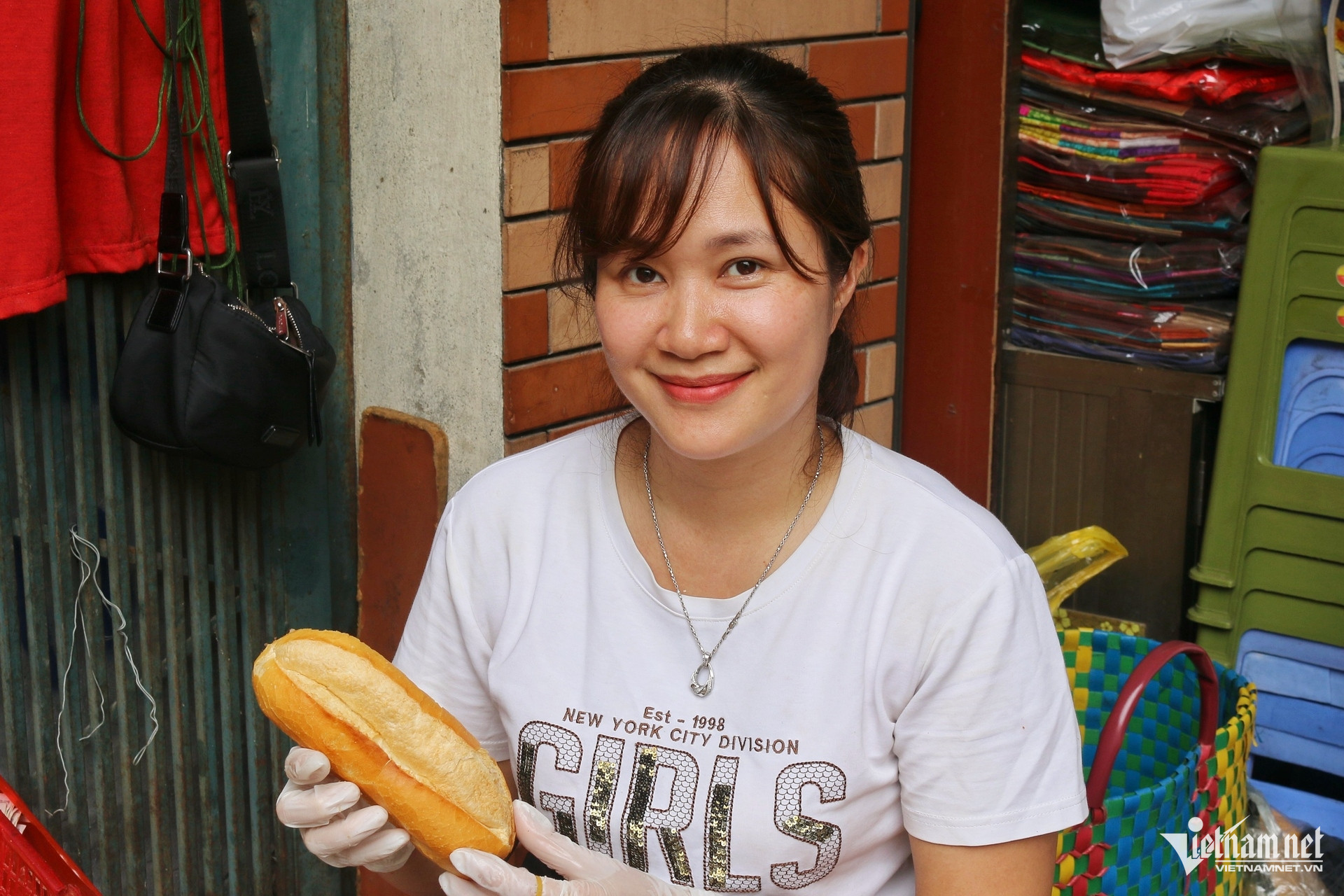
Linh began helping her mother-in-law run the stall in 2007.
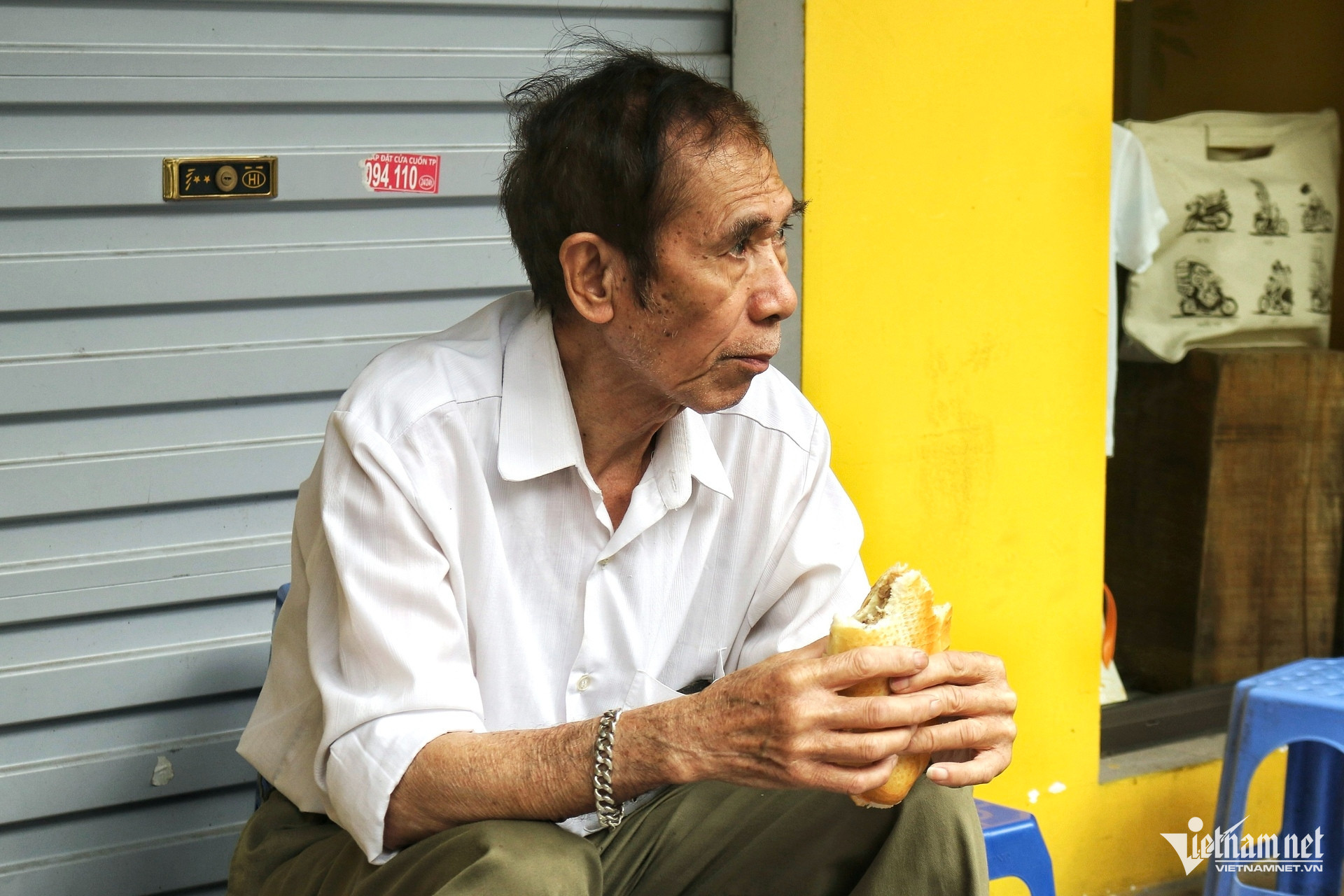
Nguyen Duc Dan, a long-time customer, has been eating here for more than 30 years.
The bread itself is specially ordered from a local bakery, made with selected flour to achieve a crisp crust and dense yet airy interior. It is reheated in a custom-built oven, allowing it to stay crispy without becoming hard or flattened.
Nguyen Duc Dan, a resident of Hoan Kiem District, has been eating here for over 30 years.
“I come here almost every day, except when it rains heavily. The banh mi is affordable, and the pâté is excellent. It tastes just like the old days,” he said.
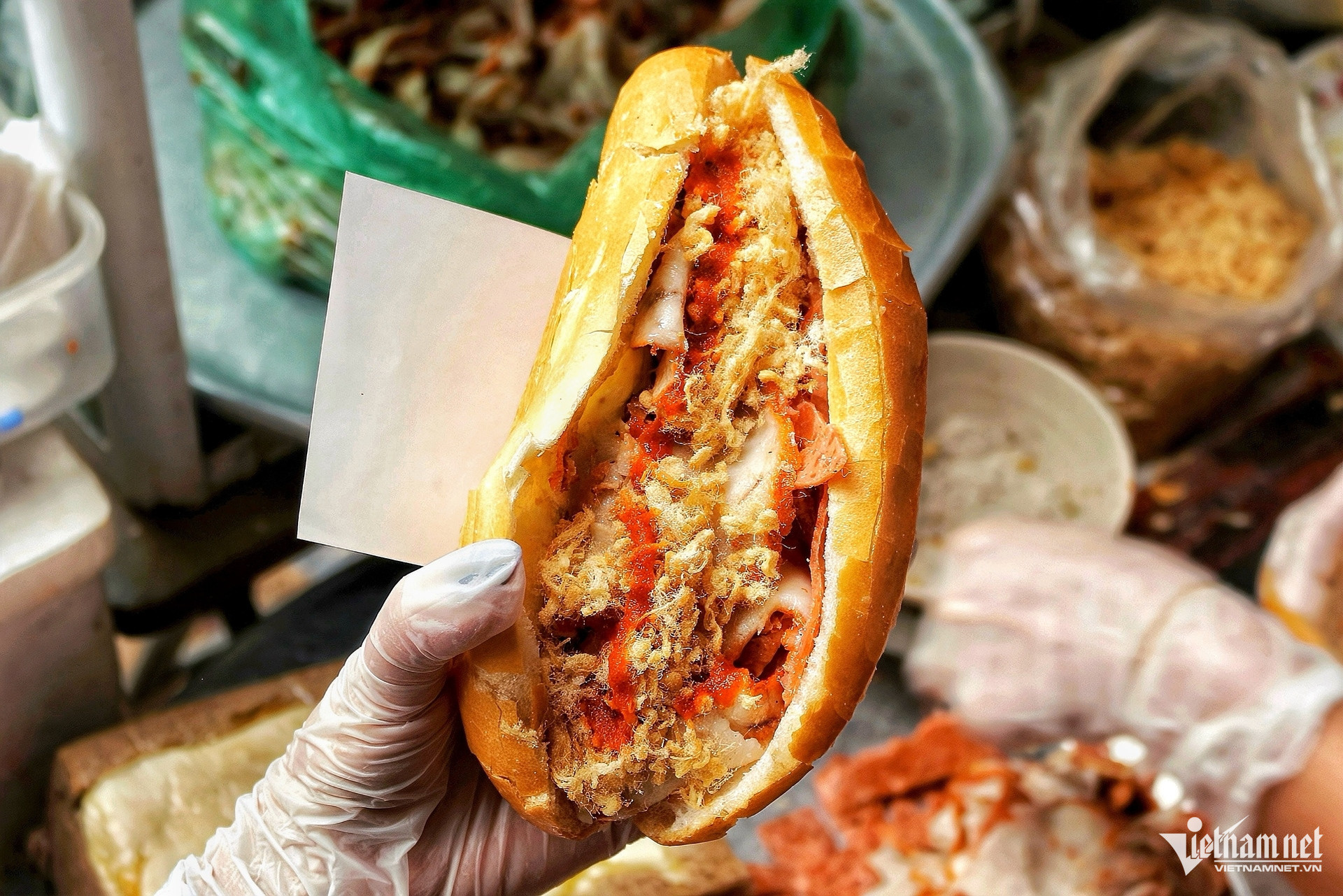
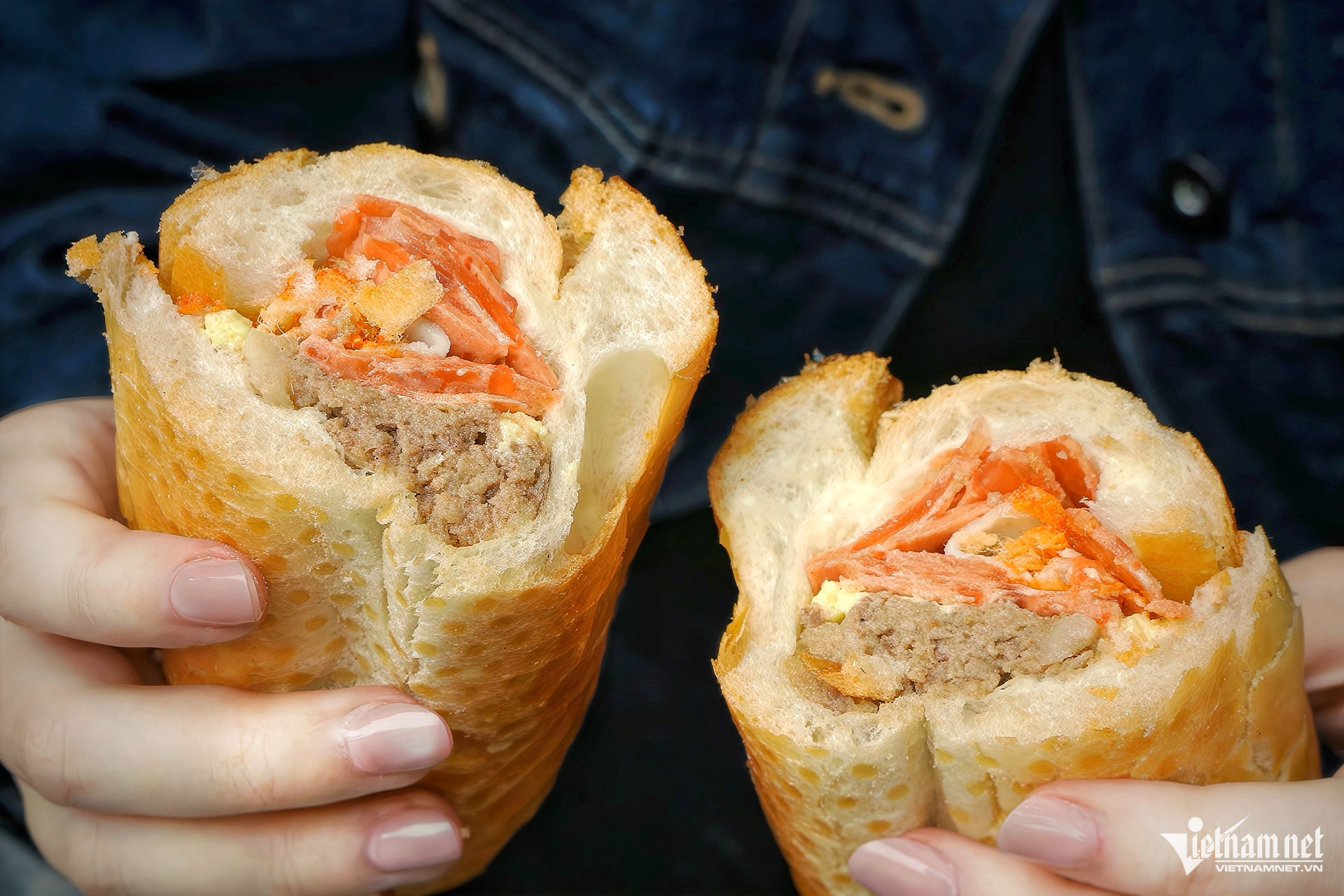
Nguyen Huu Thuan, a visitor from Can Tho, was drawn in by the crowd and decided to try it.
“I was surprised. The bread is crispy, the filling is generous and flavorful. I especially like the rich pâté,” he shared.
The stall opens daily from 5:15am to 10:15am. Each banh mi costs VND15,000 (US$0.60). Despite its simplicity, customers often have to queue to get one.
In a rapidly changing Old Quarter, this small stall on Hang Gai Street remains a familiar stop for generations of customers - where each warm loaf carries a piece of Hanoi’s memory, carefully preserved through time.
Pham Huong Mai - Nguyen Tuan Nhat
.svg)
