 Vietnamnet.vn

 Podcast



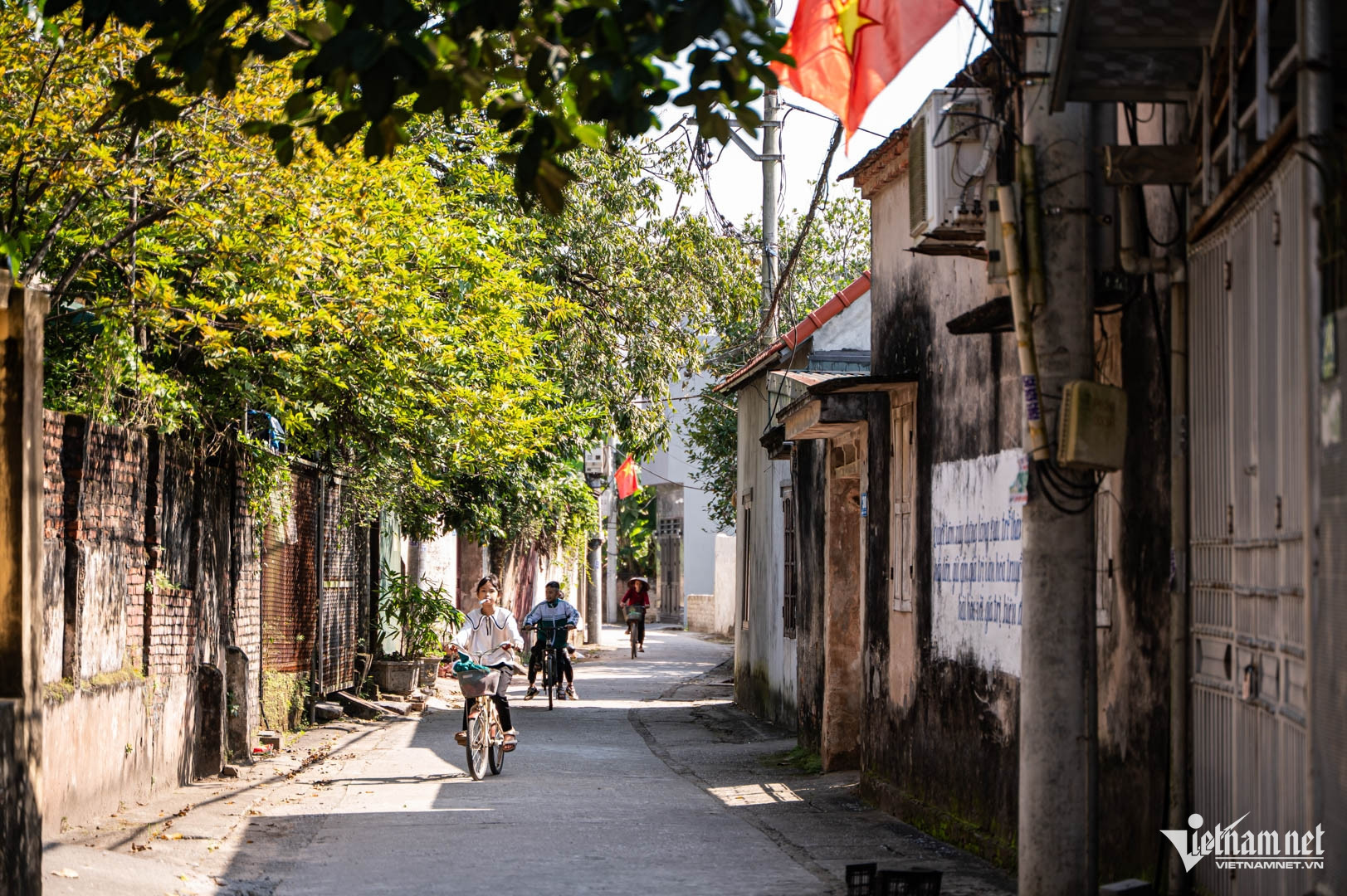
Just over 40 kilometers south of central Hanoi lies Cuu Village, in Chuyen My Commune (formerly Van Tu, Phu Xuyen District). Despite its proximity to bustling highways, the village remains serene and nostalgic - its old-world charm quietly enduring the passage of time in Vietnam’s Red River Delta.
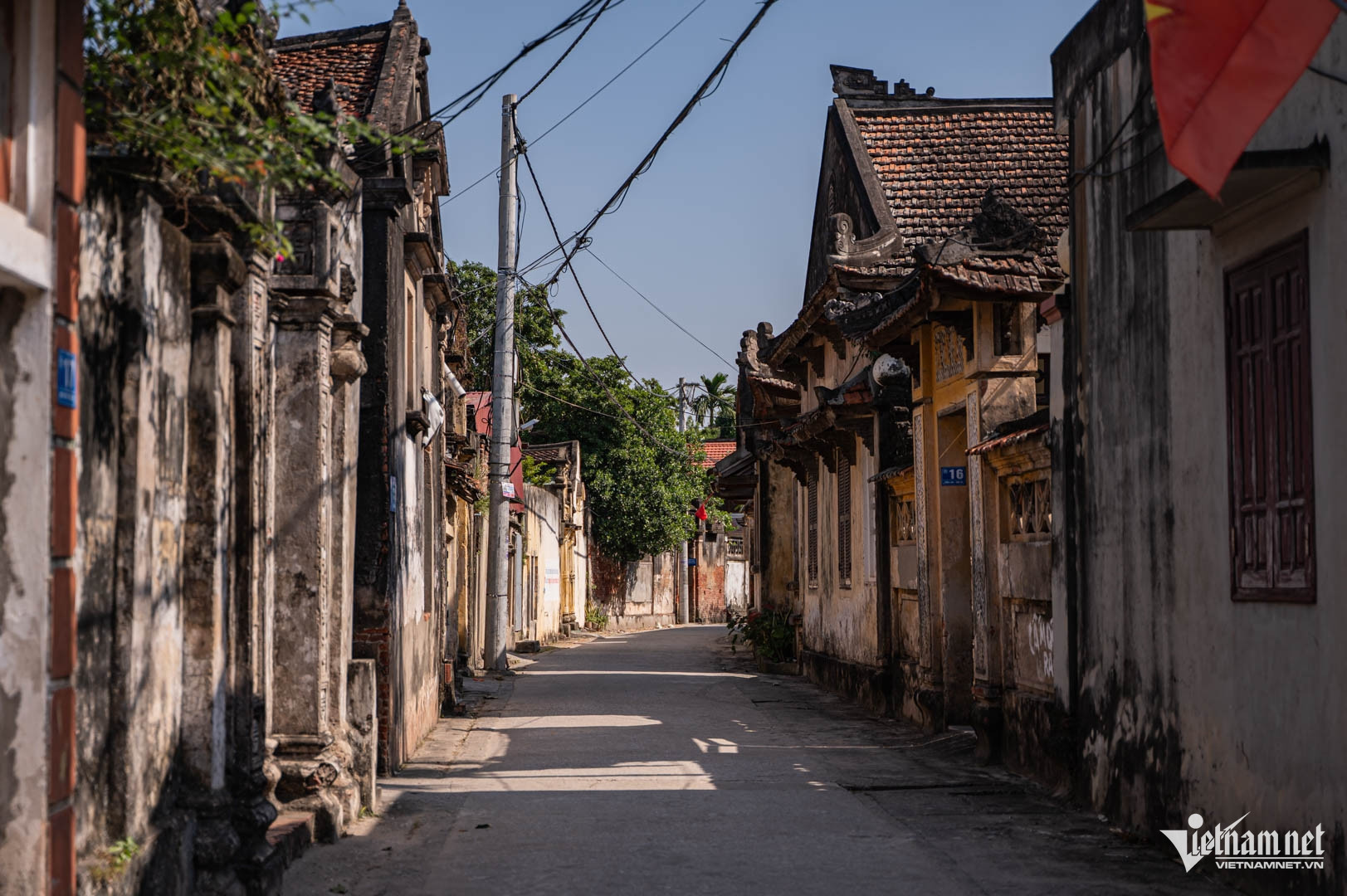
The peaceful, nostalgic charm of Cuu Village. Photo: Nguyen Huy
What sets Cuu apart is its unique blend of rural tradition and colonial influence. Beyond the banyan trees, village wells, and tiled courtyards, lie dozens of old two- and three-story French-style villas, built with wooden gates, iron columns, and curved tile roofs.
Though many of the villas are now worn, moss-covered, and weathered by age, their bones still speak of the village’s wealthy past - one built on exceptional craftsmanship and hard work.
Today, Cuu has become a “living museum” for lovers of history, architecture, and photography.
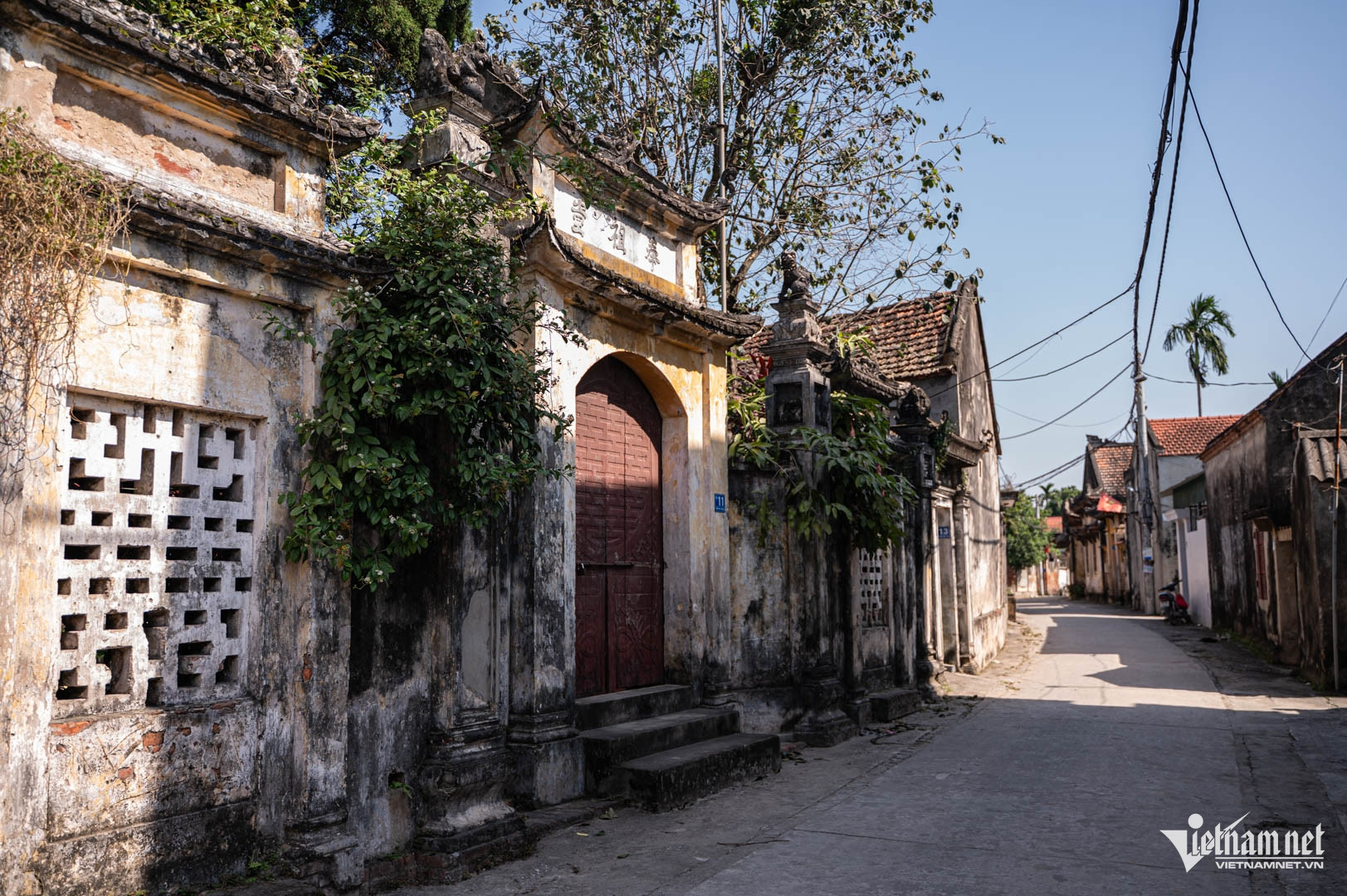
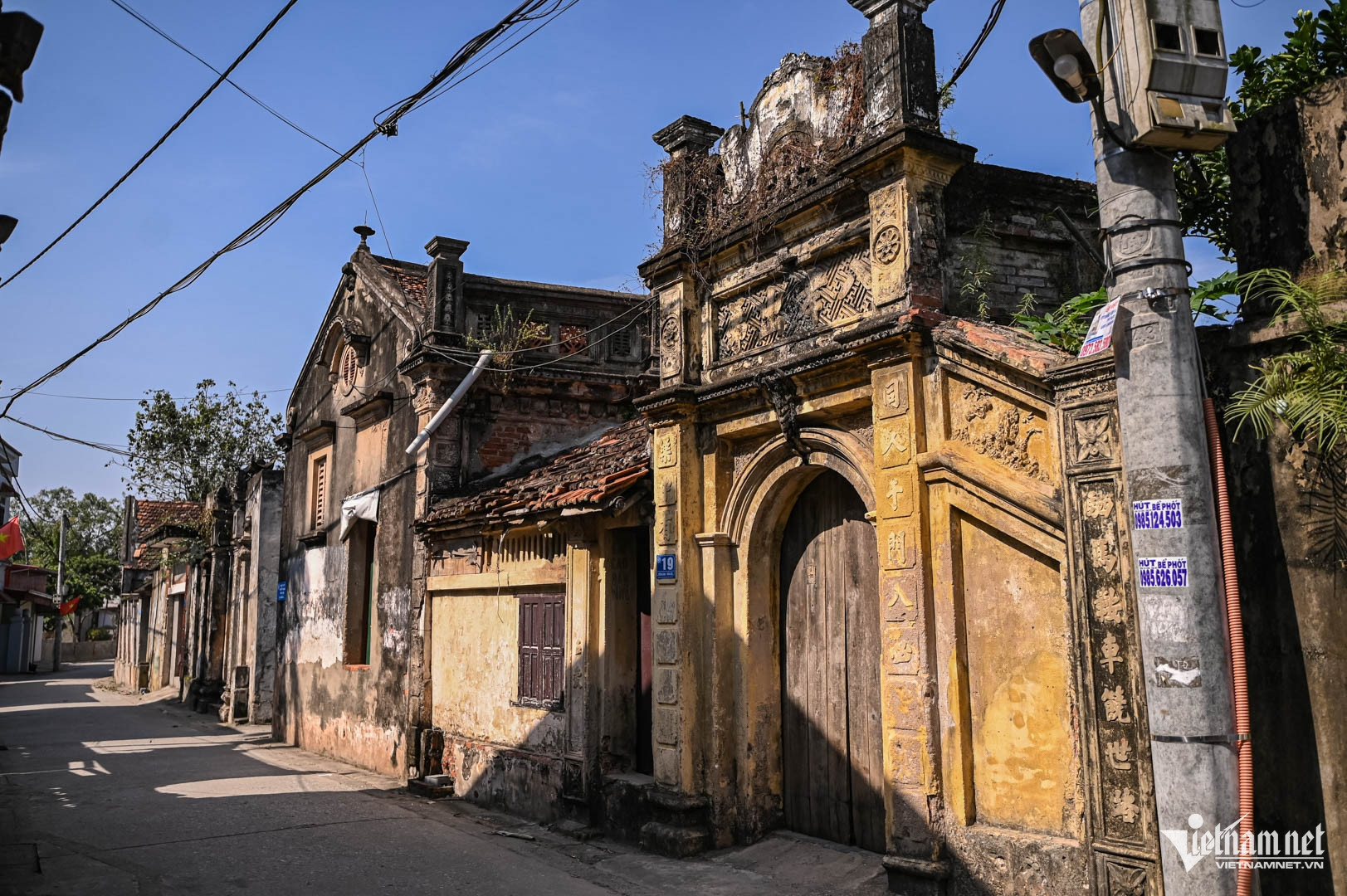
The gate to Mr. Pho Du’s home, built in 1929, features a prawn motif and the phrase “Nhap hieu xuat de.” Photo: Nguyen Huy
A village once dressed in wealth
Nguyen Thien Tu, 80, is one of the village’s oldest residents and a passionate archivist. Like a storyteller, he will sit for hours, sharing with curious visitors the stories of Cuu’s rise - from a humble fishing and farming community along the Nhue River to one of northern Vietnam’s wealthiest villages.
According to village elders, Cuu was devastated by a massive fire in 1921 that destroyed nearly all its homes. Many villagers scattered to nearby areas to earn a living. Some were fortunate enough to find work in French tailoring shops in Hanoi.
They learned quickly, saved diligently, and soon opened their own shops - expanding into the sale of imported fabrics and tailoring materials. They returned to Cuu wealthy, teaching their craft to younger generations and building the grand villas that still stand today.
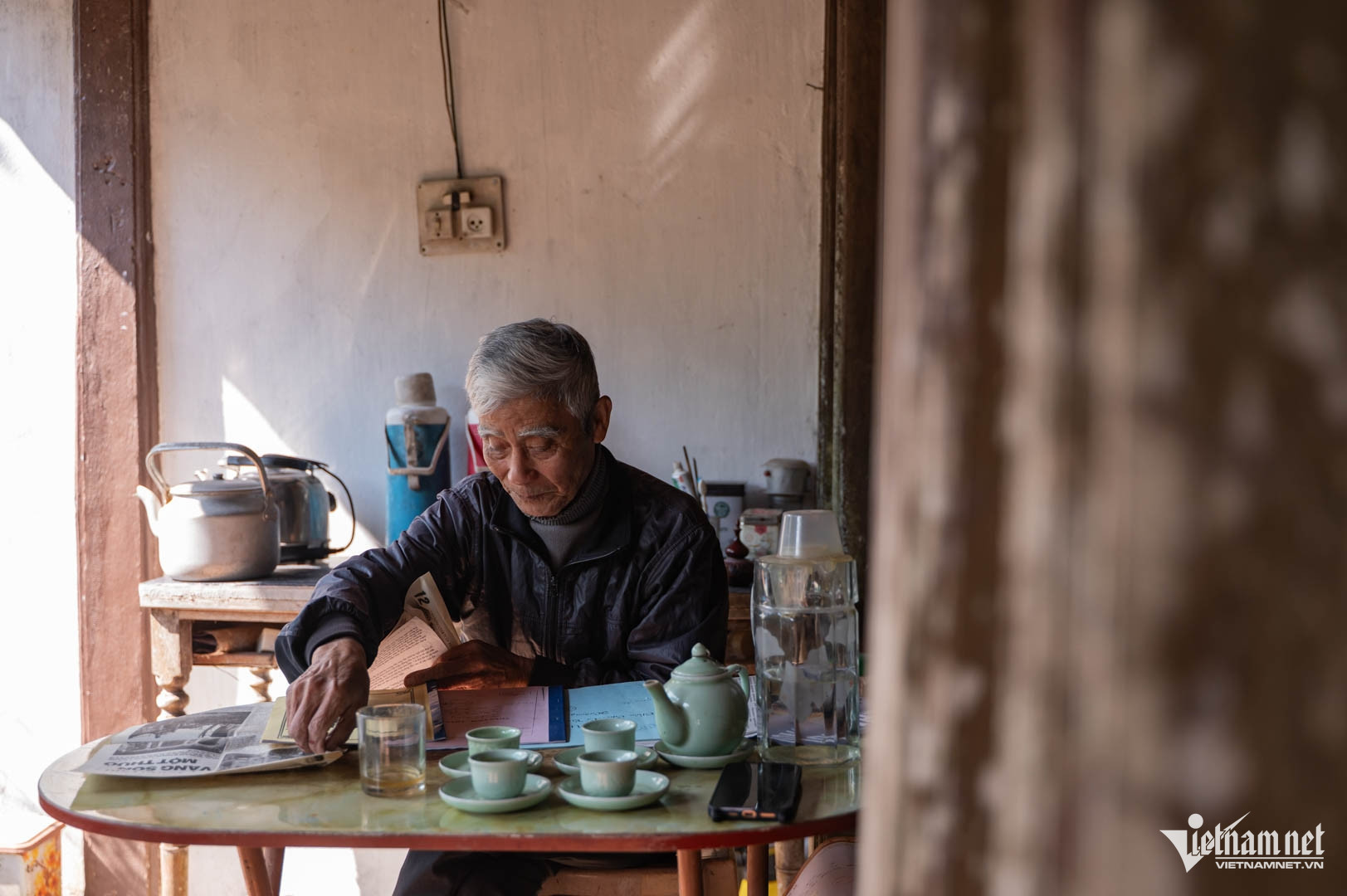
Mr. Tu, passionate about history, shares Cuu’s legacy with younger generations and visitors. Photo: Nguyen Huy
Tailors to the elite of Hanoi and Saigon
Another local legend tells of a Cuu villager who traveled to France in the 1930s and brought home the art of Western tailoring - a foreign concept in Vietnam at the time. Upon returning, he opened a tailoring shop in Hanoi and passed on his skills to relatives and neighbors.
The villagers soon opened large tailoring houses in bustling commercial areas like Hang Ngang, Hang Dao, and Hang Trong. They adopted names beginning with “Phuc” or “Phu” - symbols of prosperity - like Phuc Hung, Phuc My, Phuc Tu, Phuc Hai, Phu Cuong, and Phu My.
These shops became famous for tailored suits and elegant dresses for both French clients and Vietnamese elites in Hanoi and Saigon.
During the 1930s and 1940s, Cuu’s fortunes soared. Wealthy merchants hired architects and builders from Hanoi to construct lavish homes that reflected a fusion of French and Vietnamese design.
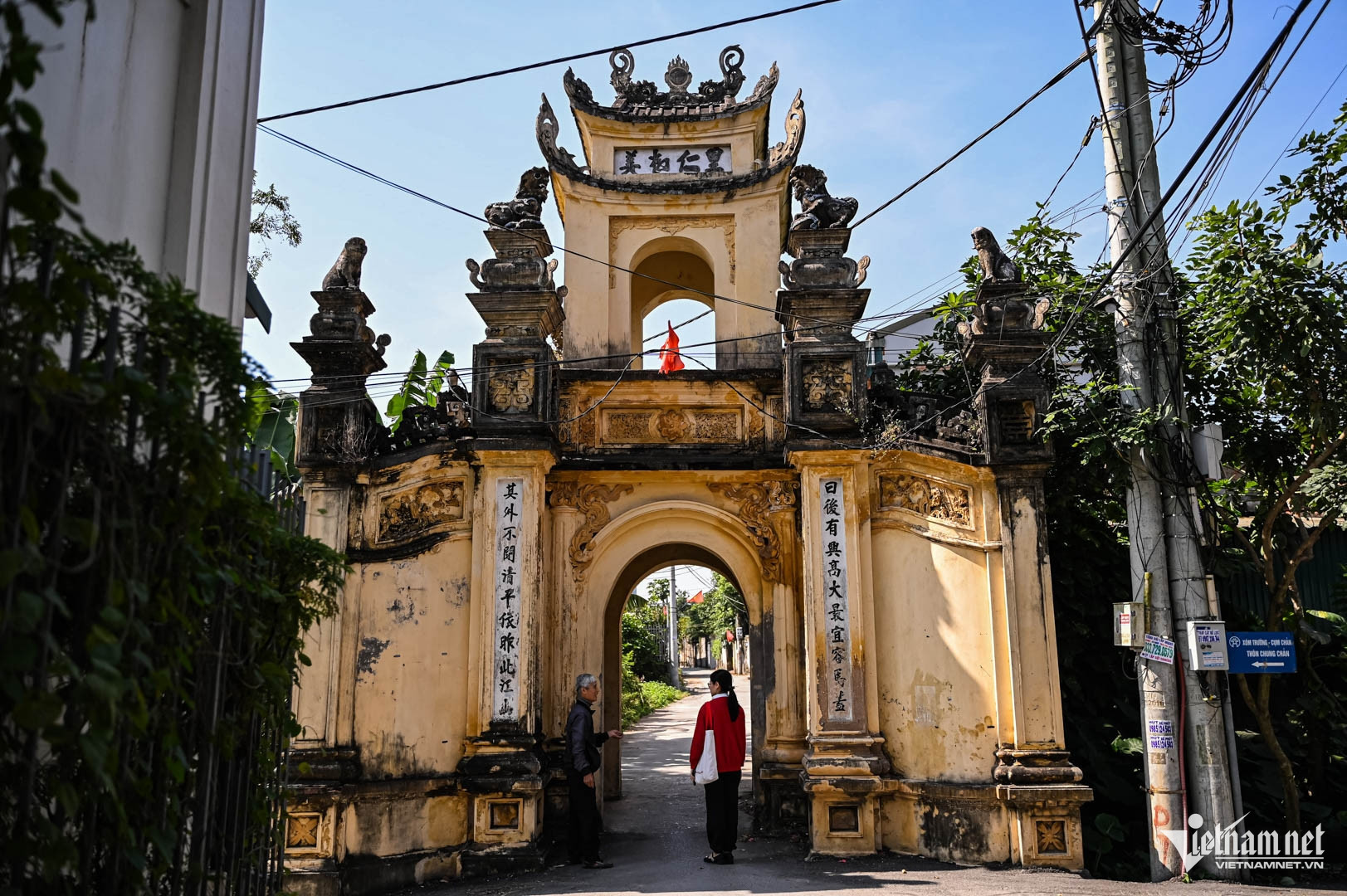
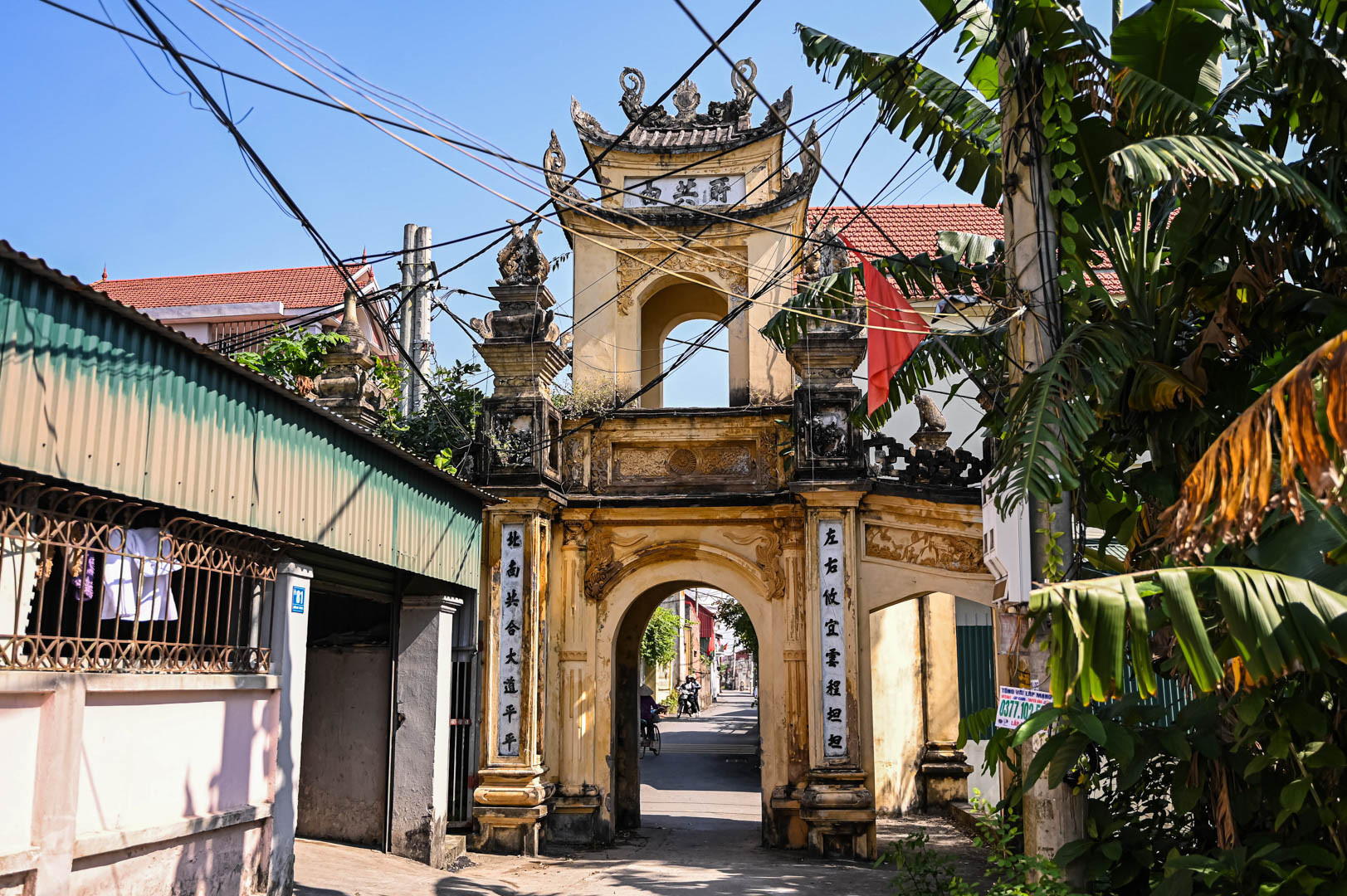
View of the west gate’s interior with traditional motifs. Photo: Nguyen Huy
Gates that guard a golden past
One remarkable example is the home of Mr. Pho Du, built in 1929. Its gate features a raised carving of a prawn, strong claws facing upward, beneath a four-character plaque that reads “Nhap hieu xuat de” - a Confucian message reminding one to be filial at home and respectful outside.
Others in the village grew wealthy through the timber trade or brick and tile production. Their fortunes funded public works: the eastern and western village gates, stone-paved alleys, schools, and even a maternity center.
“One of our village schools even hired teachers from Hanoi to teach French,” said Mr. Tu. “Back then, few villages in the region were as prosperous or progressive as Cuu.”
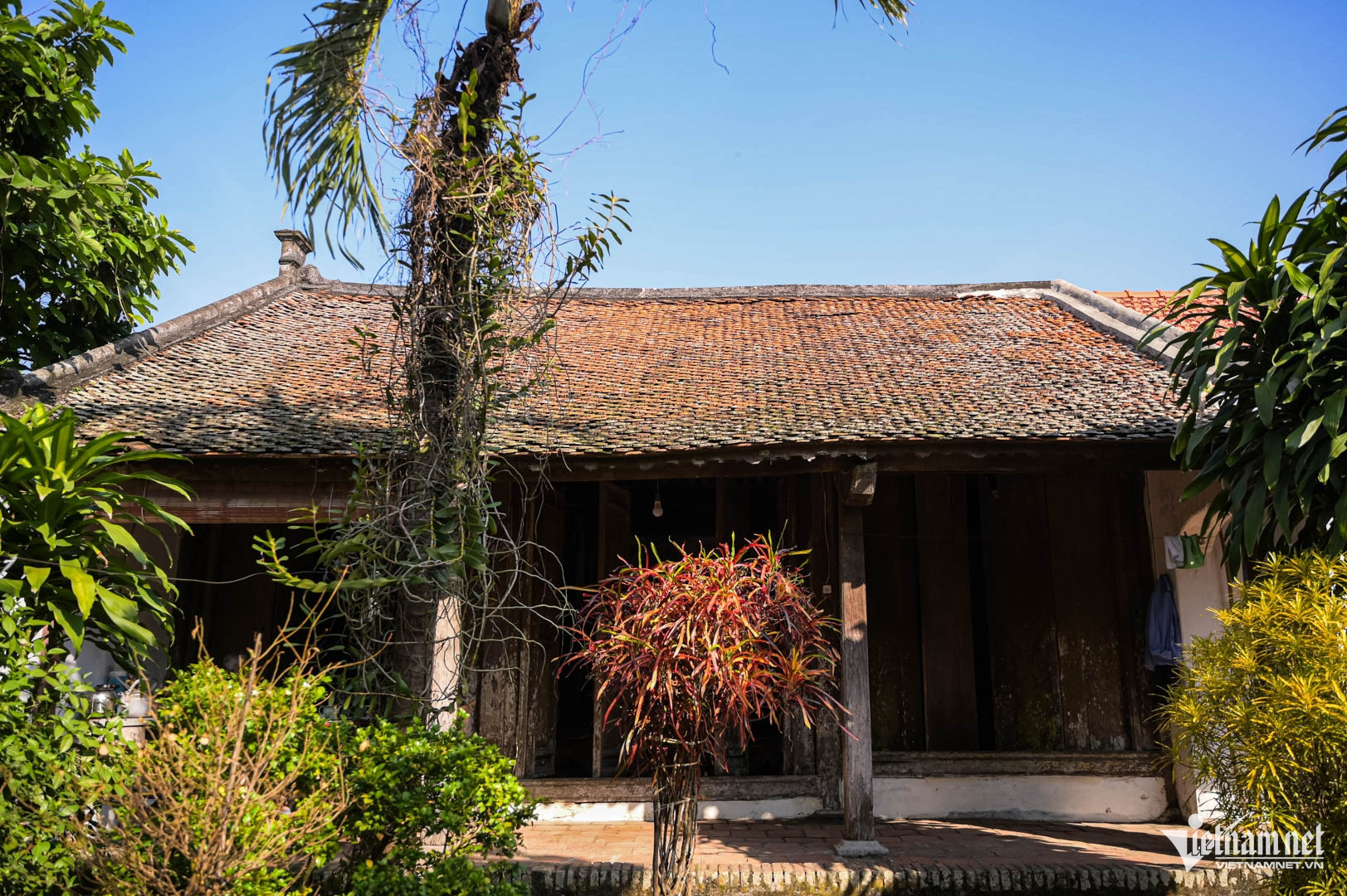
Mr. Tu’s home is among the oldest, preserved through four generations. Photo: Nguyen Huy
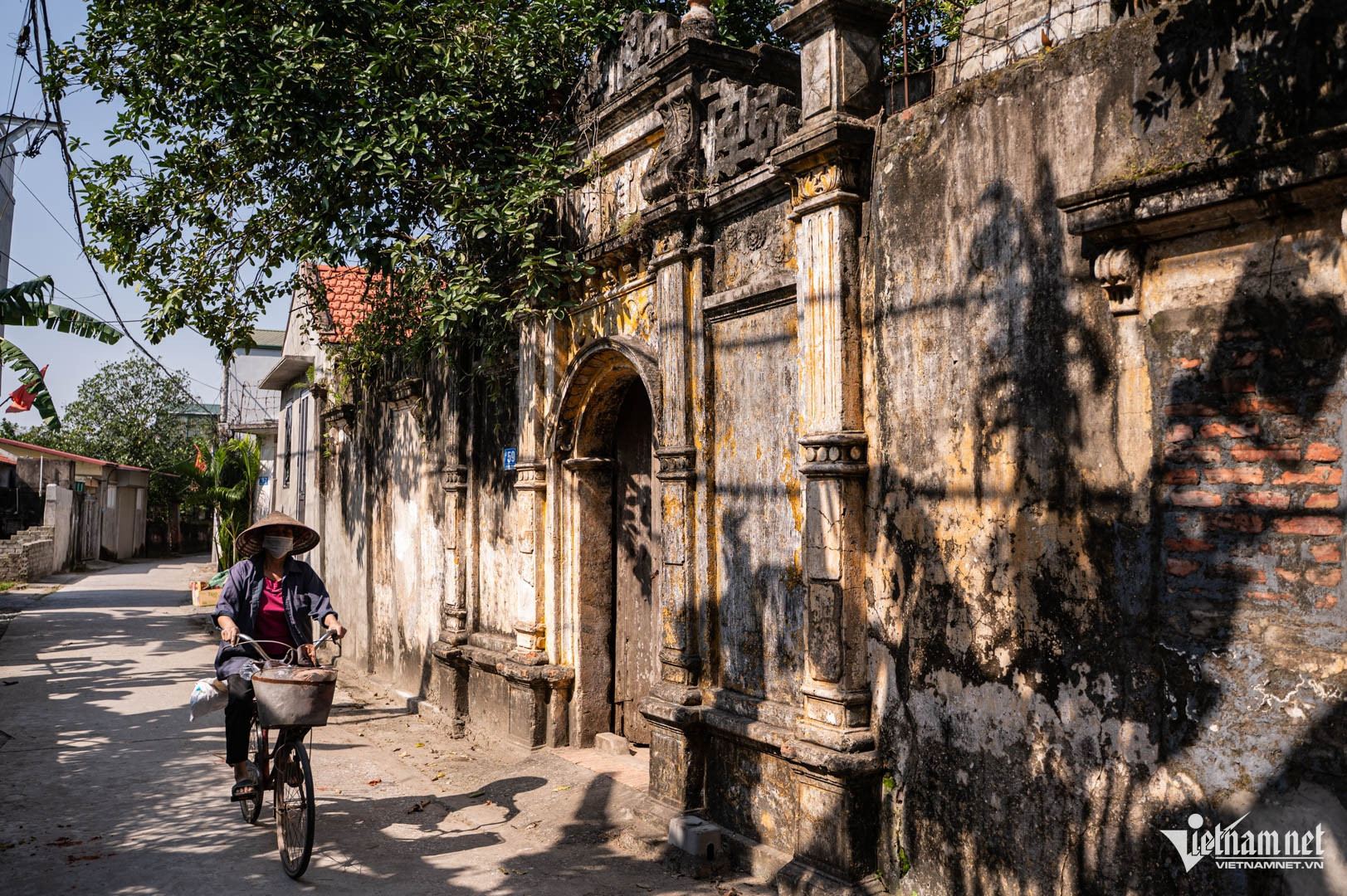
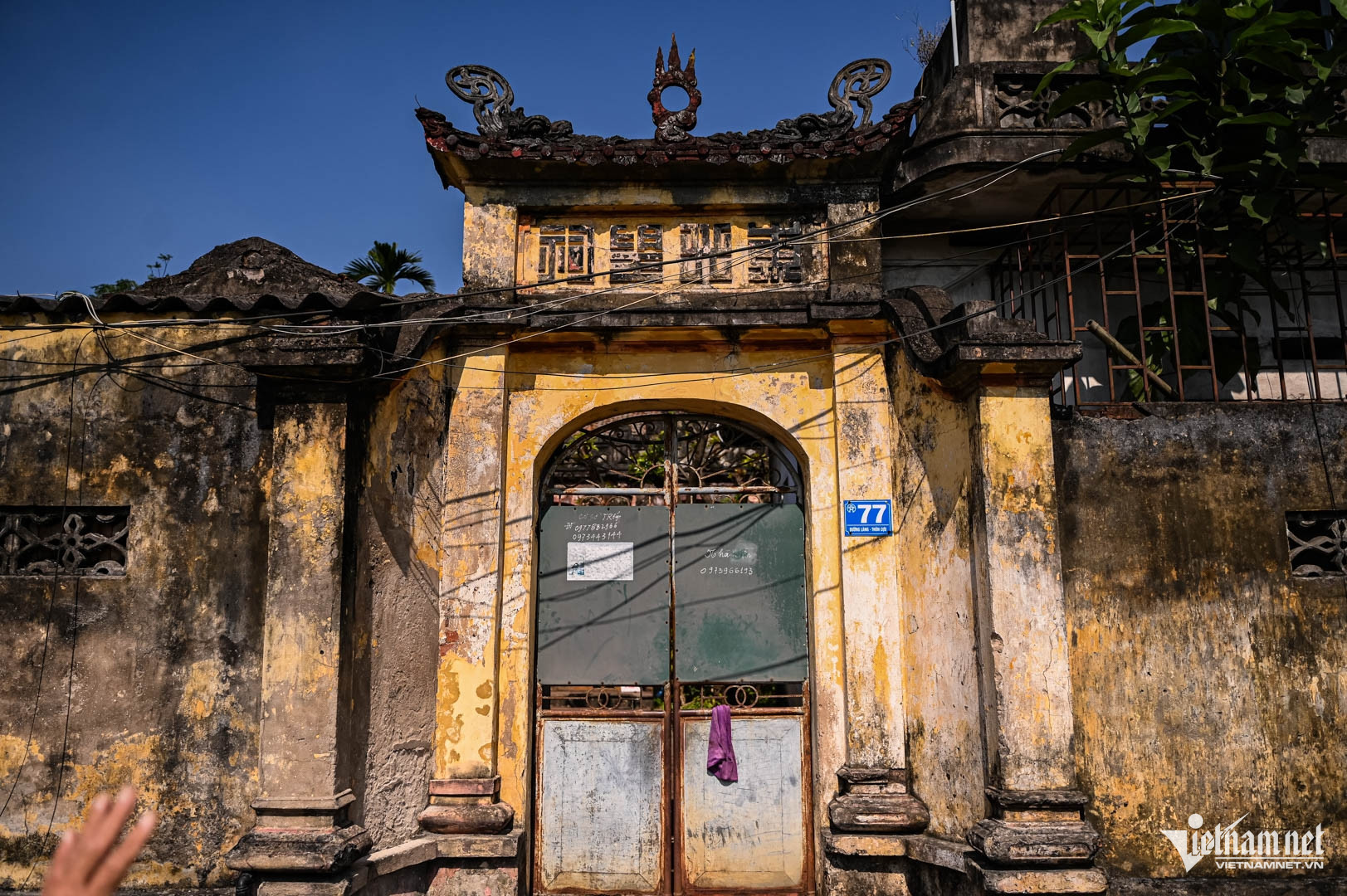
The gate bears the phrase “Đắc Kỳ Môn,” symbolizing uniqueness and longevity. Photo: Nguyen Huy
A draw for architects, photographers, and curious travelers
The village’s West Gate still stands, majestic and ornate. Built in the shape of an open scroll, it resembles a giant book welcoming visitors. Its tiled roof curves skyward, flanked by faded but still striking stone lions.
“Every element on the gate carries meaning,” Mr. Tu explained. “Inside, you’ll find carvings of wine bottles - symbols of abundance - and bats, which represent blessings.”
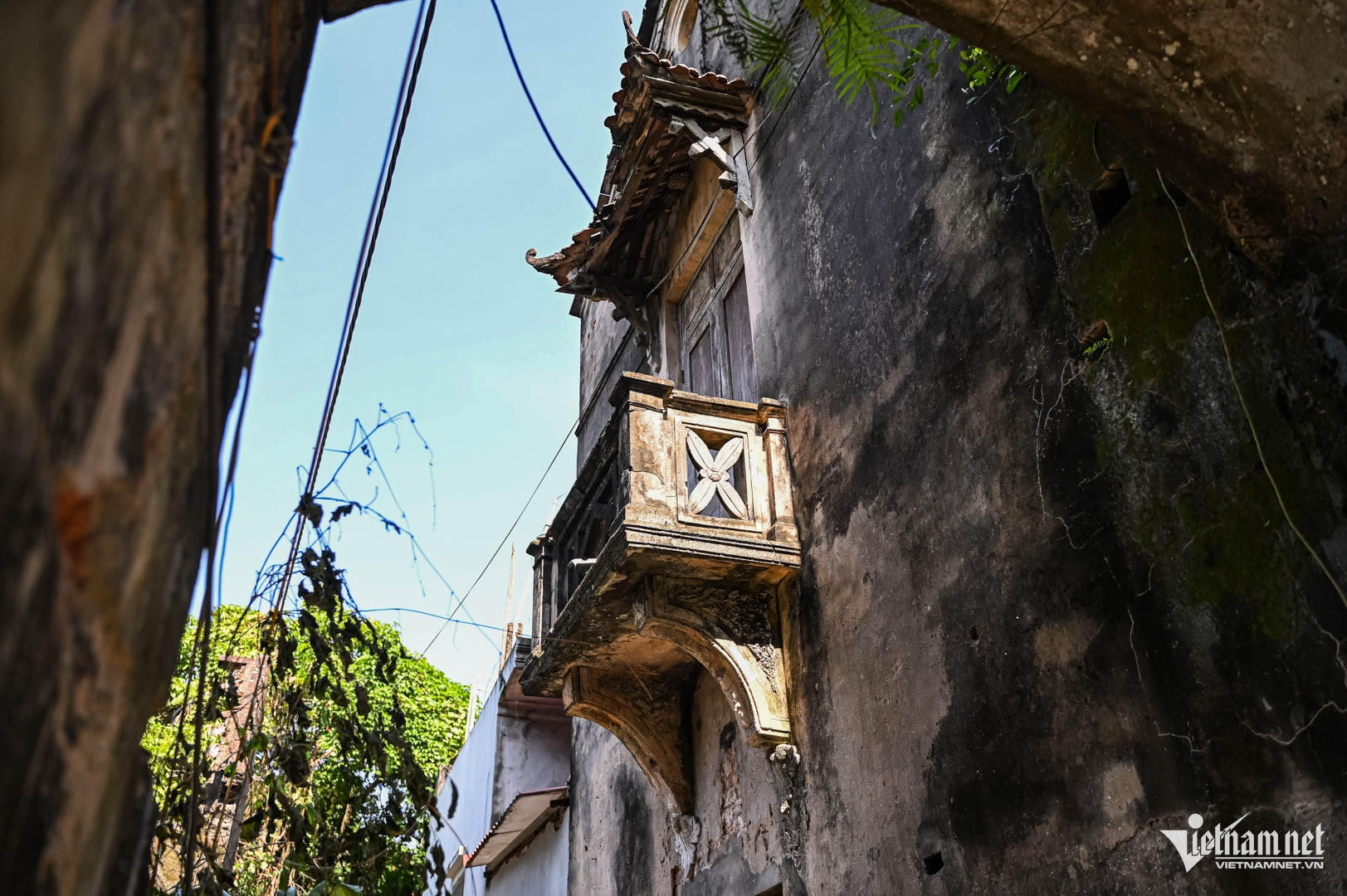
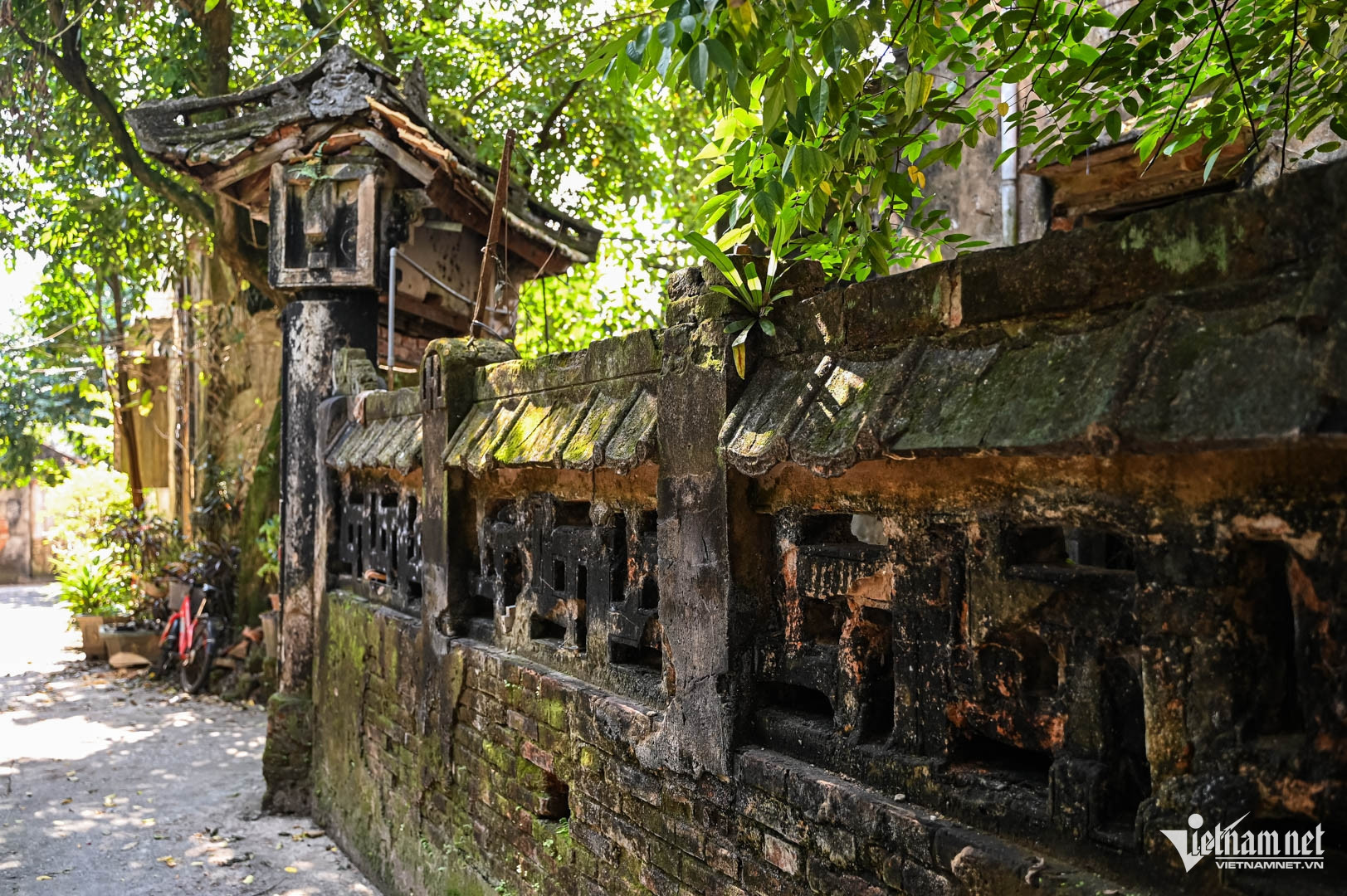
Throughout the village, colonial influences blend with traditional Vietnamese motifs - arched windows paired with red-tile courtyards, square façades softened by carved flowers and animals.
This fusion of French classicism and Vietnamese aesthetics makes Cuu unique among old French villa areas in Vietnam. Unlike the alpine charm of Sa Pa or Da Lat, Cuu’s homes reflect an indigenous reimagining of Western styles.
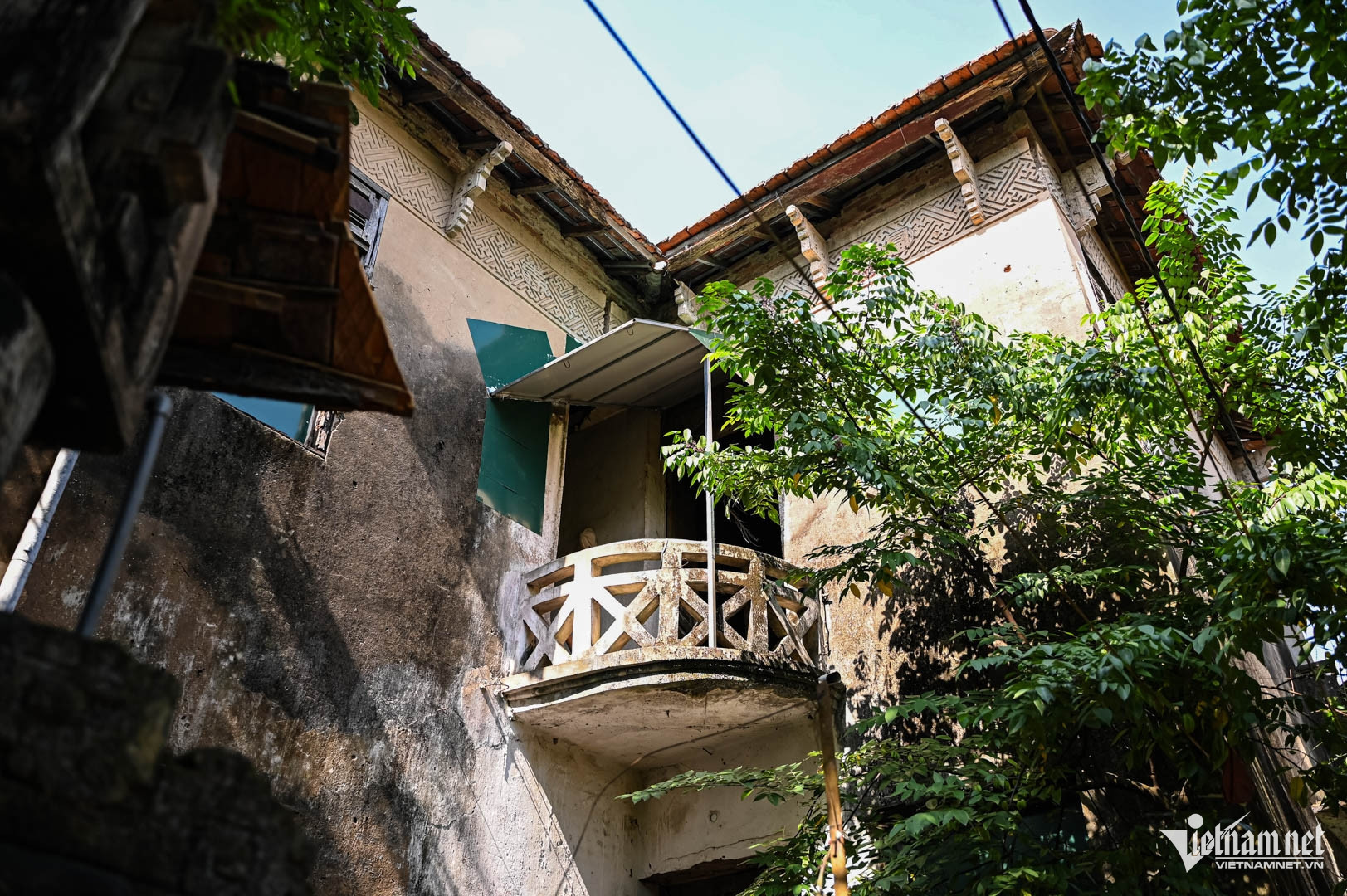
The former French-style villa of Tran Dinh Thong’s family. Photo: Nguyen Huy
Preserving the past for future generations
Today, Mr. Tu’s own home stands as one of Cuu’s oldest, preserved through four generations over more than a century. Its gate reads “Đắc Kỳ Môn” (The gate of excellence and longevity), adorned with bas-relief carvings of leaves, birds, and animals - symbols of happiness, fortune, and long life.
There are 49 ancient villas still standing in Cuu. Some are locked year-round, used only as family temples during special occasions. Others are deteriorating, their owners unable to afford repairs.
Still, the gates remain - often lovingly maintained by descendants who return for holidays and Tet.
Unlike preserved French villas in Vietnam’s tourist towns, Cuu’s architecture is a hybrid - a creative and culturally sensitive interpretation. This rare quality has attracted researchers, architects, photographers, and travelers from around the world.
Towards preservation and cultural tourism
The Cuu family home of Tran Dinh Thong, 47, was once among the village’s grandest villas. Though time and weather have taken a toll, the architecture still reflects its French colonial heritage.
Currently, Cuu’s old homes are the focus of a conservation initiative supported by Chuyen My Commune, Hanoi city departments, and the University of Civil Engineering. Plans are underway to restore these buildings and preserve their historical value.
In October 2025, Hanoi’s Department of Tourism introduced three new heritage tourism products under the theme “Essence Converged,” including the “Southern Thang Long Heritage Trail – The Craft Village Elite.” This route connects four local communes - Dai Thanh, Hong Van, Ngoc Hoi, and Chuyen My.
Cuu Village is a key stop on the tour, showcasing its East-West architecture and suit tailoring heritage. Nearby, Ngau Village is known for its royal chrysanthemum wine; Phuc Am for spiritual customs and traditional crafts; and Ha Thai for its exquisite lacquerware.
Linh Trang & Nguyen Huy
.svg)
