 Vietnamnet.vn

 Podcast



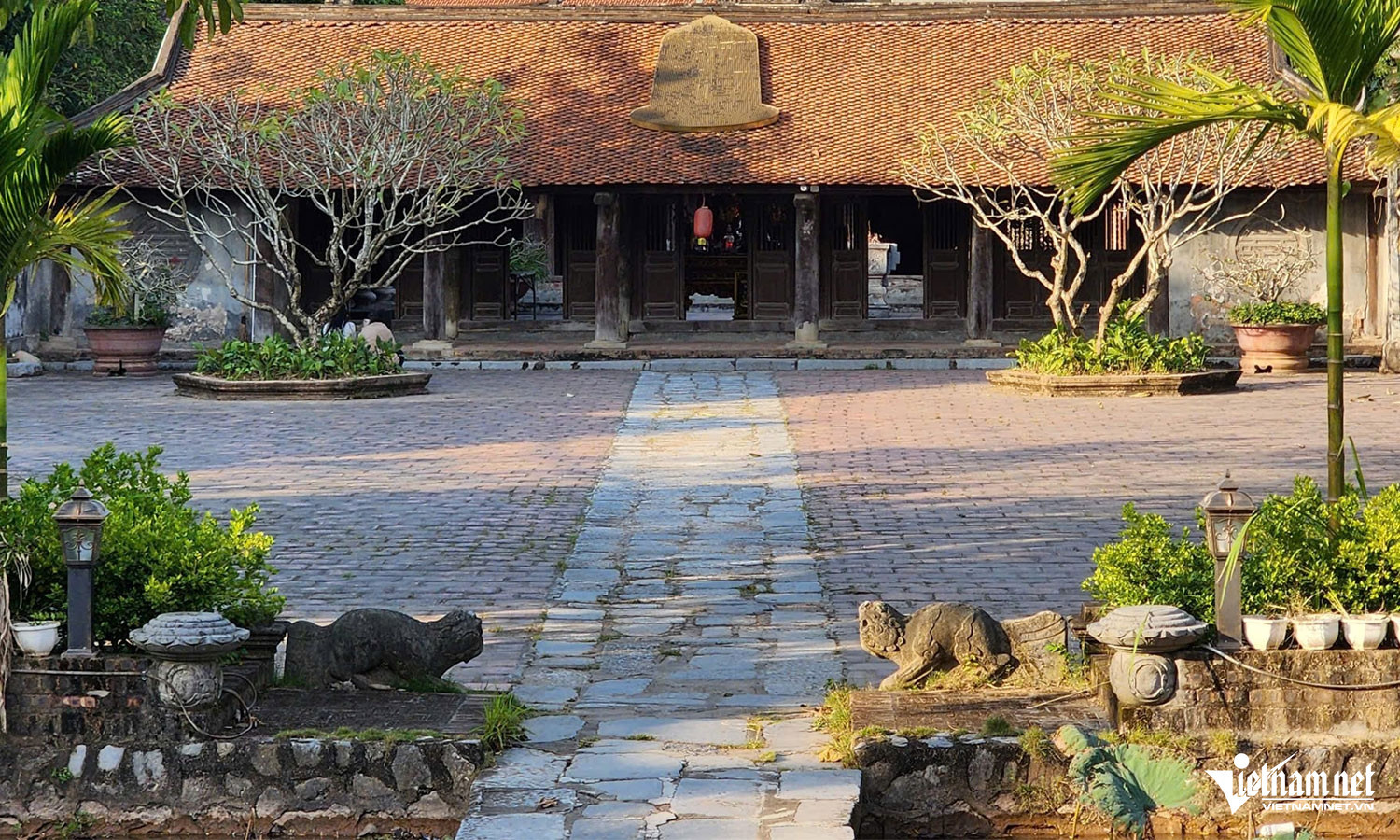
Nestled in Nhan Duc ward, Hien Nam, Hung Yen province, Chuong Pagoda - also known as Kim Chung Tu - stands as a unique spiritual and architectural gem. Most notable is its bell-shaped golden sculpture mounted atop the tiled roof, a rare sight among Vietnamese temples.
Revered as "Pho Hien’s finest sanctuary," this pagoda has long been a spiritual anchor in the region, its architecture and history deeply entwined with local legends.
The name “Chuong Pagoda” originates from a tale that still resonates today. According to local folklore, a golden bell once floated downstream on the Red River. When it reached this area, it mysteriously rang with a sacred sound.
Villagers believed it was a divine sign and pulled it ashore. In reverence, they built a pagoda at that very spot to worship the Buddha, calling it Kim Chung Tu - Temple of the Golden Bell.
Today, a stylized golden bell adorns the roof as a tribute to that legend, a symbol that crowns the ancient beauty of the pagoda.
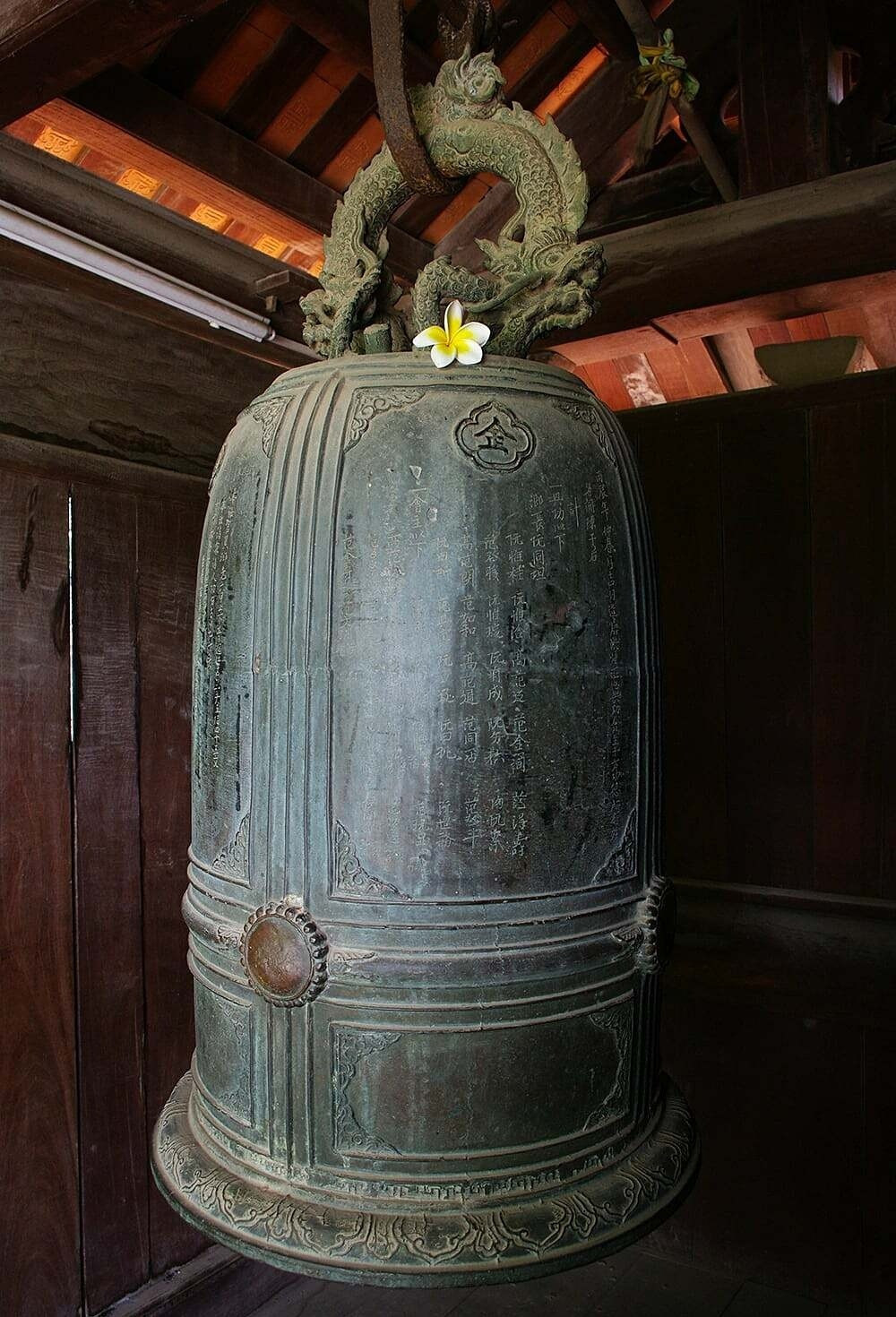
But the heart of the temple lies within its real bronze bell, inscribed with the temple’s name and said to carry prayers skyward with each resounding chime. This “heavenly treasure” has earned its place in folklore as much as in faith.
Chuong Pagoda was once a central hub of spiritual and cultural life, frequented by merchants, nobles, and villagers alike. It played a key role in the prosperity and spiritual identity of ancient Pho Hien.
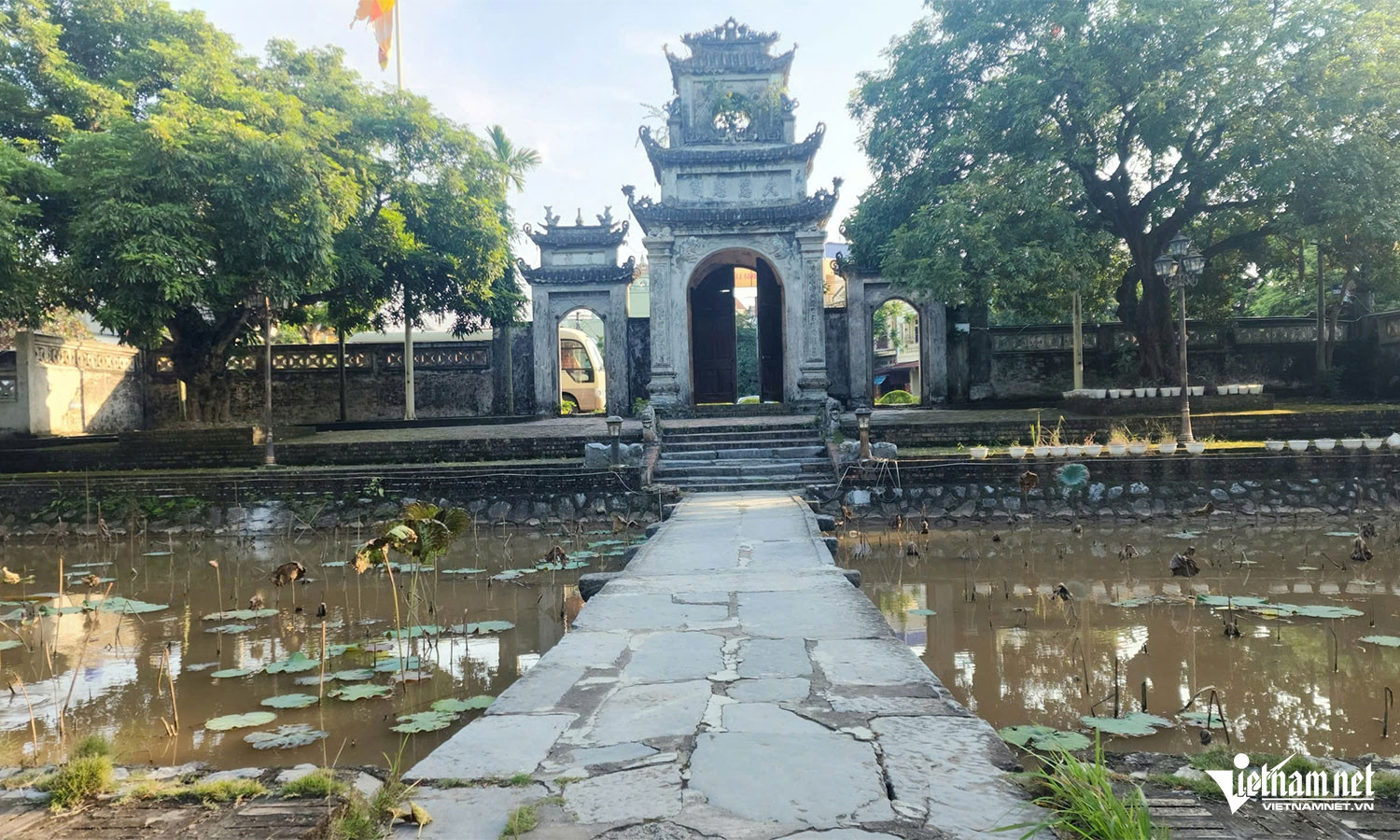
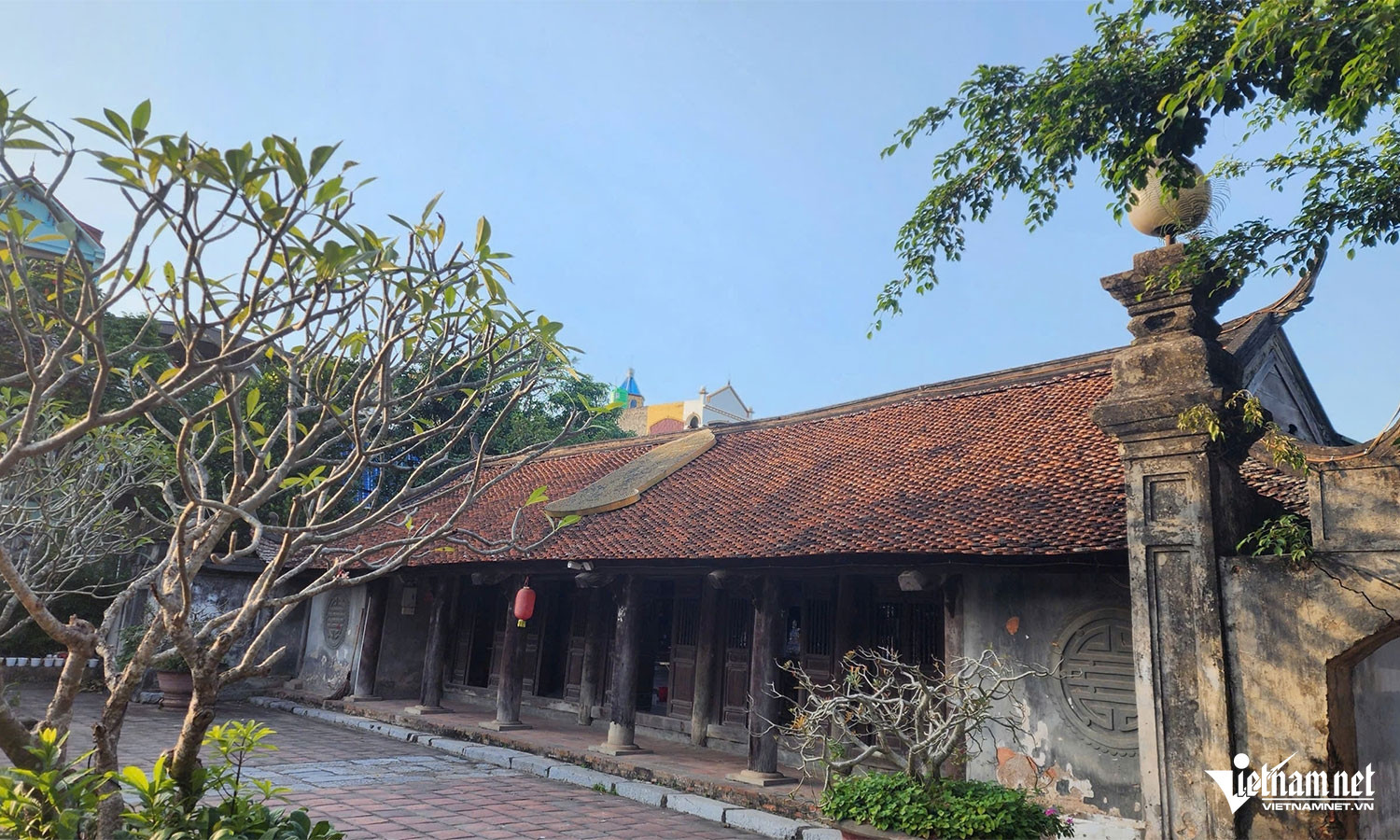
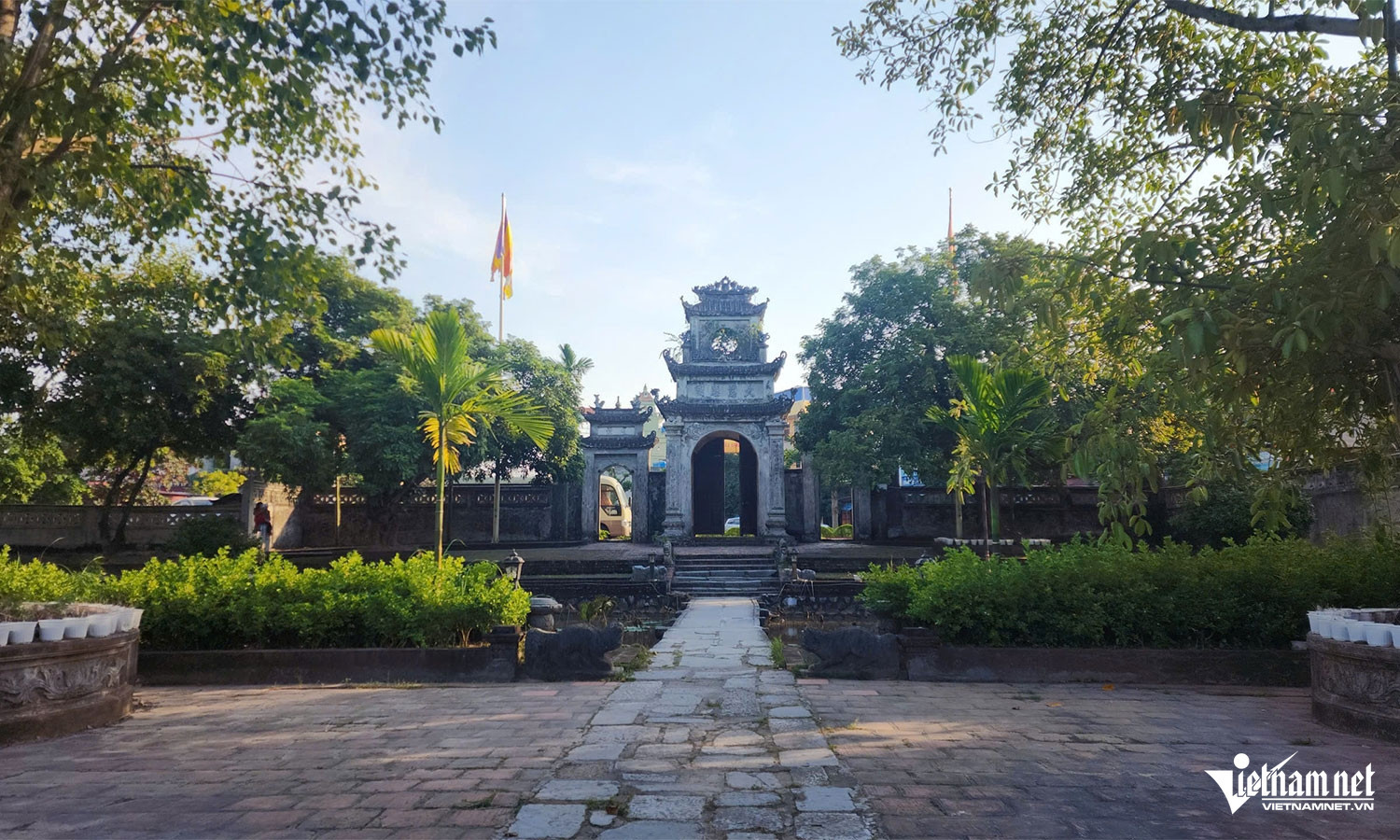
The pagoda’s layout follows the traditional “Noi Cong Ngoai Quoc” architectural design - an interlocking plan symbolizing inner strength and outer peace. All structures align on a central axis from the Tam Quan (three-entrance gate) to the Patriarch’s Hall, comprising the Front Hall, Bell Tower, Upper Hall, and flanking corridors.
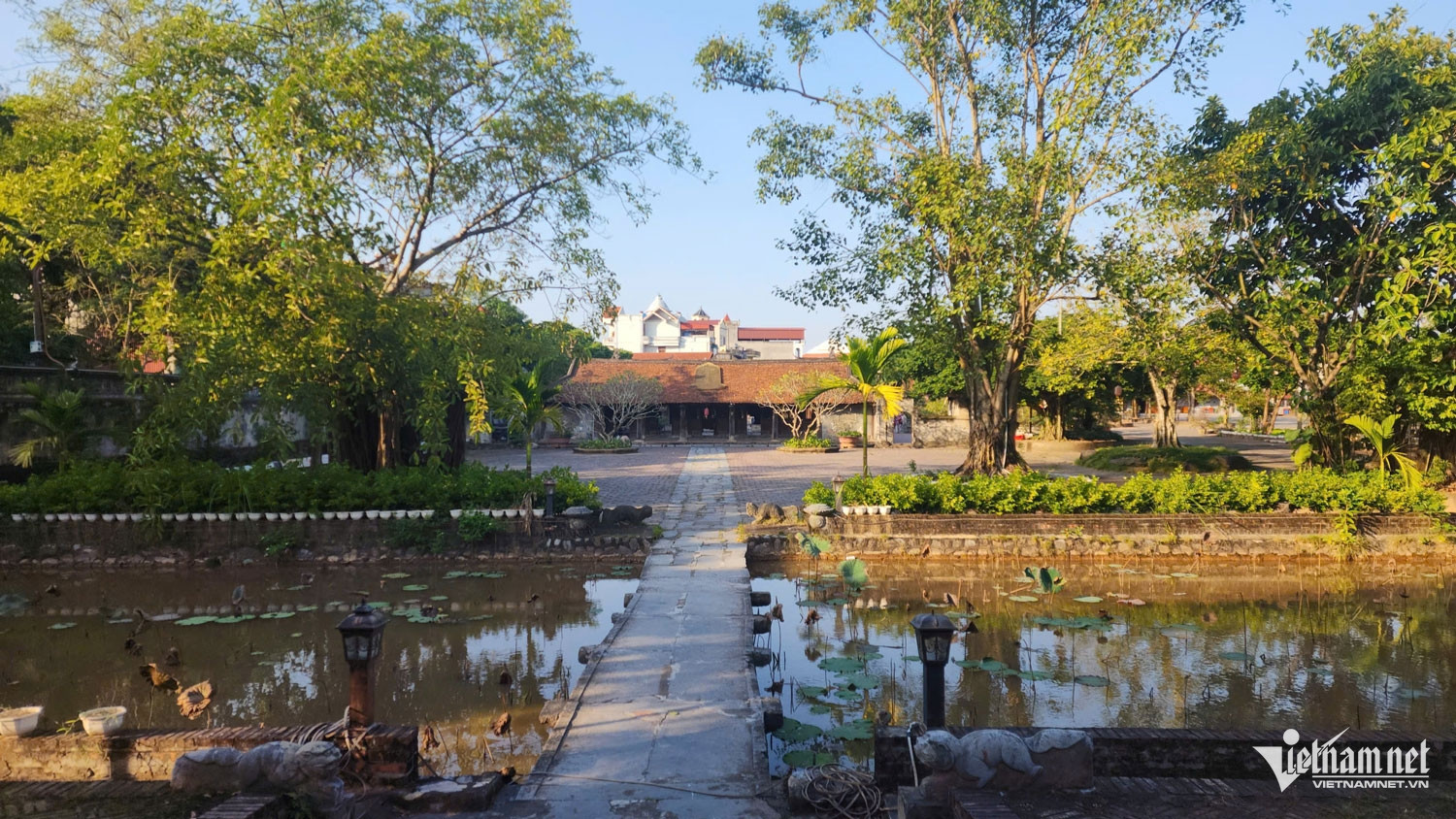
Facing south, the entrance opens into a tranquil lotus pond known as the “Dragon’s Eye,” where visitors cross a monolithic stone bridge dating back to 1702. This journey through water and stone sets a tone of serenity and reflection.
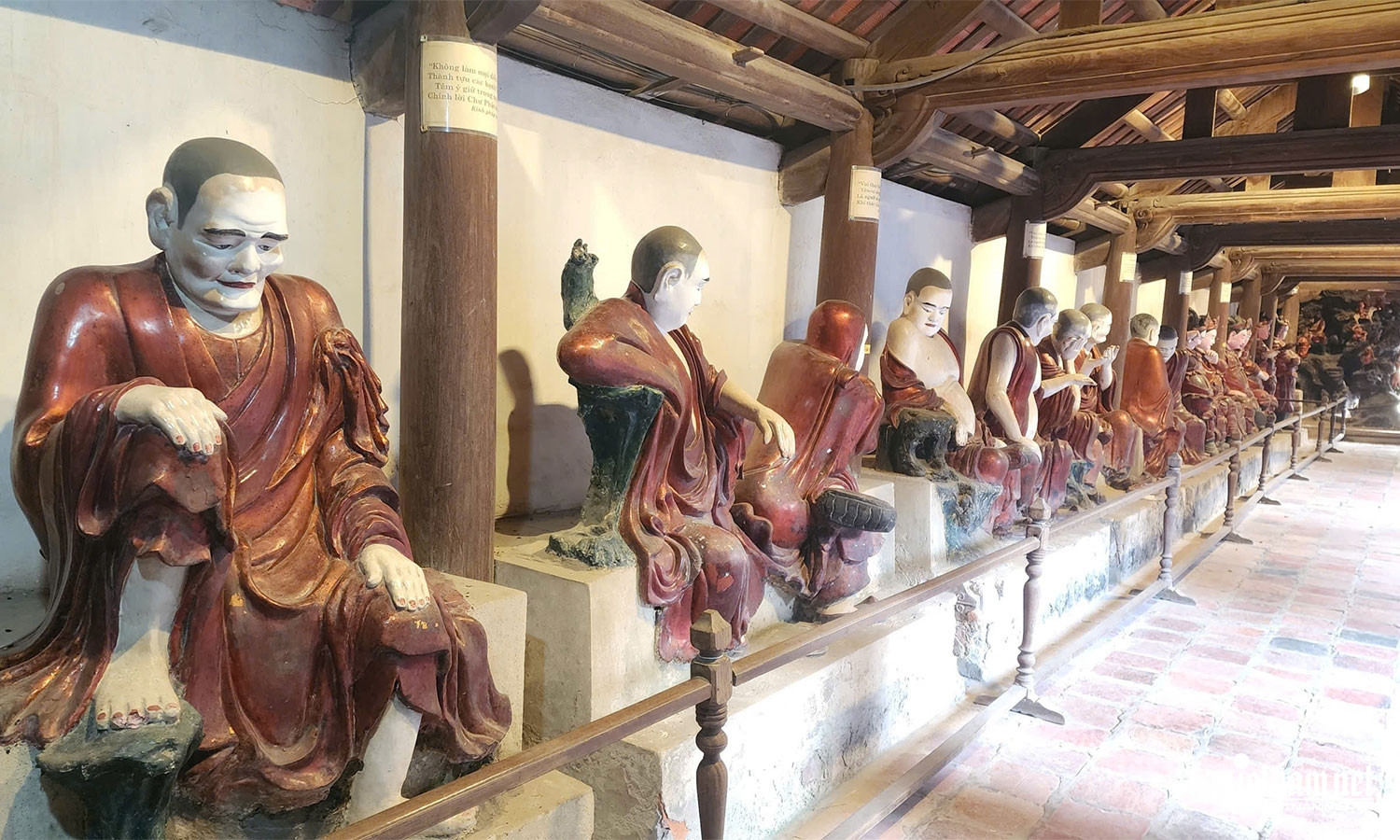
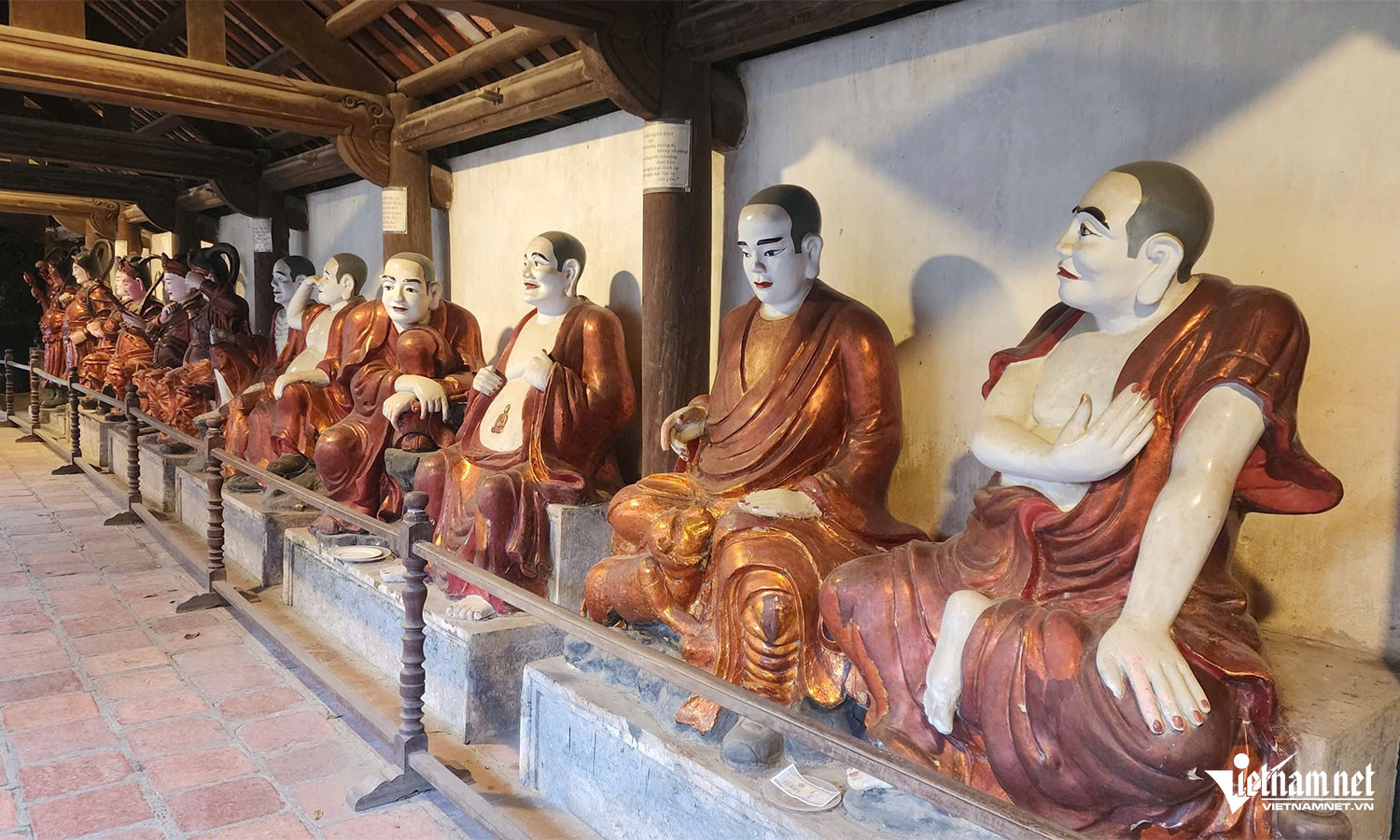
Inside, the temple houses a rich array of Buddha statues, including the Amitabha Trinity, the Three Times Buddhas, the Nine Dragons tableau, as well as four Bodhisattvas, eight Vajrapani guardians, and eighteen Arhats - all meticulously carved with distinct postures and expressive detail.
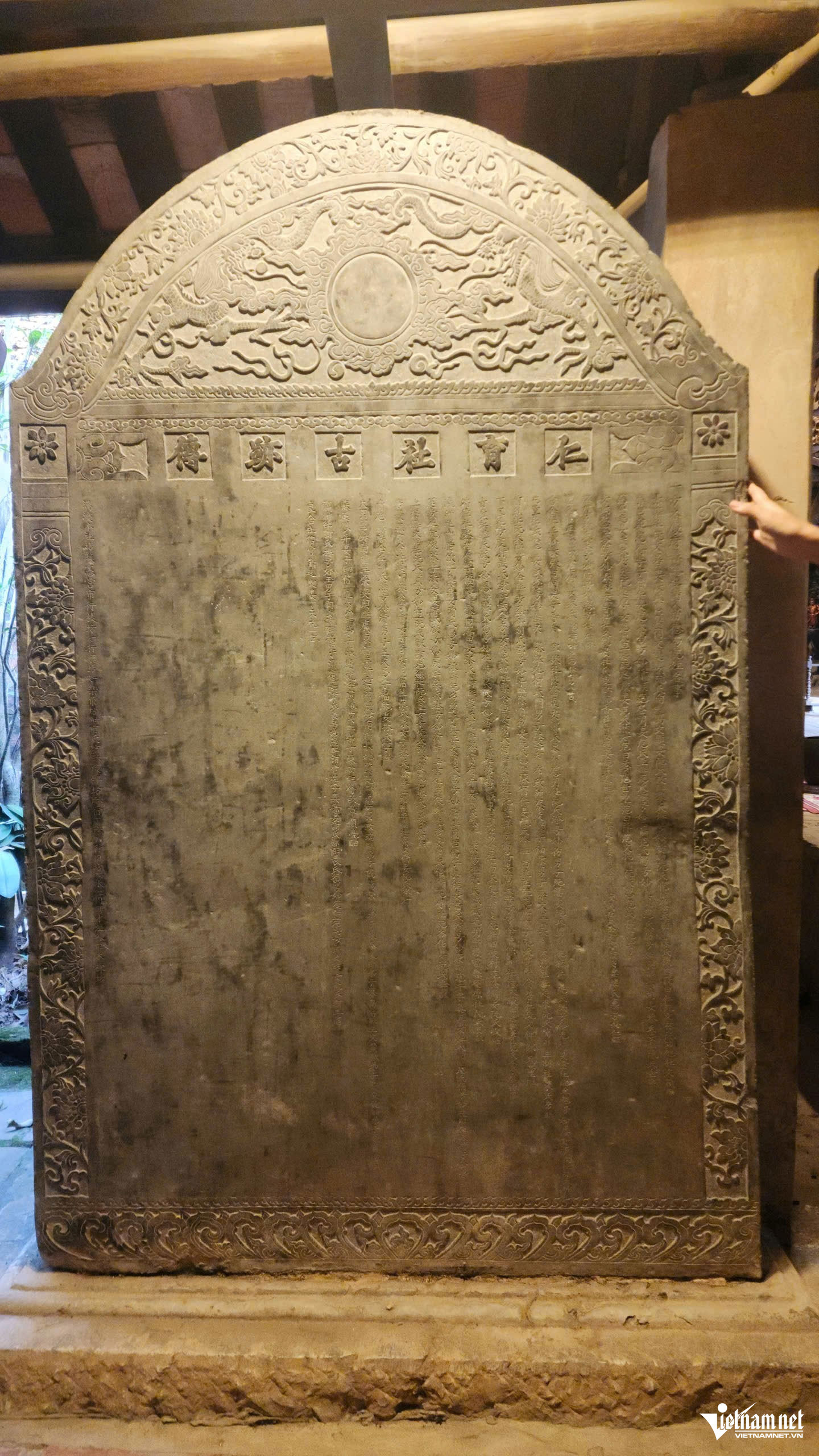
A rare stone stele dated to 1711 is also preserved here. One side is engraved with the poem “Kim Chung Thach Tu Bi Ky,” praising the beauty of the temple. The reverse tells the story “Nhan Duc Xa Co Tich Truyen,” depicting the bustling commercial port of Pho Hien during its golden era.
It notes that at its height, Pho Hien rivaled Thang Long (Hanoi) in trade, with 23 streets and 36 markets attracting merchants from over 50 localities and abroad.
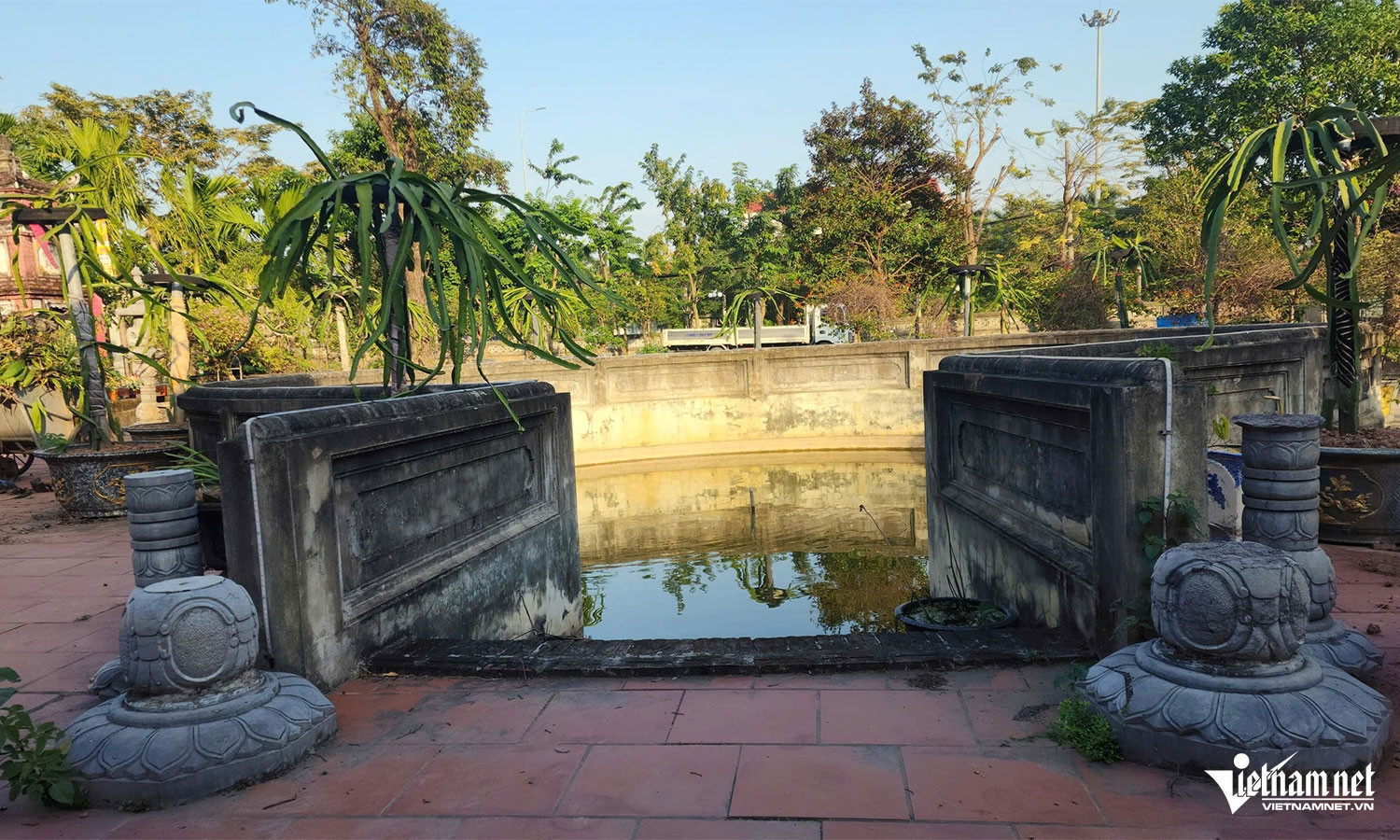
Even the pagoda’s circular well carries deep spiritual significance. According to the book Chua Chuong – De Nhat Danh Lam (published in 2017 by Hung Yen Monuments Management Board), the well is linked to the story of an honest official born in poverty.
After his death, during a great drought, villagers prayed at his altar. Rain soon fell, and a spring emerged where the earth had collapsed - forming a well that never ran dry. Today, the sacred well remains a spiritual focal point, with nearby monk stupas always oriented toward it.
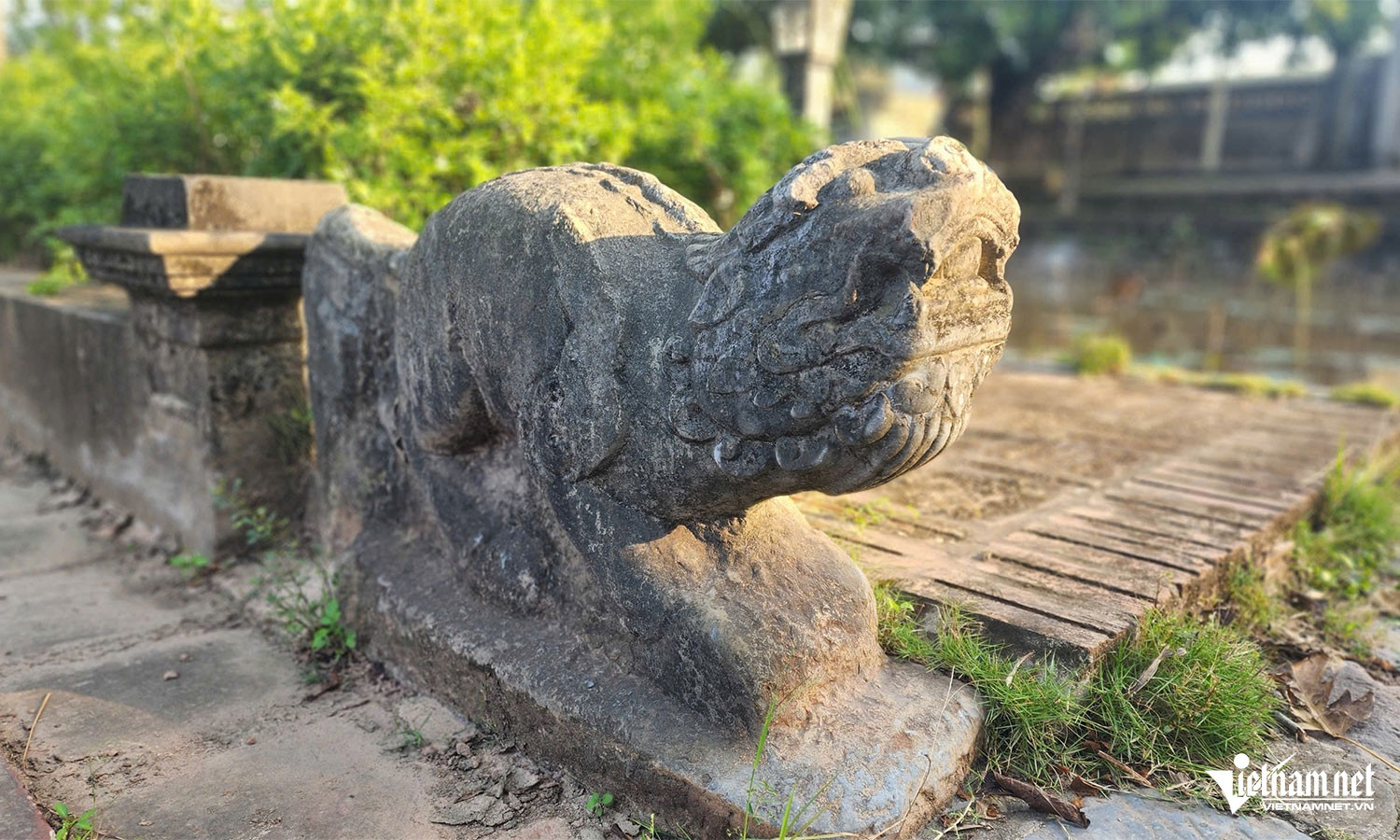
Another treasured relic is the temple’s stone lion, or nghe da, carved in a protective stance symbolizing strength and purity.
With centuries of heritage, exquisite sculptures, and enduring legends, Chuong Pagoda is more than a place of worship - it is a spiritual and cultural sanctuary that continues to inspire all who visit.
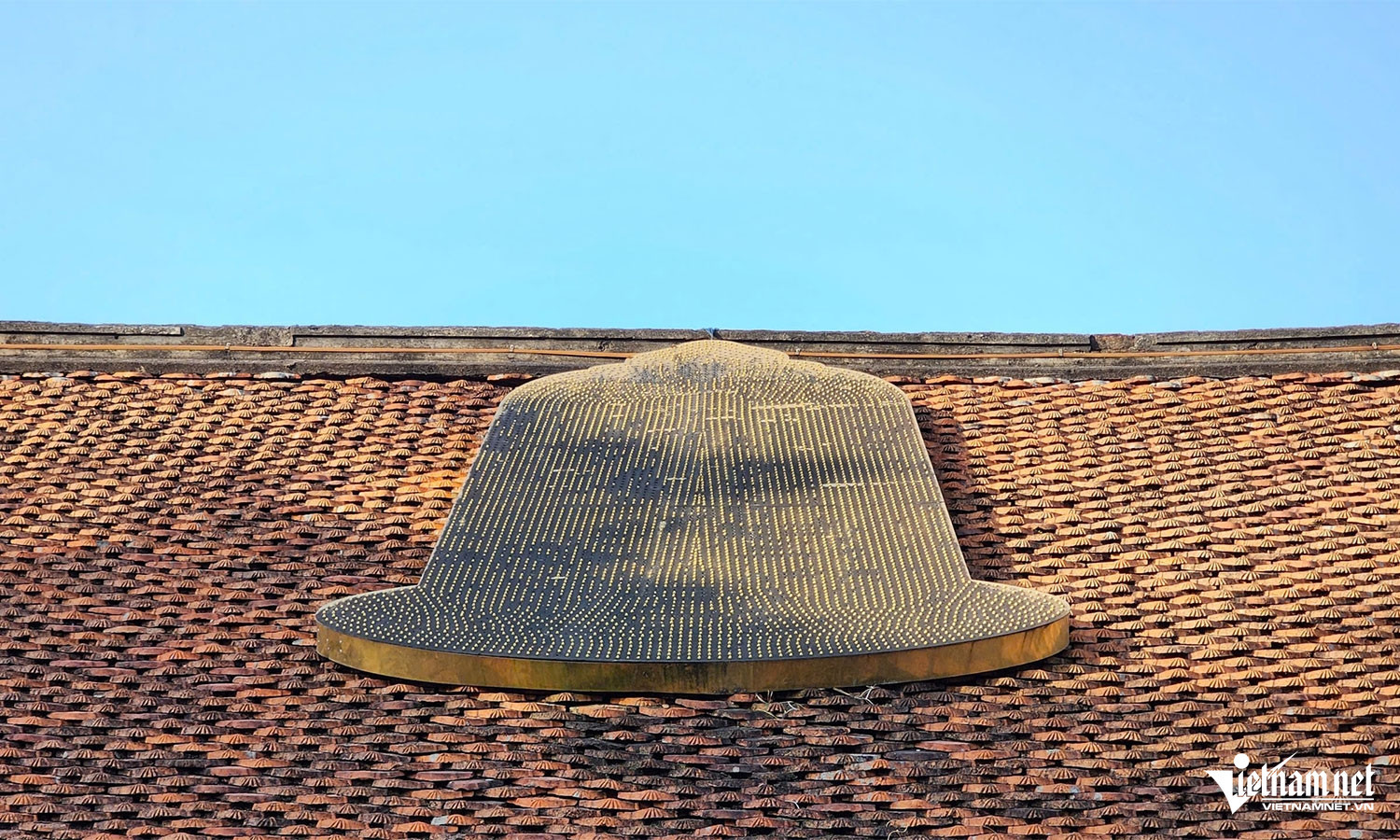
The golden bell atop the roof of Chuong Pagoda.
Tinh Le
.svg)
