 Vietnamnet.vn

 Podcast


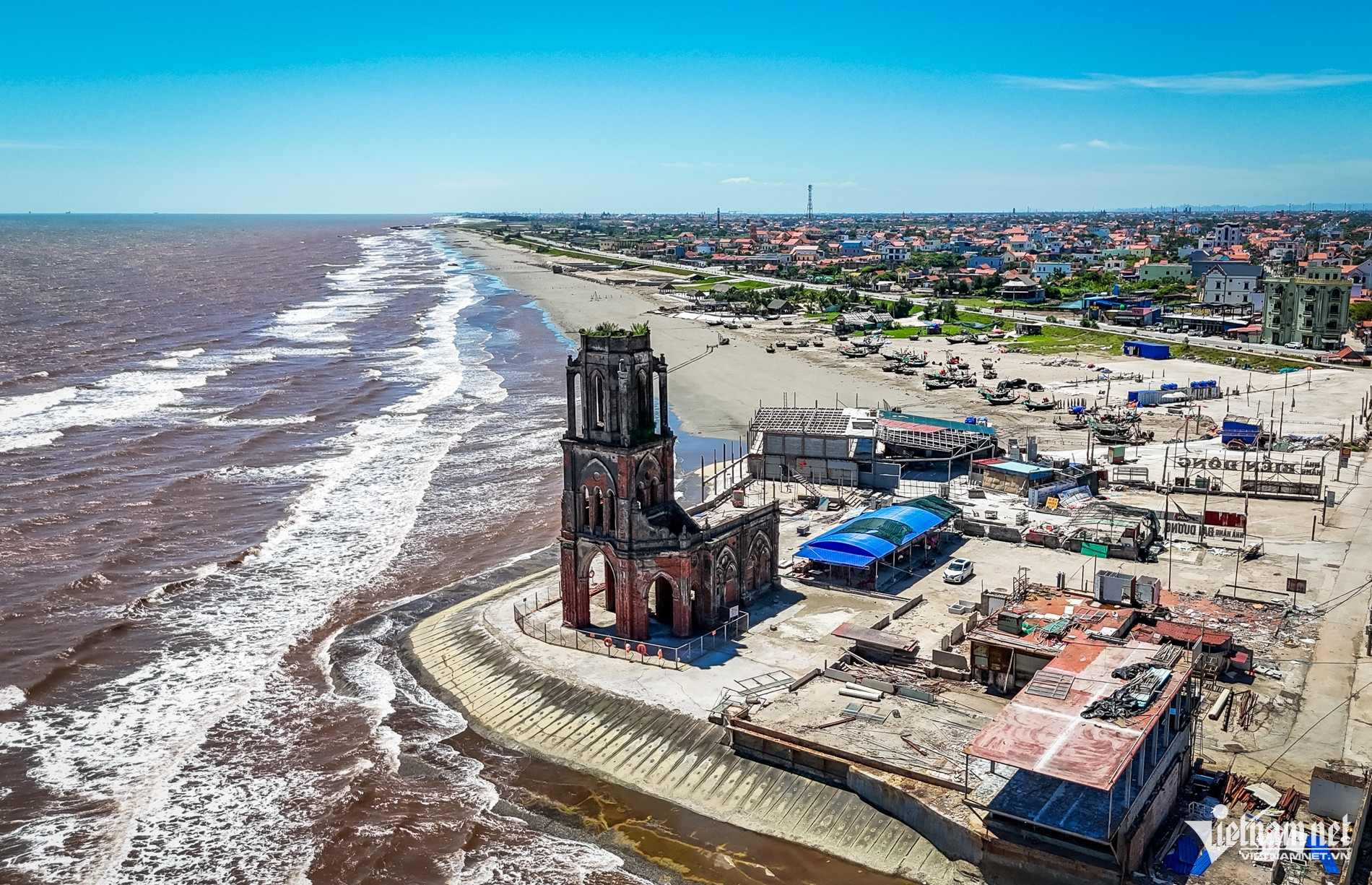
The ruins of Hai Ly Church stand on a narrow stretch of land jutting into the sea in Hai Tien commune, Ninh Binh province.
The structure is all that remains of the Sacred Heart Church, closely associated with the history of the former Xuong Dien fishing village, which developed between Doanh Chau and Van Ly villages.
The area emerged from land reclamation and sea-dike construction efforts undertaken by local residents in the early 18th century. Initially known as Con Cat Be, or Sea Sand Dune, it gradually developed into the fishing community of Xuong Dien.
As residents reclaimed land and established their livelihoods, religious and spiritual life also began to flourish. The Xuong Dien Catholic parish was founded in 1797.
Three relocations as the sea encroached
The first Sacred Heart Church was built in 1877. It was a modest structure measuring 14 meters wide and seven meters long, with a roof made from traditional thatching materials.
By the 1910s, the Con Cat Be area had begun experiencing increasingly severe coastal erosion.
The shoreline gradually retreated, while earthen sea dikes proved unable to withstand powerful waves and the advancing sea.
Forty years after the original church was constructed, local residents were forced to relocate it approximately three kilometers inland.
In 1917, the community began rebuilding the Sacred Heart Church for the second time at the site where the ruins now stand.
Designed by a French architect, the new building featured European-style architecture.
After a decade of construction, the church was completed in 1927 on a site covering approximately 9,330 square meters.
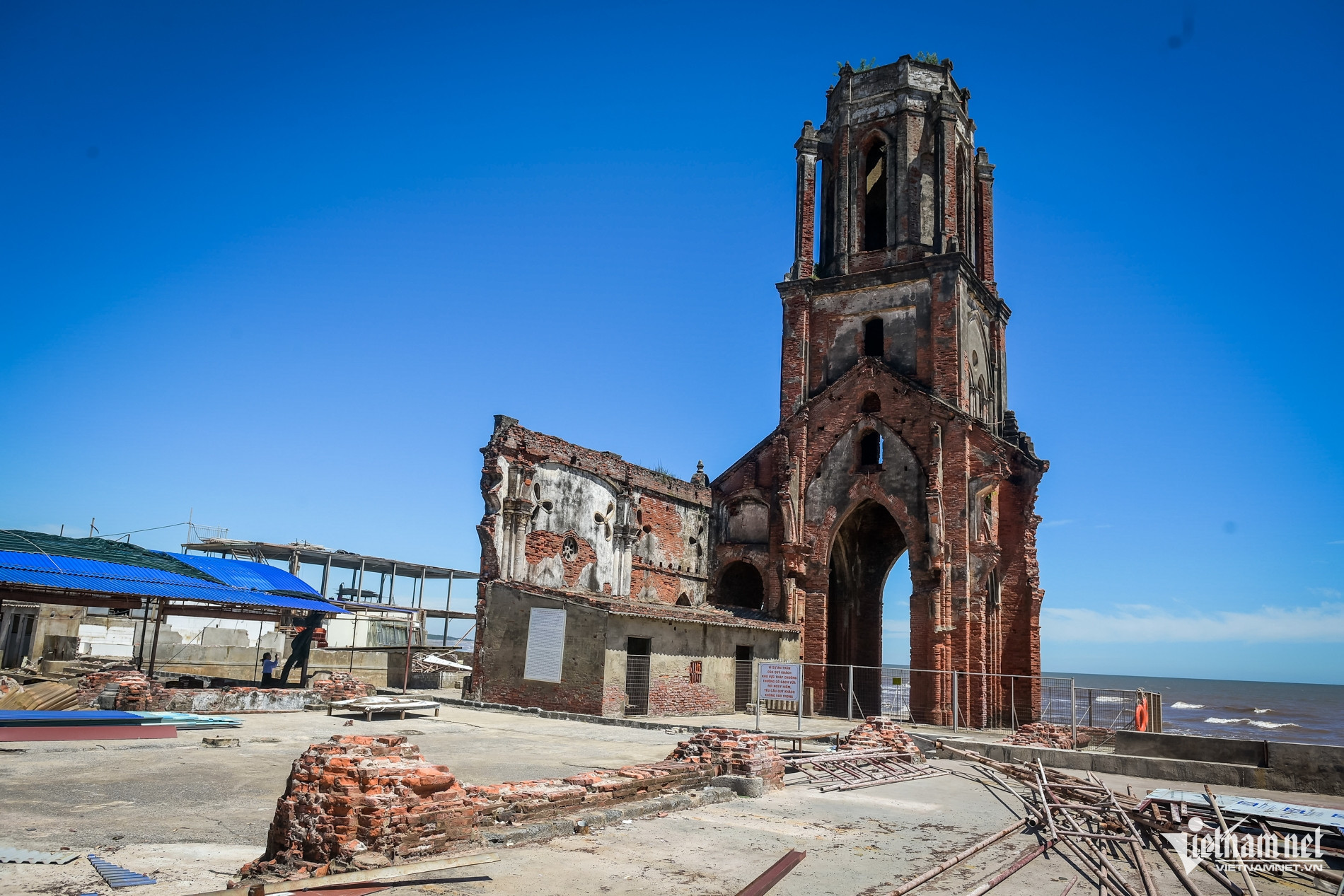
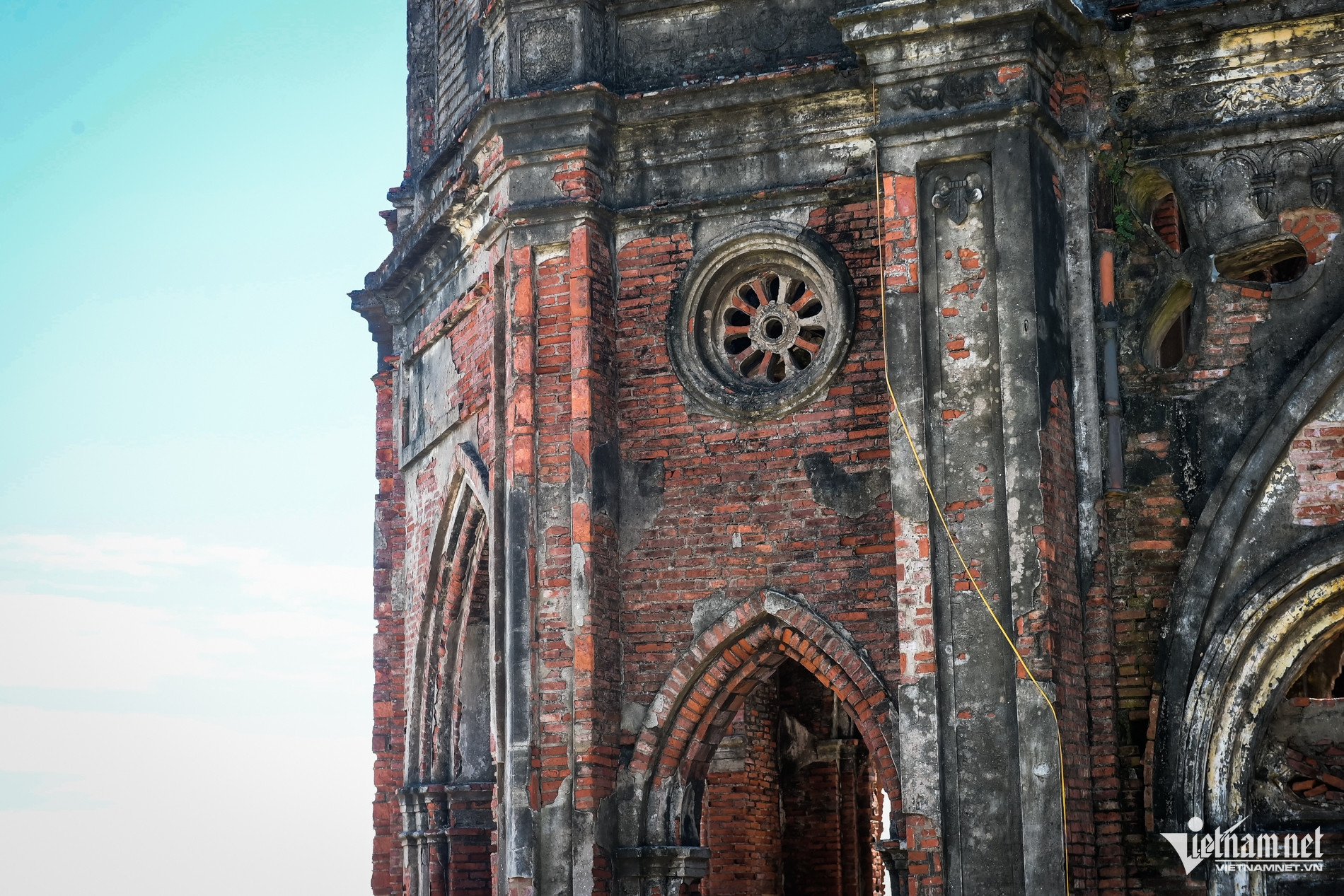
The building measured 47 meters long and 15 meters wide, with a 27-meter bell tower and a 15-meter-high cross-shaped architectural feature.
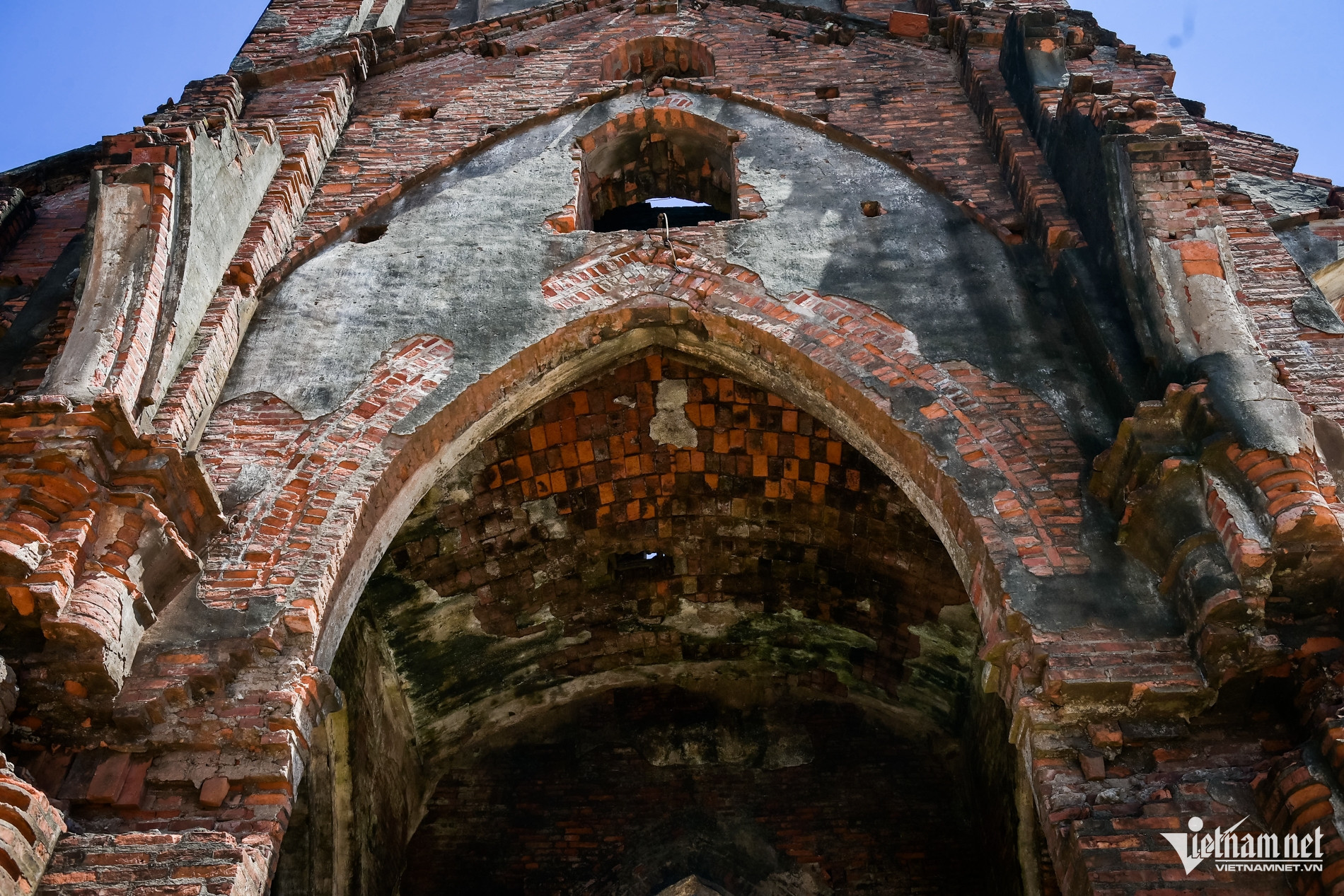
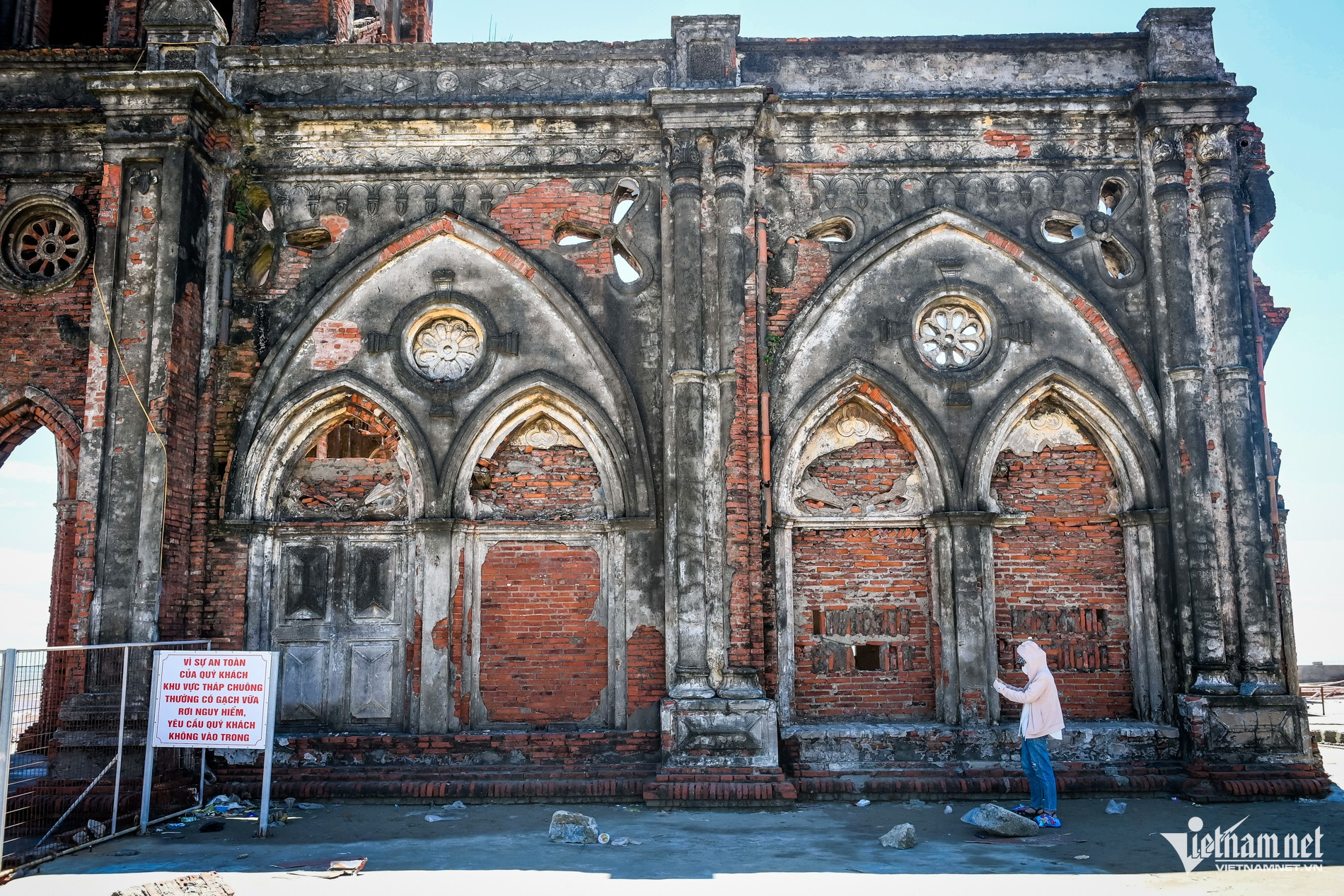
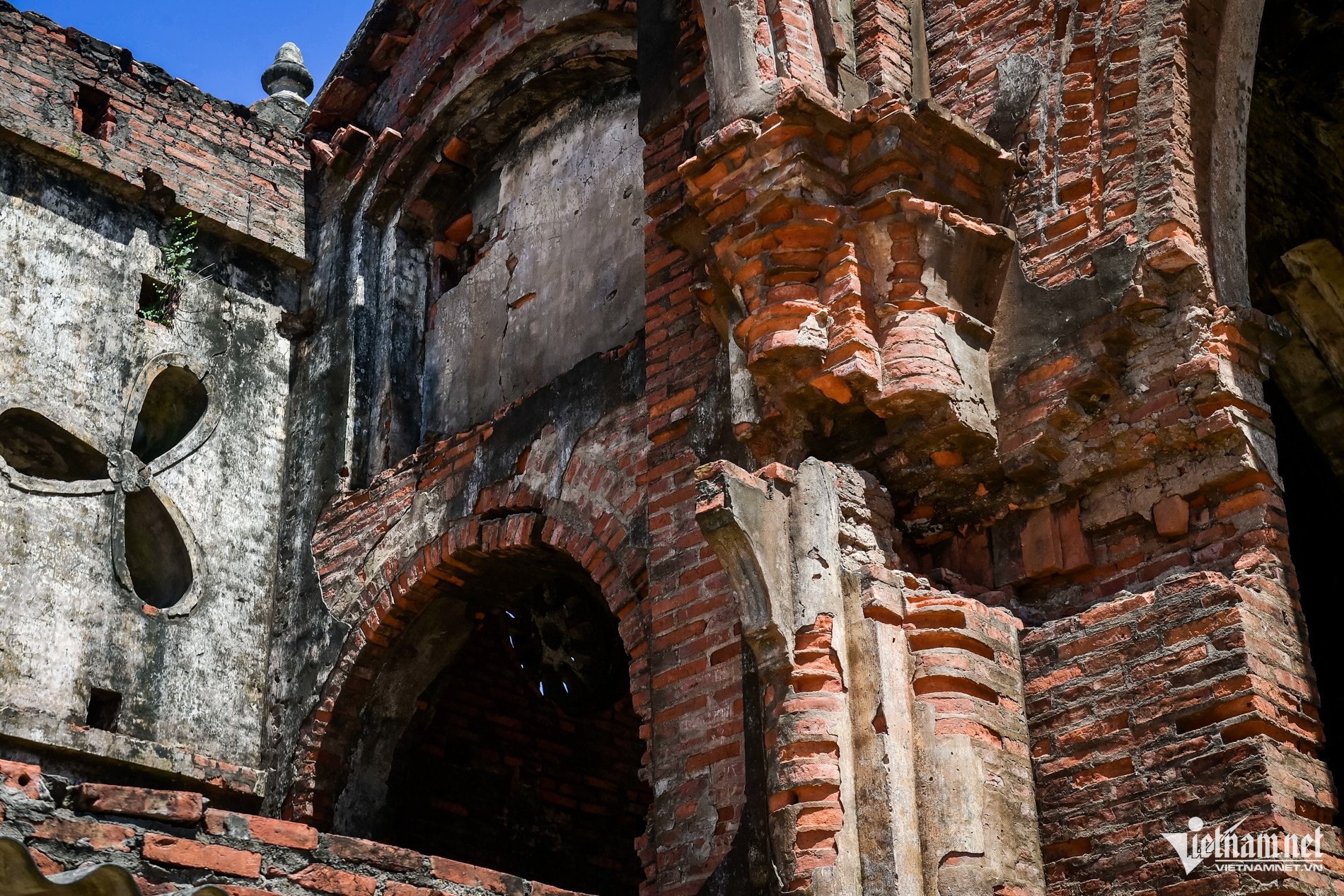
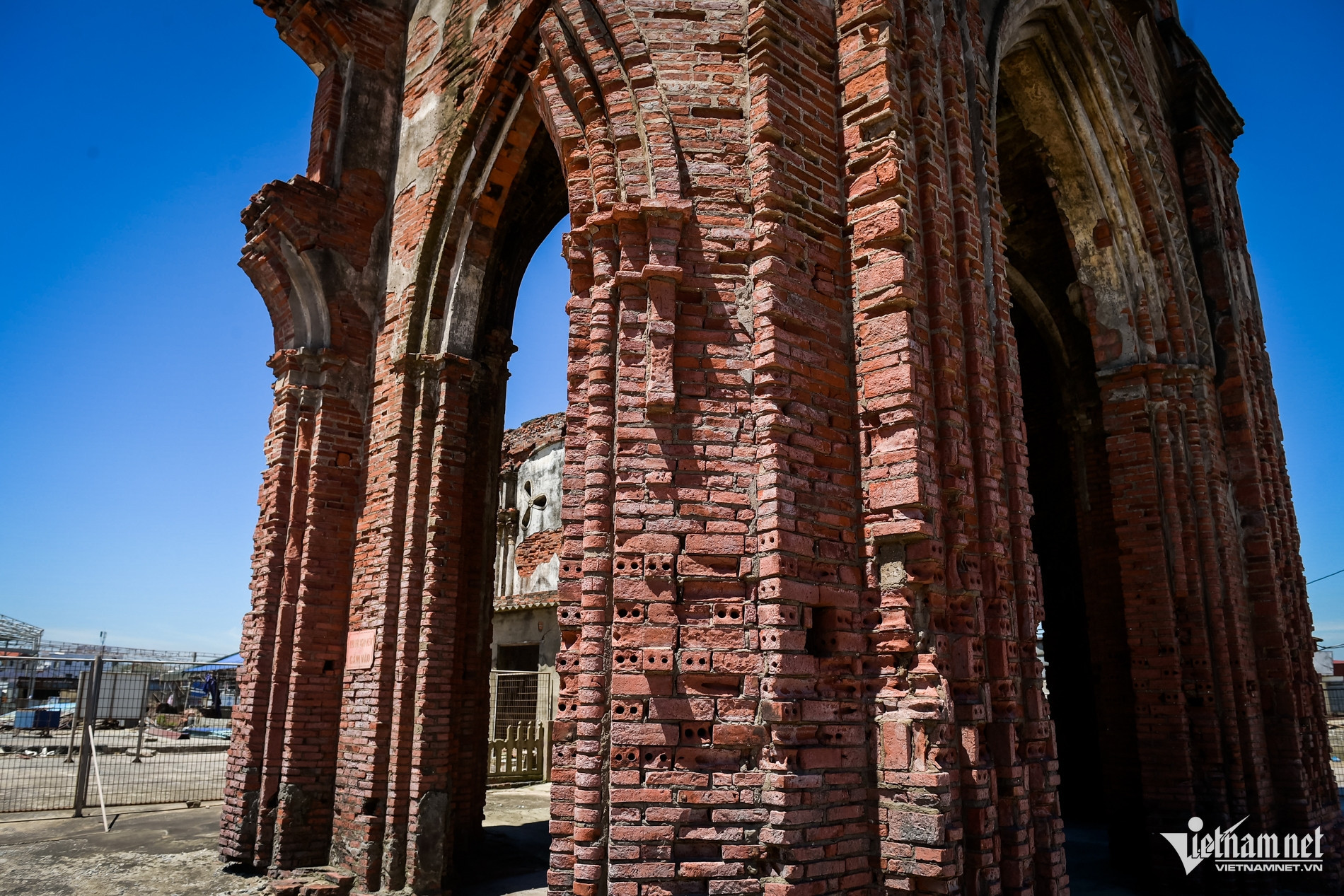
Its arched doorways and elaborate decorative details reflected the European architectural influences of the period.
Over the following decades, the coastal area of Hai Tien continued to suffer from extreme weather events and accelerating shoreline erosion.
The Sacred Heart congregation was eventually forced to move its place of worship farther inland once again.
In 2005, Typhoon No. 7 caused extensive destruction along the Hai Tien coast, breaching the outer sea dike and sweeping away the fishing village and several coastal churches.
The foundations and bell towers of some abandoned churches were completely destroyed after their congregations relocated.
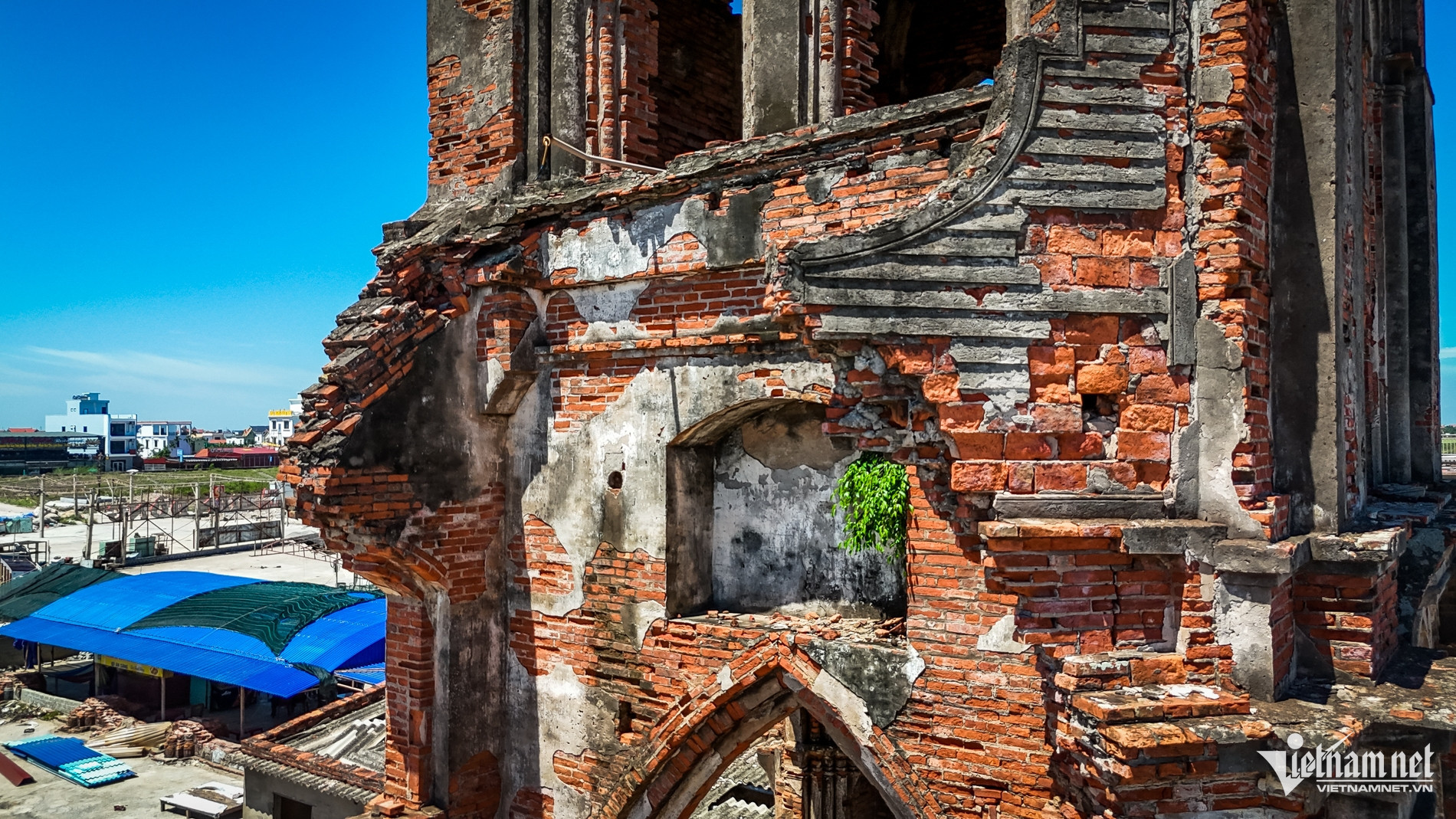
The second Sacred Heart Church, however, left behind several surviving structures, including its bell tower, foundations and part of the northern wall.
For decades, these remnants have endured the direct impact of waves, strong winds and harsh coastal weather.
Their weathered walls now form a hauntingly beautiful landmark against the open sea, bearing witness to the area's changing coastline and the resilience of the local Catholic community.
After nearly 100 years, the surviving church has become both a visible reminder of climate change and a sacred symbol of enduring faith.
In September 2026, the Ninh Binh Provincial People's Committee issued a decision officially recognizing the Hai Ly Coastal Church Climate Change Heritage Site as a tourist destination.
The provincial authorities also assigned the Hai Tien Commune People's Committee responsibility for managing, operating and developing the site.
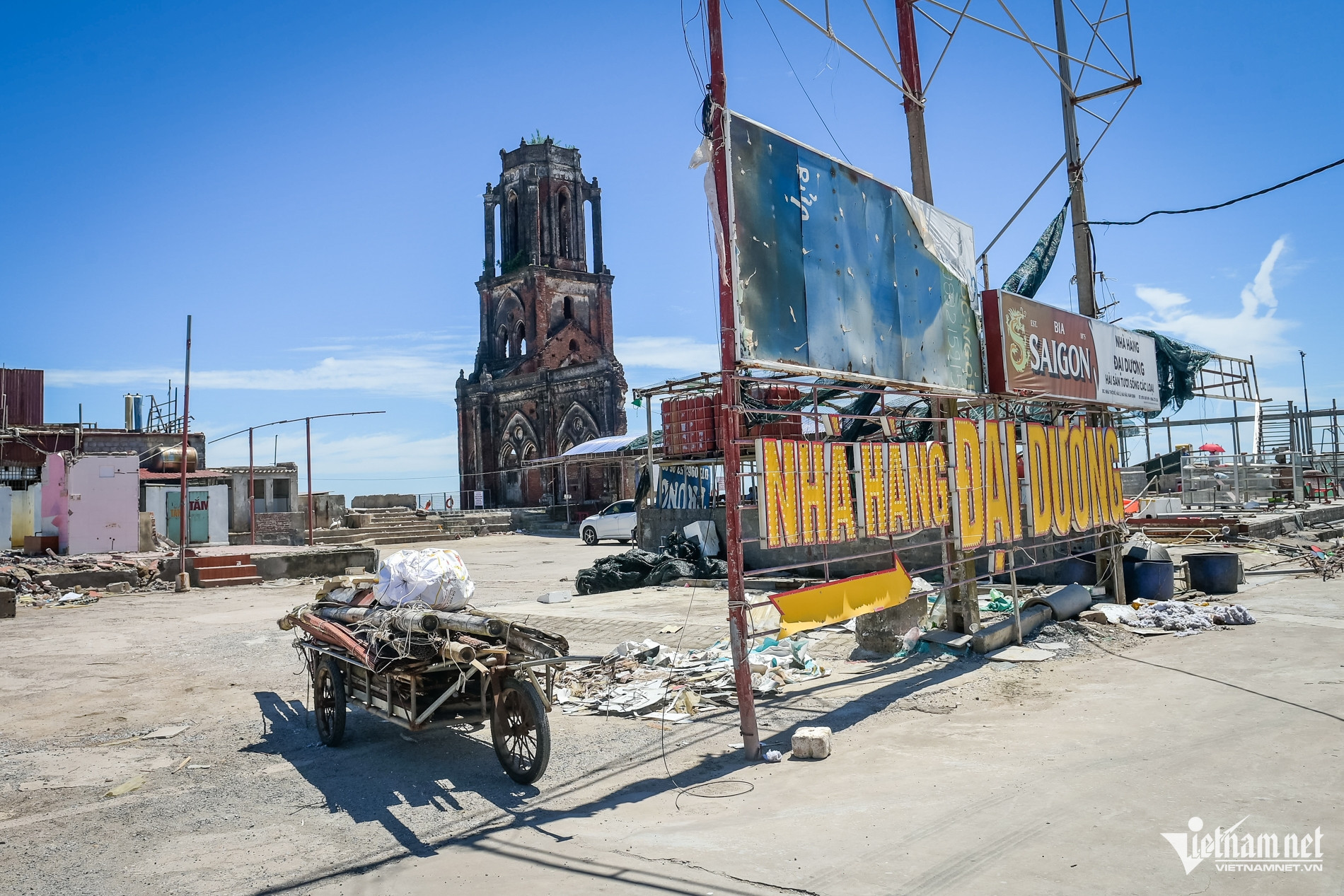
Following the provincial directive, local officials launched an information campaign encouraging households with unauthorized structures around Hai Ly Church to voluntarily dismantle them.
The initiative aims to restore the surrounding landscape and protect the historic remains.
According to local statistics, 23 unauthorized structures had been built along the Hai Tien coastline.
Of these, 12 were restaurants and food businesses clustered close to the church ruins, while the remaining structures were used for aquaculture activities.
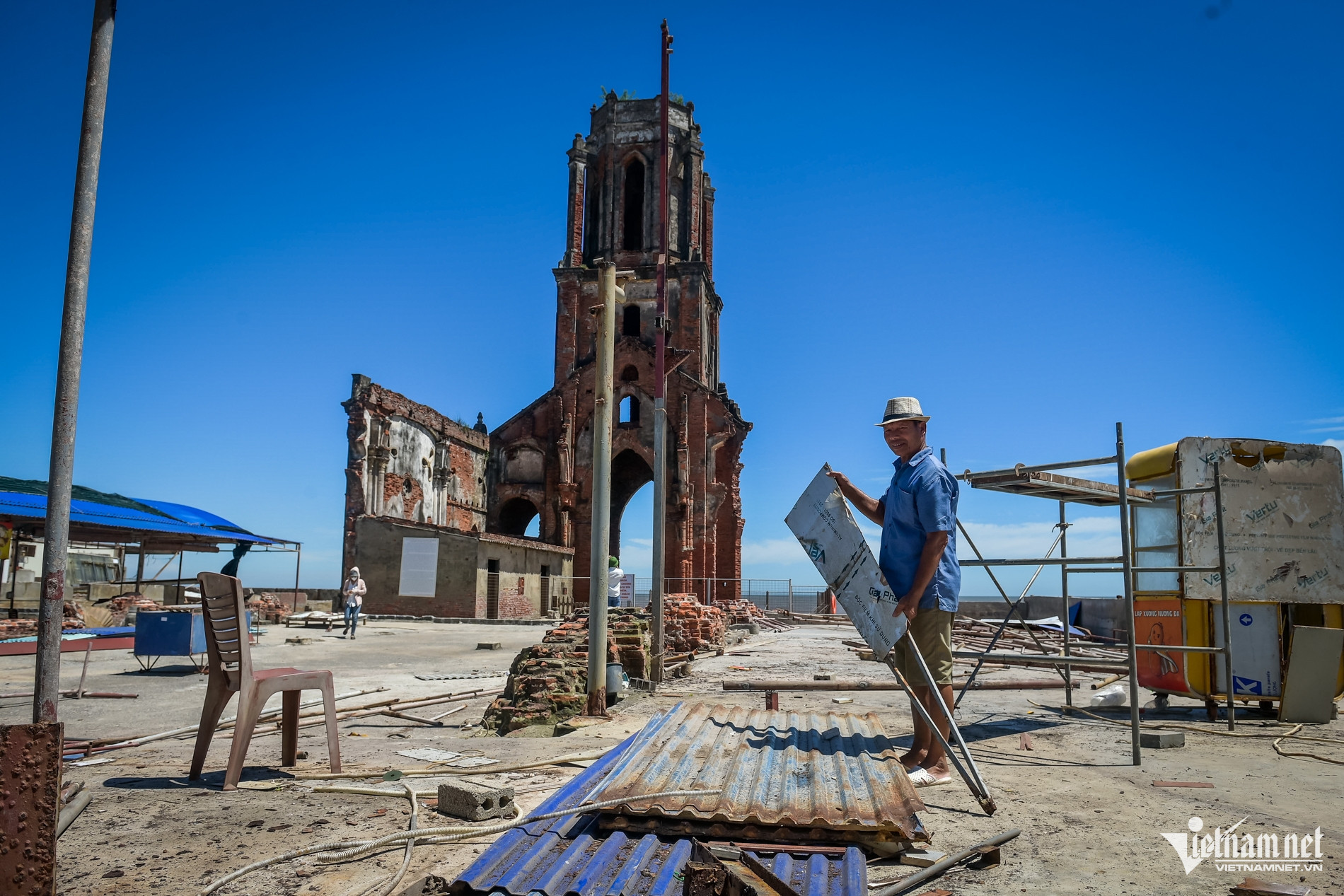
Most of the demolition work has now been completed, gradually restoring open space around the historic landmark.
Phan Van Dong, born in 1960, who operated a restaurant next to the church ruins, said his family had been running the business for more than 20 years.
He emphasized that the old church holds profound spiritual significance for local Catholics.
"The church survived the fierce years of war, even when it was struck by bombs and gunfire," Dong recalled. "What is particularly remarkable is that, in recent years, despite being repeatedly battered by extreme weather and powerful waves, the ruins have continued to stand."
Dong said his family and other nearby business owners agreed to voluntarily dismantle their commercial structures after local authorities explained the importance of preserving the site.
"When the authorities came to explain the situation, my family and other households willingly removed the structures we had built for business near the church. We simply want to contribute to preserving the ruins," he said.
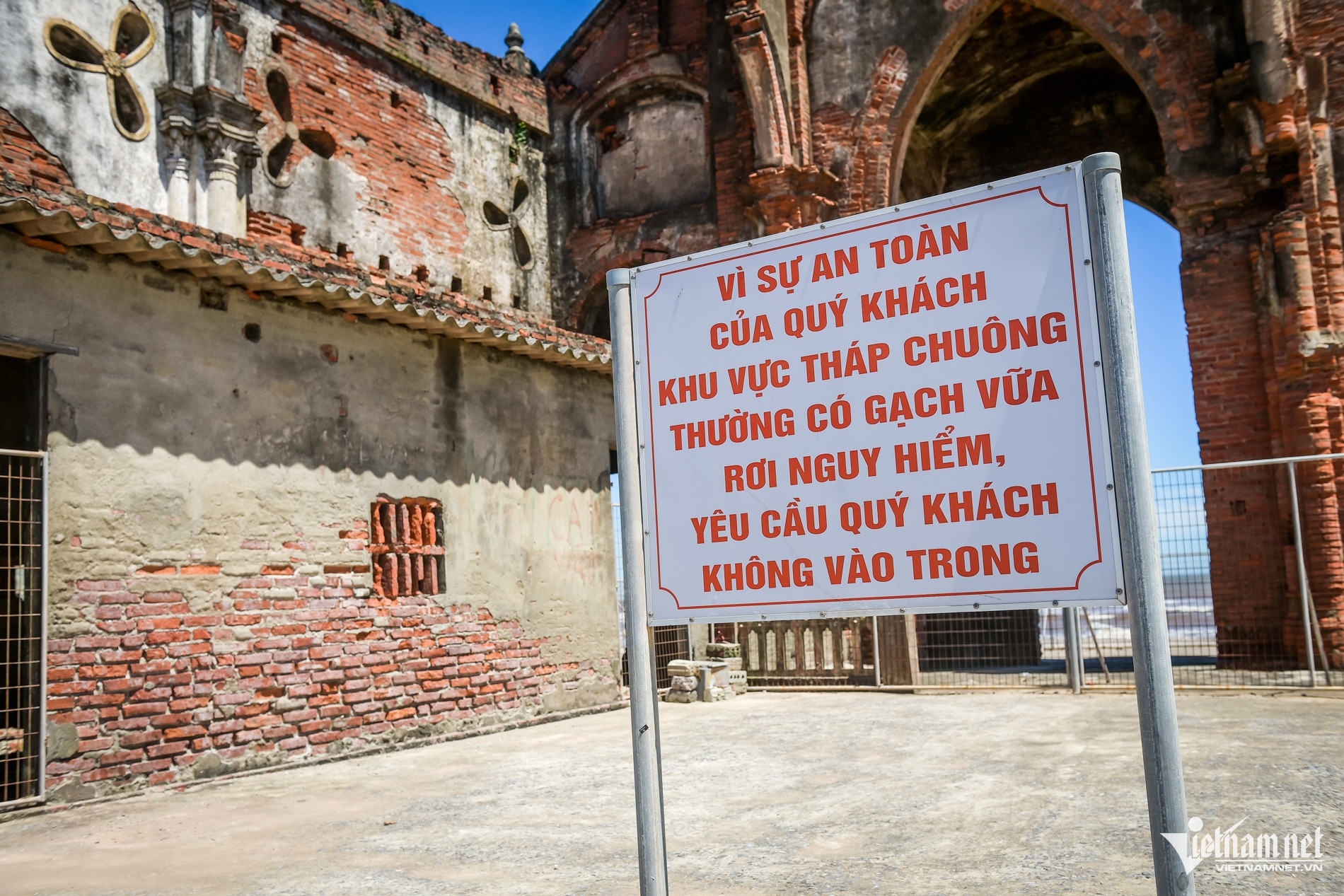
Local authorities have also installed protective barriers and warning signs around the remaining bell tower to ensure visitor safety.
Mai Duc Nghia, Standing Vice Chairman of the Hai Tien Commune People's Committee, said the removal and relocation of unauthorized coastal structures was scheduled for completion in early October 2026.
Once the land has been cleared, local authorities plan to study and develop a comprehensive spatial plan to protect the Hai Ly Church ruins.
The commune also intends to gradually transform the surrounding area into a more developed tourist destination, balancing heritage conservation with opportunities for local tourism.
Trong Tung

