 Vietnamnet.vn

 Podcast



From health worker to organic rice farmer
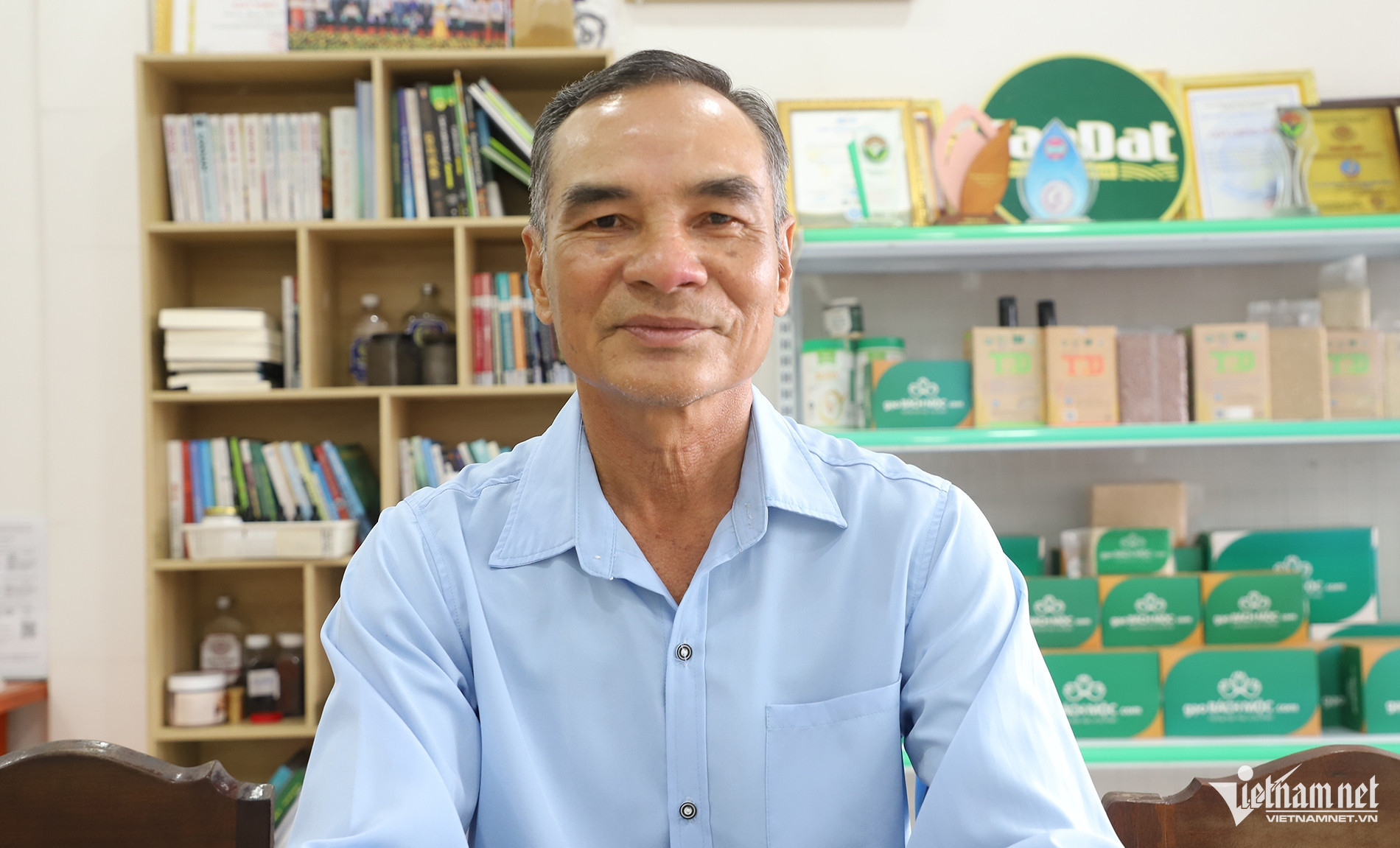
Doan Van Tai, 62, lives in Trung Ngai Commune in the Mekong Delta province of Vinh Long. He previously worked at a hospital in the former Tra Vinh Province before leaving his job in 1989 and returning home to make a living.
Like many farmers in the area, Tai initially grew rice using conventional farming methods.
Around 2011, as the effects of climate change became increasingly evident, unpredictable weather and rising pest pressure prompted him to search for a different approach.
Tai said maintaining yields often required farmers to increase their use of fertilizers and pesticides, driving up production costs while leaving chemical residues in the soil and affecting the environment and human health.
"That made me think about how to stop the indiscriminate spraying of chemicals in rice farming and produce safe rice without pesticide residues," Tai said.
Searching for alternatives, he traveled across the Mekong Delta to learn from other farming models before experimenting on 1,000 square meters of his family's land.
His early attempts repeatedly failed. Pest outbreaks damaged the rice, but chemical pesticides could not be used.
His persistence, however, attracted scientists from the Mekong Delta Rice Institute and universities in Ho Chi Minh City and Hanoi.
With their support in biological techniques and production processes, his organic rice model began producing successful results in 2014.
The trial area expanded from 2,000 square meters to one hectare and eventually covered all three hectares of his family's farmland.
Tai invited neighboring farmers to see the production process firsthand. After recognizing the economic potential of the model, more households began participating.
In 2016, he persuaded seven farmers to establish a cooperative group and gradually shift about 6.5 hectares of farmland toward organic rice production.
In September 2017, the group developed into Tan Dat Cooperative with 15 members and 11.5 hectares under cultivation.
Today, the cooperative has 85 official members and around 800 affiliated members who have not contributed capital. It manages or partners in production across approximately 100 hectares, including 30 hectares certified for organic farming.
Tai said the cooperative aims to expand its production area to 300 hectares under the province's collective economic development plan.
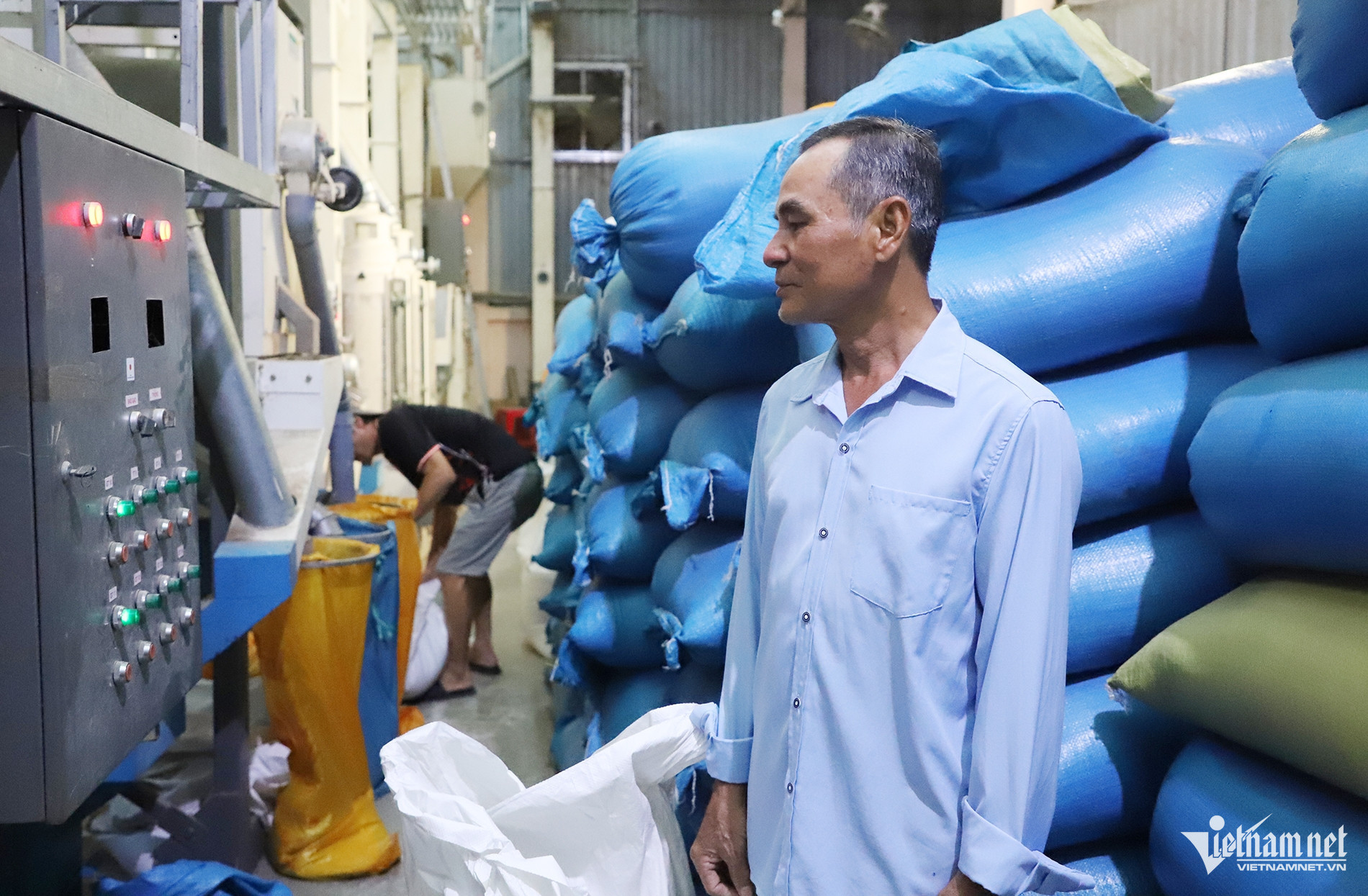
Tan Dat has also developed a closed production chain covering planting, crop care, harvesting, drying, storage, milling and packaging.
According to Tai, converting farmland to organic production is among the most difficult stages because many areas have been exposed to chemical fertilizers and pesticides for years.
The cooperative uses organic fertilizers and microbial products to gradually rehabilitate the soil and reduce the effects of residual chemicals.
"The transition period takes at least about three years. Only when the soil meets the necessary conditions can it be converted to organic production," he said.
Lower yields but higher profits
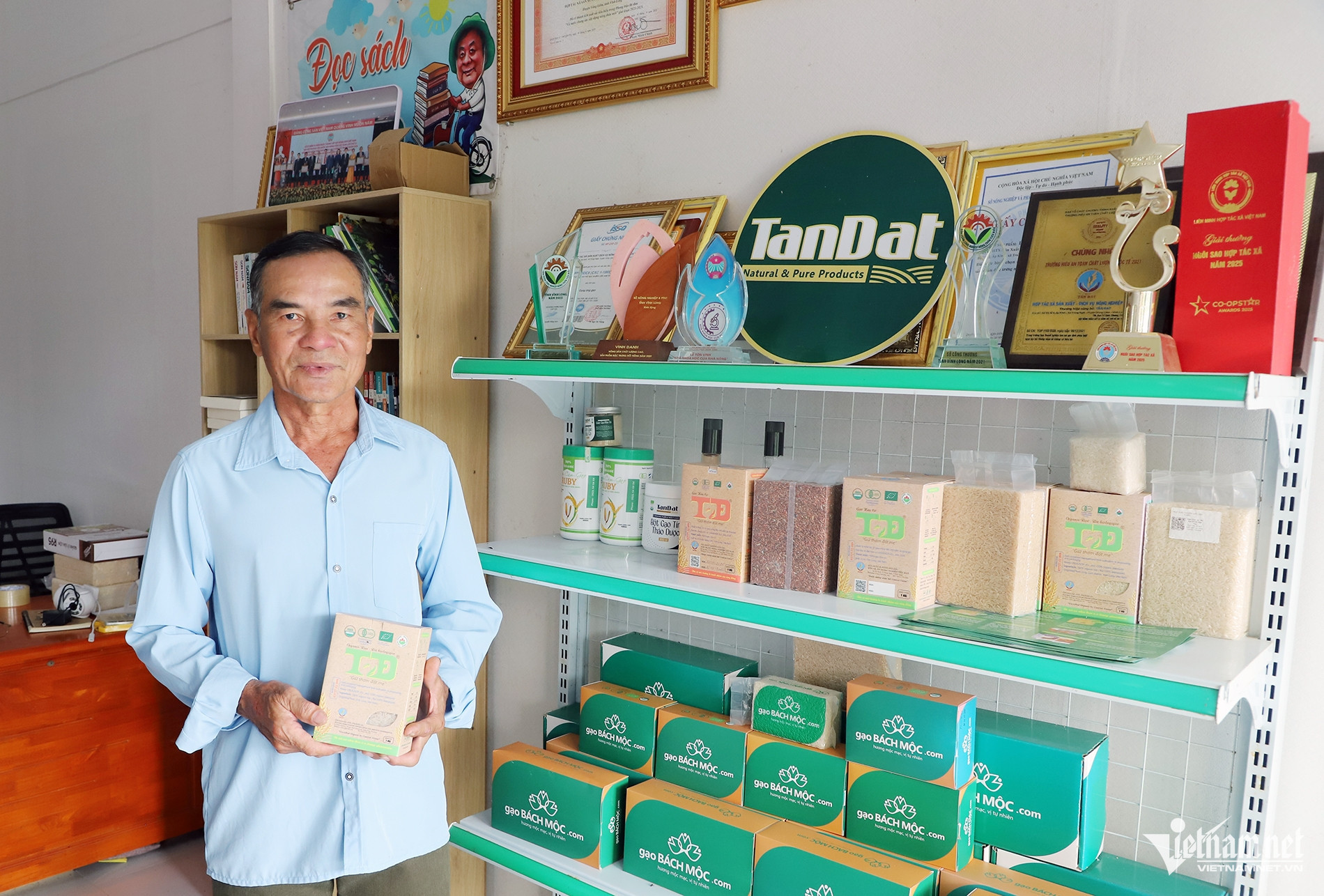
Tai said organic rice yields are about 10-15% lower than those of conventional farming, but profits can be two to three times higher because organic rice commands higher prices.
On 1,000 square meters of farmland, a conventional rice farmer may earn around VND1 million ($38) in profit after expenses, while internationally certified organic rice can generate VND2-3 million ($76-114).
His cooperative currently supplies around 150-200 tons of internationally certified organic rice every three-month crop.
Its main products include ST25 rice, herbal purple rice and ruby rice.
The cooperative has also developed nutritional rice flour, herbal brown rice tea and organic rice wine, while preparing to produce rice noodles and rice cakes.
Current retail prices are about VND115,000 ($4.40) per kilogram for herbal purple rice, VND100,000 ($3.80) for ruby rice and VND85,000 ($3.20) for ST25 rice.
Tai said demand for colored and nutritional rice varieties is growing. For purple, red and ruby rice alone, the cooperative needs around 50 hectares of cultivation each crop to meet demand.
Building a market for its products has been another major focus.
Tan Dat's organic rice was initially sold mainly in the local market. From 2018, distribution gradually expanded across Vietnam.
Its products are now exported through corporate partners to the US and Europe, while the cooperative is preparing a shipment of herbal rice for Australia.
Tai said demand is strong, but the cooperative currently lacks sufficient farmland to meet it.
While researching organic production models, Tai once traveled to Nghe An Province, where he discovered a purple rice variety and brought it back to the Mekong Delta for trials.
Initially, the variety produced hard grains and low yields and was poorly suited to local soil conditions.
Tai continued selecting and refining the variety over multiple crops, gradually improving its grain quality and eventually developing it into Tan Dat herbal purple rice.
The cooperative is also moving beyond rice.
It has begun trialing organic vegetable crops under orders from customers. Several cooperatives in Dong Thap have approached Tan Dat about an organic chili-growing model, which is now being tested on two hectares with encouraging initial results.
During the 2026-2027 winter-spring crop, the cooperative plans to cultivate around 10 hectares of edamame.
From an initial trial covering just a few thousand square meters, Tai has built a comprehensive production process, connected hundreds of farming households and developed an organic rice brand.
He now generates average annual revenue of VND3-5 billion ($114,000-190,000), with profit of around VND1.5-2 billion ($57,000-76,000).
Tai has received numerous awards and certificates of merit from central and local authorities and was named an Outstanding Vietnamese Farmer at the national level.
In 2025, Tan Dat Cooperative received a certificate of merit from the Prime Minister.
Vo Minh Hoang, chairman of the Trung Ngai Commune People's Committee, described Tai and Tan Dat Cooperative's model as an exemplary form of collective economic development that delivers benefits in three areas.
Economically and socially, the model helps farmers increase their income by around 1.5 times compared with conventional production while providing stable employment for local workers and cooperative members.
Environmentally, strict production standards help improve soil and water quality while protecting rice-field ecosystems and community health.
The cooperative is also the first in the Mekong Delta to simultaneously obtain four international organic certifications: USDA, EU, JAS and Canada. Tan Dat is considered one of Vietnam's exemplary cooperatives.
Hoai Thanh
.svg)
