 Vietnamnet.vn

 Podcast



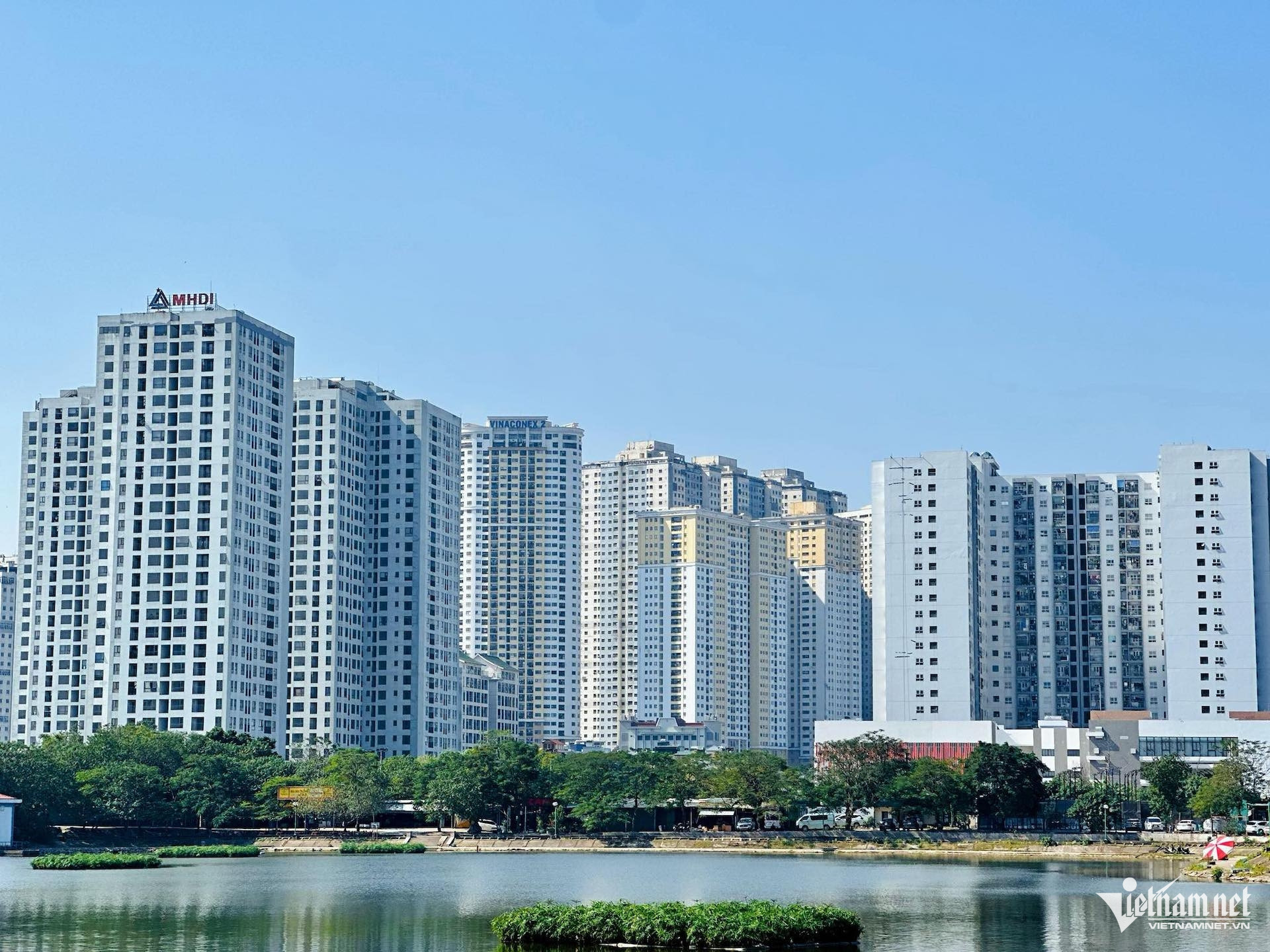
Primary apartment prices in Hanoi have crossed the $4,100 per square meter mark, despite showing signs of quarterly cooling. According to new market data, while prices have eased slightly compared to the previous quarter, they remain significantly higher than the same period last year. Meanwhile, mortgage rates are trending upward, and market liquidity is beginning to slow.
At a real estate market briefing held on January 28, property consultancy Cushman & Wakefield reported that in Q4 2025, the average price of primary apartments in Hanoi reached approximately $4,140/m². Although this represents a 10% decline from Q3, it marks a 32% increase year-over-year, indicating that overall housing prices in the capital remain firmly elevated.
The quarterly price drop, the firm explained, is mainly attributed to a growing proportion of mid-range units within the newly launched supply. This segment accounted for nearly 45% of all new listings in Q4, which helped lower the average price level. Nonetheless, prices remain substantially higher compared to the same period in 2024, reflecting a long-term upward trend.
Cushman & Wakefield noted that rising input costs continue to exert pressure on selling prices. These include escalating land prices, construction materials, and financing expenses. In addition, limited supply in central districts makes it difficult for prices to fall significantly.
On the demand side, the firm’s data shows that by the end of Q4 2025, about 6,200 apartments were sold in Hanoi, down 33% year-on-year. New supply also dropped 32% compared to Q4 2024, indicating that the market is entering a correction phase after a prolonged period of sharp increases.
Liquidity weakens as interest rates climb
Le Hoang Lan Nhu Ngoc, Senior Director of Strategic Consulting at Cushman & Wakefield, observed that housing market liquidity has shown signs of reversal since late last year, coinciding with a new cycle of rising lending rates.
As of January 28, many commercial banks have raised home loan interest rates, with typical increases ranging from 2% to 3% annually. For example, Vietcombank’s updated lending rates for apartments or houses with land use rights or purchase contracts are now:
9.6%/year for fixed 6-month terms
9.9%/year for 12 months
13.6%/year for 18 months
13.9%/year for 24 months
All of these rates include principal grace period incentives.
MB Bank also offers preferential home loan rates starting at 8.5%/year for the first 12 months, 9%/year for 18 months, and up to 9.5%/year for 24 months. After these promotional periods, rates increase by an additional 1.5% to 3.5% annually.
Commenting on these changes, Ms. Ngoc remarked that in the near future, the property market is likely to cool as investment capital becomes more cautious and real demand continues to dominate. This shift will strongly impact homebuyers, who are typically very sensitive to price and interest rate fluctuations.
Buyers remain active in $160,000–$210,000 range
Despite tighter financial conditions, apartment units priced around $160,000 to $210,000 still show healthy absorption, with brisk transaction activity. This underscores the ongoing dominance of genuine homebuying demand.
Hoang Nguyet Minh, General Director of Cushman & Wakefield Vietnam, added that both homebuyers and developers are now under growing financial pressure as capital costs rise. The market, she said, is moving toward a more cautious and practical operating model.
For buyers relying on financial leverage, higher interest rates are inflating monthly repayments, directly affecting their ability to manage long-term income and expenses. This is making buyers more hesitant, extending decision-making timelines and slowing project absorption rates.
On the developer side, elevated interest rates are also causing strain. When buyers face difficulty managing cash flow, developers are forced to adjust their sales strategies to maintain liquidity. Many are now actively sharing financial burdens by extending interest support periods, deferring principal payments, relaxing payment schedules, or increasing discounts for buyers with ready capital.
“In essence, financing costs are now being redistributed among banks, developers, and homebuyers,” Minh said. “With capital becoming more expensive, profit margins are inevitably shrinking. But if developers don’t support buyers, selling becomes even more difficult.”
She also noted that projects that can successfully solve the interest rate challenge for customers will gain a significant edge in market liquidity - and this will likely be the main factor driving market differentiation in the coming period.
Hong Khanh
.svg)
