 Vietnamnet.vn

 Podcast



Take, for example, a woman in her 70s in a small alley in Hanoi’s Old Quarter who been selling clam porridge from her shoulder poles for decades, refusing to accept welfare or beg for money. Every morning, she gets up early to cook her pot of porridge and sits selling it until noon.
Another person, nearly 45 years old, migrated from the province to Hanoi and has been working as a motorbike taxi driver for over 15 years. To support his family and fund his two children's education, he has to earn at least 17 million VND every month, driving nearly 14–15 hours almost every day.
And there are factory-worker couples who migrated from the Central region to Hanoi with an initial combined income of less than 20 million VND per month. They have worked overtime for years, lived extremely frugally, and saved every dong to buy land and build a house.
People like these do not appear on forums celebrating success or in glamorous, inspiring stories. Yet they are the very force that keeps this city functioning.
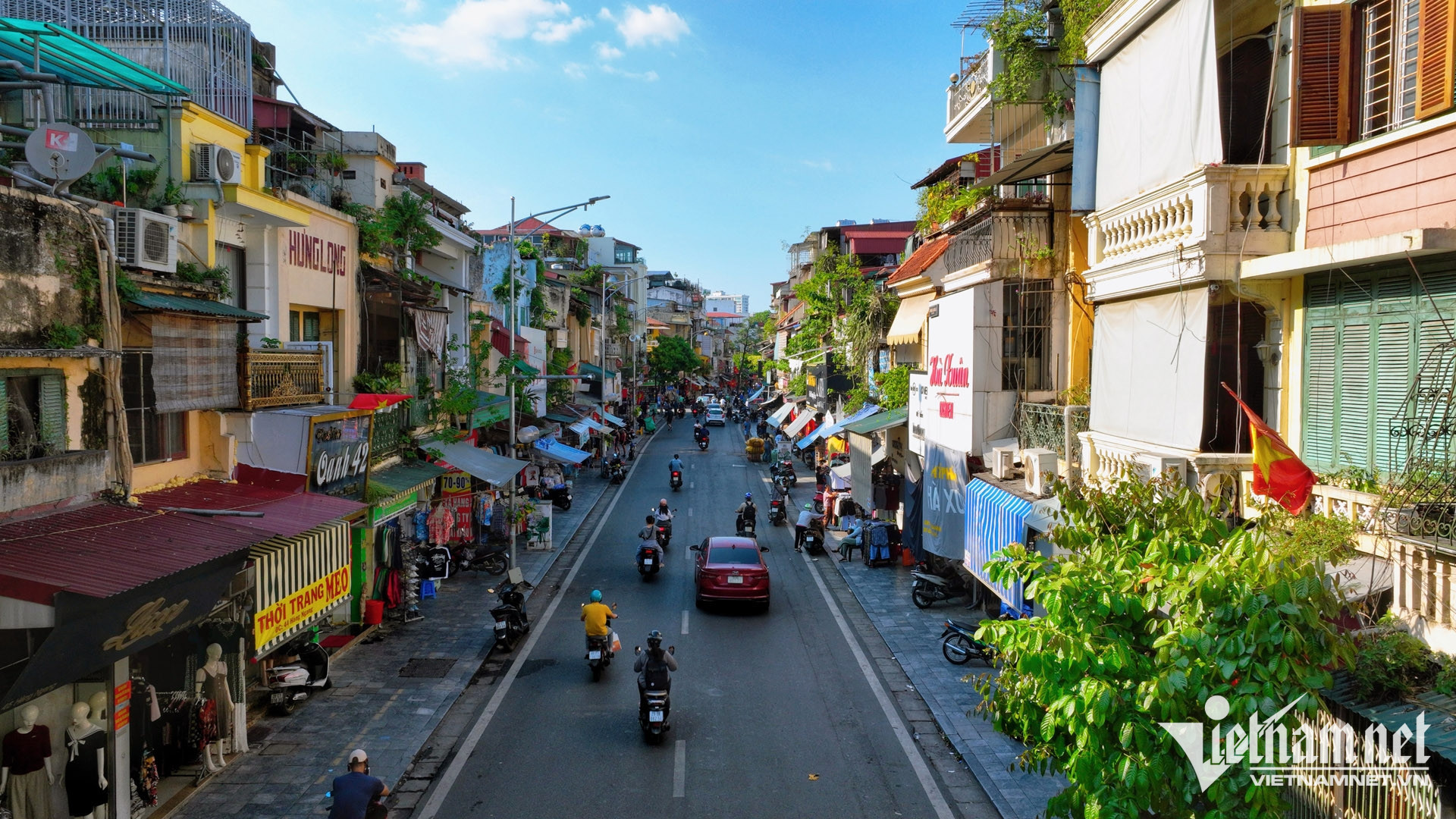
A debate on social media has sparked many comments about who should come or stay in Hanoi. But the city is not solely shaped by prominent or successful figures. Its rhythm is also maintained by the sticky rice vendor at the corner of the alley at the crack of dawn, the street sweeper when the city is still asleep, the shippers under the blistering heat, or the air-conditioner repairman on the rooftop in the stifling mid-summer noon.
These individuals are not seen as “exceptional”, but they are the ones keeping the lights on, giving the city its breath of life, and keeping it moving every day.
Hence, opinions on social media saying, “If you are not exceptional, do not stay in Hanoi,” have sparked intense debates.
The true pulse of a metropolis
It is true that Hanoi is a place of fierce competition, where the cost of living is rising and the pressure to make ends meet is by no means easy. In a major metropolis, capability is always a vital factor to survive and go further. But if we only look at the city through the lens of excellence or high-profile success, the picture is incomplete.
In reality, the bulk of a city is run not just by the elite, but by countless ordinary people. They are not perceived to have admirable careers, and do not generate monumental achievements, but they contribute to maintaining the city's rhythm through their own daily labor.
For years, Hanoi has strived to become more civilized, modern, and orderly. The tightening of the management of sidewalks, street vendors, or informal trading is understandable from an urban perspective. Yet sometimes, looking at a sticky rice basket at the alley corner, an iced-tea stall on the pavement, or a wandering flower cart in winter, it seems there is more to it than just trade.
It is also how many migrants, elderly citizens, or low-skilled laborers earn a living in the city. And it is precisely these tiny things that create the soul of Hanoi's daily life.
The more modern a city becomes, the more order it requires. Thus, the hardest part is ensuring that this modernization process remains compassionate toward ordinary human beings.
The current debates about Hanoi have perhaps overlooked one thing. People do not flock to major metropolises for cheap living costs; they come for opportunity.
Incomes in Hanoi are significantly higher than the national average. It is this disparity in opportunity that keeps the influx of people pouring into the capital, even as housing prices and living costs increase.
Hanoi is growing by about 200,000 residents annually and aims to become a megacity of 14–15 million people by 2035.
The city is embarking on an unprecedented urban restructuring. Hanoi is currently clearing land for 1,428 projects. The Red River landscape mega-project alone impacts 247,431 residents.
The question of “who gets to stay in Hanoi” has therefore ceased to be an emotional opinion. It has turned into a very real pressure that many young people live with every single day.
A city restructuring too quickly while housing prices far outpace income growth can easily create a sense of being pushed out of the city among the working class and young middle class.
And it seems the mindset of “if you aren't exceptional, don't stay in Hanoi” inadvertently dumps the city's structural pressures on the shoulders of these young people.
Lan Anh
.svg)
