 Vietnamnet.vn

 Podcast



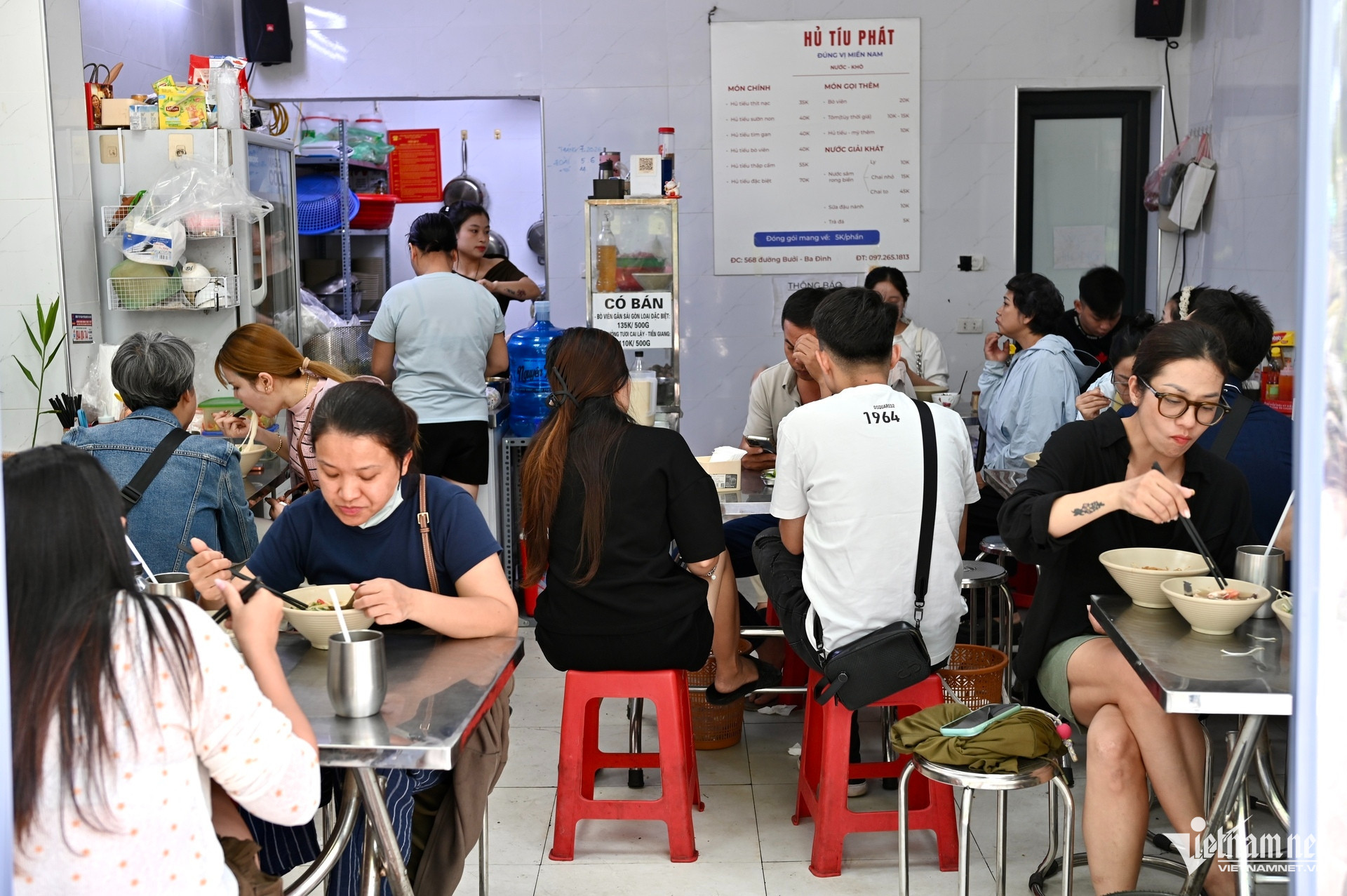
On Buoi Street in Ngoc Ha Ward, Hanoi, where pho and rice vermicelli shops line the streets, a small restaurant has been drawing crowds with a dish less commonly found in the capital: hu tieu, a popular noodle specialty from southern Vietnam.
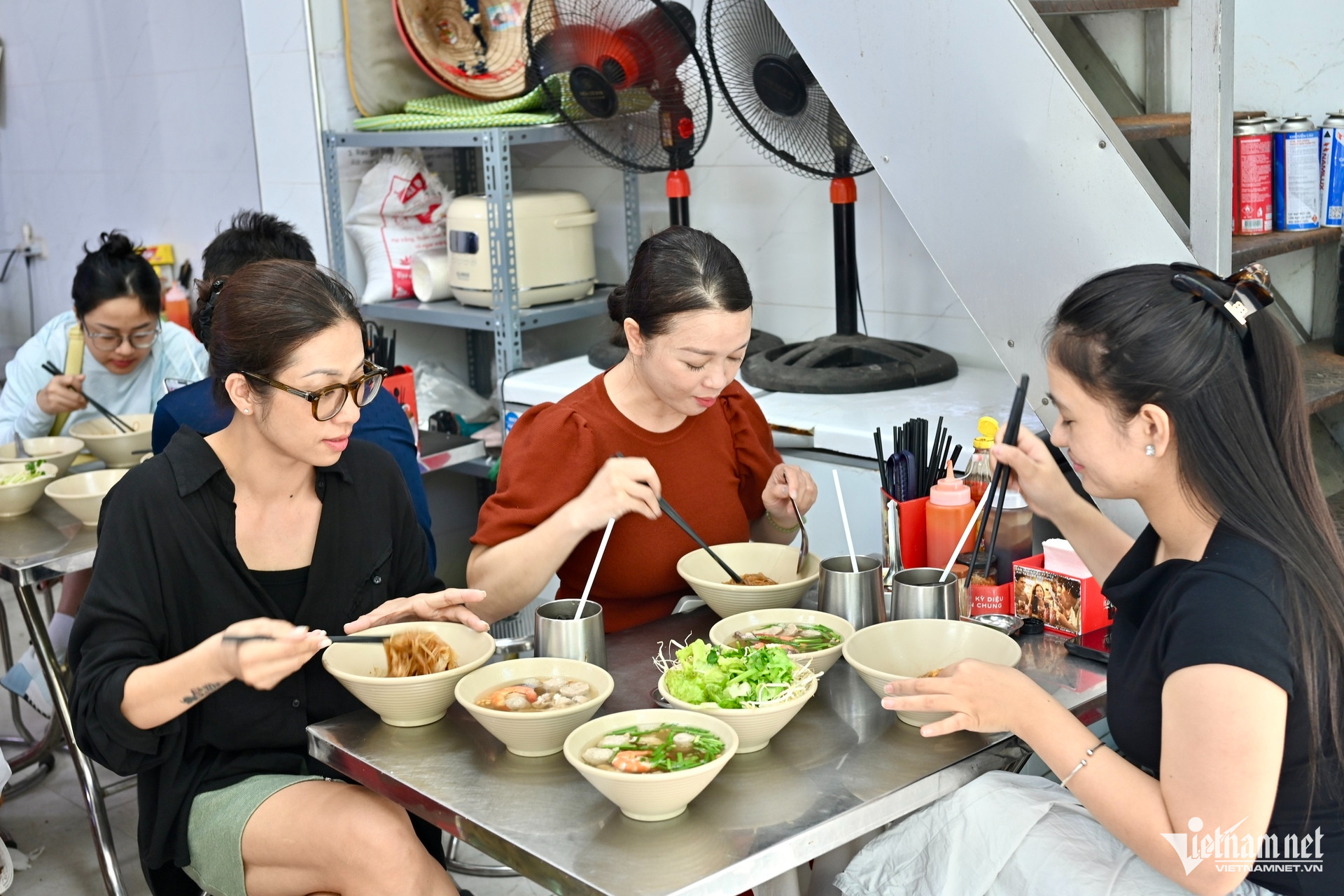
The modest eatery can accommodate only about 30 customers at a time, but diners arrive throughout the day. During peak hours, from 11:30 a.m. to 1 p.m. and 6 p.m. to 7:30 p.m., every table is usually occupied, leaving newcomers waiting patiently for a seat.
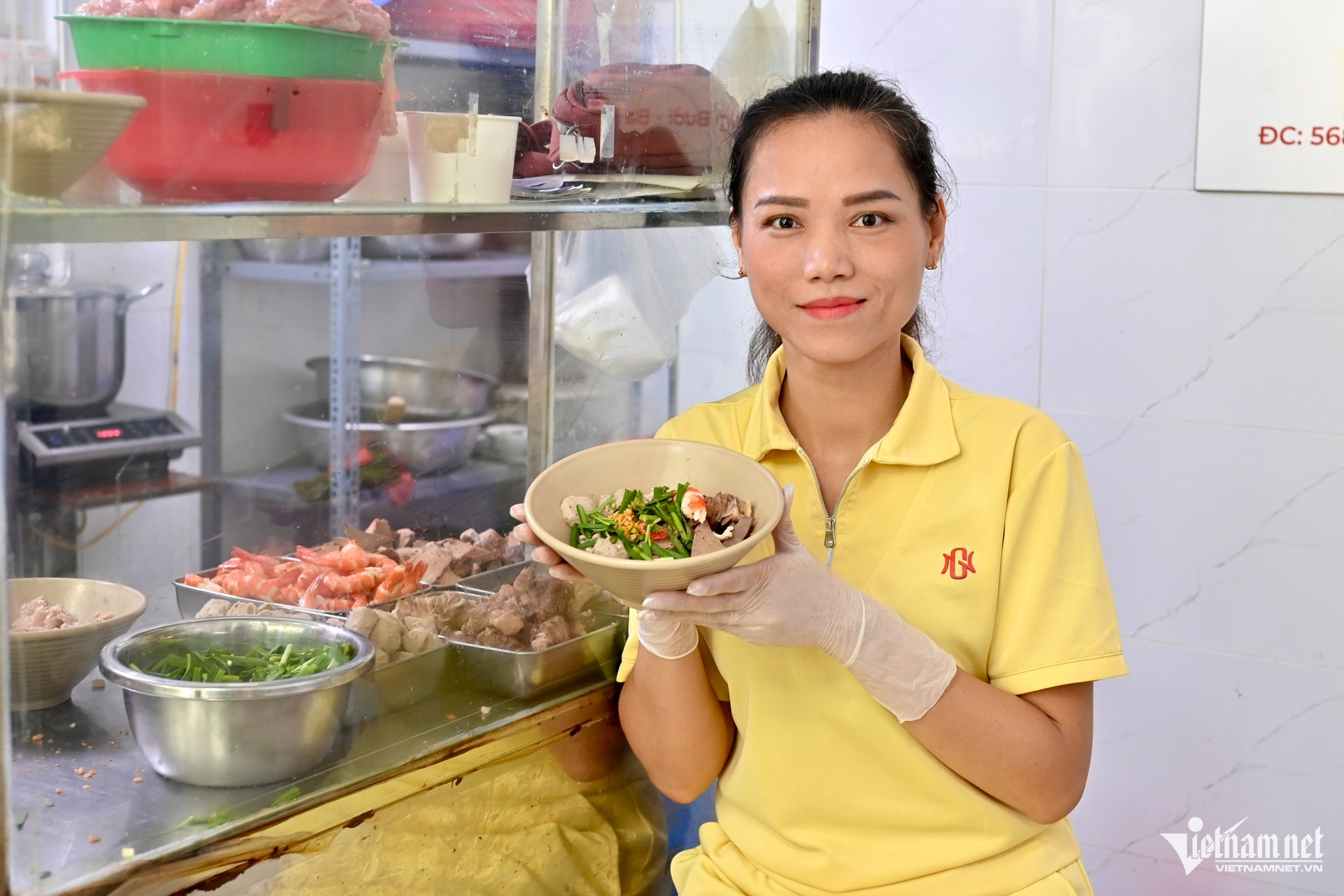
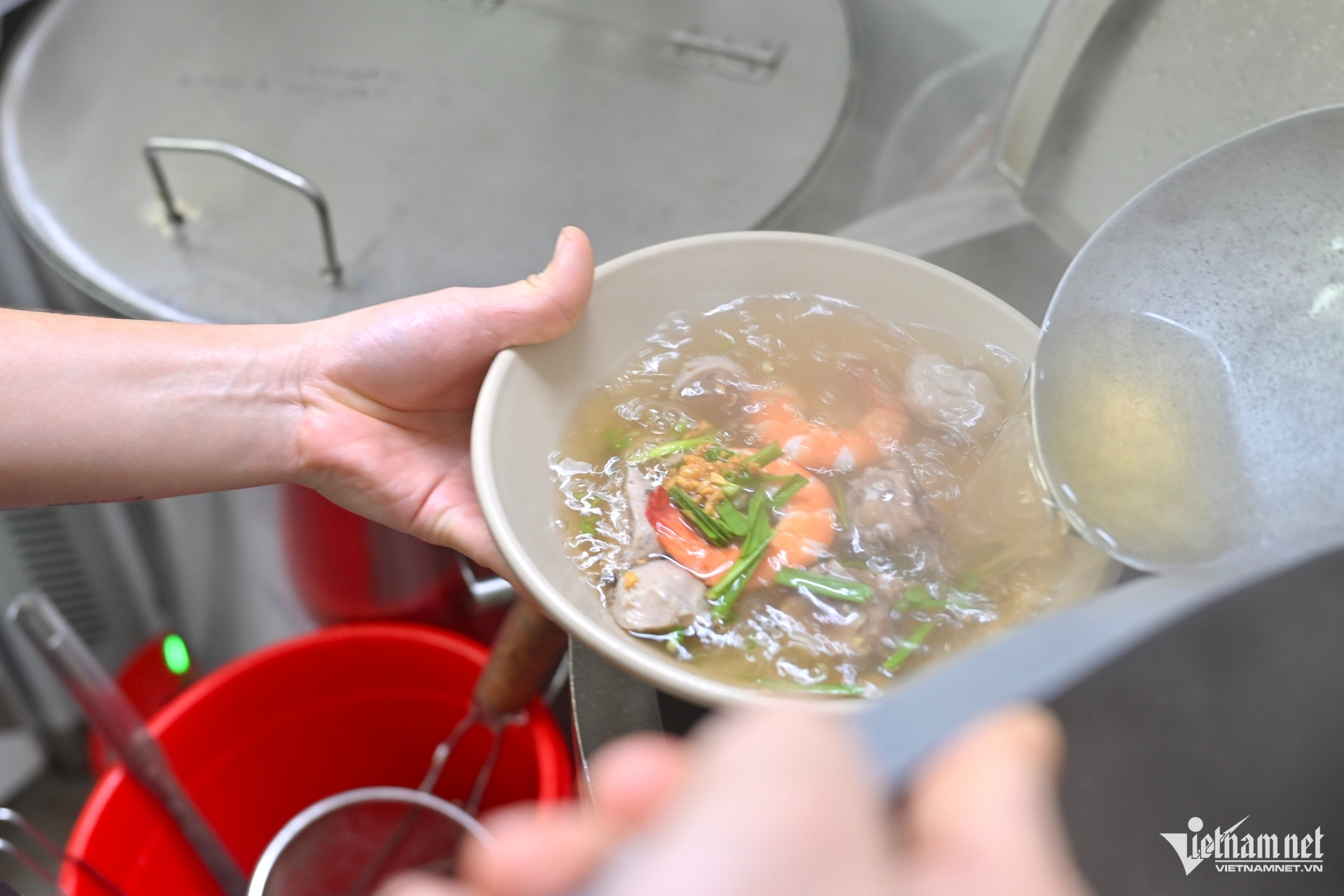
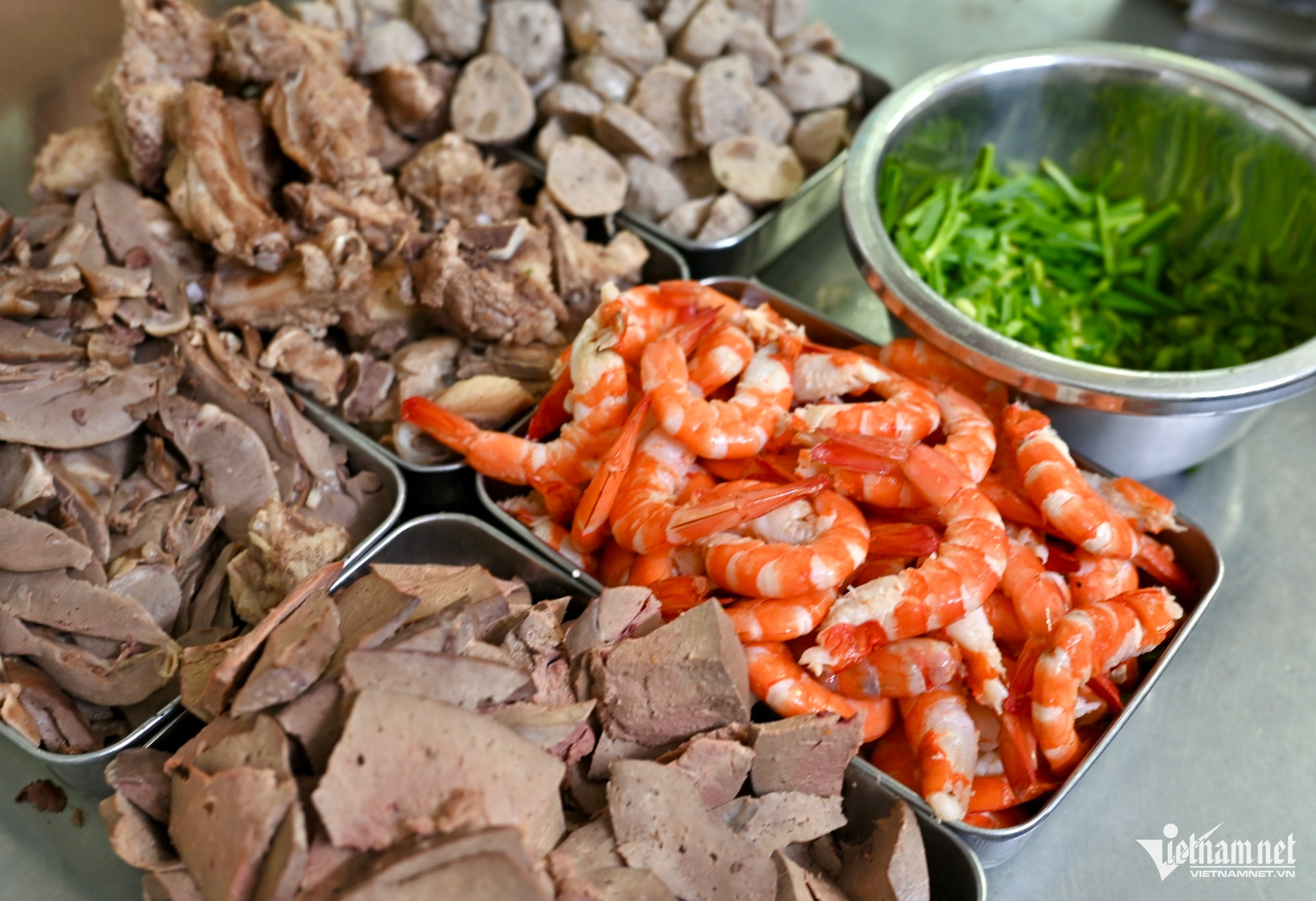
Behind the counter, the owner works quickly, blanching portions of noodles and arranging sliced lean pork, tender ribs, shrimp, pork heart, liver and beef balls in bowls before ladling over steaming broth.
The fragrance of garlic chives and fried garlic rises with the steam, bringing together the familiar aromas of southern Vietnamese hu tieu.
The dish is popular across many southern provinces and cities, with recipes varying from place to place.
For Vo Hong Nhung, who grew up in southern Vietnam, bringing hu tieu to Hanoi has meant preserving the flavors of her childhood while making small adjustments to suit local tastes.
Many of her ingredients are sourced directly from Vinh Long, Ca Mau and Ho Chi Minh City, hundreds of kilometers away.
"My family's restaurant has been open for about three and a half years. Over the past two years, it has become increasingly popular, and we've been busy almost every day," Nhung said.
"Sometimes I have to apologize to customers because the space is so small and we simply can't serve everyone quickly enough. The dish also takes a great deal of preparation, so there's a limit to how many bowls we can make."
From just 18 bowls a day to a packed restaurant
Nhung was born and raised in Vinh Long, a province in Vietnam's Mekong Delta.
Hu tieu was part of her life from childhood through her university years in Ho Chi Minh City.
In 2013, she married and moved to Hanoi to live with her husband's family.
Although she worked as an accountant, cooking had always been a passion. In her spare time, she sold southern Vietnamese dishes online, including caramelized fish in clay pots, braised pork with eggs, kho quet dipping sauce and jelly mooncakes.
In 2023, after giving birth to her second child, Nhung began reconsidering her career.
She felt her accounting job offered limited prospects for a major change, so she decided to resign and start a food business, hoping to gain more control over her time and improve her family's finances.
She considered several dishes she knew how to prepare well, including com tam (broken rice), hu tieu and chicken soup.
But Hanoi already had plenty of broken rice restaurants, while places serving authentic southern-style hu tieu were relatively uncommon.
After studying the market, she decided to make hu tieu the centerpiece of her business.
The beginning was far from easy.
"At first, I didn't dare keep the original southern flavor of the broth," she recalled.
"I was worried that Hanoi customers wouldn't enjoy the sweetness, so I deliberately reduced it. But that made the dish lose its character, and we received a lot of criticism. Some days, from morning until evening, we sold only 18 bowls. Some customers offered gentle suggestions, while others criticized the food harshly and said they would never return."
Rather than giving up, Nhung took the feedback seriously and reconsidered her approach.
She decided to return to the original southern-style recipe, making only minor adjustments.
After roughly three months of persistence, customers' responses gradually became more positive.
The dish that once struggled to win over Hanoi diners began attracting a loyal following.
Fresh noodles travel nearly 1,800km from southern Vietnam
Nhung's working day begins at 5 a.m., when she starts preparing ingredients for the restaurant's 8 a.m. opening.
For her, the broth is the heart of a good bowl of hu tieu.
Pork bones are simmered overnight over low heat, with the liquid kept at a gentle simmer to extract natural sweetness without turning cloudy.
During cooking, she carefully skims away foam to keep the broth clear.
Dried shrimp, dried squid, preserved radish and fresh daikon are also essential ingredients.
Her parents send dried shrimp and squid from Vinh Long to Hanoi so she can prepare the broth using the flavors she remembers from home.
Fresh radish is added generously to create a light, naturally sweet taste.
"A good broth must be crystal clear, with a delicate aroma of dried squid and shrimp," Nhung explained. "The flavors should be balanced, with natural sweetness that isn't overpowering."
Finding the right noodles proved equally challenging.
Unlike pho noodles, rice vermicelli or glass noodles, hu tieu noodles are not widely available in Hanoi.
At first, Nhung used dried hu tieu noodles, but after blanching them, she found that their texture lacked the balance of softness and chewiness she wanted.
Eventually, she decided to have fresh noodles transported from southern Vietnam to Hanoi on a regular daily supply schedule.
The noodles travel approximately 1,800km by passenger coach.
"The producer puts the noodles on a bus in the morning, and I receive them the following afternoon," she said. "The noodles are slightly air-dried and contain no preservatives, so we have to keep ordering fresh supplies. They can only be stored for about five to seven days at room temperature."
The long-distance supply arrangement comes with risks.
When a bus breaks down or deliveries are delayed, the restaurant may be left without its most important ingredient.
"Sometimes the buses have problems and the noodles don't reach Hanoi on time. When that happens, we would rather close for the day than replace them with dried noodles," Nhung said.
Once briefly blanched in boiling water, the fresh noodles turn an opaque white. They become soft yet pleasantly chewy without breaking apart and readily absorb the flavors of the broth.
That texture, Nhung believes, is essential to an authentic bowl of hu tieu.
The toppings require just as much care.
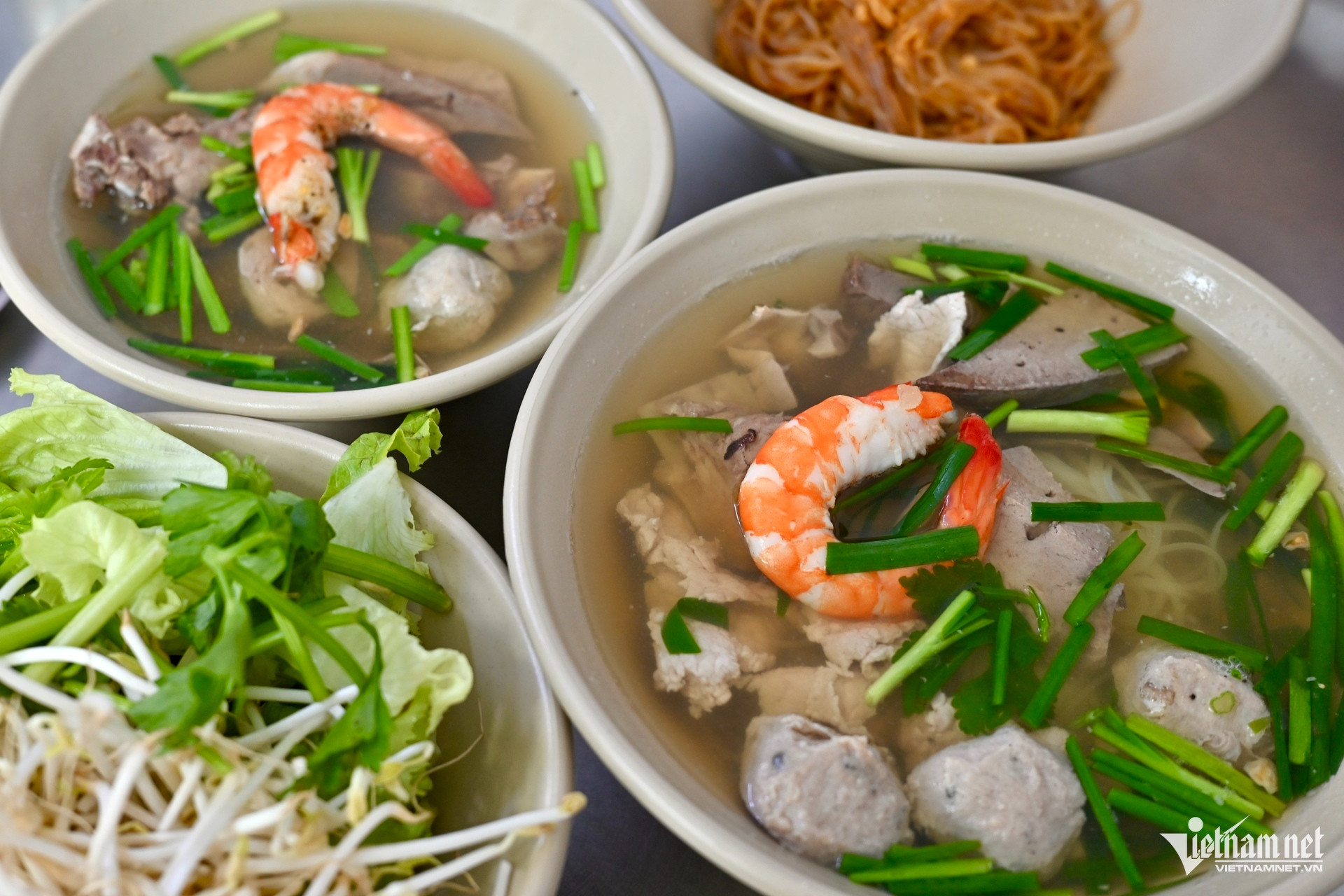
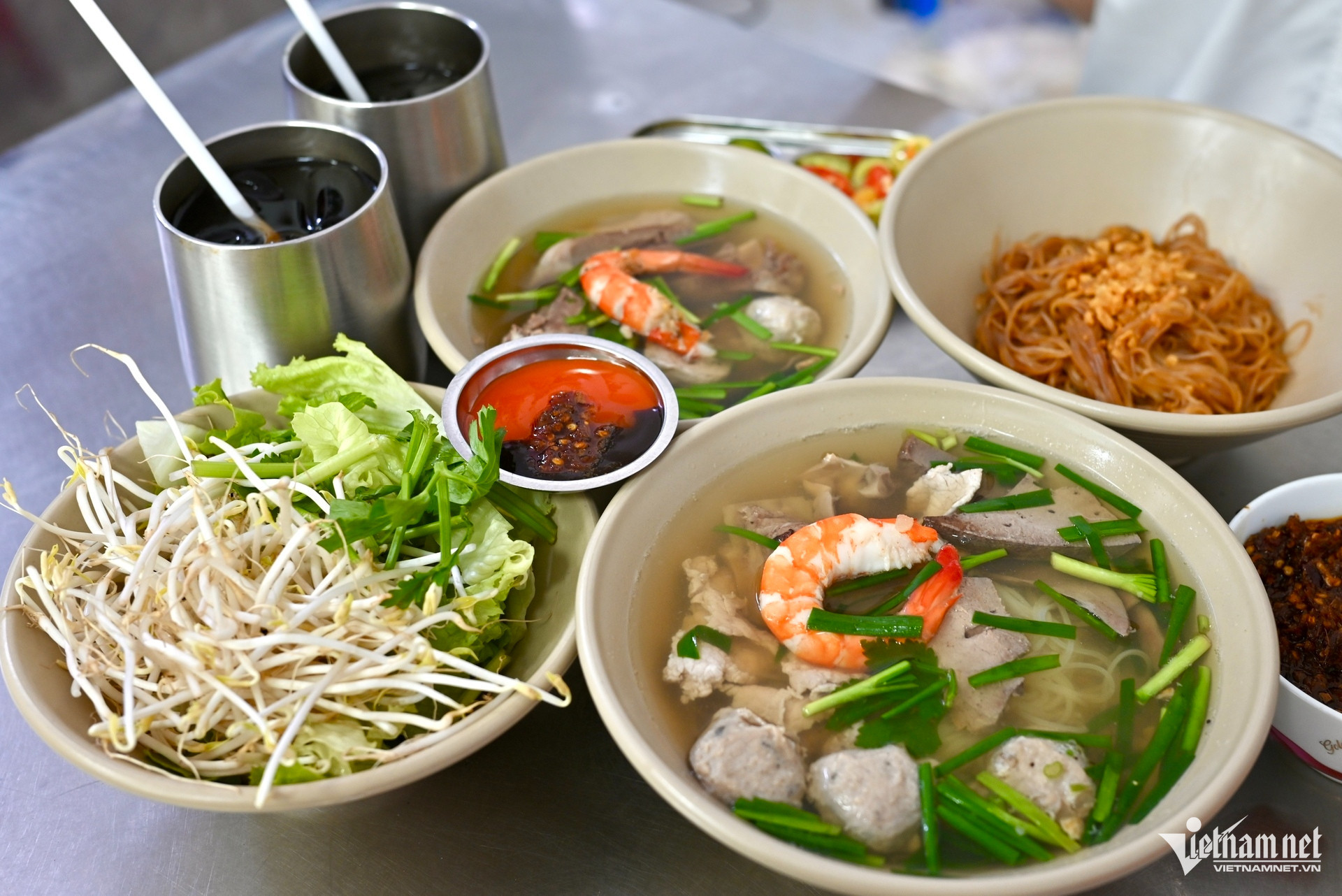
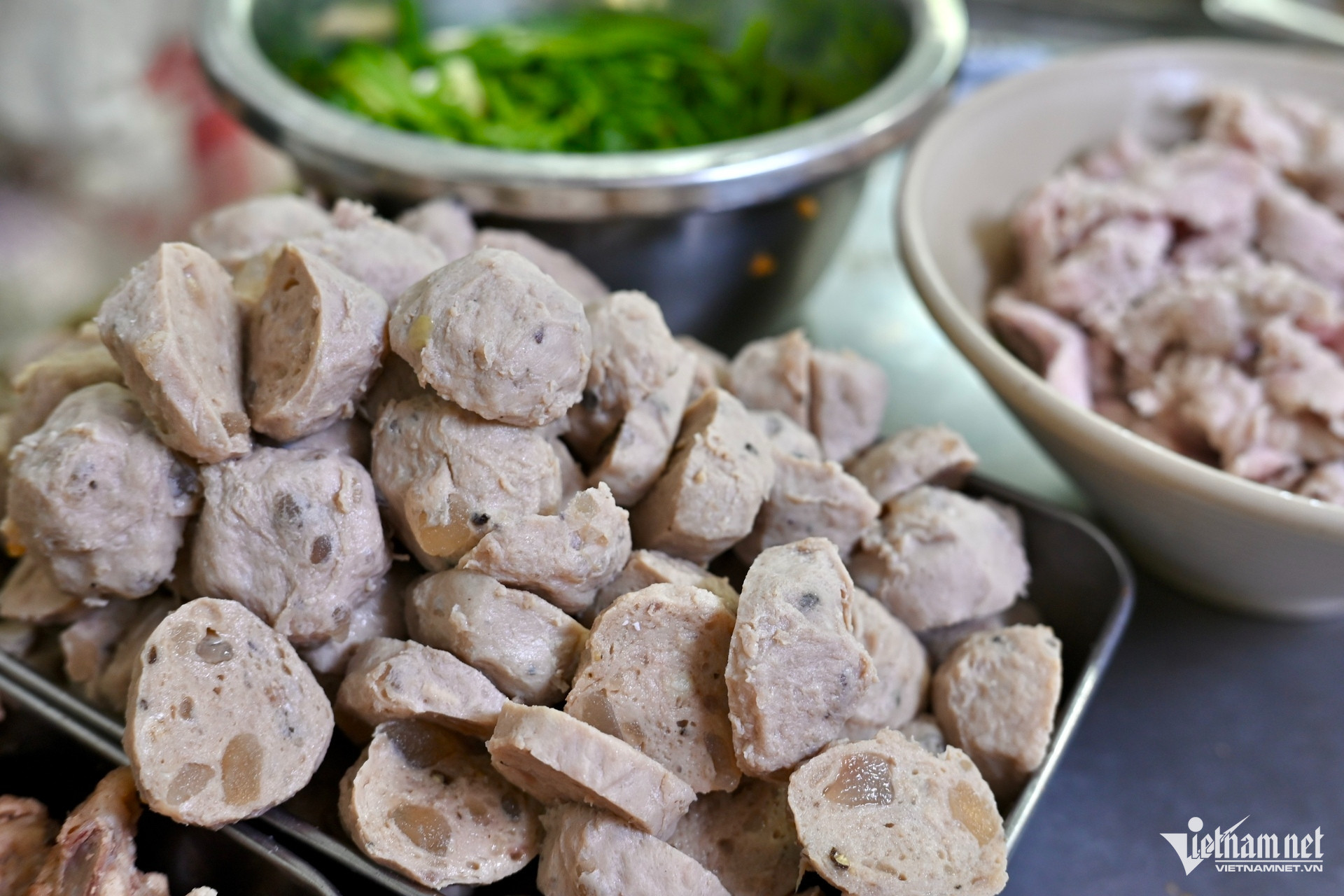
A typical bowl may contain thinly sliced lean pork, simmered pork ribs, peeled shrimp, pork heart, liver and beef balls.
Lean pork is sliced thinly and blanched in hot broth only after a customer places an order, keeping the meat tender, juicy and fresh.
The pork ribs are simmered for approximately 1.2 to 1.5 hours, long enough to become tender without falling apart.
Shrimp, pork heart and liver are purchased and prepared fresh each morning.
The beef balls, meanwhile, come from a specialist producer in Ho Chi Minh City.
They have become one of the restaurant's most popular toppings.
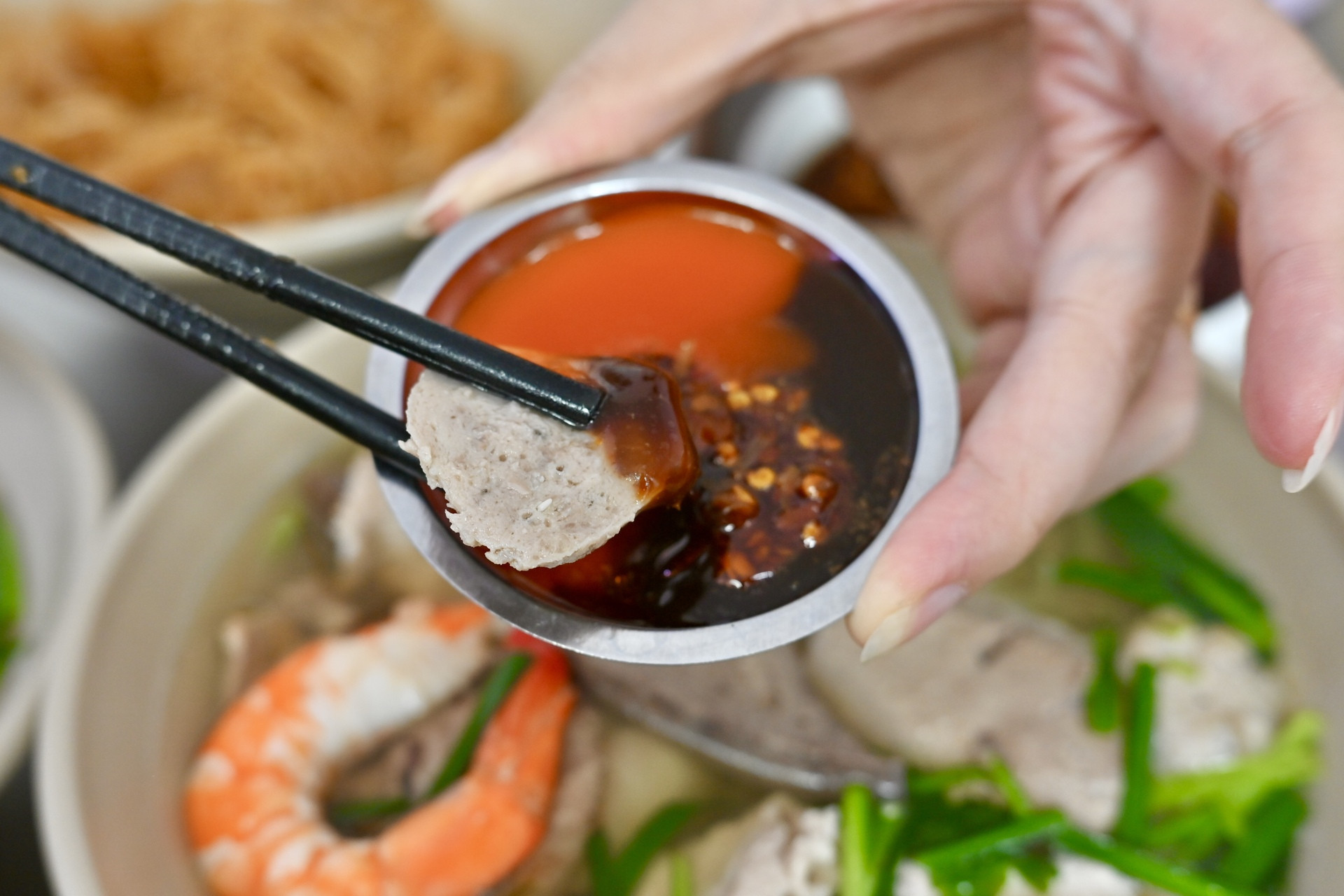
"I tried products from many suppliers before finding the beef balls I wanted," Nhung said. "They're rich in flavor, wonderfully fragrant and especially good when dipped in dark sauce and chili satay."
A bowl of hu tieu is assembled only when an order comes in.
The noodles are quickly blanched and placed in a bowl, followed by the lean pork, ribs, shrimp, heart, liver and beef balls.
Garlic chives and fried garlic are added before the hot broth is poured over everything.
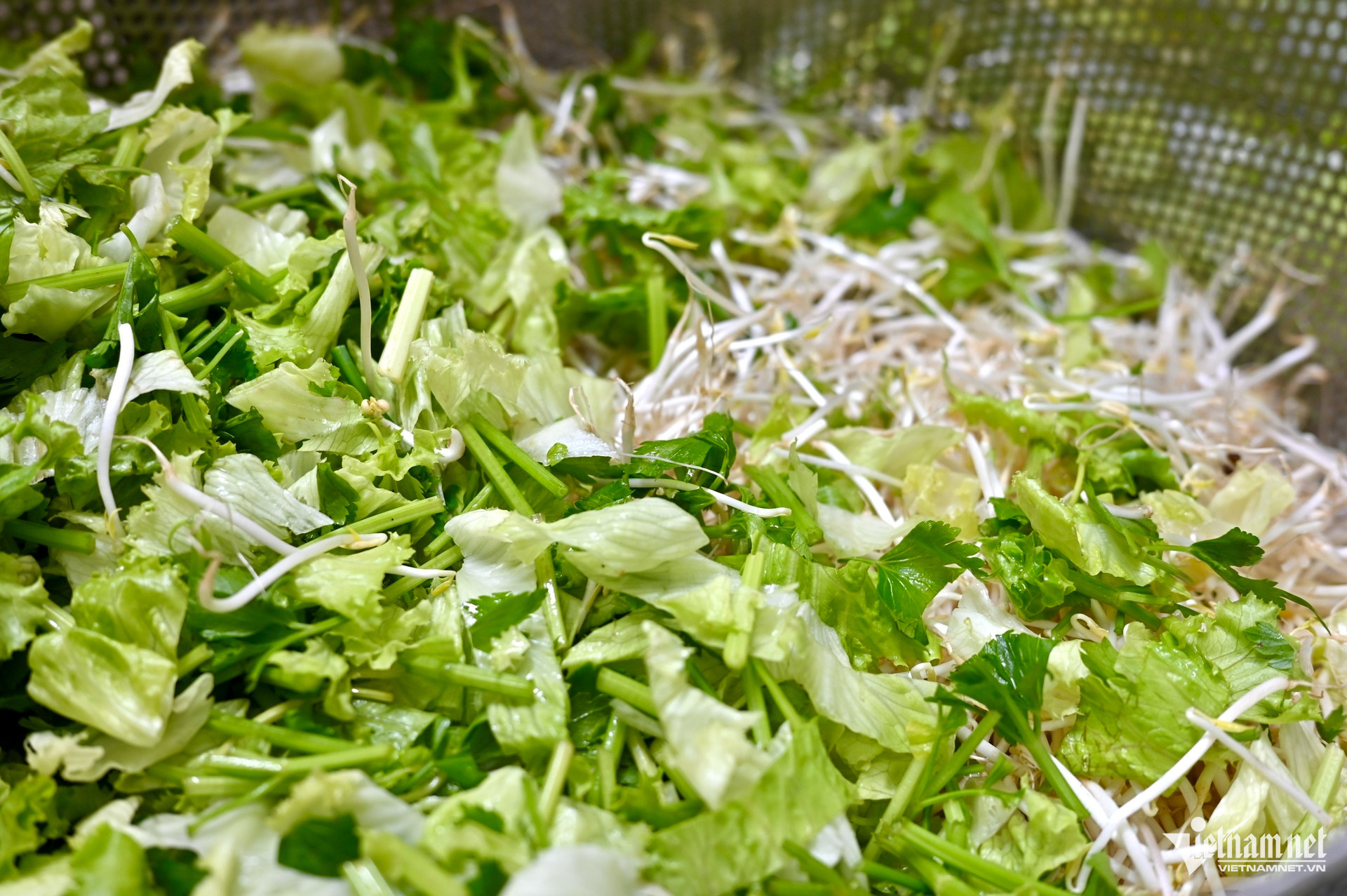
The dish is served with bean sprouts, lettuce and Chinese celery. Diners can add southern-style dark sauce or chili satay to suit their taste.
Nhung also makes the restaurant's chili satay herself.
Every five days, she and her staff prepare a fresh batch using lemongrass, garlic and fresh chilies.
The mixture must be stirred continuously over the stove for about two hours.
"In summer, the chili fumes can be so strong that they make our eyes sting," she said.
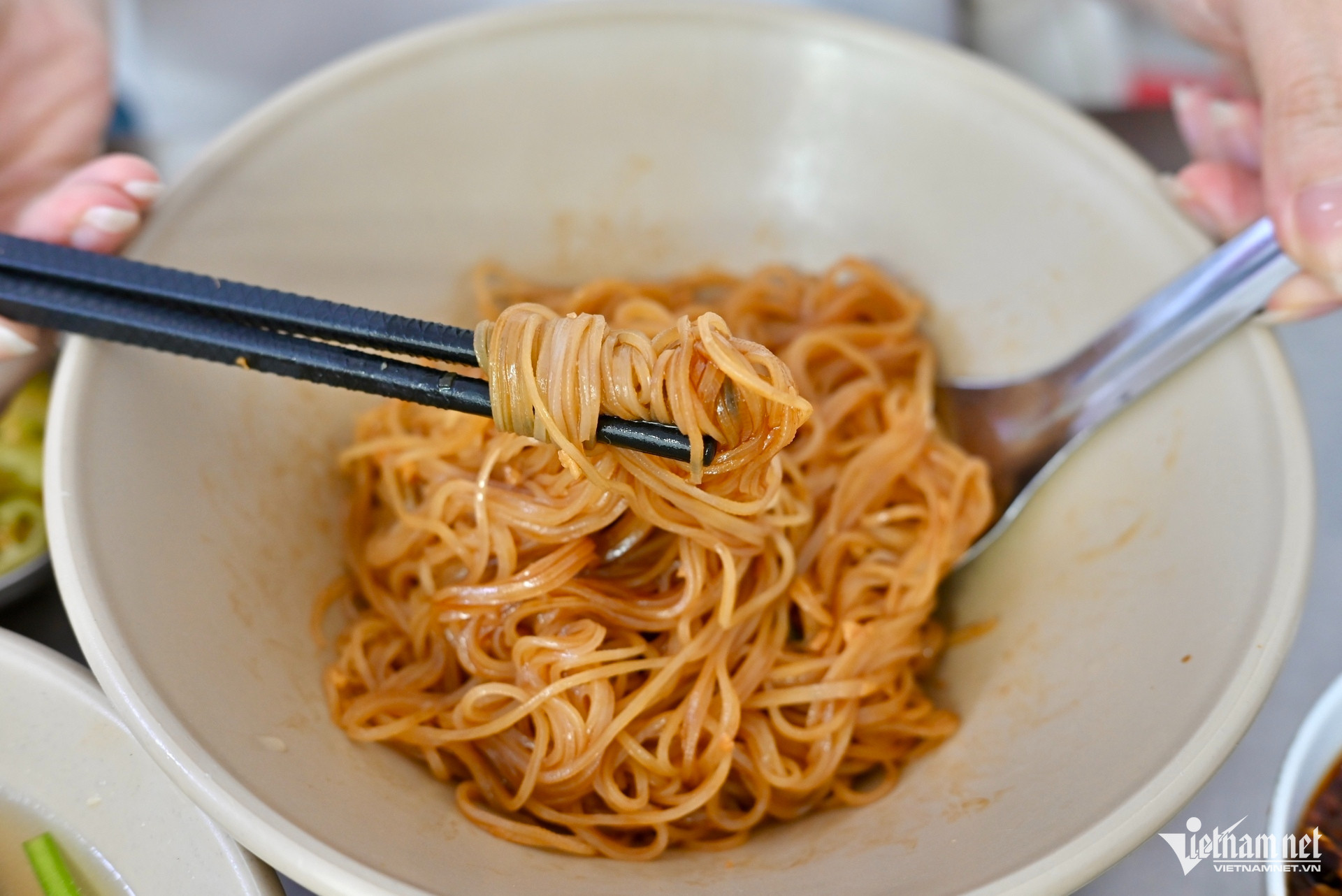
Alongside the soup version, the restaurant serves hu tieu kho, a dry-style noodle dish.
For this variation, the noodles are blanched until tender and tossed with a house-made sauce and fried garlic.
The toppings are served separately in a bowl of hot broth to keep them warm.
Diners can dip the meat and other ingredients into chili satay, chili sauce or chili paste for extra flavor.
Prices range from approximately $1.35 (VND35,000) for a bowl with lean pork to $2.70 (VND70,000) for the special version with lean pork, ribs, pork heart, liver, beef balls and shrimp.
A taste of childhood for southern Vietnamese diners in Hanoi
For some customers, Nhung's hu tieu offers more than a satisfying meal. It brings back memories of home.
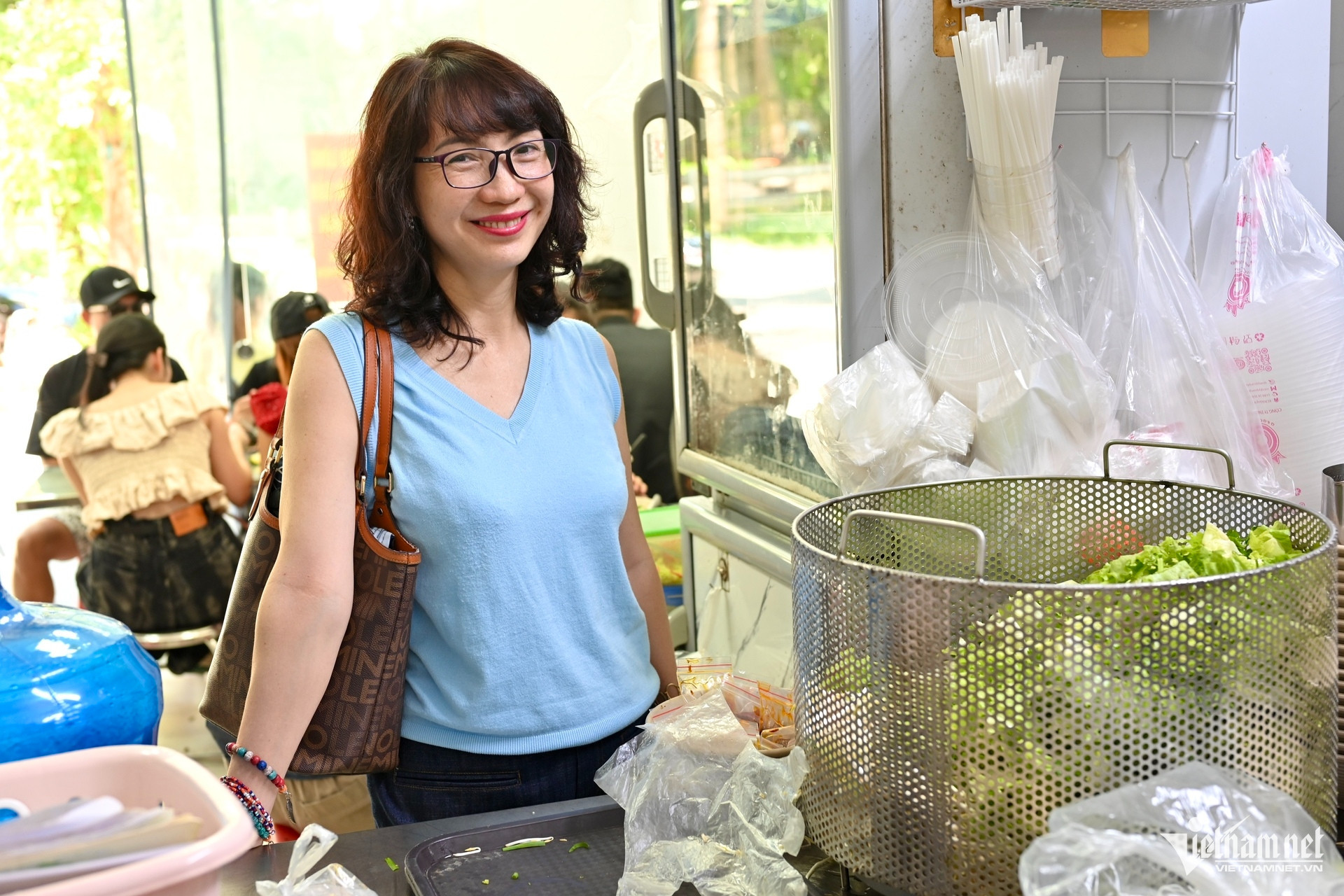
Thuy Dung, originally from southern Vietnam, has lived in Hanoi for around 30 years.
She discovered the restaurant more than a year ago and quickly became a regular.
The flavors reminded her of the hu tieu she ate as a child, although she admitted the location can be inconvenient for customers arriving by car and the restaurant is often crowded.
"When I happened to discover this place, I was genuinely surprised to find the same hu tieu flavor I remembered from childhood," Dung said.
"During the first week, I came here every single day. After that, I kept returning three or four times a week, even though it was crowded and sometimes I had to queue. The broth has a light, balanced sweetness. The beef balls are excellent, and the shrimp and pork are always fresh."
Another regular, Nguyen Ngoc, who lives in the Quan Hoa area, discovered the restaurant about six months ago.
Since then, she has made a habit of eating its dry-style hu tieu at least once a week.
"It's easy to eat and never feels too heavy," Ngoc said. "I've tried hu tieu in Ho Chi Minh City and several other places, but this restaurant's version suits my taste the best."
Positive reviews and word of mouth have helped the small eatery build a loyal customer base.
Yet its popularity has also created a practical challenge: with only about 30 seats and dishes requiring considerable preparation, the restaurant cannot always accommodate everyone who turns up.
Visitors hoping to enjoy a bowl of southern-style hu tieu without a lengthy wait are therefore advised to avoid the busiest lunch and dinner periods.
For Nhung, the long days, complicated preparation and ingredients traveling nearly 1,800km are part of what it takes to bring a familiar taste of southern Vietnam to diners in the capital.
Linh Trang - Thu Hien
.svg)
