 Vietnamnet.vn

 Podcast



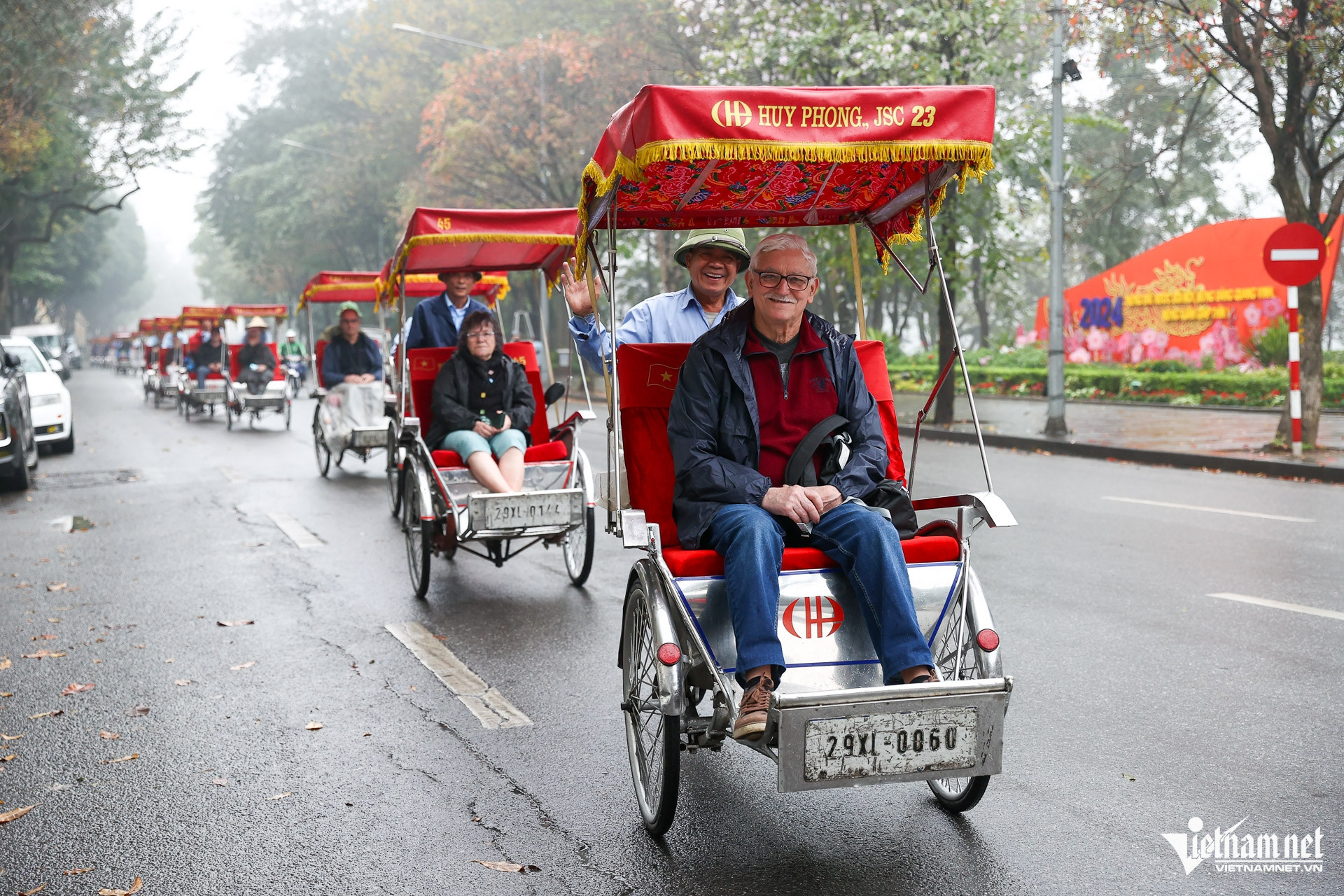
Hanoi’s tourism sector has made a remarkable comeback in 2025, not only recovering from the pandemic but surpassing pre-COVID levels in both visitor numbers and total revenue.
According to the Hanoi Department of Tourism, the capital expects to welcome over 33.7 million visitors in 2025, an increase of 20.8% compared with 2024.
This includes 7.82 million international visitors, up 22.8%, and 25.9 million domestic visitors, up 20.3% year-on-year.
Total tourism revenue is estimated at 134.46 trillion VND (approximately 5.3 billion USD), a 21.5% rise over 2024.
Compared with 2019 - when Hanoi hosted about 29 million visitors, its highest pre-pandemic figure - the city’s tourism scale has now fully recovered and exceeded that benchmark.
Deputy Director of the Hanoi Department of Tourism Tran Trung Hieu said these achievements were driven by the city’s strong investment in infrastructure, particularly in transport and hospitality.
Hanoi currently boasts the Noi Bai International Airport, which connects to major global destinations, an expanding urban expressway and ring-road network, and over 3,700 accommodation facilities, including numerous international 3–5-star hotels catering to MICE travelers, high-end guests, and global events.
A new wave of international visitors
In recent years, Hanoi has witnessed a significant shift in its international visitor profile.
Besides traditional markets from Northeast Asia and ASEAN, the city is increasingly attracting travelers from Europe, the Americas, the Middle East, and Australia.
According to Vietnam Airlines, visitor numbers from Europe, Australia, and the Americas have continued to grow steadily, with increases of 10–30% compared with pre-pandemic levels, except for the Russian market, which has only recovered to 72% of 2019 figures after flights resumed in May 2025.
Australian arrivals alone surged by 64.5%, reaching 135,382 visitors in 2025 versus 82,275 in 2019.
Meanwhile, Asian markets remain dominant, with 4.5 million arrivals to Hanoi in the first ten months of 2025 - a 20% increase from 2024 and 26% higher than 2019.
Northeast Asia (Japan, South Korea, China) leads with around 60% of total visitors, while Indian tourists increased fivefold from 2019, driven by the launch of new direct flight routes.
Arrivals from Halal countries in the Middle East and Southeast Asia also rose 20–30% between 2022 and 2025.
Opportunities and challenges in Hanoi’s tourism model
Despite strong growth, Deputy Director Tran Trung Hieu acknowledged that tourist spending and length of stay remain modest.
International tourists stay only two to three nights on average, and spending on shopping remains limited.
Vietnam Airlines representatives noted that Hanoi is often a “transit destination” - a starting or ending point rather than a city where tourists linger.
Travel agencies also warned of stiff competition from regional hubs such as Bangkok, Seoul, Singapore, and Kuala Lumpur, where tourism products are more diverse and event-driven.
Hanoi still lacks large-scale, distinctive international events that could anchor major inbound promotion campaigns.
In 2026, the capital targets 35.8 million visitors, up 6.2% from 2025, including 8.6 million international arrivals and 27.2 million domestic travelers, with total revenue projected at 160 trillion VND (about 6.3 billion USD), a 19% year-on-year increase.
Repositioning Hanoi’s tourism brand
According to Nguyen Quy Phuong, Head of Tourism Promotion at the Vietnam National Administration of Tourism, rebranding Hanoi’s tourism image has become an urgent priority.
“Hanoi should no longer be seen only as a ‘heritage city’,” he said, “but as a destination where tradition and modernity coexist, where cultural values are not just preserved but lived every day.”
This distinct identity aligns with global trends in experiential and cultural tourism, providing a strong foundation for strategic marketing campaigns.
He emphasized that brand repositioning must go hand-in-hand with data-driven, digital marketing strategies, focusing on creative content and targeted outreach rather than broad-based promotion.
Expanding regional tourism chains
To extend visitor stays and boost spending, experts propose that Hanoi deepen regional linkages with Ninh Binh, Ha Long, and Sa Pa, forming multi-destination cultural, heritage, nature, and leisure itineraries.
Such linkages could increase the average stay of international tourists from 2.8 days to 4–6 days, generating greater economic impact while enhancing the capital’s visibility in international markets.
Hanoi’s tourism success has marked a new phase - one where growth must now be paired with brand sophistication and global resonance.
PV
.svg)
