 Vietnamnet.vn

 Podcast



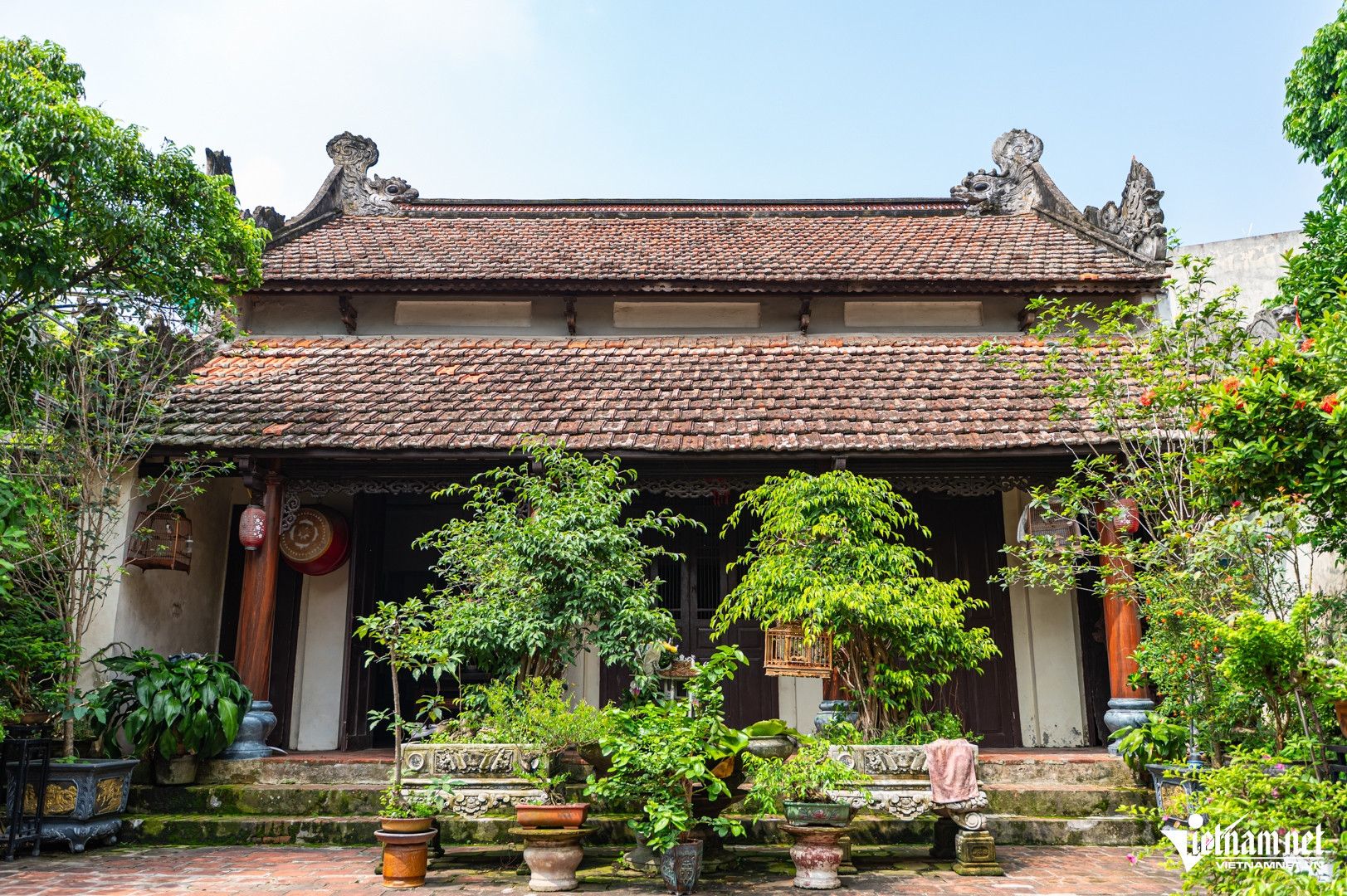
The house's timeless architecture has made it a sought-after filming location. Photo: Huy Nguyen.
Linh Trang
Carefully preserved by the Nghiem Xuan family across 17 generations, the historic residence has also become one of Vietnam's most recognizable film locations.
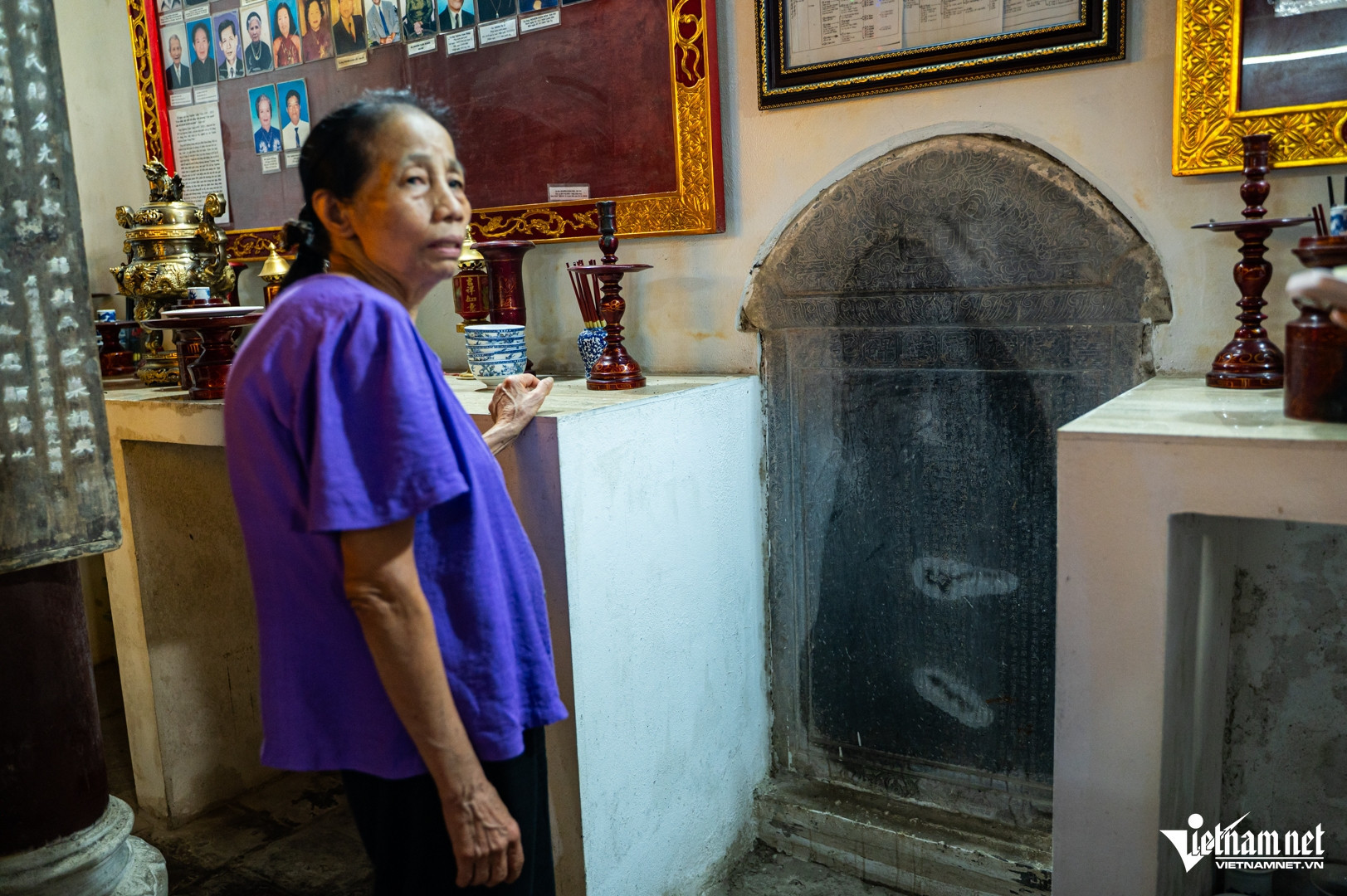
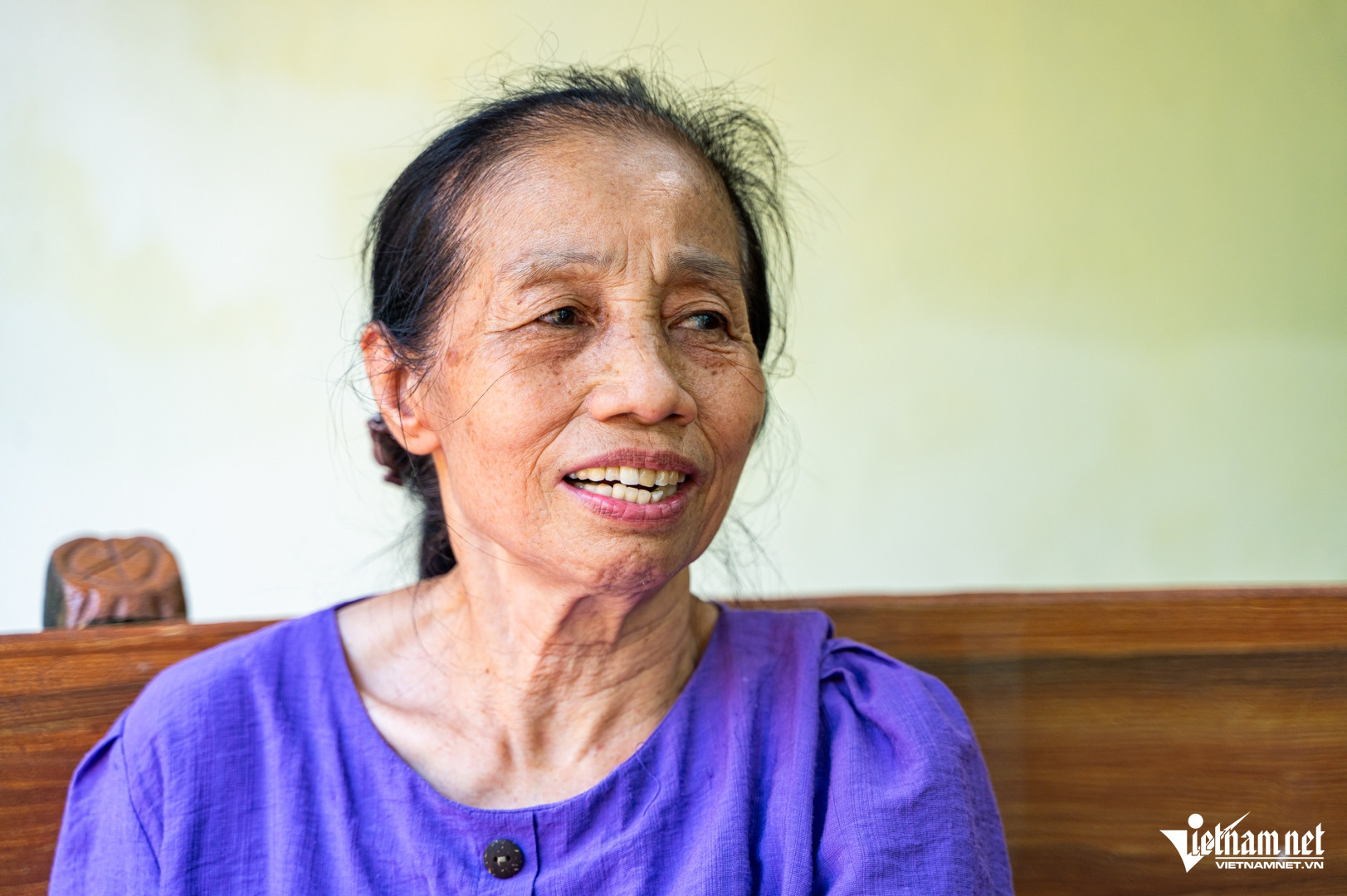
Nearly 80 years old, Hoang Thi Yen still sweeps the courtyard each day, lights incense and tends every corner of the Nghiem Xuan ancestral house.
A daughter-in-law of the family's 15th generation, she has spent more than half a century caring for the property. Today, her grandchildren - the family's 17th generation - also live here.
The Nghiem Xuan family is one of Tay Mo's most prominent lineages, long known for its tradition of academic achievement.
Yen married into the family in 1975. Less than a decade later, her husband - the family's eldest son - passed away, leaving her to raise three young children while caring for her elderly father-in-law and taking responsibility for maintaining the ancestral altar and family shrine.
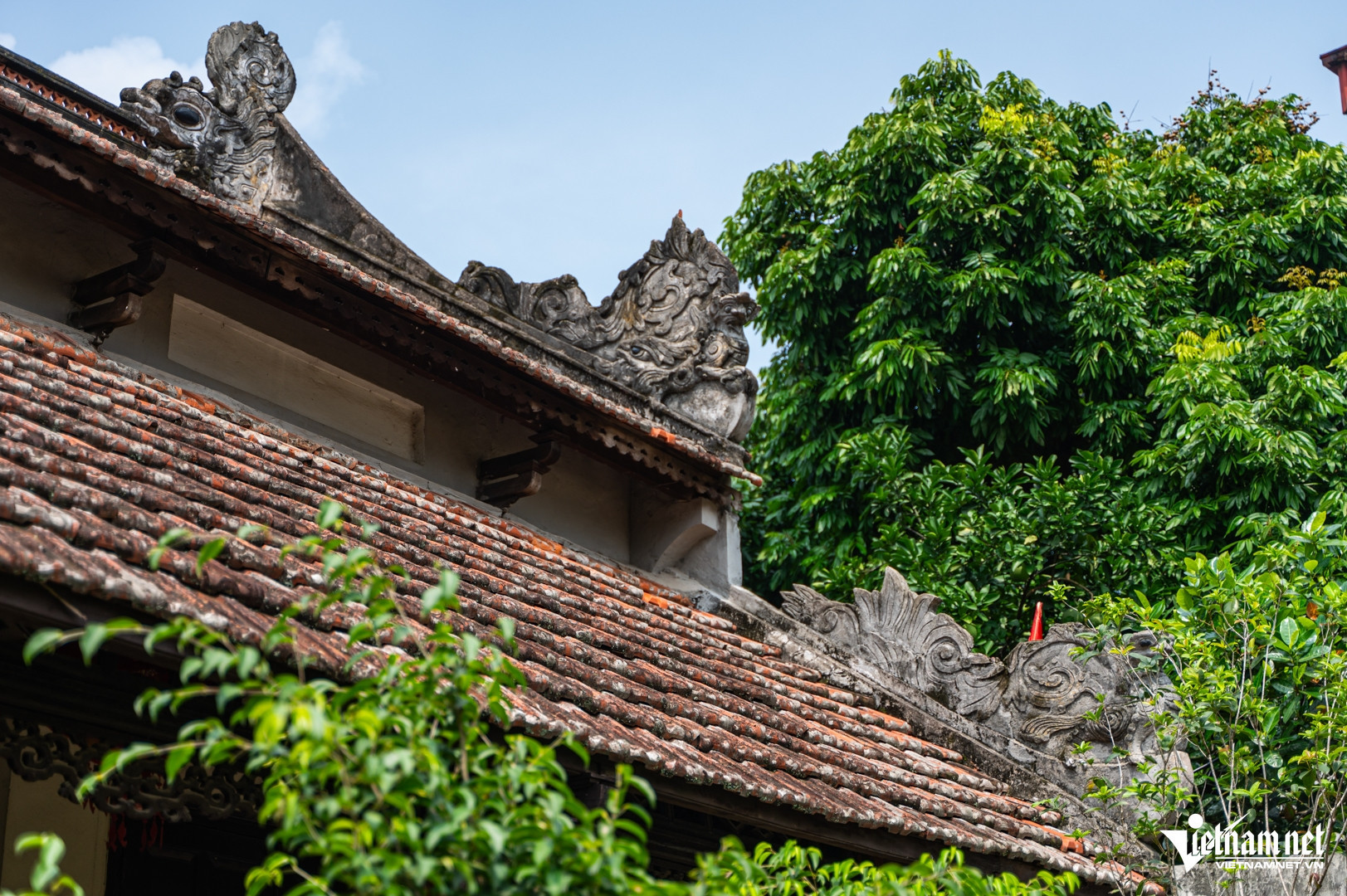
Passing through the entrance gate feels like stepping into another era. The property still retains three historic gates, each facing a different direction. Their curved roofs are decorated with traditional scroll motifs and finely carved ornamental details.
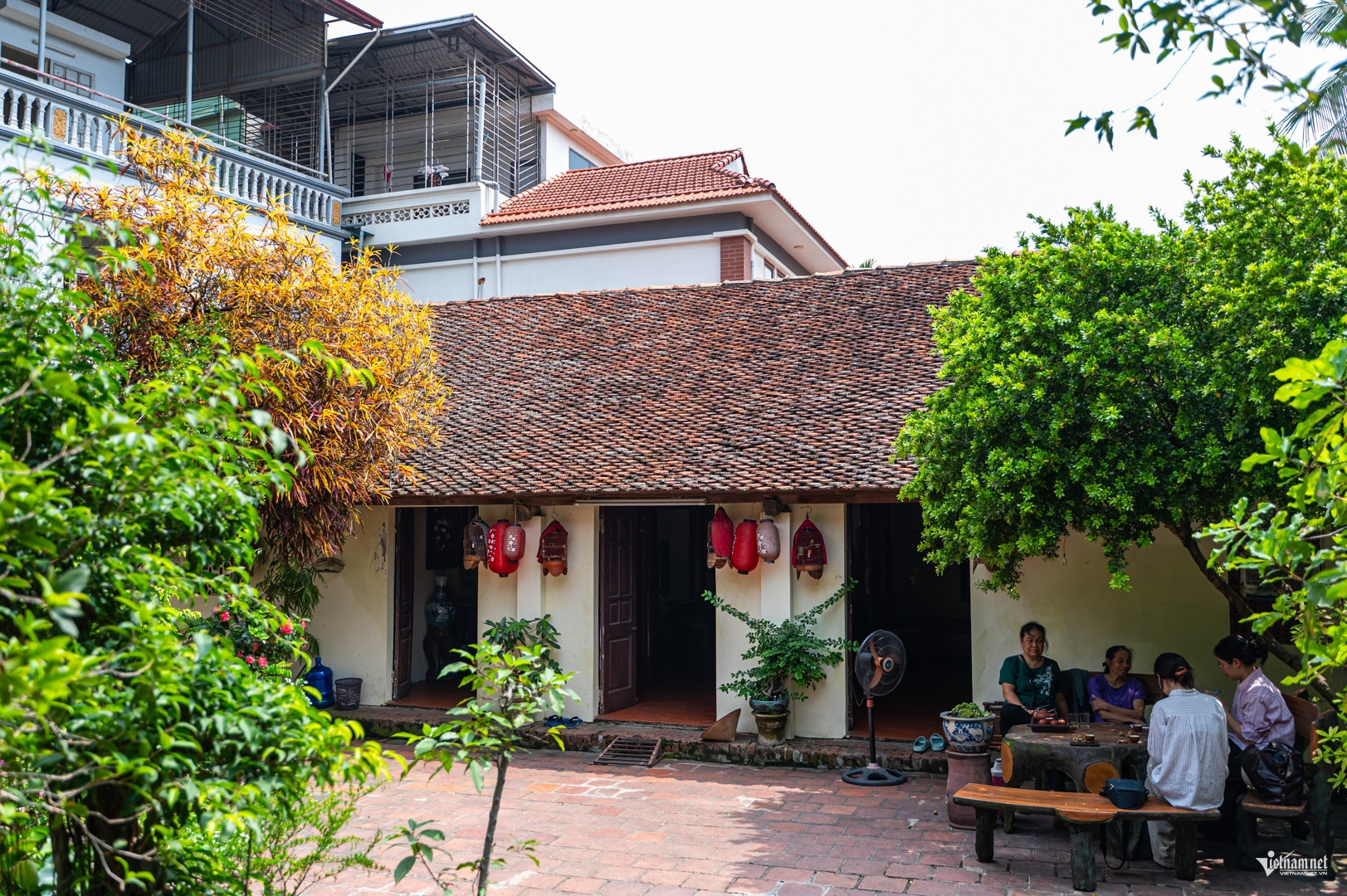
Beyond the gates lie an old brick courtyard, a lush garden shaded by mature trees and the delicate fragrance of ngau flowers. The sounds of the city quickly fade, replaced by the quiet atmosphere of a traditional northern Vietnamese home.
Two monumental stone pillars stand before the ancestral hall, serving as enduring symbols of the Nghiem Xuan family for more than two centuries. The ancestral hall itself follows traditional Vietnamese architecture with a distinctive eight-roof design.
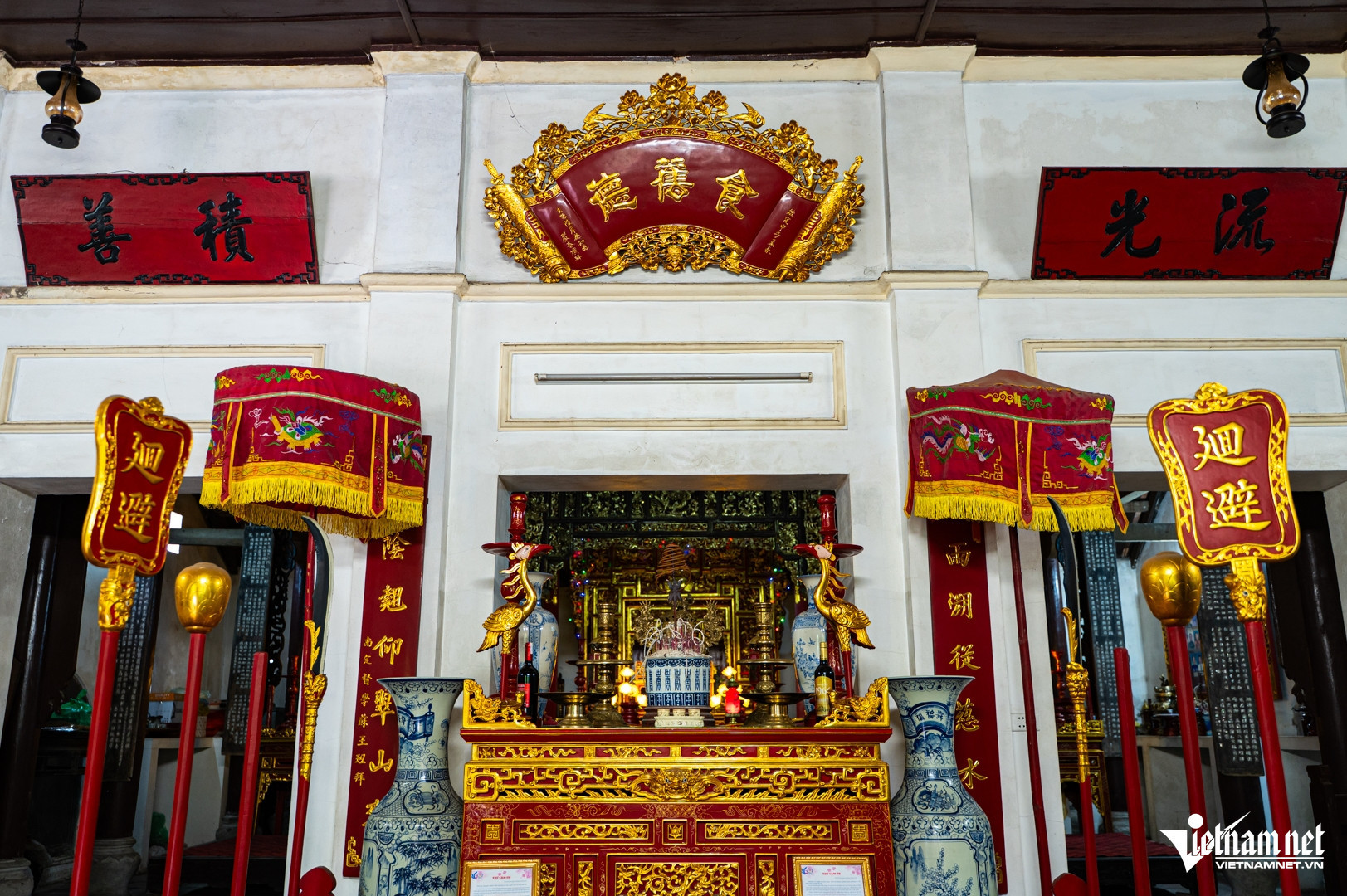
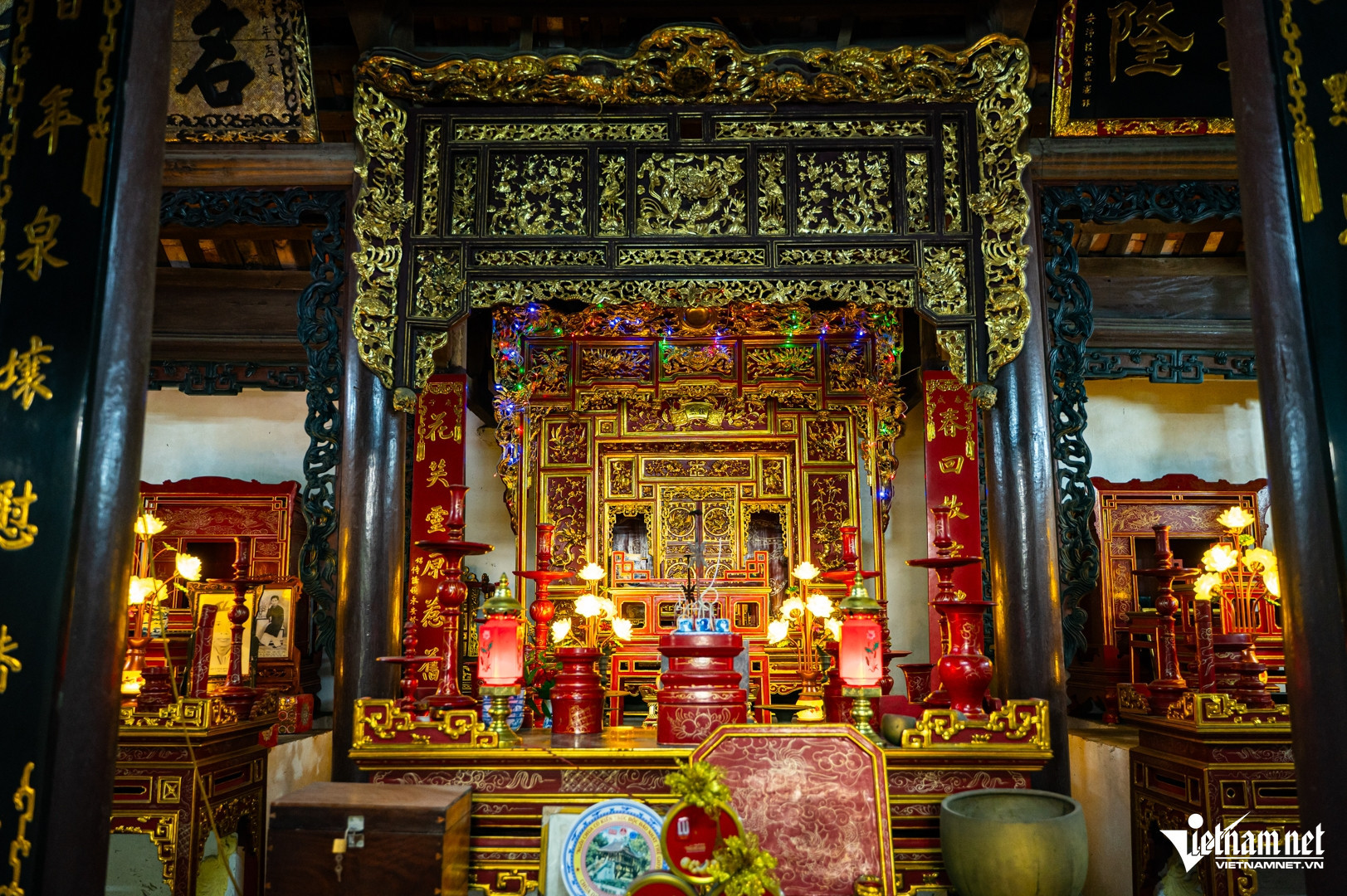
The outer chamber is dedicated to local guardian deities and the preparation of ritual offerings, while the inner chamber serves as the family's solemn ancestral shrine.
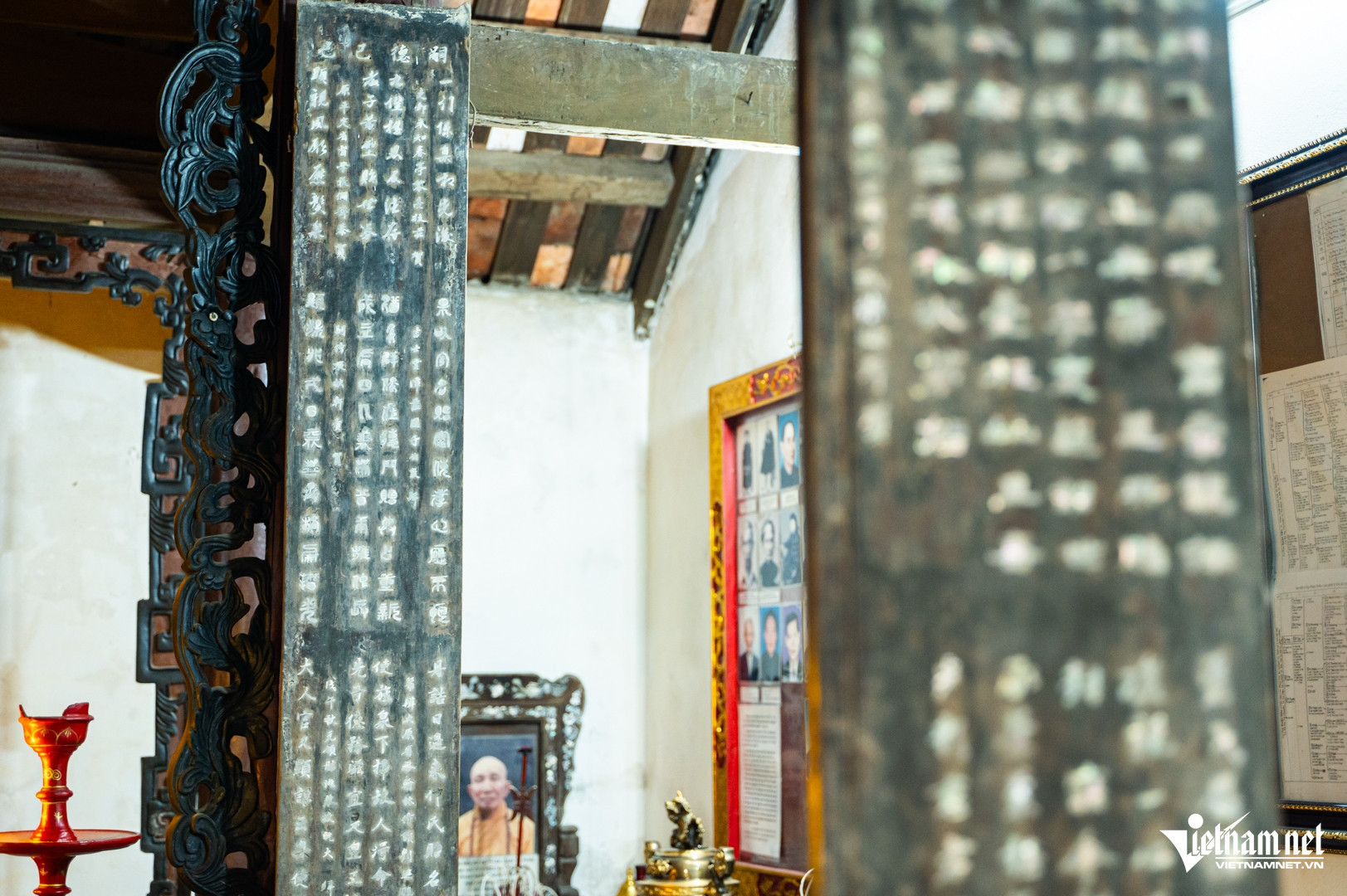
The building continues to preserve numerous valuable artifacts, including gilded horizontal plaques, mother-of-pearl inlaid parallel sentences, gold-leaf ceremonial panels and ancient stone steles inscribed in Classical Chinese.
These inscriptions record generations of successful scholars from the family while passing on teachings about virtue, morality and good conduct.
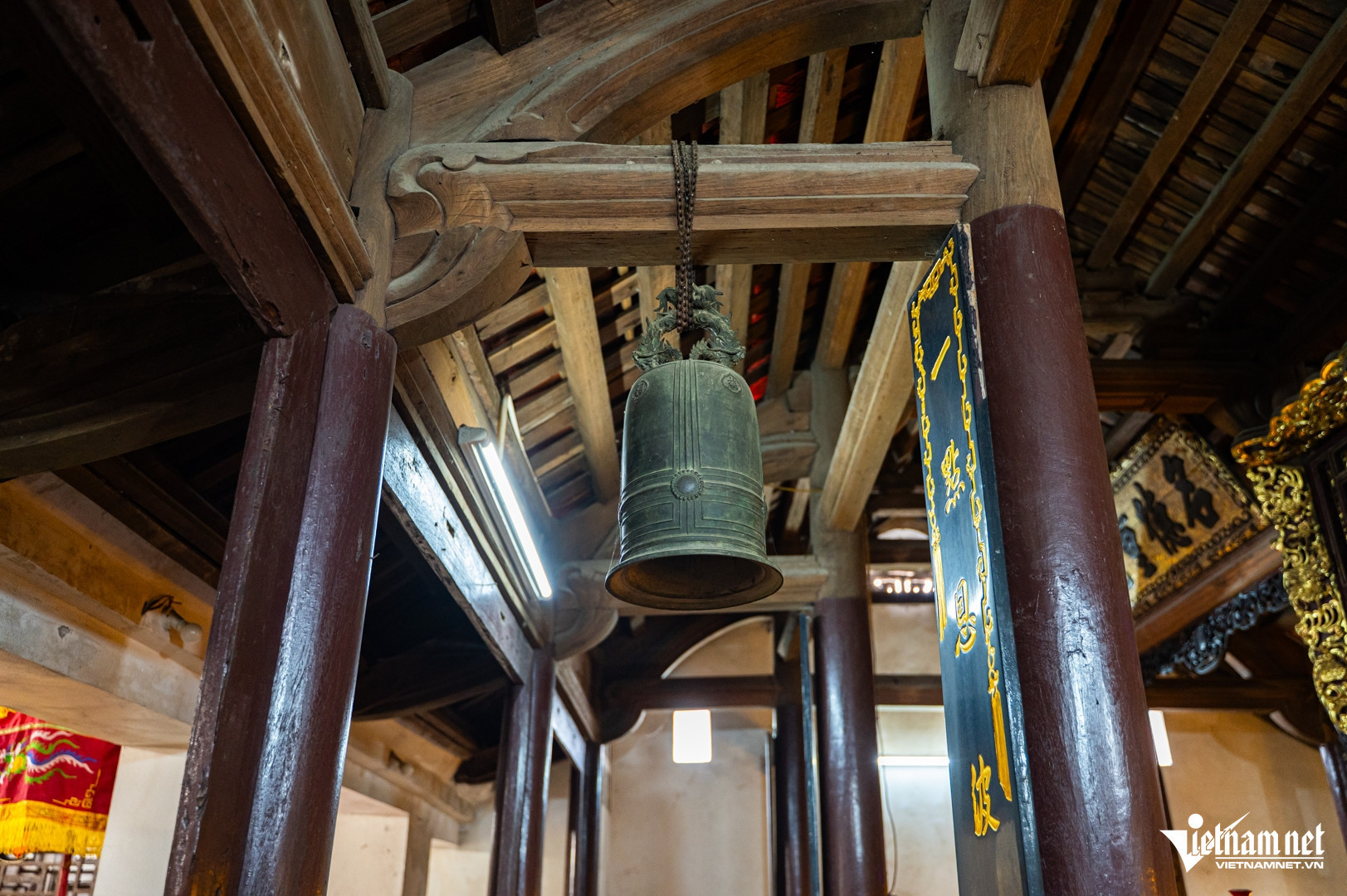
The interior also retains many artifacts dating back more than 200 years. Remarkably, despite centuries of historical upheaval, the original wooden framework, pillars, beams and roof remain largely intact.
Intricately carved dragons and phoenixes still decorate the timber structure, reflecting the exceptional craftsmanship of earlier generations.
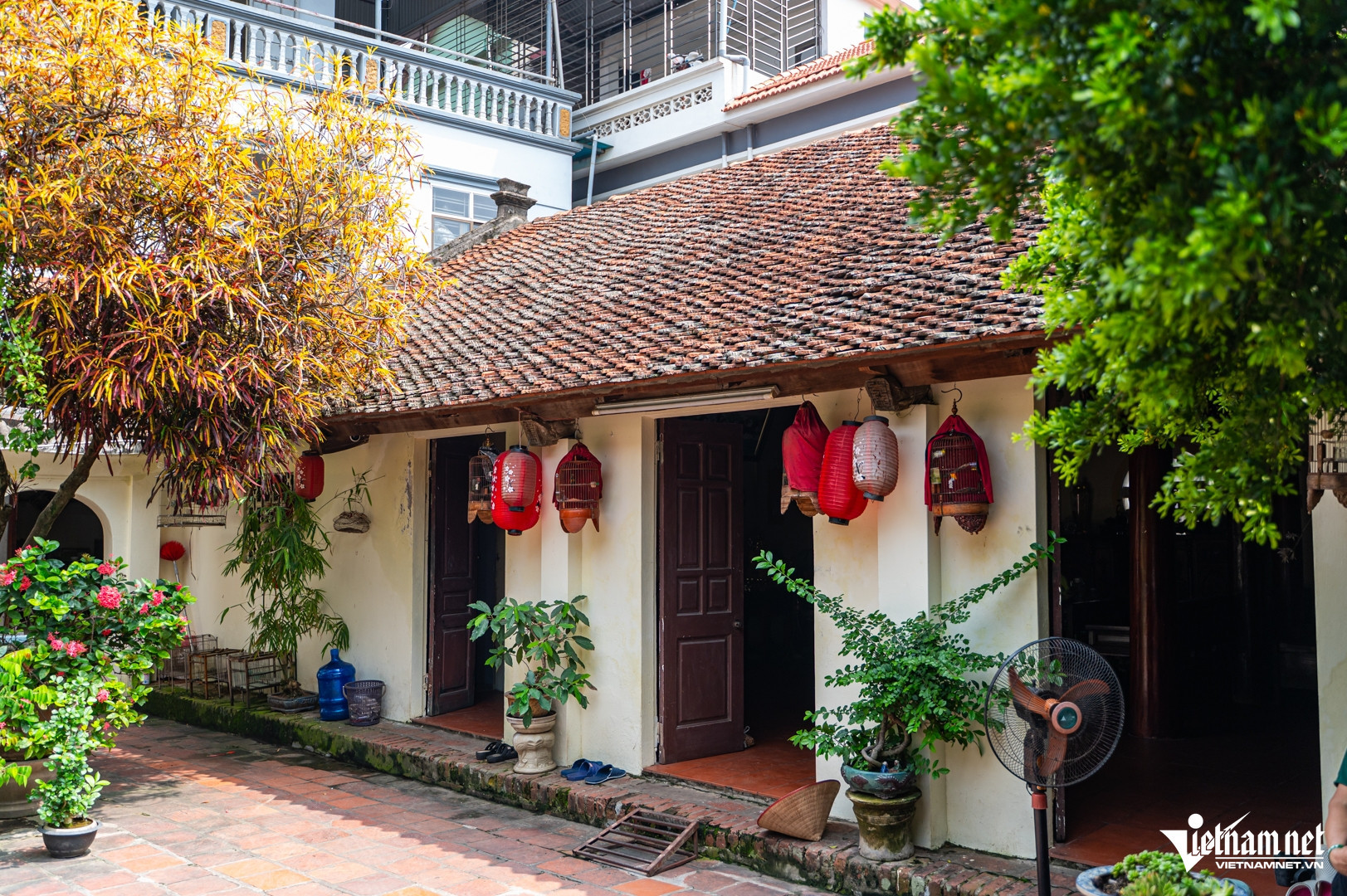
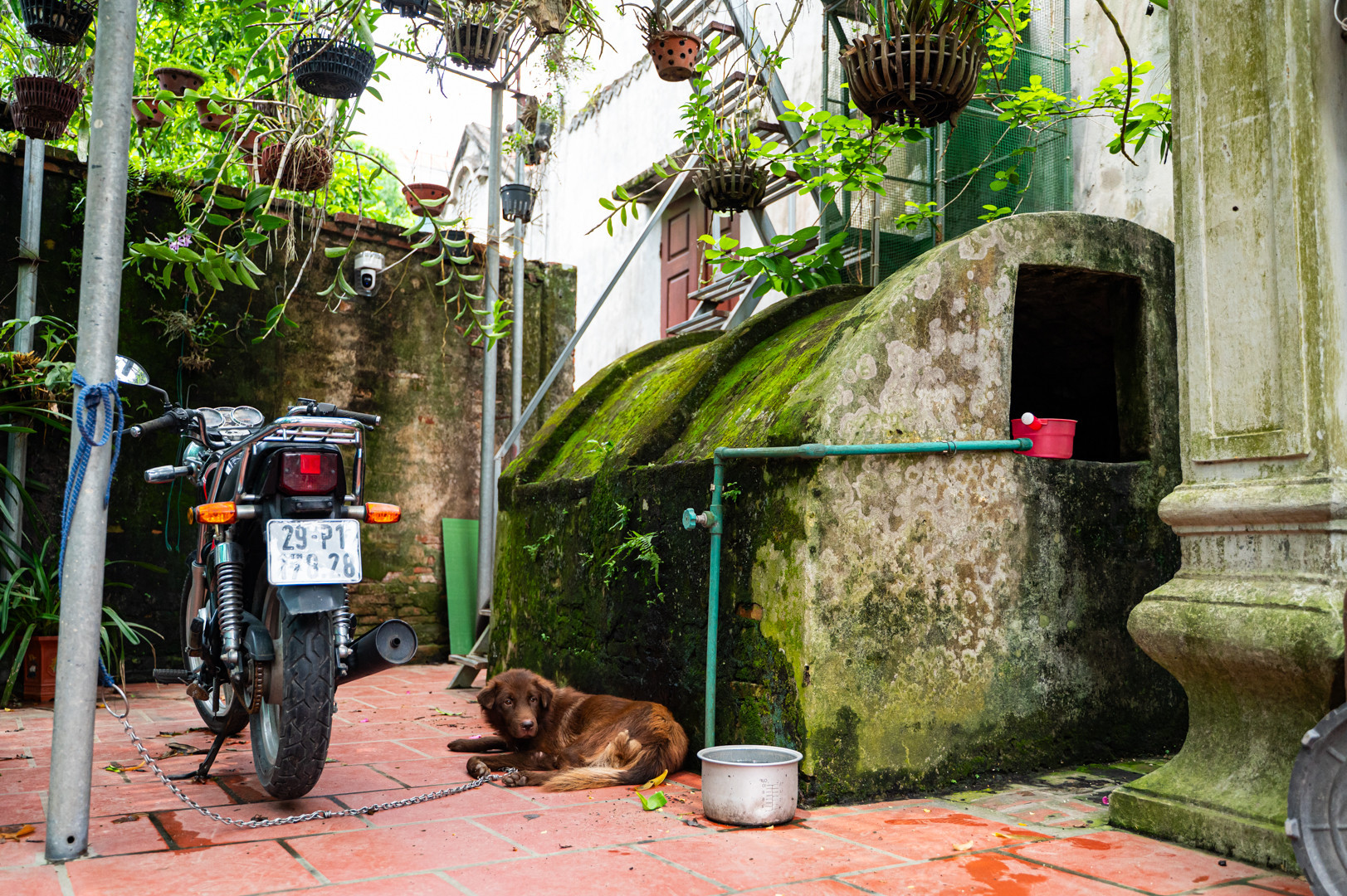
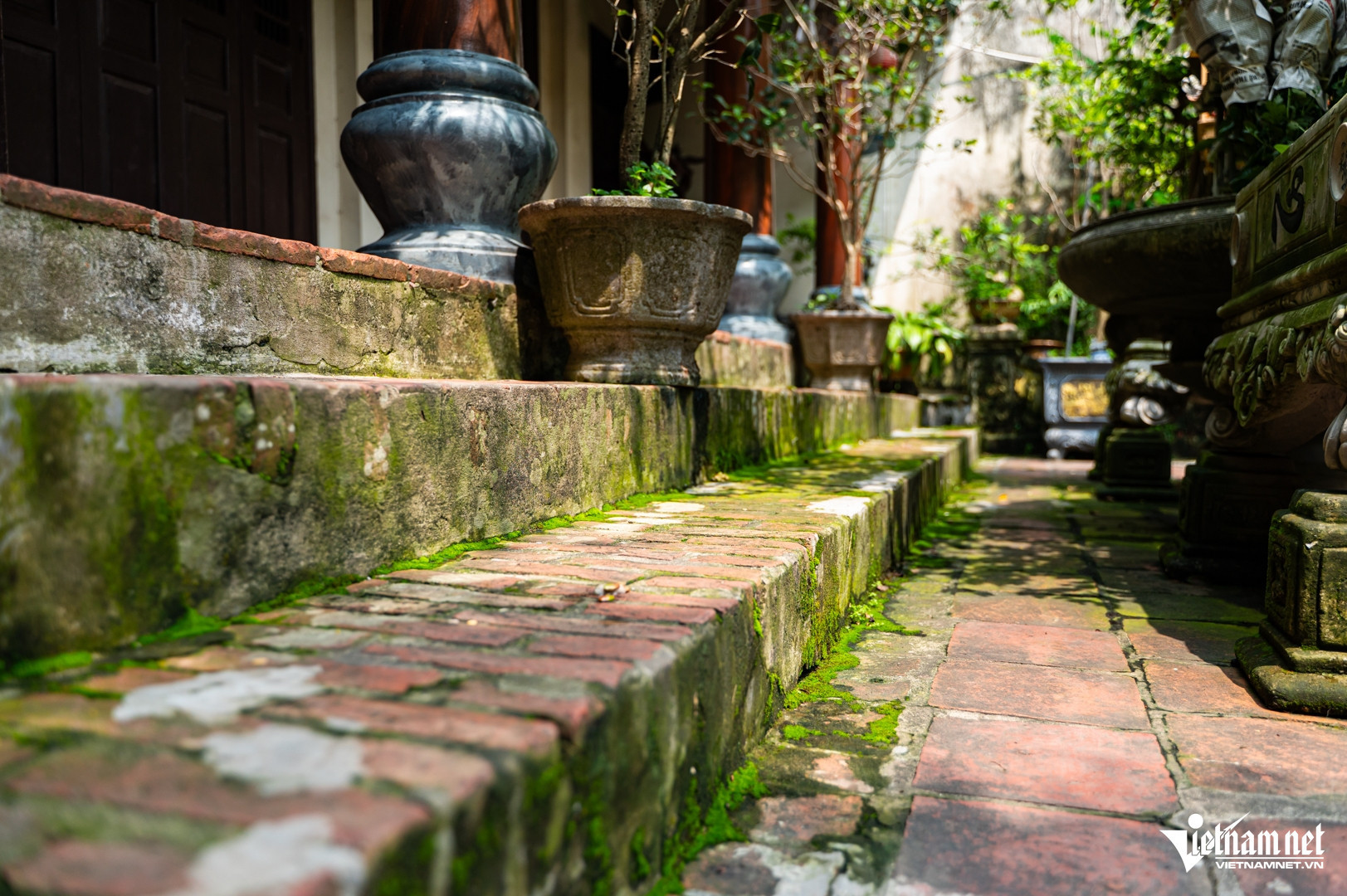
Facing the ancestral hall is a traditional five-bay residence where members of the family continue to live. Its terracotta roof tiles, old water cistern, ceramic jars and moss-covered walls preserve the atmosphere of a classic northern Vietnamese village.
"Our ancestors held many official positions, so they built this home with extraordinary care," Yen said. "Every roof tile, brick and household object has been preserved as faithfully as possible. Whenever repairs are needed, our family carries them out with great care."
Even during Hanoi's hottest summers, the thick traditional structure remains naturally cool and comfortable. During major holidays, Lunar New Year and ancestral commemorations, the house fills with descendants returning home.
As the eldest daughter-in-law and head of her branch of the family, Yen managed the family's ancestral ceremonies for many years before gradually passing those responsibilities to her eldest son and daughter-in-law.
"Our family has three branches," she said. "In my branch alone, we prepare 35 banquet tables for major commemorations. Our descendants have achieved success in many different fields, but they always remember their roots and remain united."
More than two centuries after it was built, the Nghiem Xuan ancestral house continues to preserve not only traditional architecture but also the family's shared history, cultural identity and enduring respect for education.
A familiar face on screen
Its well-preserved appearance and convenient location near central Hanoi have made the house a favorite filming location for decades. That is why many visitors immediately recognize it, even if they cannot remember where they have seen it before.
According to Yen, the first production filmed here was "Bac Ca – Nguoi Sung Suong," directed by Tran Luc, in the early 2000s.
It was followed by numerous well-known television dramas and films, including "Ma Lang," "Dat va Nguoi," "Khi Dan Chim Tro Ve," "Gio Lang Kinh," "13 Nu Tu," "Dam Cuoi Gia To Nhat Lang," the feature film "Loi Nguyen Huyet Ngai," and, most recently, the VTV series "Dong Ho Dem Nguoc."
Some productions remained at the house for an entire month. During filming, the courtyard filled with props and equipment, and the family's daily routine had to adjust.
"Sometimes my eldest son's family even stayed with relatives while filming was underway," Yen recalled. "But we were always proud to see our ancestors' house appear so beautifully on screen and become known to so many people."
Hosting film crews also created an unexpected source of income. An accomplished cook, Yen began preparing meals for production teams. Simple home-style dishes - including braised fish, braised pork, crab soup, boiled water spinach, pickled eggplant and fried tofu - became favorites among cast and crew members.
She remembers that in the early years, each meal cost only a little over VND10,000 (less than US$0.50 at the time).
At one point, she and several neighbors cooked for three film crews simultaneously, working from early morning until late at night. During winter shoots, she even prepared hot porridge for crews working until one or two o'clock in the morning.
The income earned from renting the location and catering for film crews helped her support the education of her three children. From time to time, Yen and other villagers were also invited to appear as extras.
One of her favorite memories was helping prepare dozens of imitation banquet trays made from pomelos and young bananas for a film scene.
"It was hard work, but it was also great fun," she said. "Many actors and directors became like family. They still visit during holidays, sometimes bringing me simple gifts like banh gio or fresh bread from Hanoi's Old Quarter. Those friendships are what I cherish most."
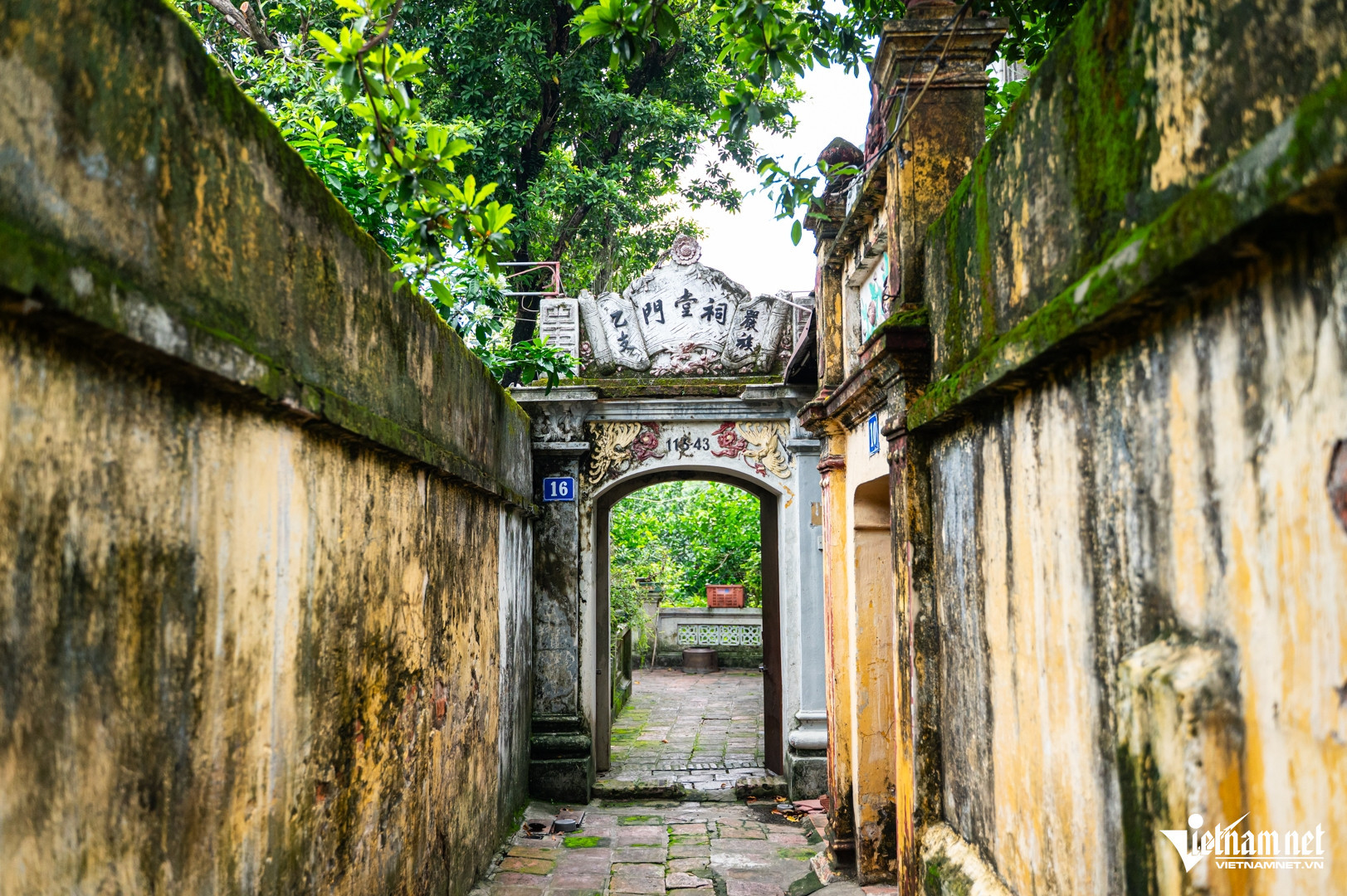
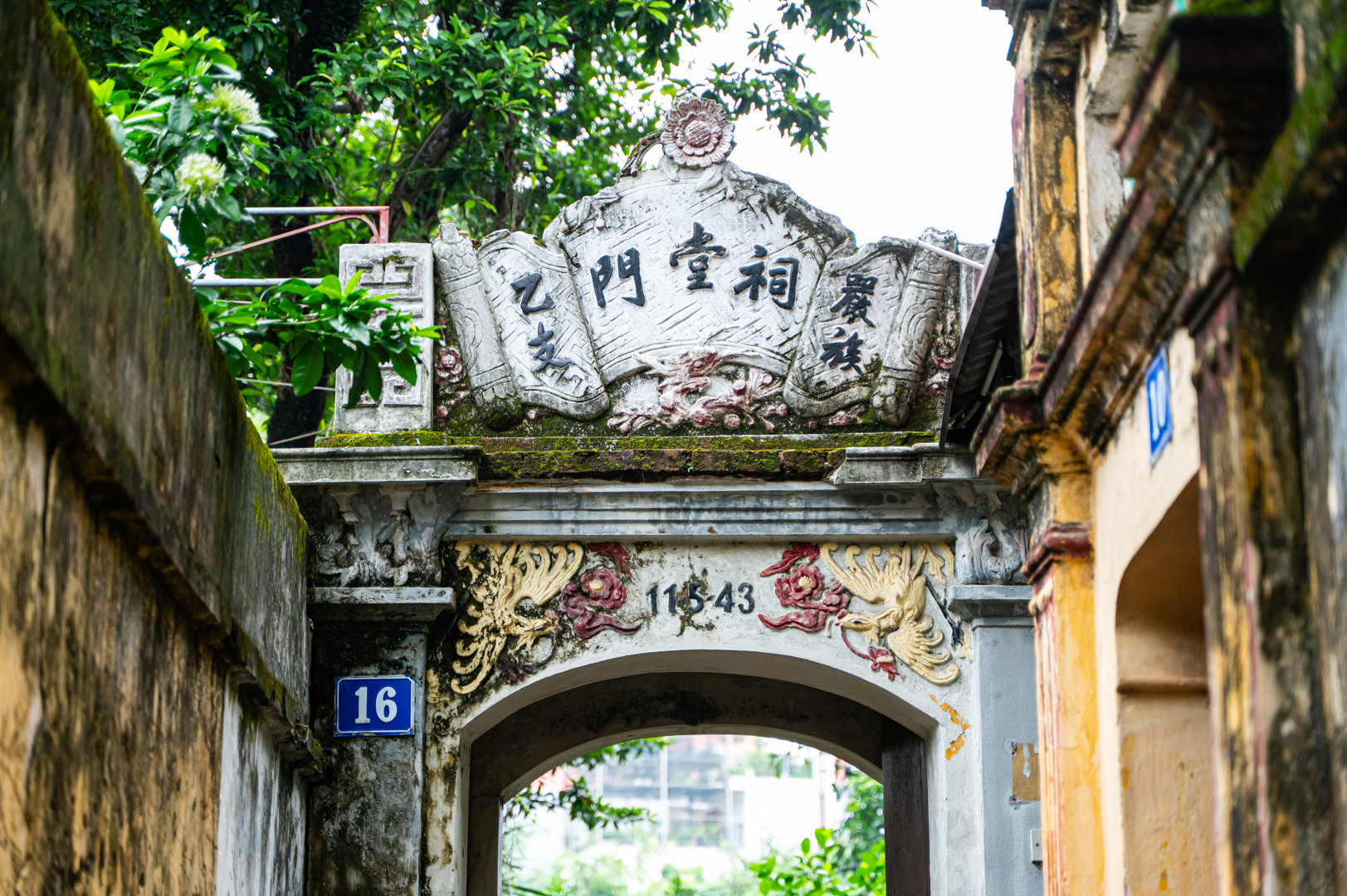
One of the historic entrance gates leading into the ancestral home. Photo: Huy Nguyen.
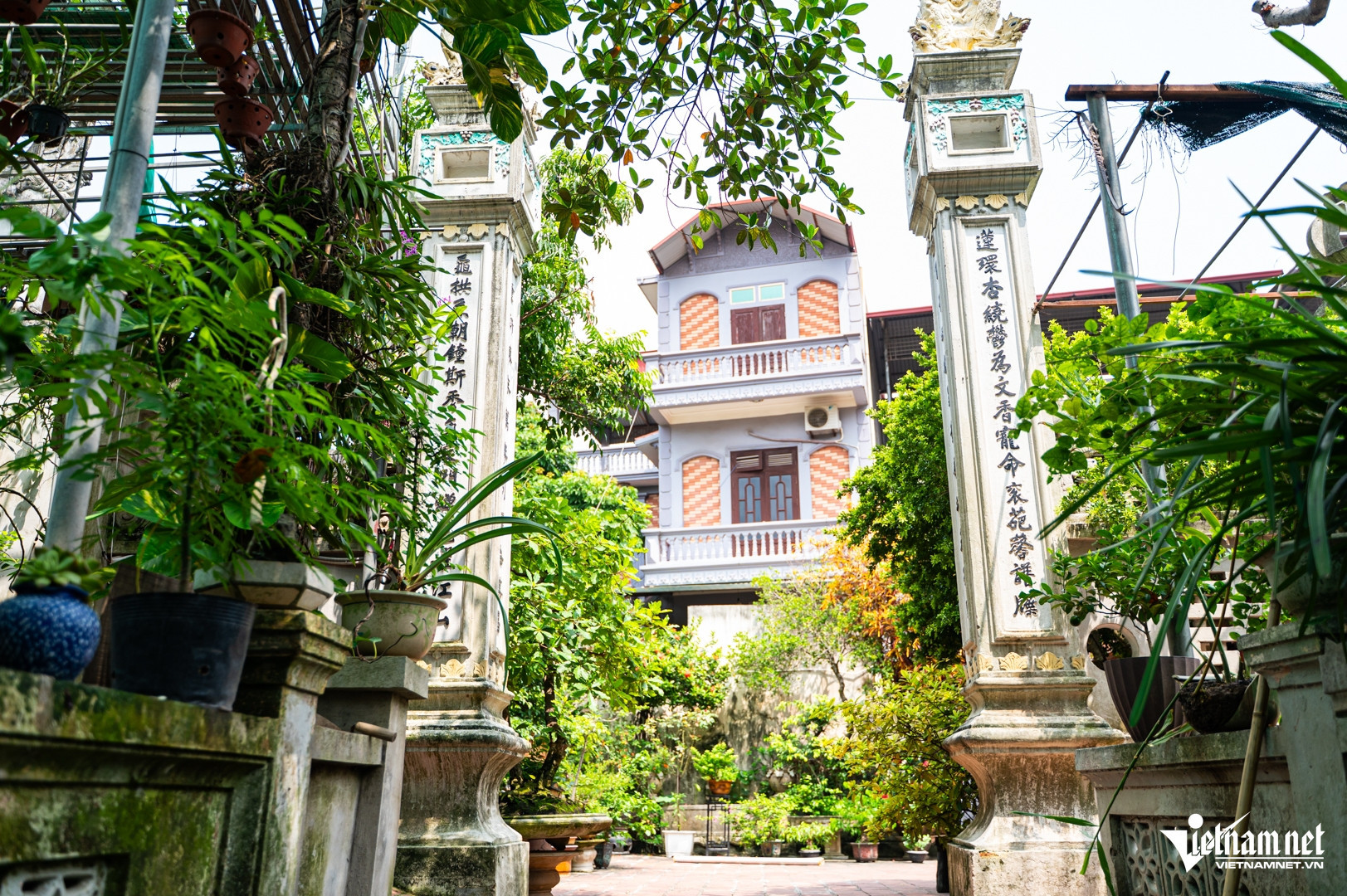
The two ceremonial pillars that have symbolized the Nghiem Xuan family for more than 200 years. Photo: Huy Nguyen.
.svg)
