 Vietnamnet.vn

 Podcast


The challenge lies in turning historic assets into innovative, high-value products that attract visitors, investment and sustainable growth.
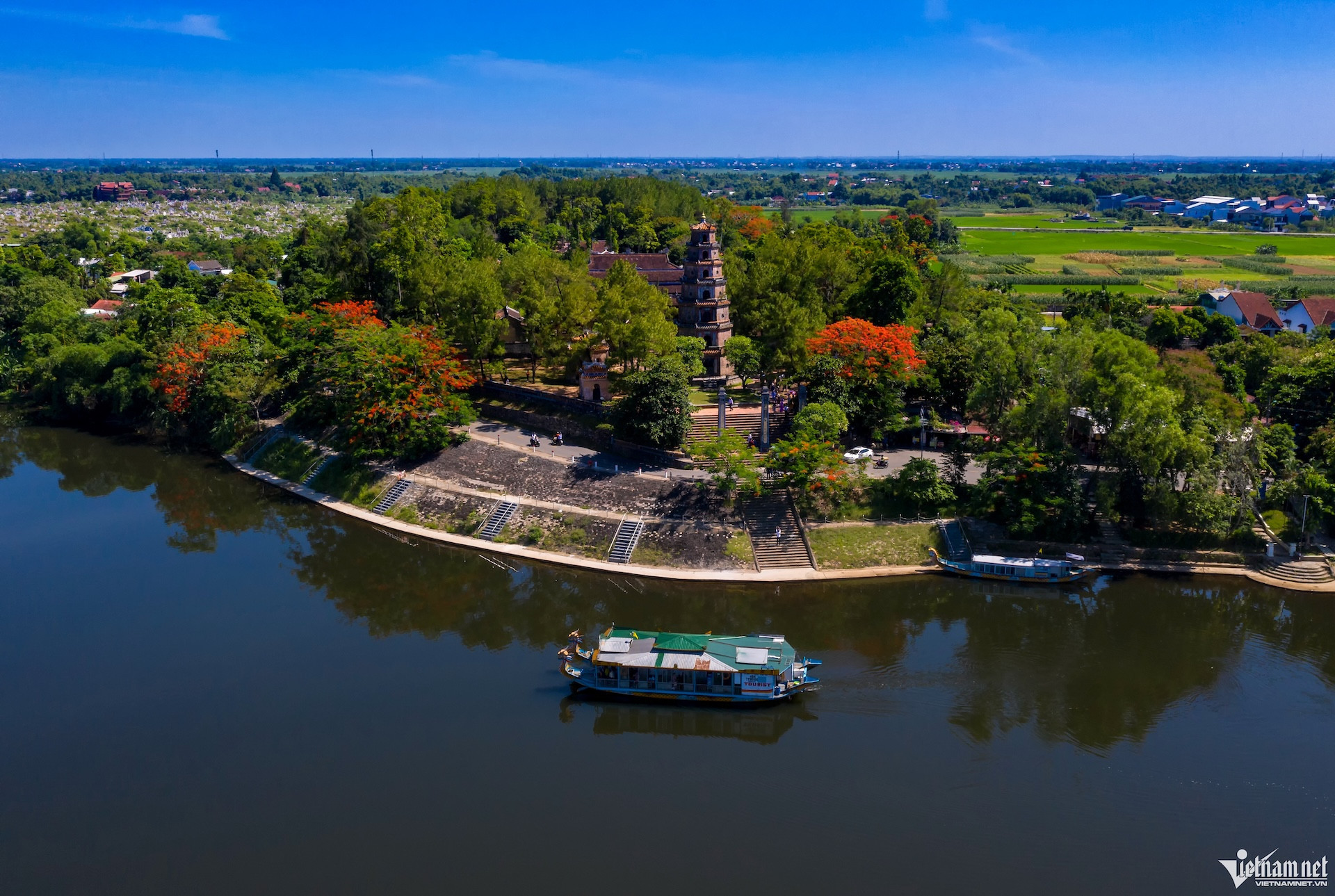
Hue possesses something many destinations can only dream of: centuries of history and an exceptional wealth of cultural heritage.
From imperial palaces and royal tombs to court music, traditional ao dai, distinctive cuisine, handicrafts, garden houses and the refined lifestyle of its people, these elements form an identity that is difficult to replicate.
Yet a striking paradox remains: Hue is extraordinarily rich in heritage, but it has not become correspondingly prosperous from that heritage.
Visitors have countless historic sites to explore and stories to discover, but the city still lacks a sufficiently diverse range of distinctive, high-value cultural products capable of encouraging longer stays, higher spending and repeat visits.
In 2025, Hue welcomed approximately 6.3 million visitors and generated more than VND13 trillion ($494 million) in tourism revenue, an achievement worth recognizing.
However, looking beyond the headline figures raises a more fundamental question: how much of that revenue came from innovative heritage-based products, including performing arts, design, premium handicrafts, digital content industries and genuinely valuable cultural experiences?
This is the question Hue must address in its next stage of development.
From heritage preservation to economic value creation
Hue has made considerable progress in conserving and restoring historic sites, organizing festivals and promoting its image as Vietnam's former imperial capital.
However, preserving heritage successfully and transforming it into an economic resource require two different sets of capabilities.
Restoring a monument and opening it to paying visitors does not automatically create a cultural industry product.
Significant economic value emerges only when heritage resources are researched, creatively developed and transformed into appealing, marketable products with recognizable brands.
For example, life in the Nguyen Dynasty's imperial court involved far more than royal thrones, ceremonial robes or reconstructed rituals.
It encompassed an entire world of architecture, music, fine arts, costumes, cuisine and historical narratives.
With a modern creative approach, these resources could inspire performing arts, films, digital games, interactive exhibitions and premium cultural experiences.
Unfortunately, Hue remains more focused on showcasing what it already possesses than on developing what the market needs from its existing cultural assets.
Are regulations the obstacle, or how they are implemented?
Cultural heritage is a special public asset that requires strict protection.
Regulations governing conservation, public property, investment, construction and environmental protection are all necessary.
However, when an investment proposal must pass through multiple agencies and layers of approval without clearly defined coordination responsibilities, valuable opportunities can easily be lost.
At the national level, there is a need to further improve frameworks for public-private partnerships, commercial service rights associated with heritage sites, copyright protection and investment in cultural industries.
In particular, authorities must clearly distinguish between activities that require strict conservation controls and areas where appropriate commercial services can be developed.
But Hue must also confront some difficult questions.
How many obstacles genuinely arise because the law does not permit certain activities? How many result from the way regulations are interpreted and applied? And how many stem from officials' reluctance to make decisions?
Not every delay can be attributed to regulatory constraints.
An enabling government should help businesses understand how to operate within the law rather than merely explain what they cannot do.
Preserving heritage should not mean resisting innovation
As a heritage city, Hue has distinctive characteristics that require careful consideration in every development decision.
But caution should not become inertia, and protecting heritage should not mean avoiding innovation.
Even a promising idea is unlikely to become reality if it must pass through endless meetings and consultations without anyone assuming responsibility for seeing it through.
Businesses may be willing to wait for a while, but market opportunities do not remain available indefinitely.
It is also important to recognize that public officials' responsibilities extend beyond avoiding decisions that could lead to violations.
They must also be accountable for development opportunities lost through inaction.
A fragmented creative ecosystem limits major cultural products
Hue is home to skilled artisans, researchers, artists and arts education institutions.
However, producing high-value cultural products also requires designers, screenwriters, directors, technology specialists, marketing professionals and businesses capable of organizing commercial operations.
An artisan may create an exquisite product without having the expertise to bring it to international markets.
Similarly, an outstanding artistic performance may struggle to become a commercially sustainable, year-round ticketed attraction without a professional management and operations team.
Hue needs to attract creative enterprises, content production studios, designers and cultural business specialists willing to establish a long-term presence in the city.
Retaining such talent requires meaningful projects, a supportive working environment and income opportunities that reflect their capabilities.
Investing in people and the capacity to develop cultural products may ultimately be more important than constructing additional large-scale facilities.
Focus on cultural products with breakthrough potential
Hue should prioritize a limited number of commercially promising areas.
These could include premium heritage experiences combining performing arts and cuisine, digital content based on Hue's cultural traditions, the development of ao dai and traditional handicrafts into higher-value brands, and a nighttime cultural economy centered on the Perfume River and the historic urban landscape.
Digital content industries, in particular, offer considerable opportunities.
A video game, animated film or interactive product inspired by Hue's history and culture could reach millions of people without depending on the number of visitors physically arriving in the city.
This would allow heritage to become part of contemporary cultural life while creating new revenue streams.
However, investment should not be spread too thinly across numerous initiatives.
Hue should select approximately three to five flagship cultural products, entrust their development to capable businesses, establish transparent support mechanisms and evaluate performance based on actual commercial results.
Public funding should primarily support conservation, research, heritage digitization and essential infrastructure.
Meanwhile, the creation, production and commercialization of cultural products should draw on the capabilities of businesses and market mechanisms.
Ensuring heritage becomes more than a source of pride
Hue now stands at an important development crossroads.
Its status as a centrally governed city, access to special policy mechanisms and the growing importance of cultural industries provide favorable conditions for a transition.
Rather than relying heavily on sightseeing-based tourism, Hue has an opportunity to build a cultural economy driven by creativity and higher added value.
But opportunities do not automatically translate into results.
What matters most is the quality of development thinking, human resources and implementation.
Hue does not need to become another Da Nang, nor should it sacrifice its tranquility, sophistication and distinctive character in pursuit of mass-market entertainment models.
What needs to change is not the identity of the city, but its governance approach and development capabilities.
Historically, Hue's culture emerged from the convergence of talented artisans, intellectuals and diverse creative influences.
It was precisely this process of cultural exchange and adaptation that shaped the former imperial capital's distinctive identity.
Why, then, should Hue not once again become a gathering place for artists, technology specialists, designers and creative entrepreneurs?
Only a city that respects its past while continuously creating for the present can preserve its heritage sustainably.
Hue already has a remarkable past of which it can be proud.
What it now needs is a sufficiently innovative development mindset, a capable workforce and leaders with the determination to transform that pride into prosperity for present and future generations.
After all, the most valuable heritage is not merely what previous generations have left behind, but also the value that today's generation can create and enrich before passing it on to the next.
Tuan Minh

