 Vietnamnet.vn

 Podcast



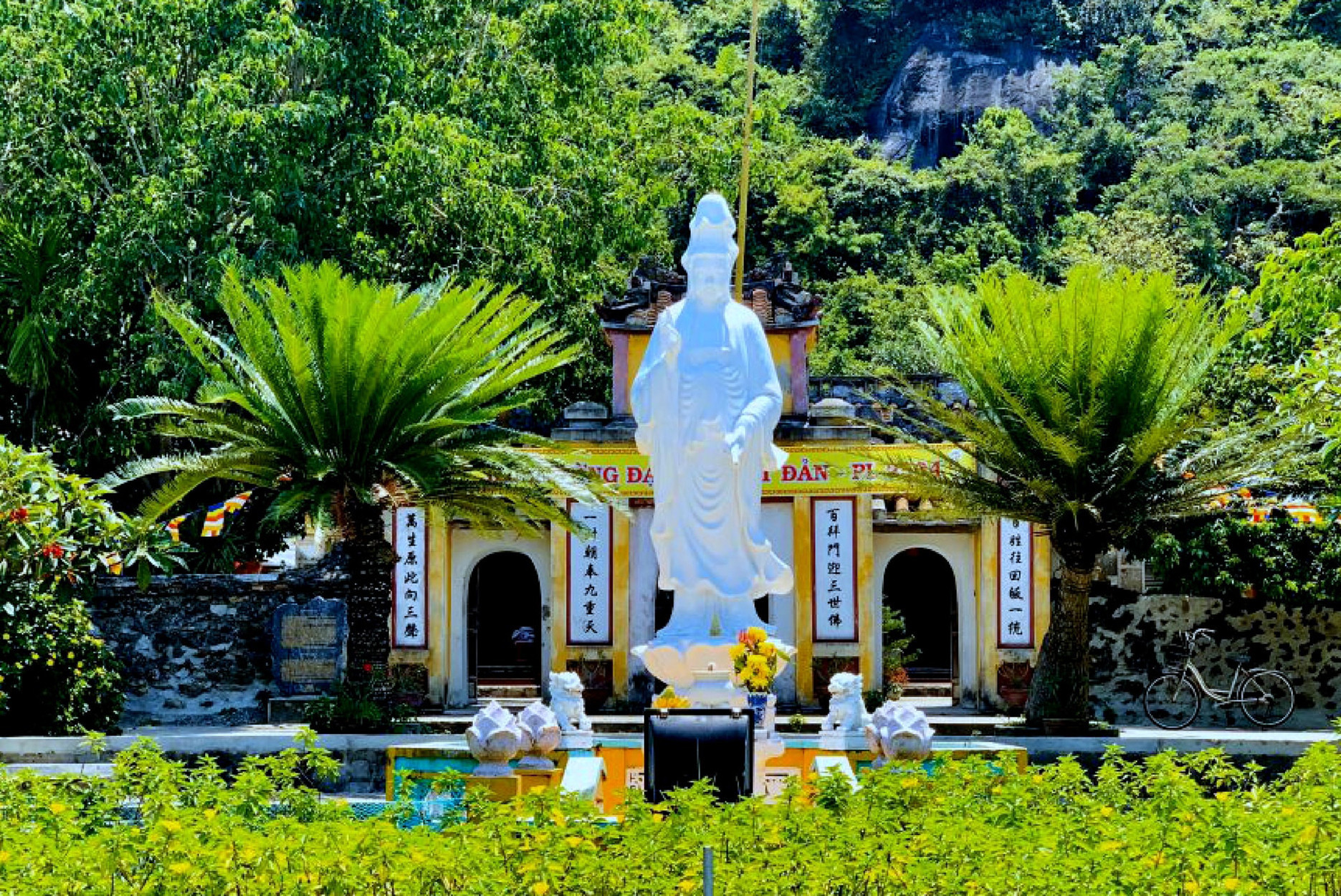
An ancient pagoda by the sea
Tucked between forested hills and the waters surrounding Cu Lao Cham (Chaim Islet), Hai Tang Pagoda is one of the most significant religious landmarks on Vietnam’s central offshore islands.
Historical records show that the pagoda was established in 1758 during the Canh Hung era by Zen master Huong Hai. Later, members of the fourth generation of his disciples, together with local residents, contributed labour and resources to complete the structure and gave it the name Hai Tang.
After nearly three centuries facing sea winds and salt air, the ancient temple retains many architectural features characteristic of Mahayana Buddhism.
The pagoda follows the traditional “front hall, rear sanctuary” layout, with yin-yang tiled roofs weathered by time. Its entrance consists of a three-gate structure featuring one main gate and two side gates, all reflecting classic Vietnamese architectural design. A laterite stone wall surrounds the grounds, creating a peaceful and secluded atmosphere.
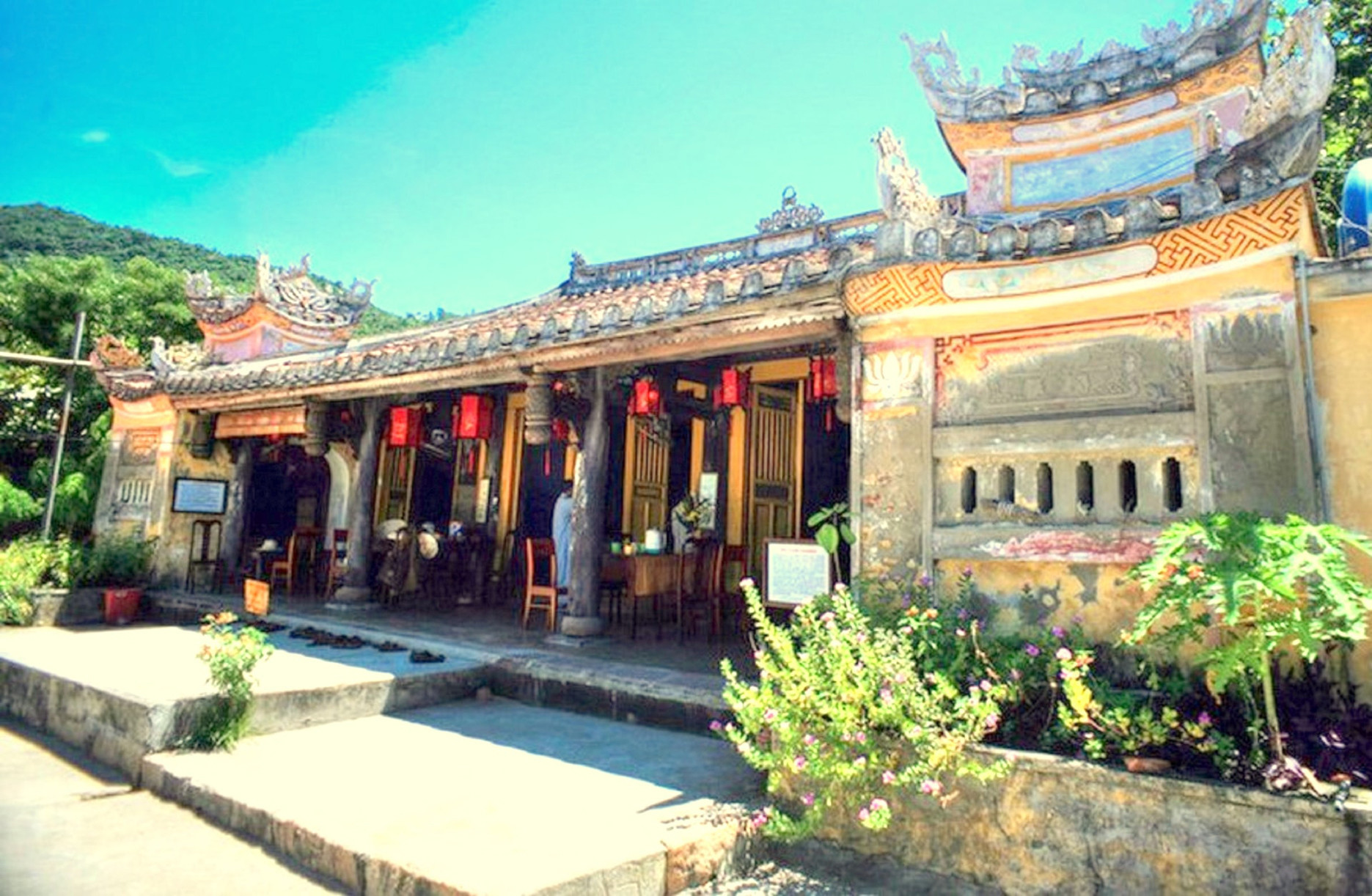
Upon entering, visitors encounter a three-metre-tall statue of Avalokitesvara Bodhisattva seated in the centre of a lotus pond and facing the East Sea. For island residents, the statue symbolises compassion and protection, embodying hopes for calm seas, safe voyages and prosperous lives.
Another distinctive feature of Hai Tang Pagoda is its rare geographical setting. In front of the temple lies a rice field known as Canh Dong Chua, situated within a small valley. During harvest season, the landscape turns golden as the scent of ripening rice mingles with the sea breeze, creating a scene seldom found on a remote island.
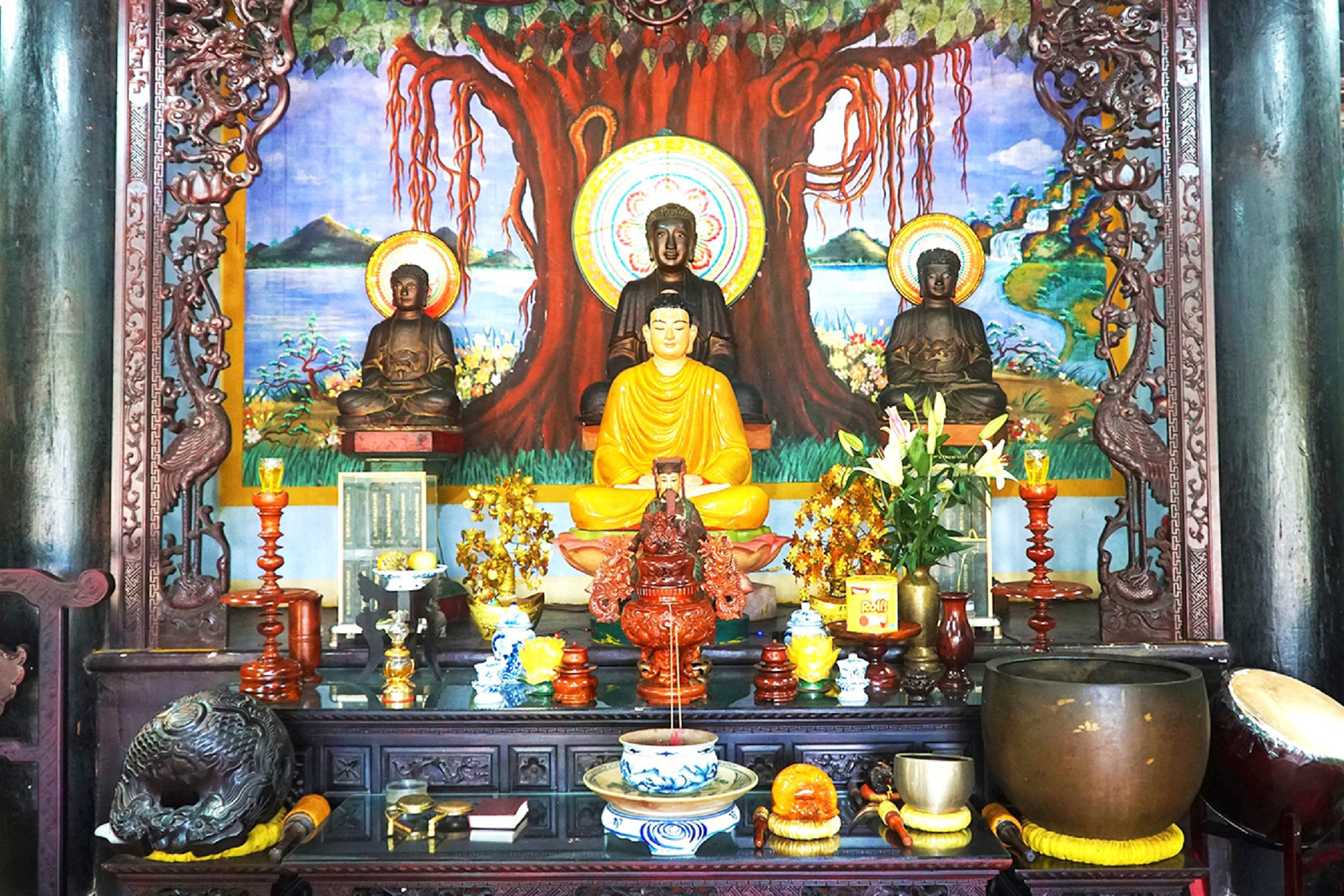
Inside the main sanctuary, large ironwood columns support the roof, lending the space an atmosphere of solemnity and antiquity. The central altar is dedicated to the Buddhas of the Three Times and Guan Yu. The right side honours Chau Xuong and Quan Binh, while the left altar is dedicated to Ksitigarbha Bodhisattva. Statues of Dharma Protectors and Dragon Deities stand on either side, while Bodhidharma is worshipped at the rear.
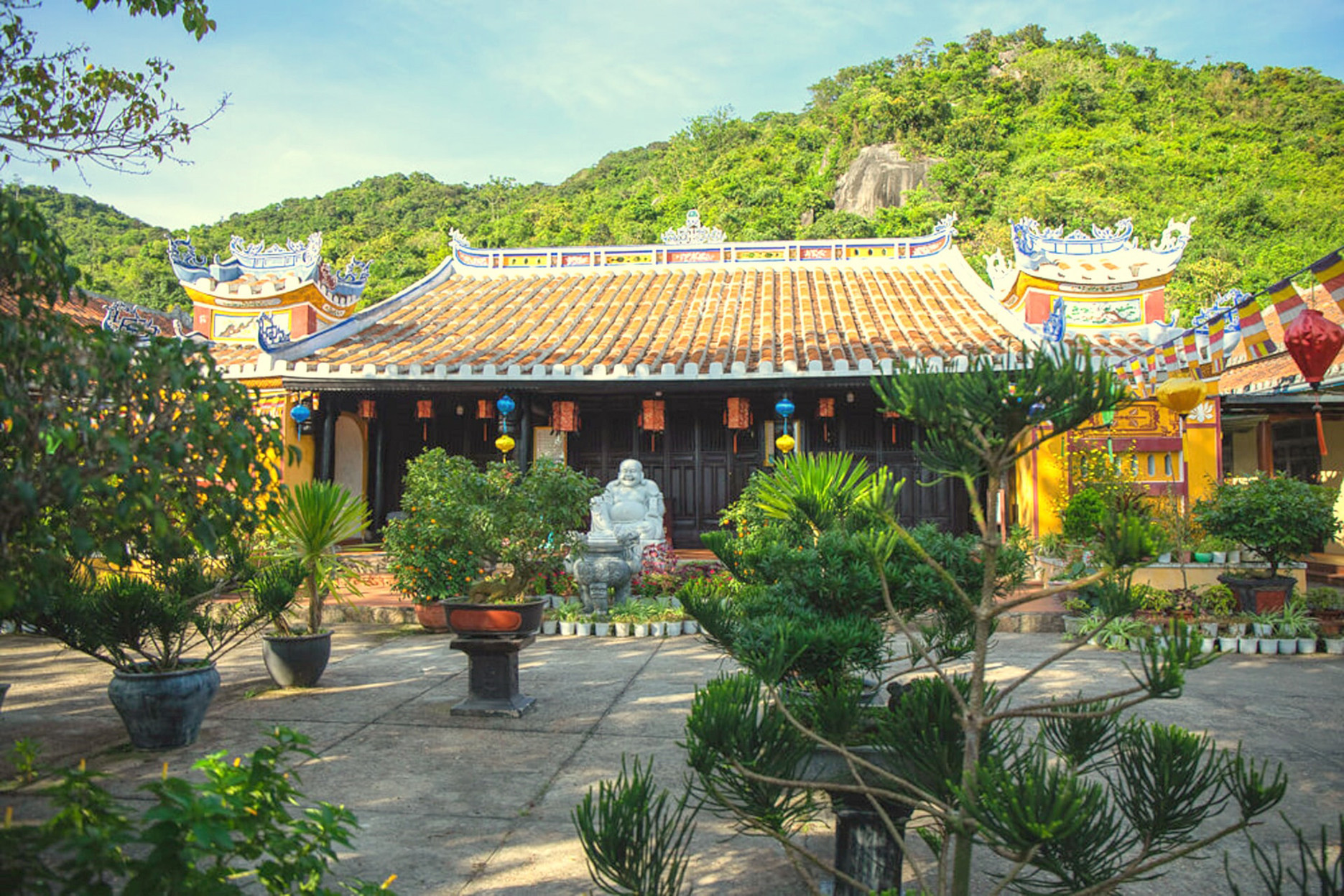
A unique aspect of Hai Tang Pagoda is the blending of Buddhism with local folk beliefs. In addition to Buddhist statues, the temple also houses shrines dedicated to the Jade Emperor and other deities rooted in traditional popular beliefs.
This convergence reflects the philosophy of “Three Teachings in Harmony” and illustrates the cultural life of coastal communities, where spiritual practices and daily life remain closely intertwined.
Many of the statues have survived in remarkably intact condition. Crafted from wood and finished with lacquer and gold leaf, they are more than 250 years old.
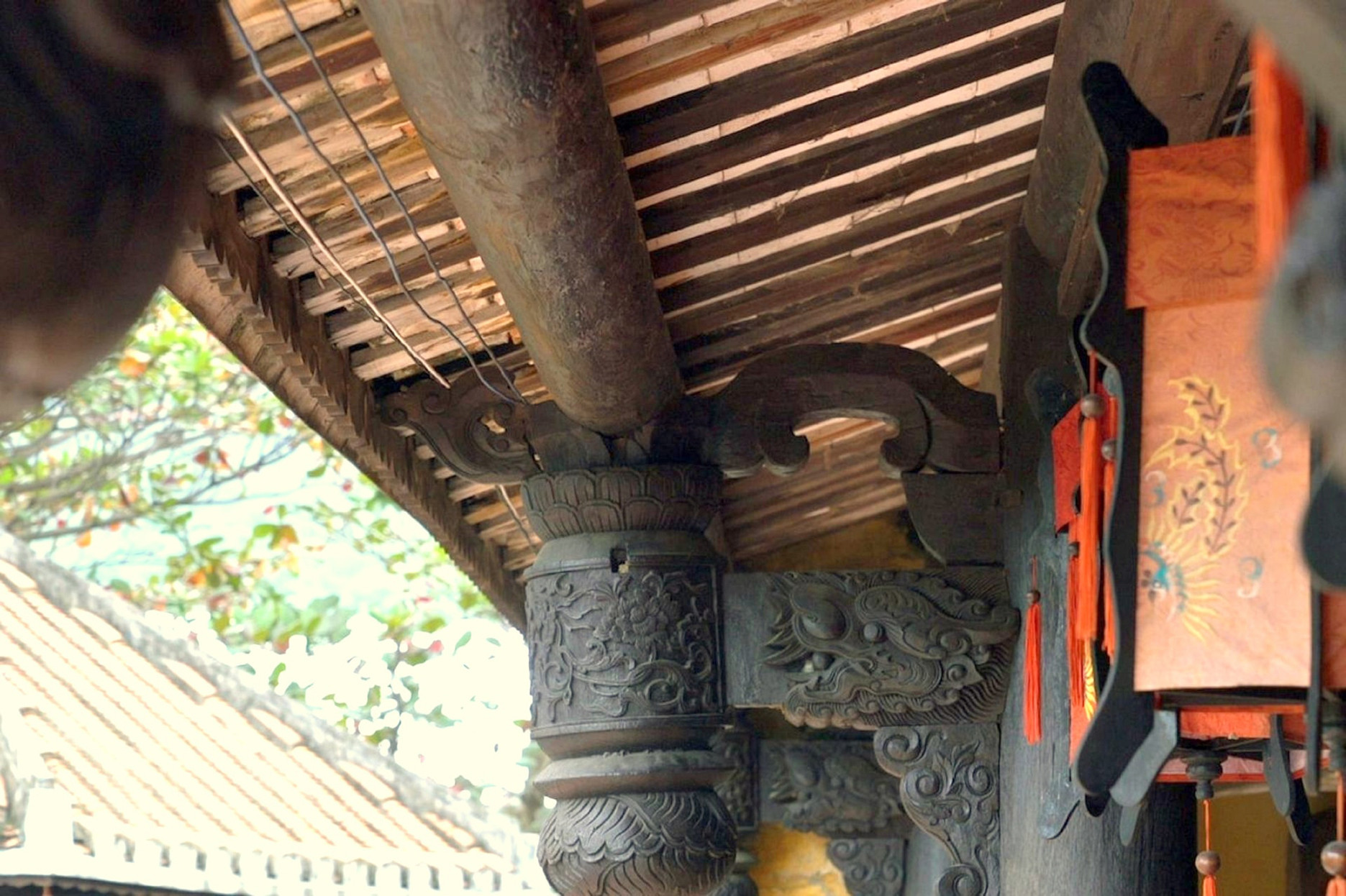
The pagoda also preserves intricately carved horizontal plaques, parallel sentences and wooden beams, adding to its artistic and historical significance.
Among its most valuable artefacts is a large bronze bell decorated with motifs characteristic of the Early Le Dynasty. Particularly striking is the image of two dragons facing the sun, carved in fine detail with flowing whiskers, raised scales and curved bodies. The bell is regarded as a rare object of considerable artistic and historical value.
A spiritual anchor for island communities
Beyond its ancient architecture, Hai Tang Pagoda is known for a rare characteristic often described as its “four no’s” - no abbot, no paper offerings, no electric lighting and no resident monks.
The temple was once overseen by Venerable Thich Hai Tang. Following his passing, responsibility for managing and maintaining the site was transferred to a local management board. Despite the absence of permanent clergy, the pagoda remains a vital centre of spiritual life for island residents.
During Buddhist festivals and traditional celebrations, Hai Tang Pagoda becomes a gathering place for worshippers who come to burn incense and pray for favourable weather, calm seas and successful fishing seasons.
Each morning, as the sun rises over the East Sea, the sound of the temple bell echoes across the island. Blending with the waves, the wind and the rhythms of daily life, it creates a sense of tranquillity for all who visit.
In 2006, Hai Tang Pagoda and the wider heritage complex of Cu Lao Cham were recognised as a National Heritage Site. Beyond its architectural value, the pagoda preserves important historical records documenting the formation and development of island communities over centuries.
Today, the site has been digitally preserved through VR360 technology and a 3D virtual tour system. These technologies help safeguard the temple’s architecture, artefacts and surroundings while expanding public access to its heritage.
Tieu Dao
.svg)
