 Vietnamnet.vn

 Podcast



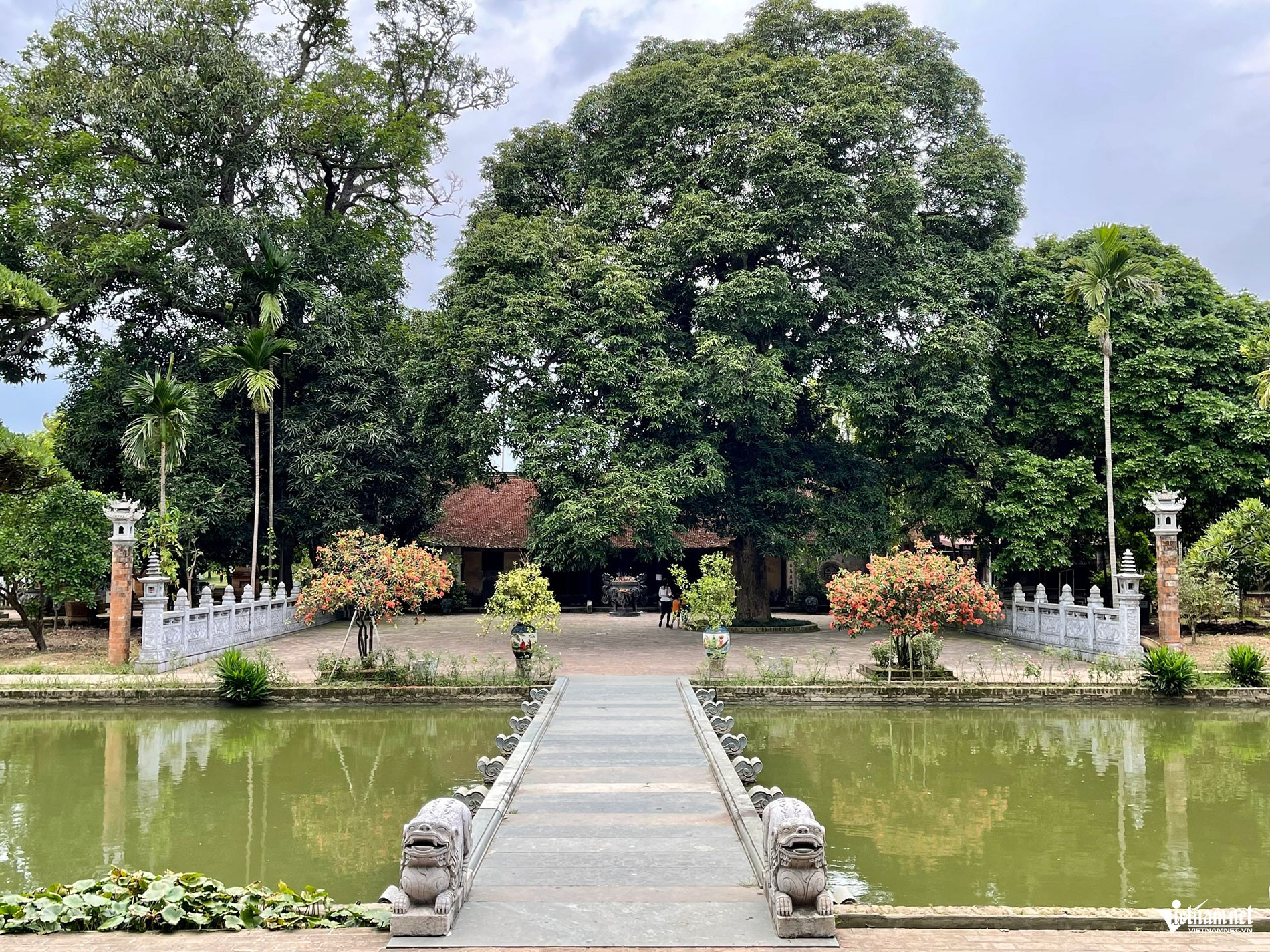
Cross a small bridge and leave the water behind, and the pagoda emerges beneath the canopy of old trees.
At Nom Pagoda, part of the historic Nom Village complex in Dai Dong Commune, Hung Yen province in northern Vietnam, the boundary between the earthly and the sacred has never seemed entirely clear.
There is a pagoda born from legend, clay statues that have endured season after season of floodwater, and the sound of bells drifting through the countryside. And just outside the Buddhist sanctuary, there is a village market.
A halo of light in a pine forest
Some pagodas are remembered for their age, precious statues or ancient tiled roofs. Others live longer in collective memory because of a story whose boundary between history and legend has long since disappeared.
Nom Pagoda is one such place.
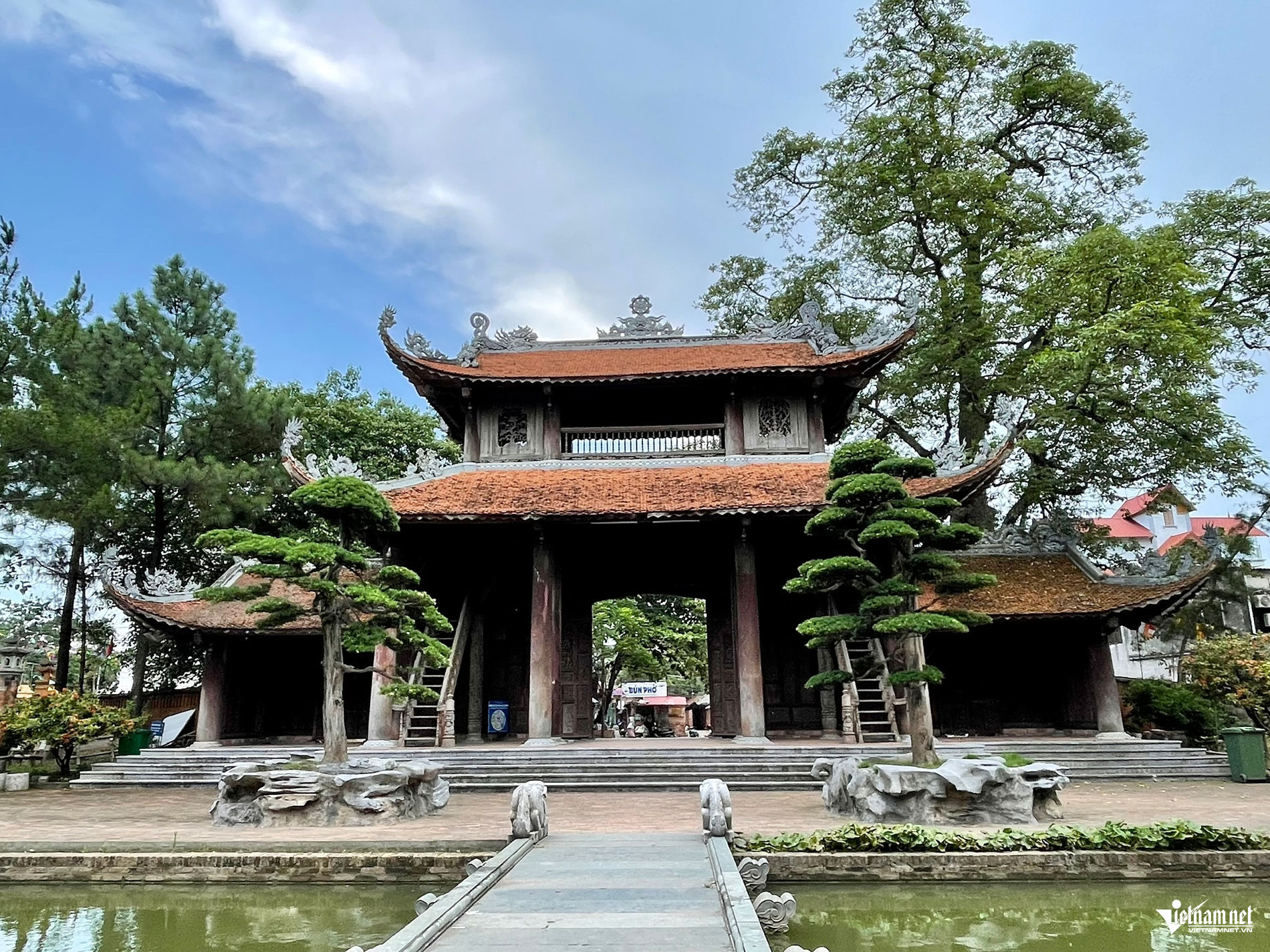
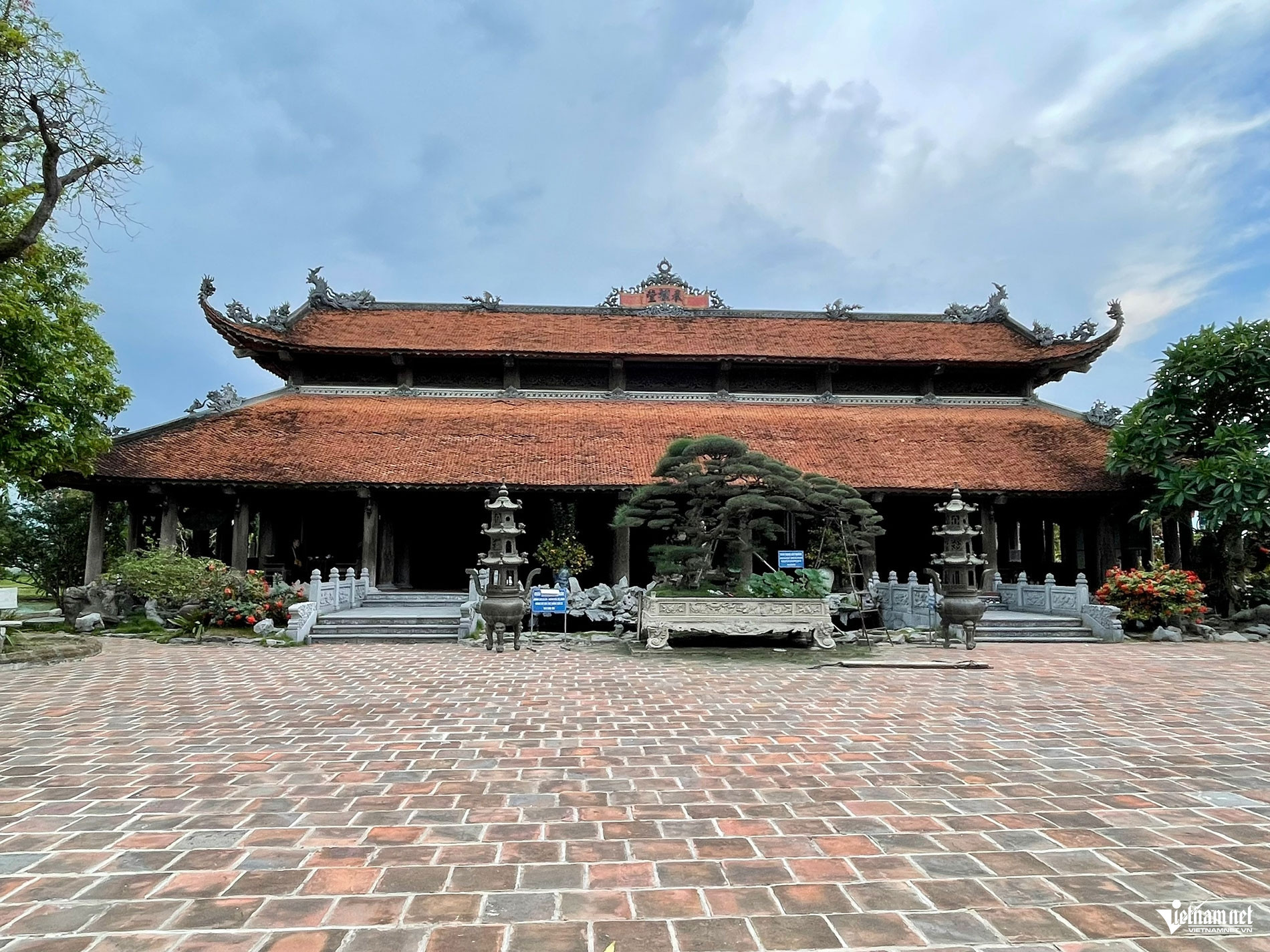
Its formal name is Linh Thong Co Tu, or the ancient Linh Thong Pagoda. Historical records have yet to establish exactly when it was founded. An inscription at the pagoda says it was rebuilt in 1680, during the reign of King Le Hy Tong, meaning an earlier temple must already have stood there.
But the people of Nom Village preserve a story that reaches much further into the past.
Legend has it that a monk sleeping at Dau Pagoda awoke one night and saw a beam of light shining from the south.
He followed it until he reached a pine forest, where the light spread into a great halo. Believing it to be an auspicious sign from the Buddha and the heavens, the monk built a pagoda in the forest and named it Linh Thong Co Tu.
Oral tradition passed down by village elders places the story as far back as the era of the Trung Sisters, who led an uprising against Chinese rule in the first century.
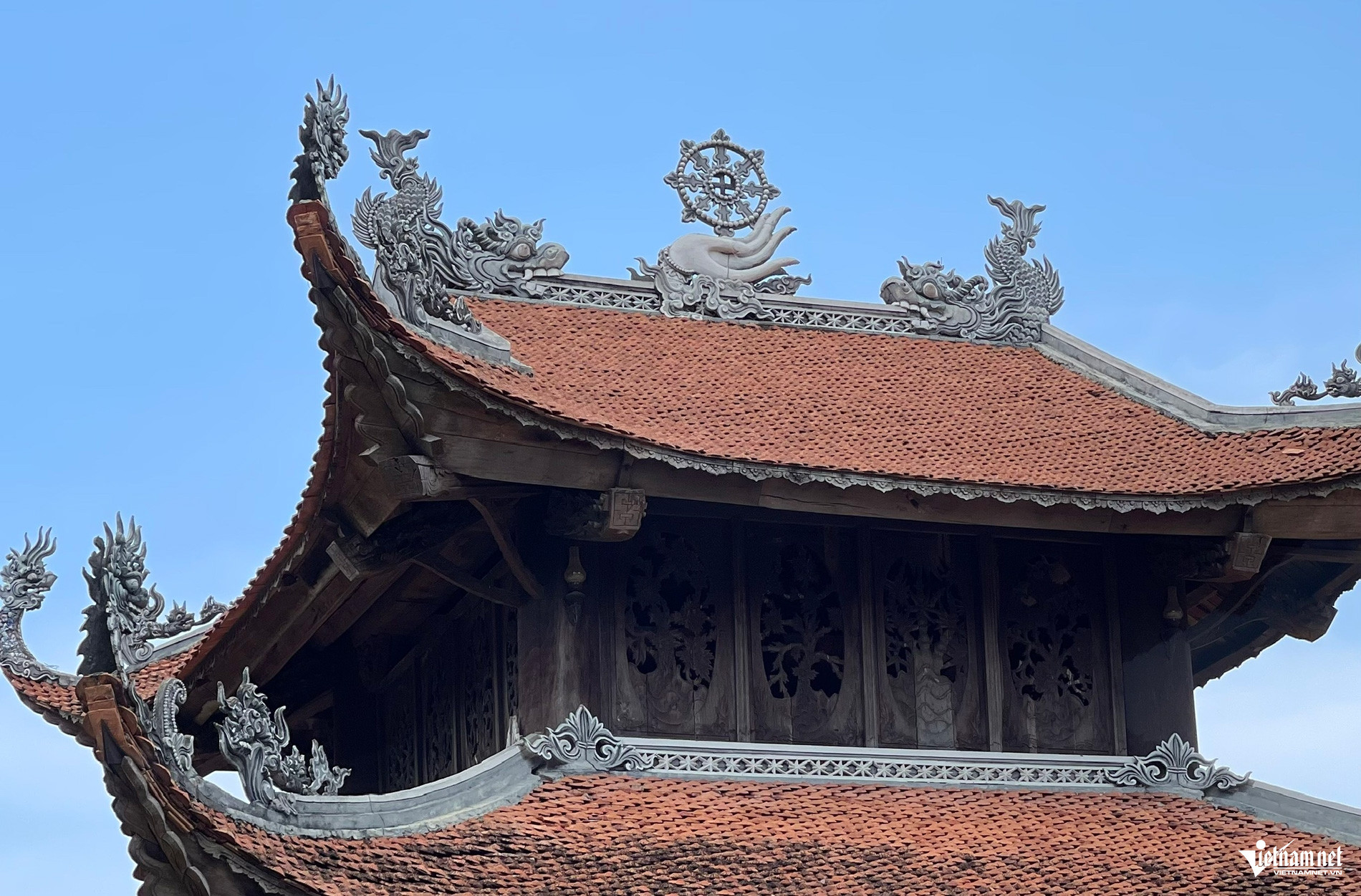
No one can prove that the mysterious halo ever appeared. But legends were never meant to do the work of history.
They preserve something else: the human belief that amid the ordinary world, certain places are chosen to become spiritual refuges.
Perhaps that is why crossing the water toward Nom Pagoda carries such a particular feeling.
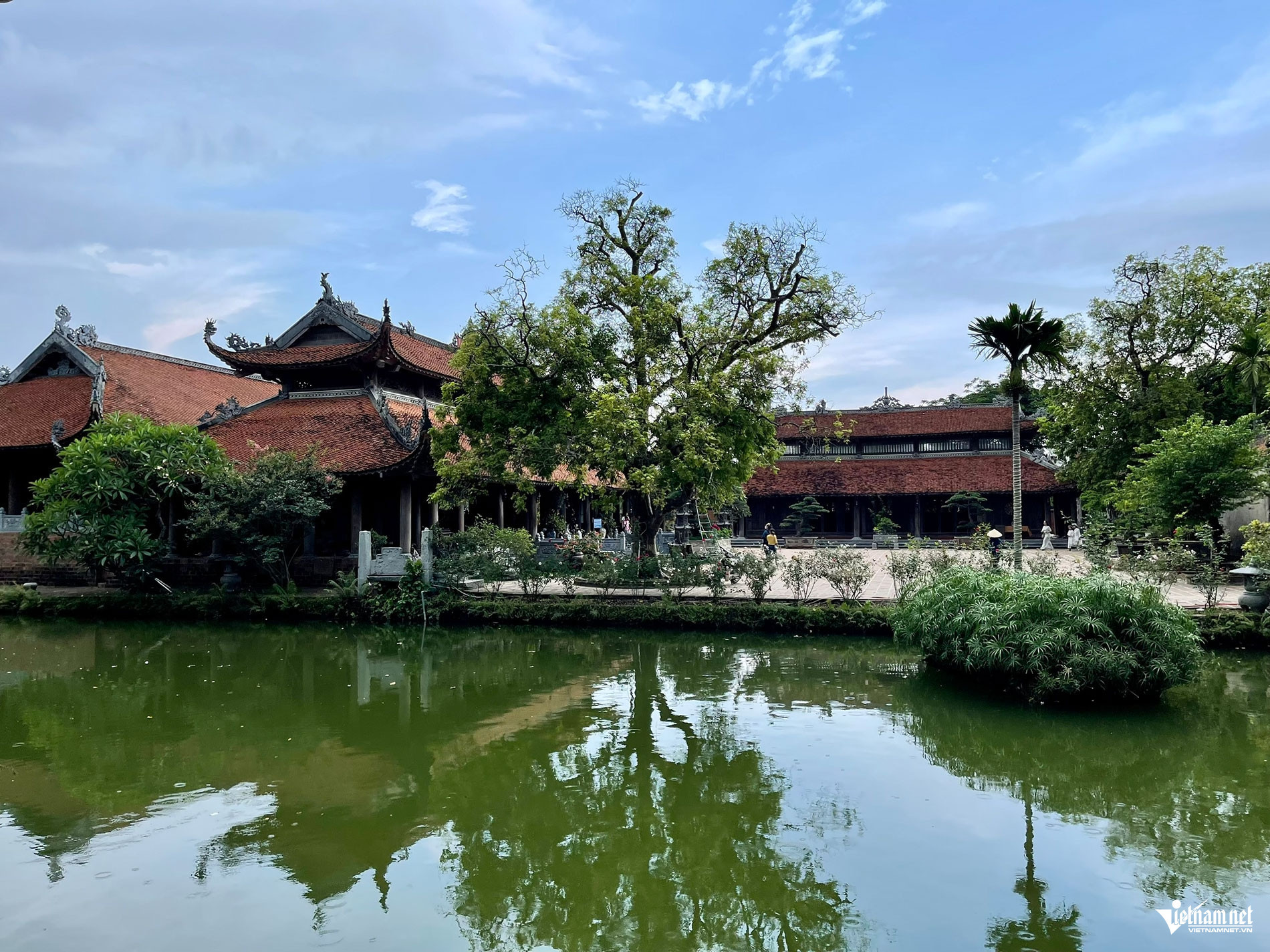
The bridge is not long, yet the world on the other side somehow seems to slow down. The lake holds the reflection of curved roofs, old trees stand silently nearby, and weathered tiles sit beneath a sky that can be clear blue one moment and heavy with clouds the next.
Clay statues and a story of impermanence
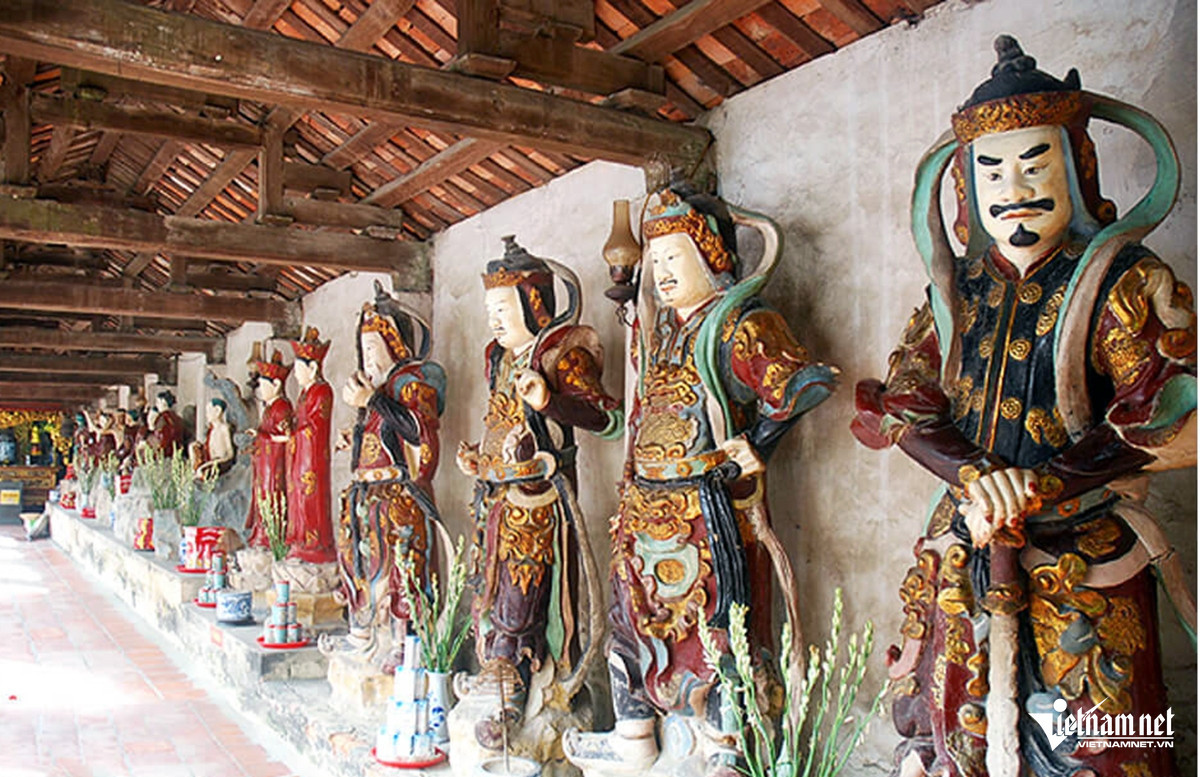
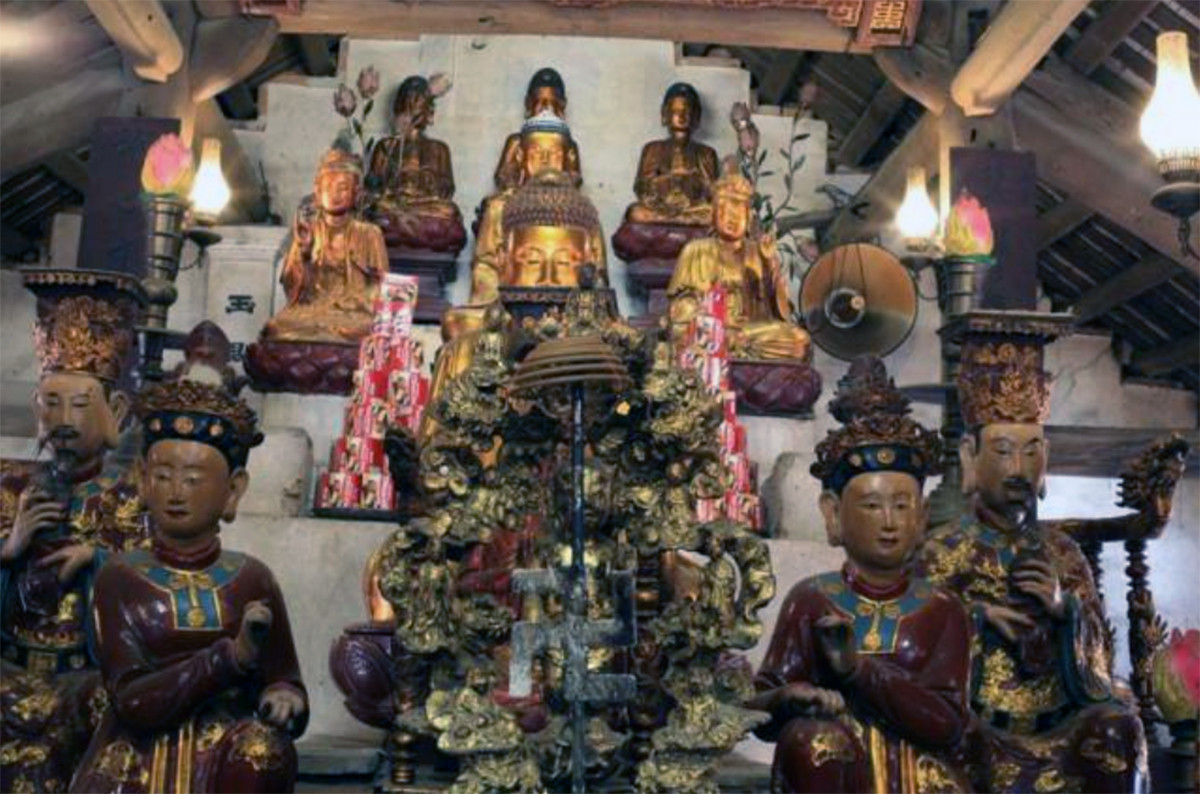
If the mysterious halo begins the story of Nom Pagoda, its clay statues may be the most extraordinary part of its spiritual life.
The pagoda preserves more than 120 ancient clay statues, each with its own posture and expression.
They depict Buddhas, Bodhisattvas, Arhats, the Eight Vajra Guardians and other figures from the Buddhist world. Many have survived for hundreds of years, enduring repeated floods across this lowland region.
There is a beautiful paradox here.
Clay is among the most fragile of materials. Exposed to water, it can dissolve. Weathered by sun and rain, earth eventually returns to earth.
Yet it was this fragile material that people shaped into images of the Buddha and preserved from one generation to another.
That gives the statues of Nom Pagoda another layer of meaning beyond their artistic value.
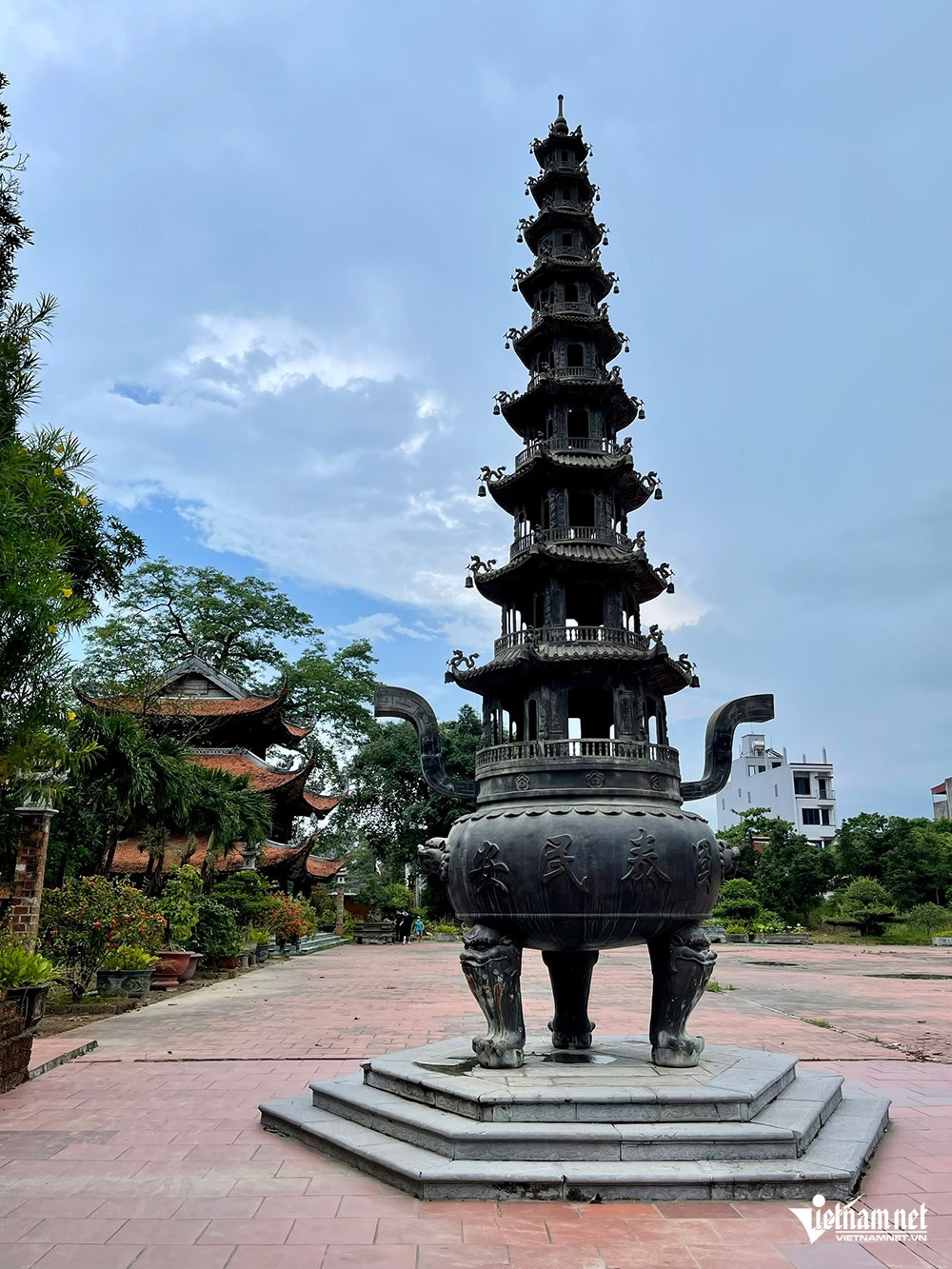
Buddhism speaks often of impermanence. Nothing remains unchanged. A person grows old. Moss eventually covers a tiled roof. A tree grows tall and one day returns to the earth.
Standing before a clay statue that has survived for several centuries, therefore, the question is not simply how it has endured.
Another thought arises: how many people who once stood before this same statue are no longer here?
And still the clay figure sits in silence.
Perhaps not as proof that anything can last forever, but as a reminder that nothing does.
A Buddhist realm close to everyday life
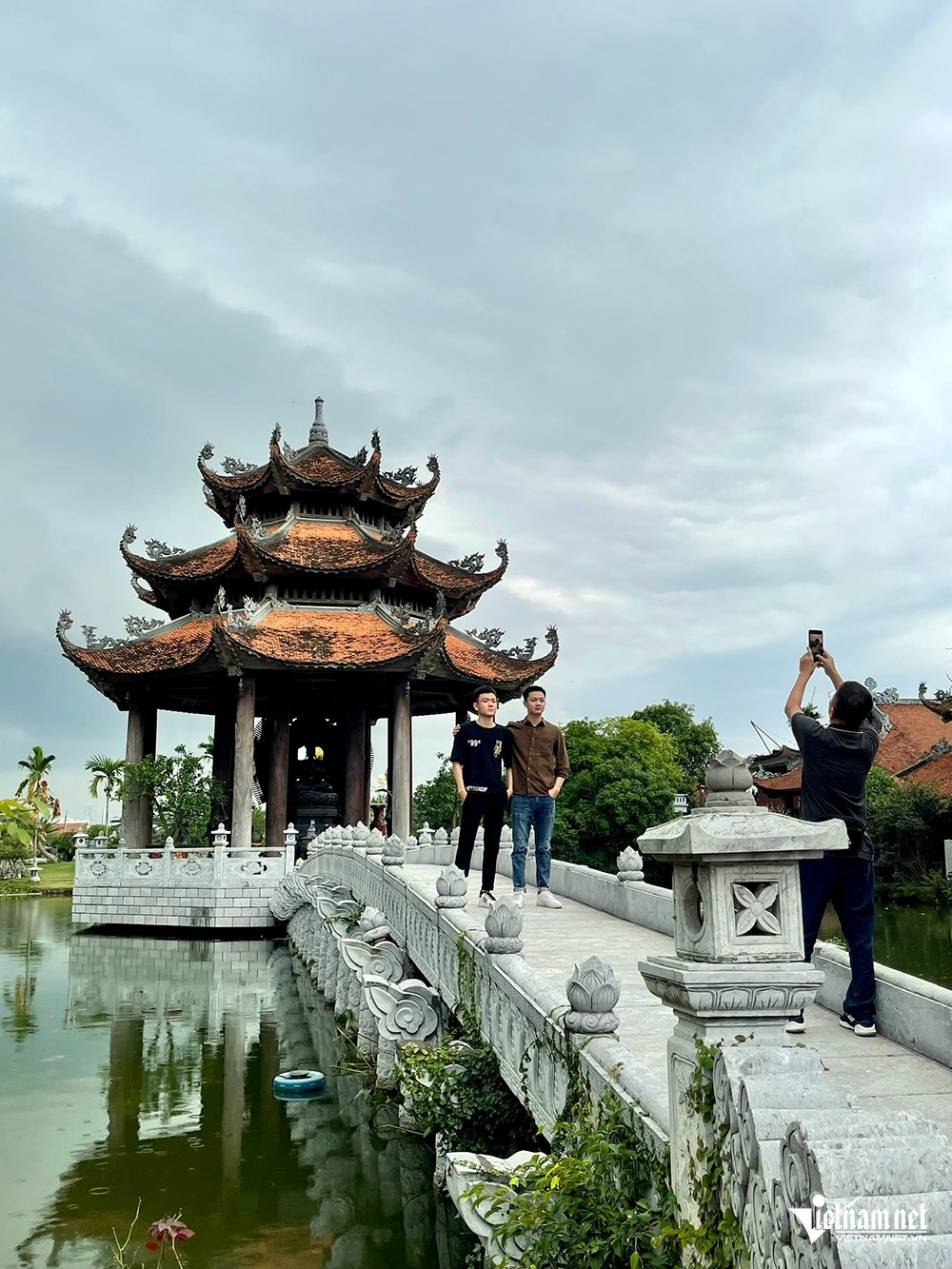
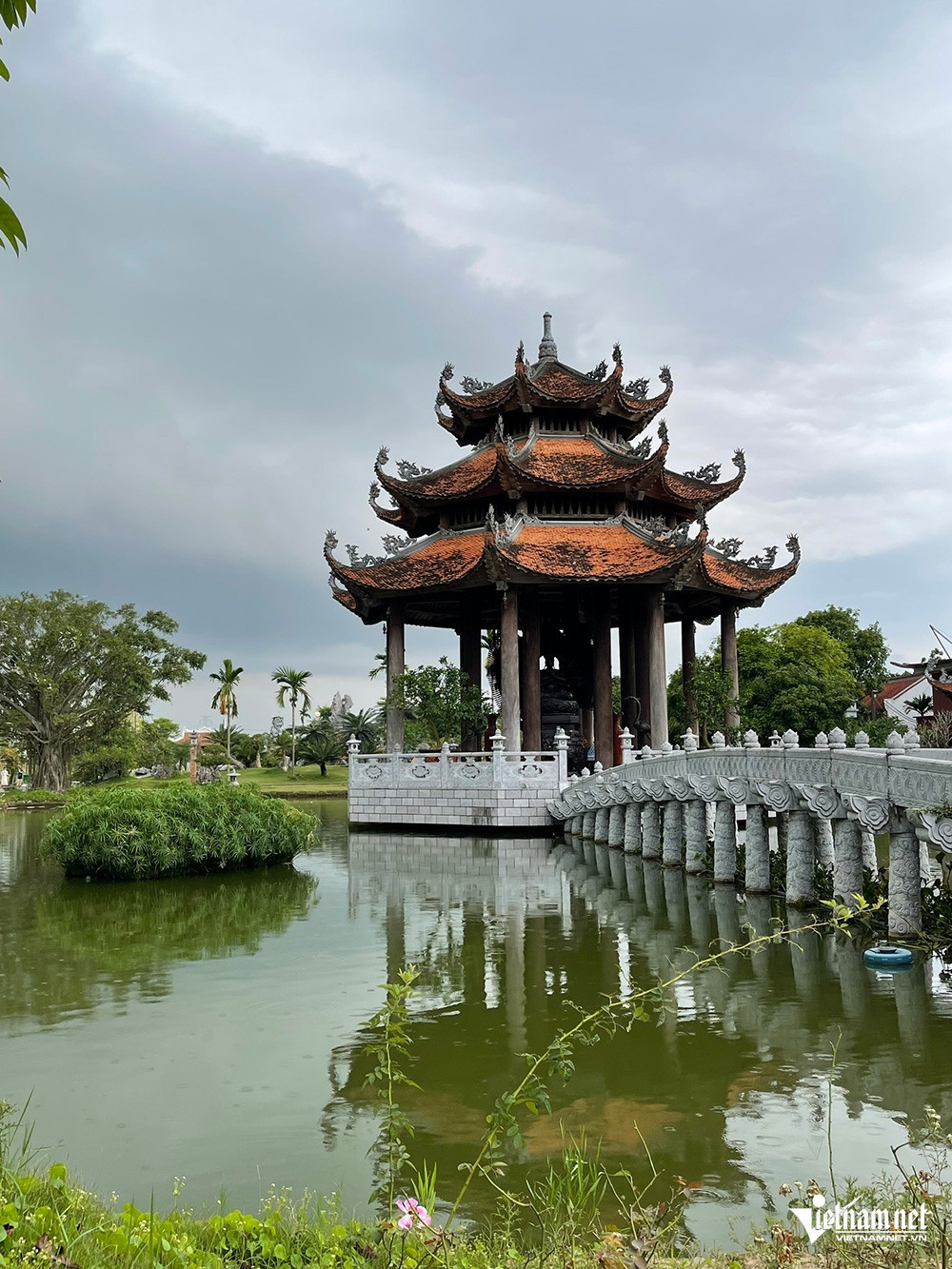
Water appears repeatedly throughout the pagoda grounds, creating spaces that seem to let the landscape breathe.
A pavilion dedicated to Guanyin, the Bodhisattva of compassion, is reflected in the lake. A bridge curves across the water. Old trees stand beside layers of tiled roofs.
When the surface is still, the entire pagoda seems to acquire another world beneath it, reflected upside down in the water.
In Buddhism, Guanyin is the Bodhisattva of compassion, one who hears the suffering of sentient beings.
In Vietnamese spiritual life, however, she has become something even more intimate.
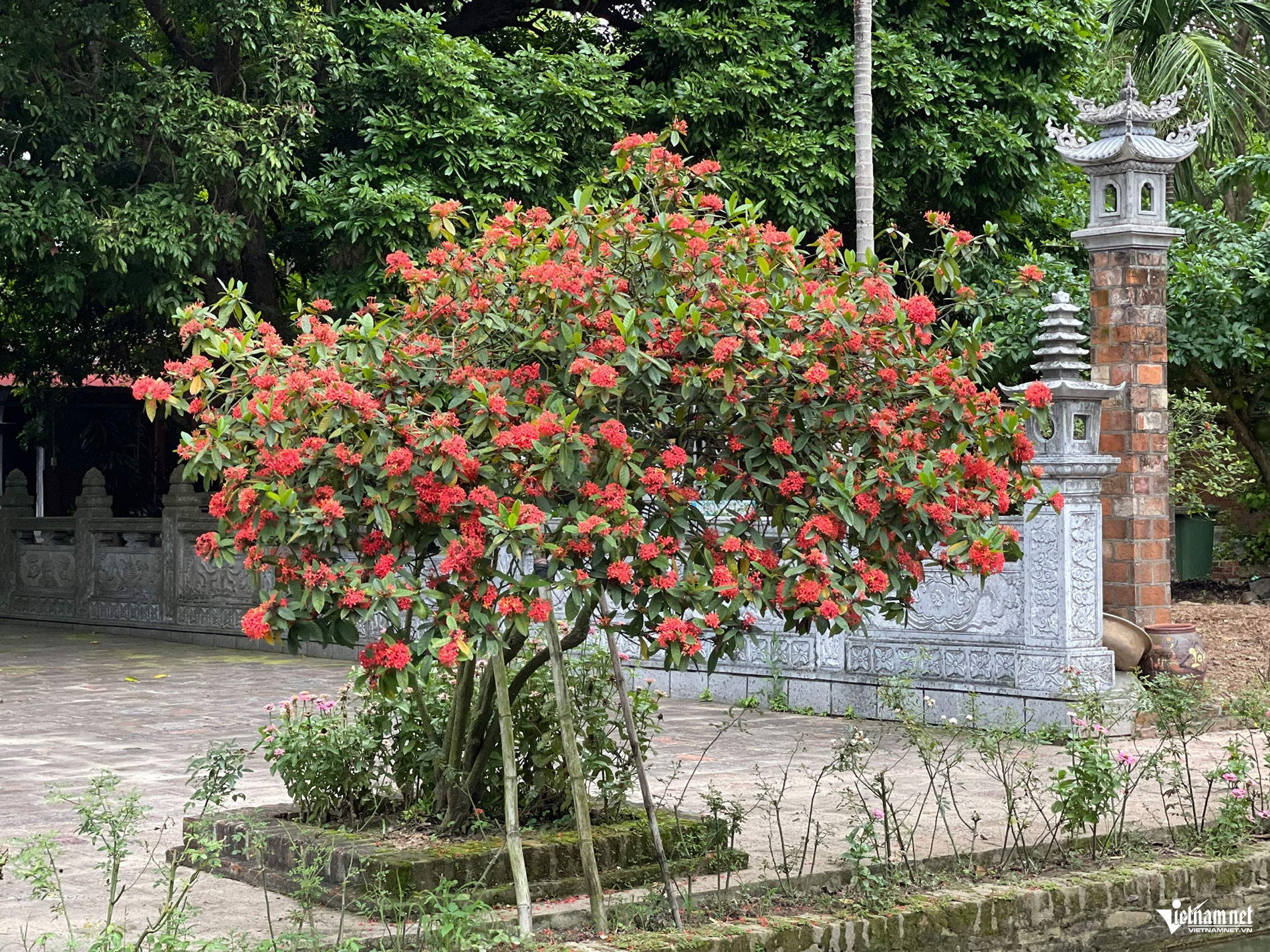
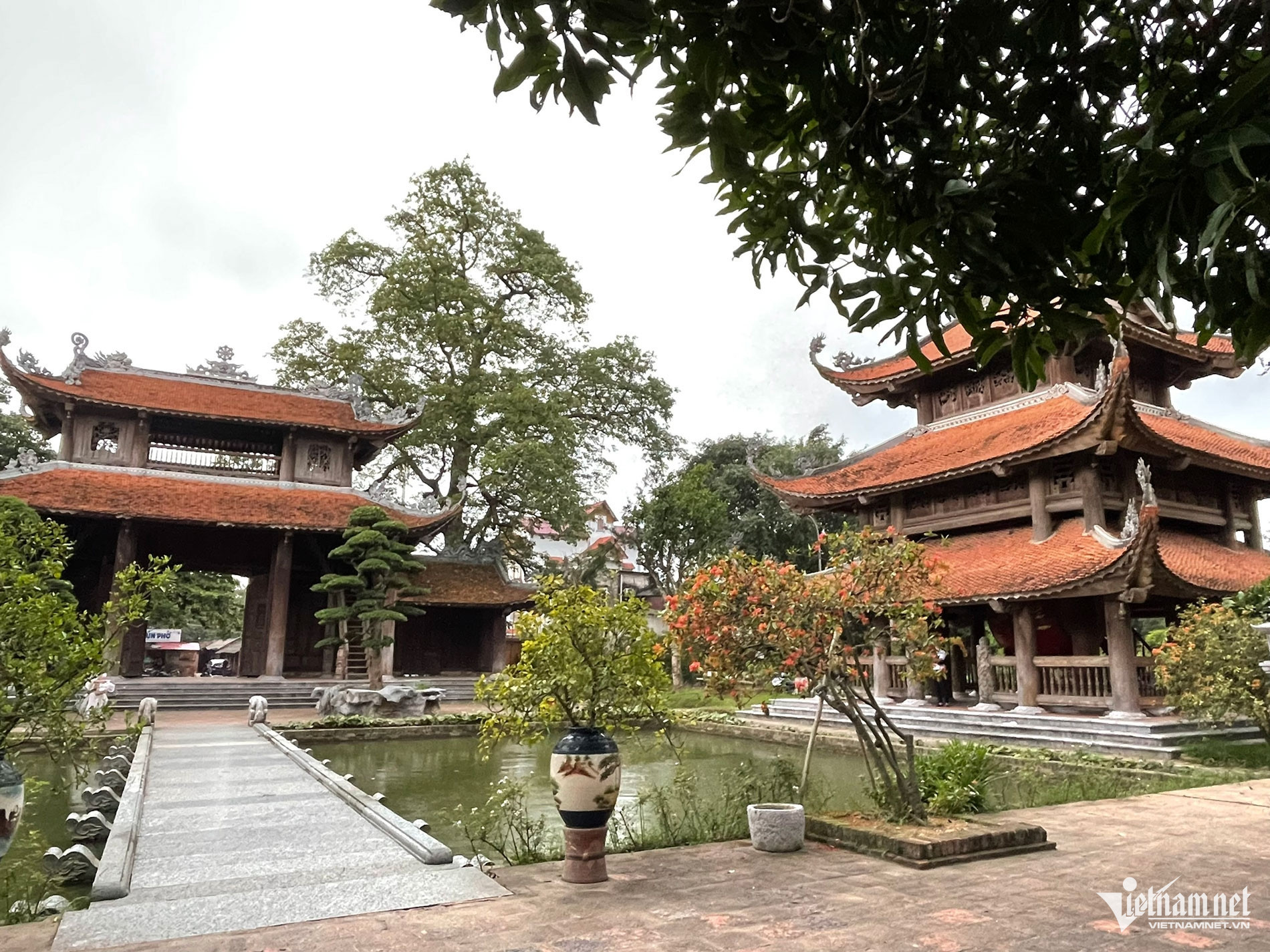
A mother may come before her to pray for her child. Someone whose loved one has travelled far away may ask for their safety. A person going through hardship may simply seek somewhere to express what cannot be said to anyone else.
People do not necessarily need to understand every Buddhist scripture before entering a pagoda.
Sometimes, knowing how to bow one's head is enough.
That reflects something distinctive about Vietnamese spiritual life.
Within the same cultural world, people may worship the Buddha, venerate Mother Goddesses and a village guardian deity, then return home to burn incense for their ancestors.
These layers of belief do not necessarily exclude one another. They meet around something more fundamental: knowing where one comes from, remembering those who came before and believing that how one lives today will leave something behind for those who follow.
The sacred quality of a village pagoda, then, does not end at its main sanctuary.
It can be found on the path where a mother leads her child to the pagoda, in an evening bell drifting over village roofs, in the incense a son lights on the anniversary of his father's death.
It may even be found in the moment when one villager steps aside to let another pass, still remembering the virtue they prayed for before the Buddha.
Beyond the pagoda wall, a village market
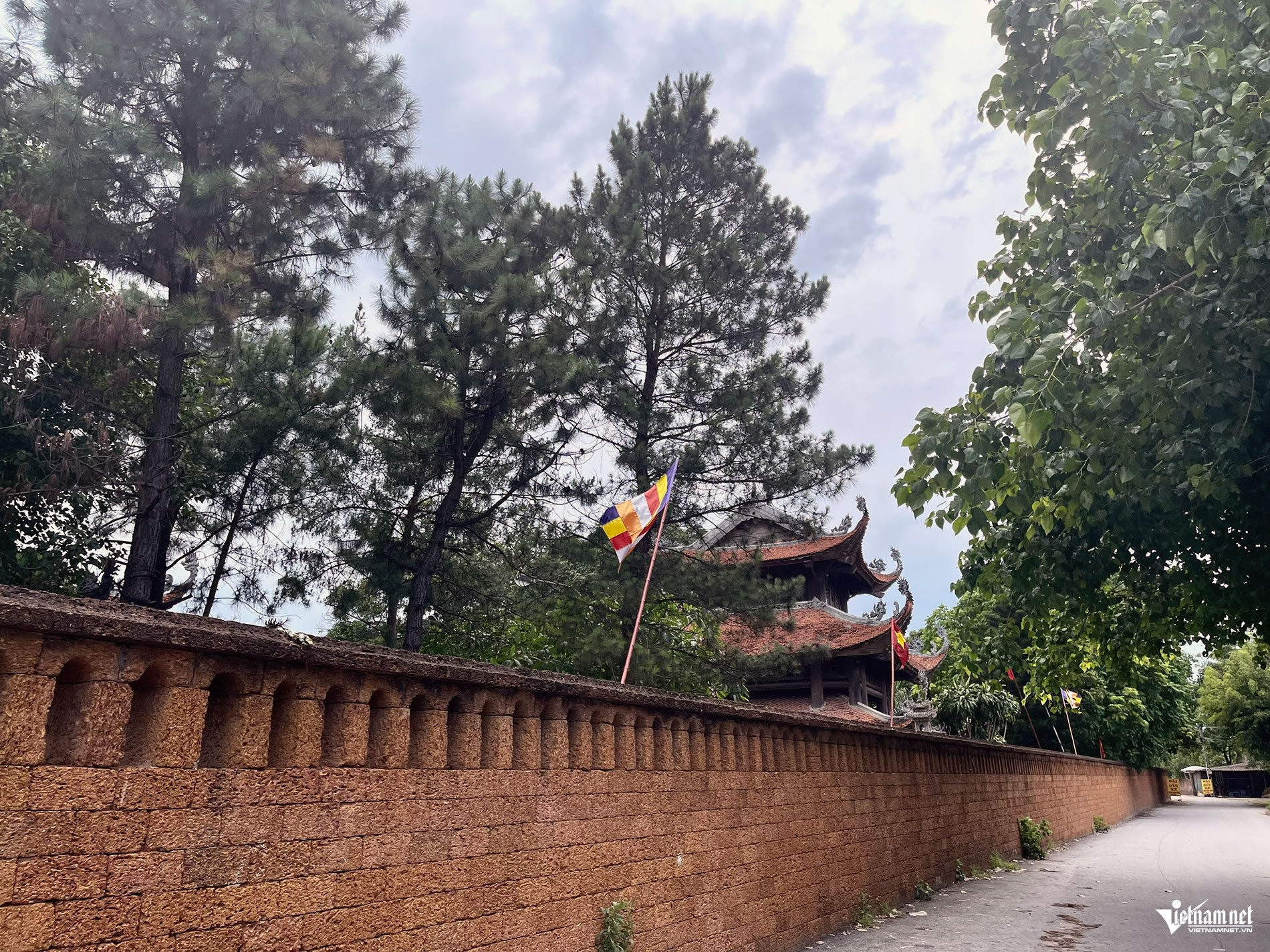
There is a striking scene at Nom Pagoda: an old wall running alongside the village road.
Inside are the pagoda roofs, trees and Buddhist flags. Outside lies the road villagers travel every day.
The wall separates two spaces, yet somehow fails to divide two worlds.
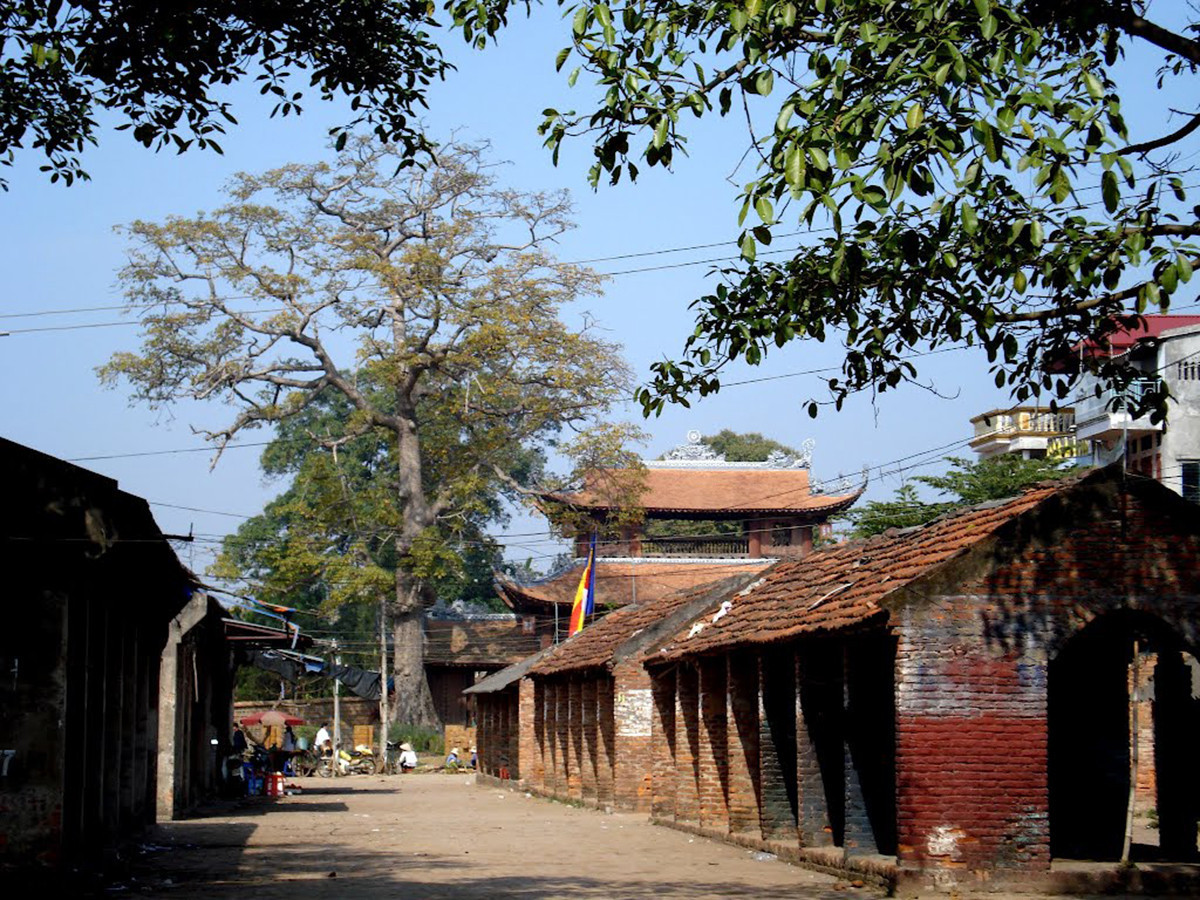
For not far beyond Nom Pagoda lies Nom Market.
The market still follows the rhythm of a traditional rural marketplace, opening on dates ending in 1, 4, 6 and 9.
In the traditional layout of Nom Village, pagoda and market existed close together: one served spiritual life, the other commerce and livelihood.
On one side comes the sound of the wooden Buddhist bell; on the other, the voices of people bargaining.
One speaks of letting go. The other begins each morning with buying and selling, profit and loss.
They might sound like opposites.
Yet their coexistence feels deeply Vietnamese.
After all, farmers of earlier generations could not remain forever inside the pagoda. After praying to the Buddha, they still had fields to cultivate.
A woman leaving an altar to Guanyin still had vegetables or rice to sell at the market. A man praying for peace and safety still had to worry about the next harvest, build a home and raise his children.
Perhaps, then, the most beautiful image of Nom Pagoda is not its tiled roofs reflected in the lake.
Perhaps it is someone stepping out through the Buddhist gate and disappearing into the market.
They return to buying and selling, worrying about putting food on the table, and living through all the joys, sorrows, gains and losses of this world.
Only one small thing may have changed.
After the sound of a temple bell, perhaps the heart has become a little quieter.
People do not come to a Buddhist sanctuary to escape the human world.
They come so that when they return to it, they might treat one another with a little more kindness.
Thai An
.svg)
