 Vietnamnet.vn

 Podcast



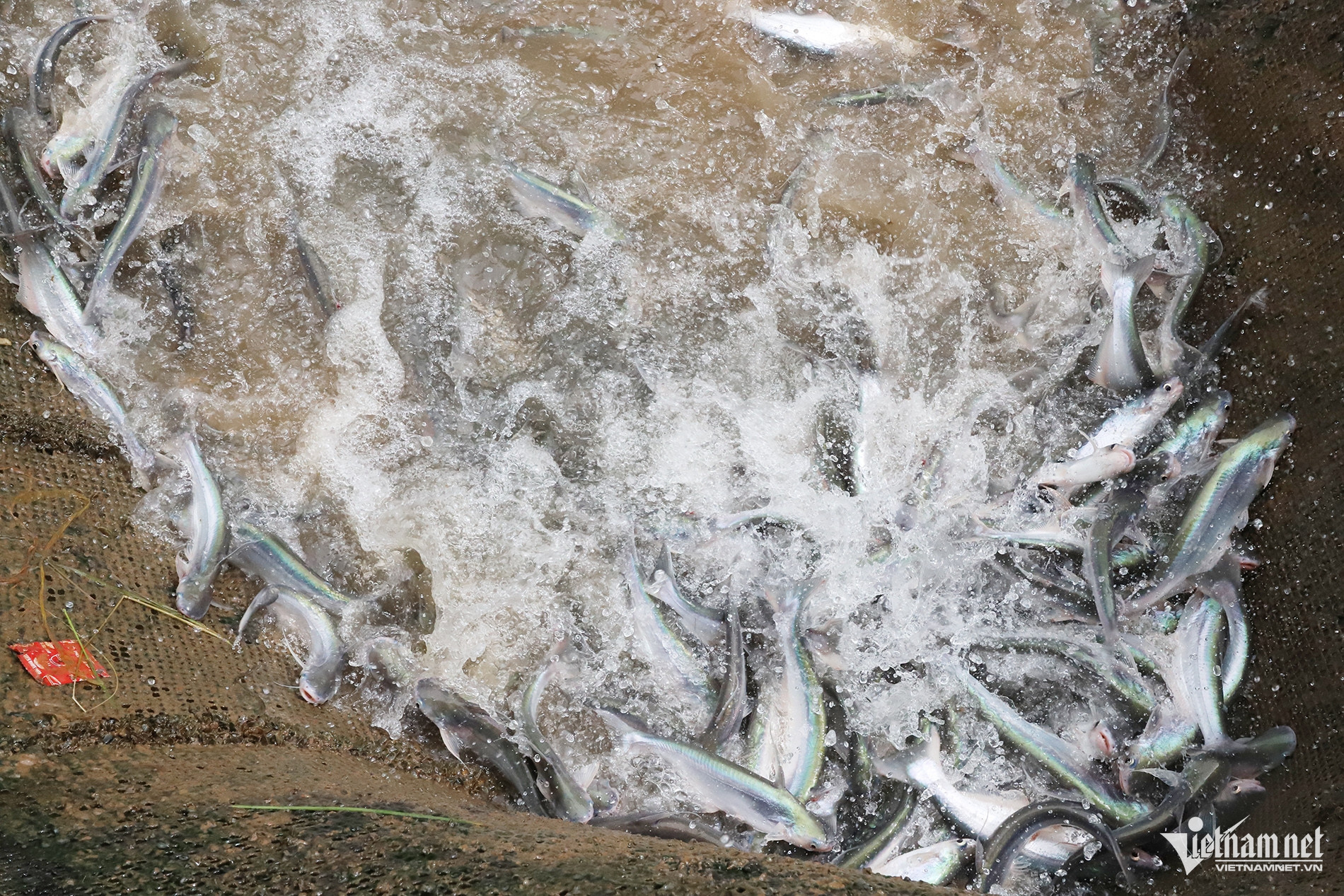
The decision to switch to raising green catfish combined with experiential tourism has helped him earn around VND1 billion each year.
Can Tho City, dubbed the "Western Capital," is the economic and cultural center of the Mekong Delta. Located about 170 km southwest of HCMC, Can Tho is famous for its intricate network of canals, year-round fruit orchards, and distinctive riverine culture.
Floating fish farms along the Hau River in Binh Thuy Ward in Can Thomhave become more than aquaculture sites—they are now popular tourist attractions. The model is operated by 36-year-old Hien, who has transformed his family's traditional fish farming business into a profitable venture combining aquaculture and experiential tourism.
While working in the import-export sector, Hien decided to return to Can Tho and continue the family's fish farming business. Initially, the family raised common species such as pangasius and red tilapia, but unstable market prices made profits unpredictable.
After researching new options, Hien switched in 2022 to raising ca xanh ky, or green catfish, a species native to the Mekong River. Green catfish is regarded by many seafood enthusiasts as one of the finest-tasting catfish species.
Hien said green catfish closely resembles pangasius but has a slimmer body, a smaller pointed head, and a distinctive green stripe running along its back from head to tail, making it easy to distinguish from ordinary pangasius.
"The flesh is much richer and more flavorful than pangasius. We currently sell it at the farm for VND150,000-VND170,000 per kilogram. Supply remains limited, so prices have stayed relatively stable," Hien said.
The fish require 10-12 months to reach a market size of 150-200 grams each.
Green catfish is not an easy species to raise. It spends most of the daytime resting near the bottom of the cages and feeds very little. Only after dark does the fish become active and rise to feed.
As a result, farmers must completely adjust their routines, feeding the fish at night while closely monitoring water conditions.
"It is much more difficult to raise than many other species, but the stable market price makes it worthwhile because few farmers produce it," he said.
Today, green catfish is the family's primary product. The farm produces around 100 tonnes annually, generating substantial profits.
Turning farms into tourist attractions
Hien has also converted the unused deck space above the floating cages into an experiential tourism destination.
The idea came as the area attracts growing numbers of visitors through community-based tourism. Rather than leaving the space idle, he invested in facilities to welcome tourists.
Visitors can feed the fish, experience fish “massages”, catch shrimp and frogs, and sample freshly prepared fish dishes right on the floating farm. In addition, tourists are connected to visit community tourism spots on the islet, such as making folk cakes, making popped rice, visiting fruit orchards, and watching flying snakehead fish.
"Tourism also helps bring visitors to local households on the islet, so everyone benefits. A destination becomes much more attractive when it offers a variety of experiences," Hien said.
The fish farming-tourism model currently brings a profit of around VND1 billion each year.
Besides green catfish, Hien's raft system also raises many endemic fish species of the Mekong River basin, such as ca ho (Catlocarpio siamensis), ca tra dau (Pangasianodon gigas), ca vo co (Pangasius sanitwongsei), ca mang ro (Toxotidae), and ca chach lau (Mastacembelus favus).
According to Hien, ca ho living in the natural environment usually eat moss and algae; when raised in cages and rafts, they eat industrial feed, so the fish grow faster. When small, they only gain about 1 kilogram per year, but as they grow larger, their weight increases more rapidly.
Bringing these fish species into the experiential area serves tourism and helps visitors, especially children, better understand the riverine ecosystem of the Mekong Delta.
"I hope visitors not only have fun but also learn more about the precious fish species of the Mekong River, raising awareness of protecting aquatic resources," he said.
Hoai Thanh
.svg)
