 Vietnamnet.vn

 Podcast


Chin Gian Temple, located on the summit of Pu Quai Mountain in Que Phong Commune, Nghe An Province, preserves a distinctive spiritual tradition of the Thai ethnic community in western Nghe An.
More than a place of worship, the temple serves as a repository of collective memories about ancestors, origins and the establishment of a region historically known as the land of nine villages and ten muong, or traditional territorial communities.
One of the temple's most striking features is the repeated appearance of the number nine.
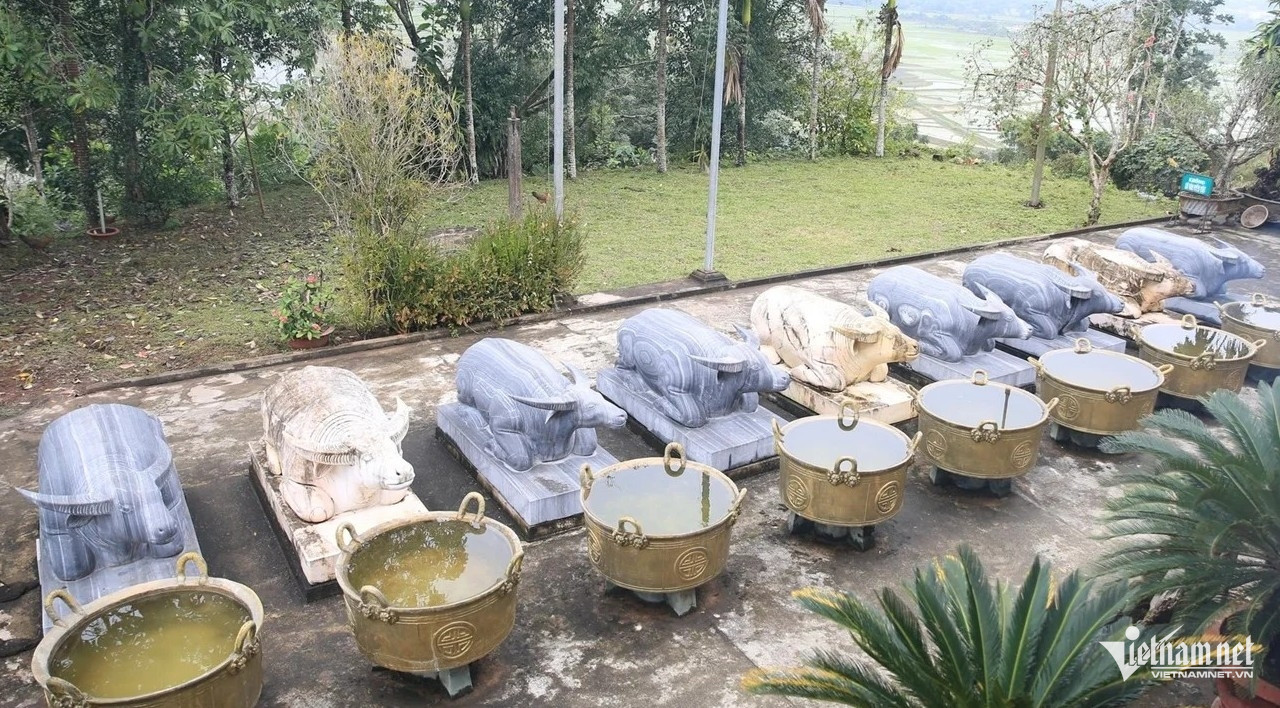
Its courtyard contains nine buffalo statues, including six black buffaloes and three white ones, each standing on a separate stone pedestal. Nine large water cauldrons are positioned in front of them.
Behind these symbolic arrangements lies a complex system of beliefs passed down through generations.
Built in the traditional stilt-house architectural style of the Thai ethnic group, Chin Gian Temple follows distinctive arrangements for its sacred spaces.
Its roof extends outward in four directions, with a decorative motif depicting two dragons facing the moon along the roof ridge. A system of main and supporting columns holds up the structure.
Heavenly deities worshipped at Chin Gian Temple
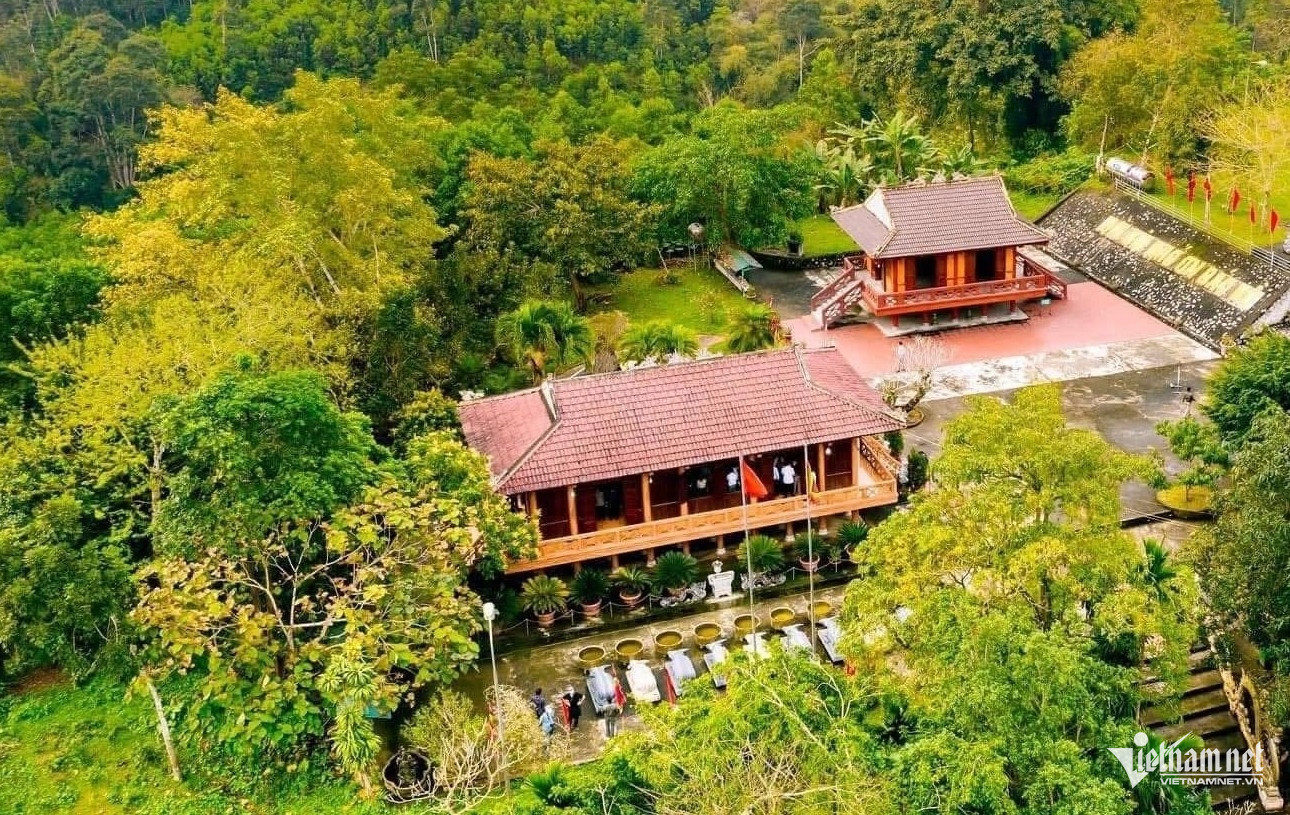
The temple's principal deity is Then Pha, also known as the King of Heaven, regarded as the supreme supernatural being in the traditional beliefs of the Thai ethnic community.
According to local beliefs, the King of Heaven has the power to bless people with abundant harvests and prosperous lives.
However, the deity is also believed to control destructive natural forces, including floods, fires and other disasters.
Worshipping the King of Heaven therefore holds particular importance for agricultural communities whose livelihoods depend heavily on favorable weather and productive farmland.
Another deity honored at the temple is Nang Xi Da, the daughter of Then Pha.
According to legends passed down through generations, her father sent her to the human world to govern and assist the inhabitants of the nine villages and ten muong.
Nang Xi Da is also associated with Khun Tinh, a tribal leader remembered for his strength, intelligence and leadership abilities.
Their story goes beyond mythology, reflecting how the Thai community explains its origins and the formation of its traditional settlements.
Legendary founders honored alongside heavenly deities
While Then Pha represents the supernatural world, Tao Lo Y is closely associated with the historical settlement and development of the nine villages and ten muong in western Nghe An.
Village elder Vi Van Hai from Tien Phong Commune recounted a legend preserved by generations of Thai ancestors.
According to the story, Tao Lo Y was the son of a Tao Muong, a traditional territorial ruler, in Luang Prabang.
His younger brother, Lo Ai, driven by ambitions for power, plotted against him and had him thrown into a river.
Tao Lo Y survived and subsequently began a new journey.
Arriving in a sparsely populated region, he helped local inhabitants defend themselves against wild animals and bandits while teaching them farming and animal husbandry.
Recognizing his contributions, the people honored him with the title of Tao, denoting a traditional leader.
Later, while traveling back toward his homeland, Tao Lo Y reached an area corresponding to present-day Que Phong Commune.
There, he continued helping local residents establish villages and traditional territorial communities, eventually becoming the first ruler of the region known as the nine villages and ten muong.
The territory directly governed by him became known as Muong Ton, meaning the original or ancestral muong.
After his death, local people elevated Tao Lo Y to the status of a deity in recognition of his contributions to founding villages and developing the region.
Other figures worshipped at Chin Gian Temple include Cam Lu, Cam Lan and Cam Can, whose stories are associated with ancestral lineages and the formation of Thai ethnic communities in western Nghe An.
Although these accounts contain legendary elements, they have become an essential part of the community's collective memory.
The achievements of those who established settlements and helped their communities survive are honored alongside the protective powers of supernatural deities.
This combination of heavenly worship and ancestor veneration is one of the defining characteristics of religious practice at Chin Gian Temple.
Residents pray not only to the heavens for peace, favorable weather and successful harvests but also pay tribute to the generations who founded their villages and laid the foundations for community life.
Annual festival celebrates the heritage of nine villages and ten muong
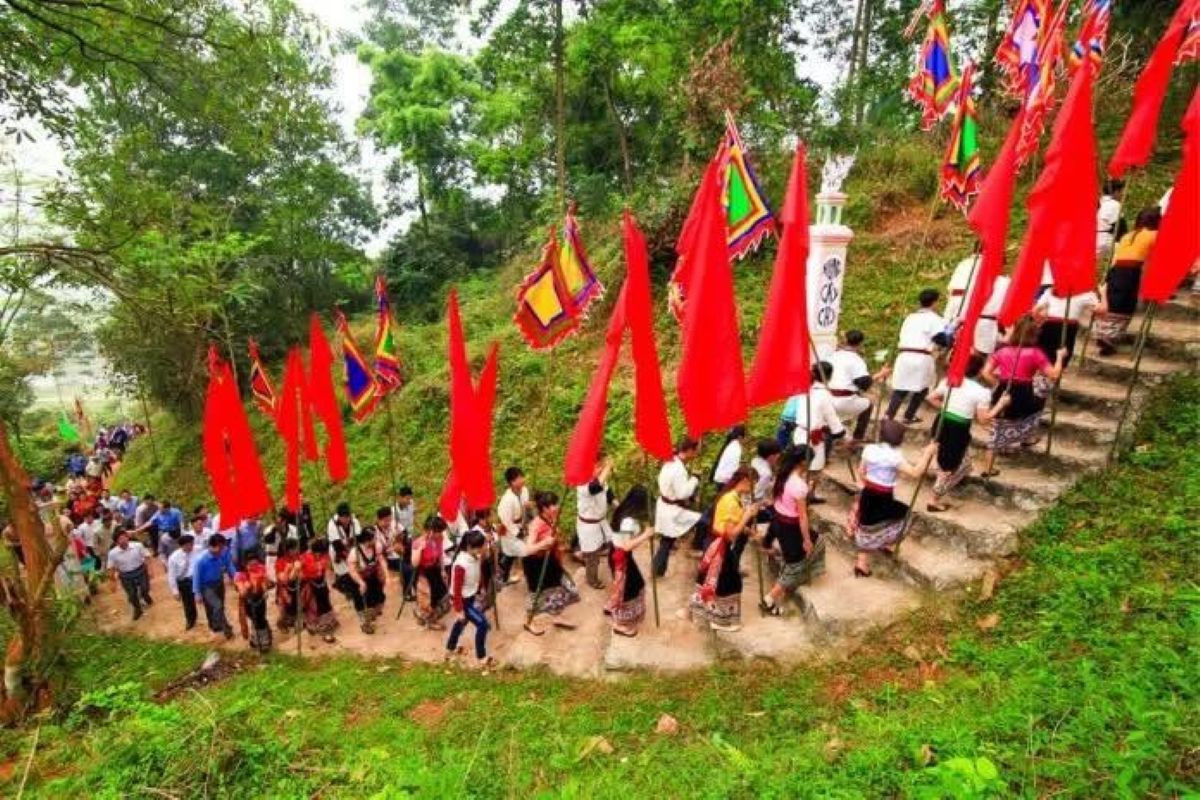
These beliefs are brought to life each year during the Chin Gian Temple Festival, traditionally held from the 12th to the 14th day of the second lunar month.
The festival has become a major cultural celebration for Thai ethnic communities in western Nghe An.
Its ceremonies include purification and opening rituals, formal announcements to the deities, buffalo bathing, processions, buffalo-offering ceremonies, major worship rituals and thanksgiving ceremonies.
Together, these practices create a distinctive cultural and spiritual atmosphere associated with the Thai communities of the Phu Quy region.
Buffaloes hold particular significance in the festival.
Beyond their ceremonial role as sacrificial offerings, they symbolize agricultural production, prosperity and the close relationship between people and the land.
For generations of farming communities, buffaloes have represented an essential source of labor and a symbol of material well-being.
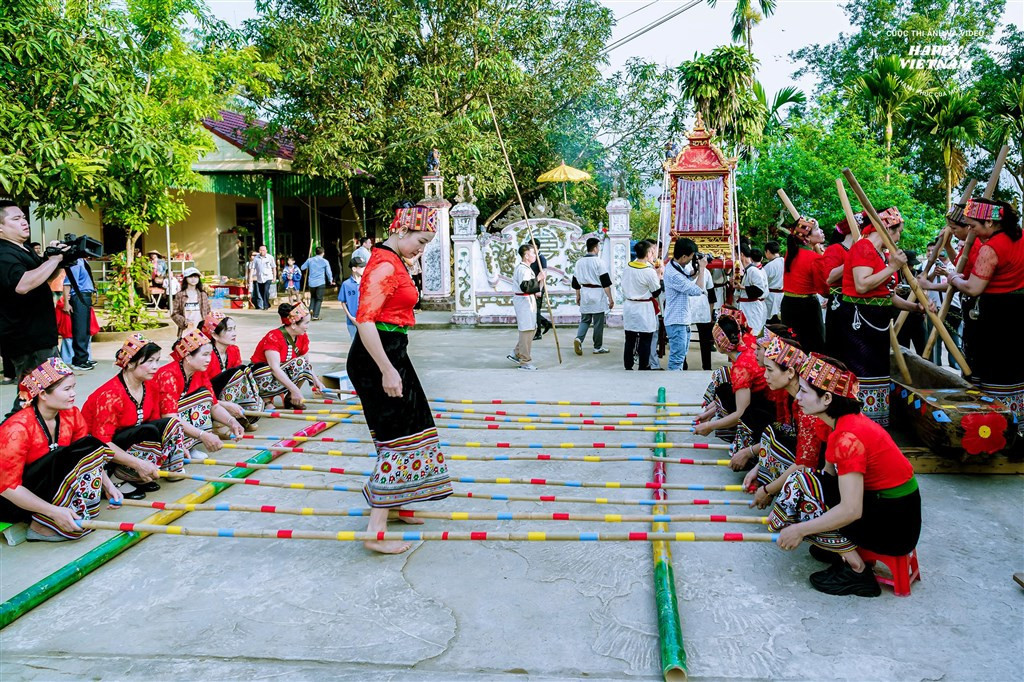
During the festival, residents from the nine villages and ten muong gather at Chin Gian Temple to commemorate their ancestors and express gratitude to the legendary figures credited with establishing their homeland.
They also pray for favorable weather, abundant harvests and peaceful lives.
Traditional games and cultural performances accompany the religious ceremonies, helping preserve the community's distinctive ethnic identity.
The temple's nine buffalo statues, nine water cauldrons and connections to the nine villages and ten muong form overlapping layers of symbolism within the Thai community's spiritual traditions.
Behind the recurring number nine are beliefs in supernatural protection, respect for ancestors and collective memories of those who founded and developed the region.
Despite the passage of time, these values continue to be preserved and passed down through generations of Thai residents in western Nghe An.
The cultural significance of the festival received national recognition on June 13, 2016, when Vietnam's Ministry of Culture, Sports and Tourism added the Chin Gian Temple Festival to the national intangible cultural heritage list under Decision No. 2067/QD-BVHTTDL.
The designation acknowledges both the festival's distinctive cultural value and its enduring importance in the spiritual and communal lives of local residents.
Tien Pham

