 Vietnamnet.vn

 Podcast



Vietnam is converging at a point of opportunity and aspiration. A new growth model is taking shape; a “Vietnamese value system” - resilience, prosperity and happiness - is gradually becoming a guiding compass for development.
As the world enters a period of profound transformation, from geopolitics and economic restructuring to supply chain shifts and new green and sustainable standards, Vietnam faces a rare opportunity to assert its national image: a resilient, innovative and prosperous country oriented toward the well-being of every citizen.
A pivotal moment
The world of 2025 no longer resembles that of just a few years ago. Global growth is forecast at around 2.5 - 2.7 percent, a prolonged low since the pandemic. The US and the EU are accelerating industrial policies and green standards. China is recalibrating its growth model toward consumption and high technology. Nearly 3,000 trade-restrictive measures have been introduced in the past two years alone. Global supply chains are undergoing deep restructuring as multinational corporations speed up their diversification away from China.
In this geoeconomic movement, nations no longer compete solely on GDP, but on image, technological capability, institutional quality, living environment and national values. This is a new race - more intense, more profound and defining in the long term.
For Vietnam - a nation of 100 million people with a strategic position at the heart of Southeast Asia and a growth rate outperforming much of the world - this is not merely a challenge. It is an opportunity for transformation, provided the country adopts the right approach, leverages its internal strengths and seizes the opportunities at hand.
Existing foundations
Over four decades of renovation, Vietnam has ranked among the fastest-growing economies in the world. GDP per capita has increased more than 6.6 times since 1985. The economy now stands at US$485 billion, according to the IMF, ranking 34th globally. Exports have surpassed US$450 billion, placing Vietnam 23rd worldwide. Disbursed FDI in 2025 could reach a record US$25 billion, reflecting the economy’s strong appeal.
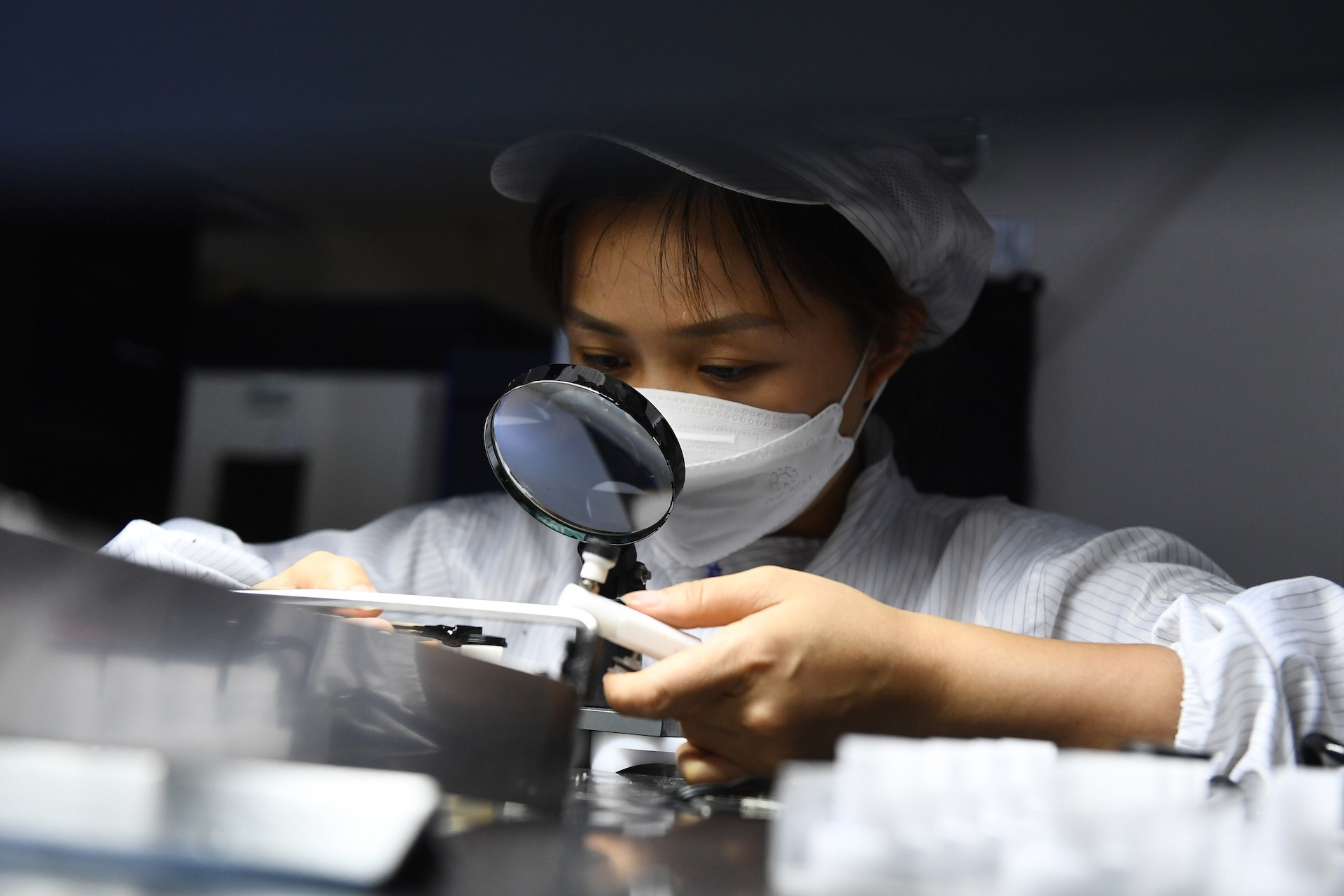
High-tech industries are poised to become new growth engines. Vietnam has become a strategic base for Samsung, LG, Intel, Apple’s supply chain partners, Amkor and others. A young, sizable workforce that rapidly adapts to new technologies provides a meaningful competitive edge.
The digital economy continues to accelerate. According to Google and Temasek, Vietnam’s digital economy reached US$30 billion in 2023 and could rise to US$55 billion by 2025, among the fastest growth rates in Southeast Asia.
A dynamic, integrated and creative Vietnam is clearly taking shape.
Leveraging strategic pillars
Draft documents for the 14th National Party Congress set an ambitious target of double-digit GDP growth and GDP per capita of US$8,500 by 2030, lifting Vietnam into the upper middle-income group.
These goals reflect a national aspiration to rise, and achieving them will require strengthening several key pillars.
First, the strongest wave of FDI relocation in three decades. UNCTAD reports that more than 50 percent of major multinational corporations are shifting part of their production out of China. Vietnam ranks among the top three attractive destinations, alongside India and Mexico. If Vietnam can attract US$35 - 40 billion in FDI annually from 2026 to 2030, the processing and manufacturing sector could achieve annual growth of 12 - 14 percent.
Second, accelerating digital transformation. Internet penetration has reached 78 percent, and e-commerce is growing at 25 - 30 percent per year. With the right strategy, Vietnam has the opportunity to become a digital economy hub of ASEAN.
Third, national infrastructure as a new growth impulse. More than VND2.87 quadrillion (approximately US$117 billion) in public investment for 2021 - 2025 - the largest sum ever - is gradually shaping new connectivity networks: the North - South expressway, Long Thanh International Airport, ring roads in Hanoi and Ho Chi Minh City, and national digital infrastructure. These are the foundations for achieving high growth if the development model is renewed.
Challenges demanding repositioning
The new context and mounting challenges require a recalibrated mindset and prudent steps.
First, competition for FDI is intensifying. India, Indonesia and Malaysia are offering superior tax incentives and infrastructure packages to attract semiconductor and electronics industries. Vietnam can no longer rely solely on low labor costs.
Second, green standards have become a “trade passport.” The EU is implementing the Carbon Border Adjustment Mechanism, while the US, Japan and South Korea are setting carbon roadmaps. Vietnam’s steel, cement, textile and chemical industries face significant pressure if they fail to transition.
Third, labor productivity remains a bottleneck. Vietnam’s productivity lags far behind many competitors. Without productivity gains, high growth will not be sustainable.
Fourth, environmental and urbanization risks loom large. An ADB analysis suggests climate change could cost Vietnam 12 - 14 percent of GDP by 2050. Air quality in major cities has become a strategic issue directly linked to national image.
An image for the new decade
To position Vietnam on the world map, a consistent, modern and era-appropriate national image must be built.
A resilient and stable nation, where political stability, crisis response capacity and long-term growth form the backbone of national branding.
A high-tech manufacturing hub in Asia, moving beyond a “factory floor” to become a center for R&D, design and innovation in global technology chains.
A fast-digitizing and creative nation, harnessing its young population and vibrant startup ecosystem to build a large-scale digital economy.
A green and livable country, greening production, enhancing urban quality and protecting the environment to attract talent and investment.
A nation of 100 million driven by aspiration. Aspiration shapes identity. A people willing to think big, move fast and innovate boldly will create the strongest magnetism of all.
Strategic solutions
Vietnam must renew its growth model based on productivity and technology, raising total factor productivity to 2 - 2.5 percent annually, building ecosystems in semiconductors, AI and biotechnology, and fostering large-scale private enterprises.
It must develop high-quality human capital, training 50,000 semiconductor and AI engineers by 2030, standardizing vocational training to OECD benchmarks and adopting special mechanisms to attract global experts.
It must build a green and circular economy, develop a domestic carbon market, increase renewable energy share and support enterprises in meeting CBAM standards.
Institutional reform must place Vietnam at the regional forefront, shortening investment licensing time to six to nine months, fully digitizing administrative procedures and ensuring transparency in public investment.
Finally, Vietnam must maximize the advantages of its 100 million-strong domestic market by developing creative services, a night-time economy and modern commerce.
A journey of aspiration
As a new year begins, looking back and ahead, it is clear that Vietnam stands at the intersection of opportunity and aspiration. A new growth model is emerging; a “Vietnamese value system” - resilient, prosperous, happy - is gradually becoming the compass of development.
Positioning Vietnam is not only a strategic undertaking, but also a story of confidence grounded in reality and lessons drawn from the journey toward the future. Confidence that a nation of 100 million can rise to new heights and assert an important role regionally and globally. Confidence that every citizen will share in the fruits of development. Confidence that a modern - green - prosperous - happy Vietnam is an achievable goal.
Yet such confidence must rest on a clear-eyed assessment of opportunities and challenges alike, and on prudent management of the risks that accompany them.
Huynh The Du
.svg)
