 Vietnamnet.vn

 Podcast



Once regarded merely as draft animals, white horses have, through the pioneering efforts of Nong Duc Tho, become an effective economic driver amid the mountains of Lang Son.
From workhorse to sustainable livelihood in the highlands
Having taken up the trade at the age of 20, Nong Duc Tho, born in 1966 and a Tay ethnic resident of Suoi Mo hamlet, Quan Son commune, Lang Son province, is among the first local households to raise white horses as a key economic model in the Huu Kien mountainous region.
Speaking to VietNamNet, Tho said his family currently maintains a herd of 10 horses. This year alone, he has sold five breeding horses at around VND30 million each (US$1,200 per horse), generating a significant source of income.
He recalled that in the past, highland residents mainly kept horses for pulling loads, carrying maize and transporting rice from fields back home. His family was no exception. At the time, a horse was simply the backbone of the household economy, an indispensable means of production in the mountains.
“In the past we raised horses purely to serve the family’s daily livelihood. Later, seeing that many places were breeding white horses for sale at good prices, I began to study the model more carefully and shift towards commercial breeding,” Tho shared.
Recognizing the market potential of white horses, a valuable breed with high economic returns, he boldly changed his husbandry methods.
From just a few animals at the outset, he gradually expanded the herd, selected quality breeding stock and paid close attention to care techniques. Today, a foal raised for about four months can be sold for breeding at roughly VND30 million (US$1,200), while a healthy, mature mare meeting reproductive standards can fetch up to VND60 million (US$2,400).
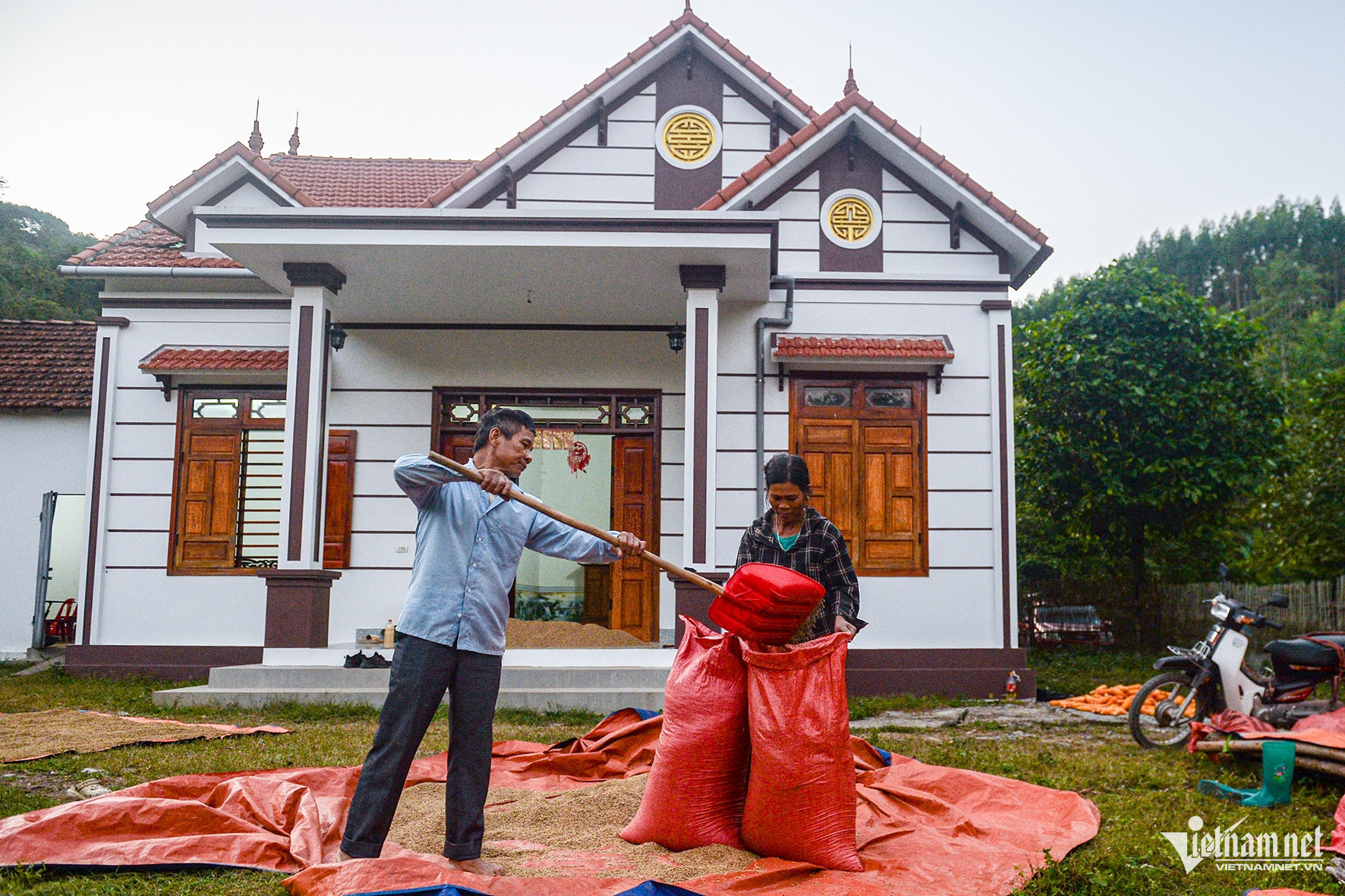
With five breeding horses sold this year, the family earned nearly VND150 million (US$6,000), excluding the value of horses that continue to reproduce. After many years of diligence, Tho’s family has built a spacious new house, tangible proof of the economic transformation in this highland area.
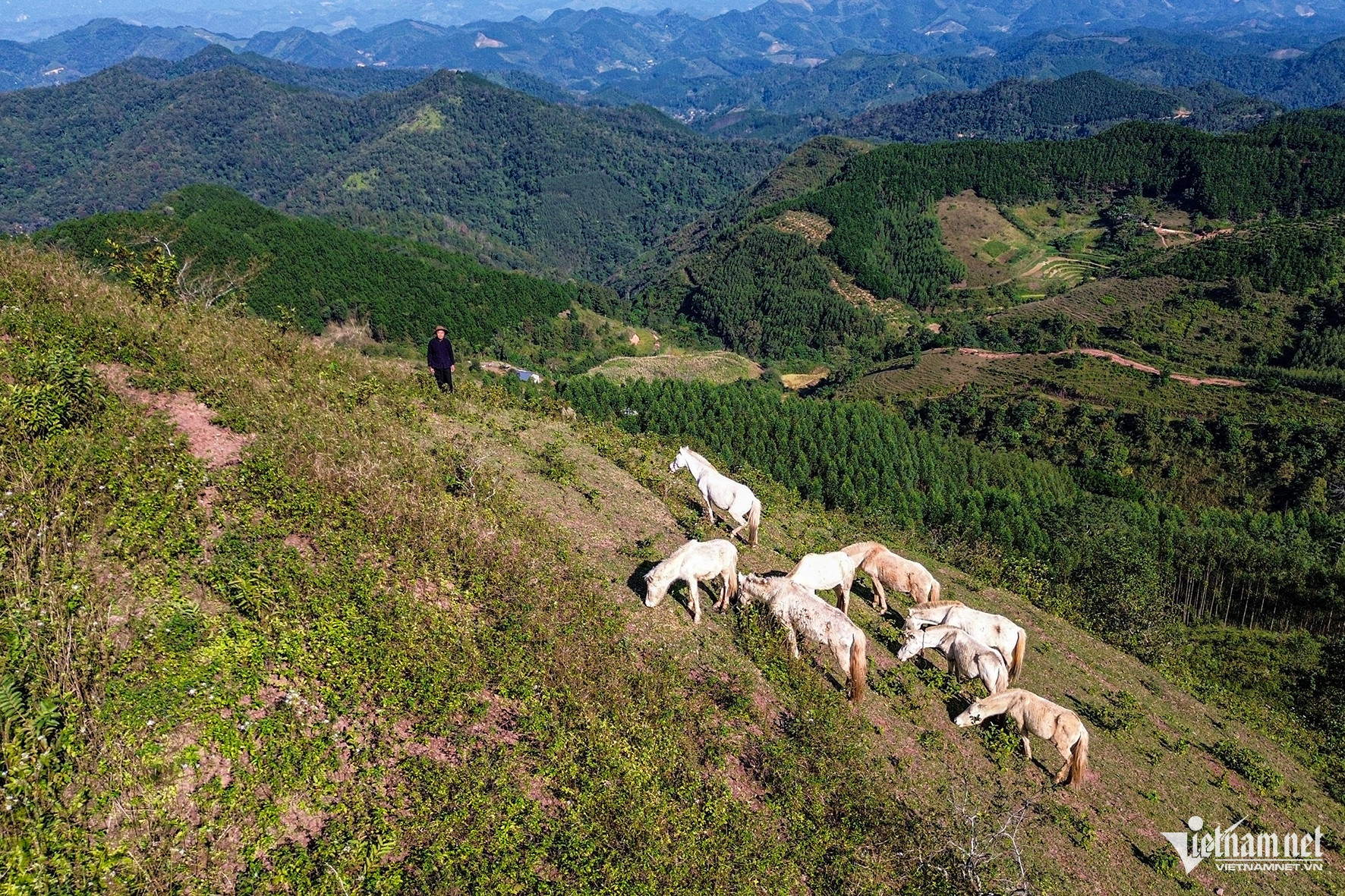
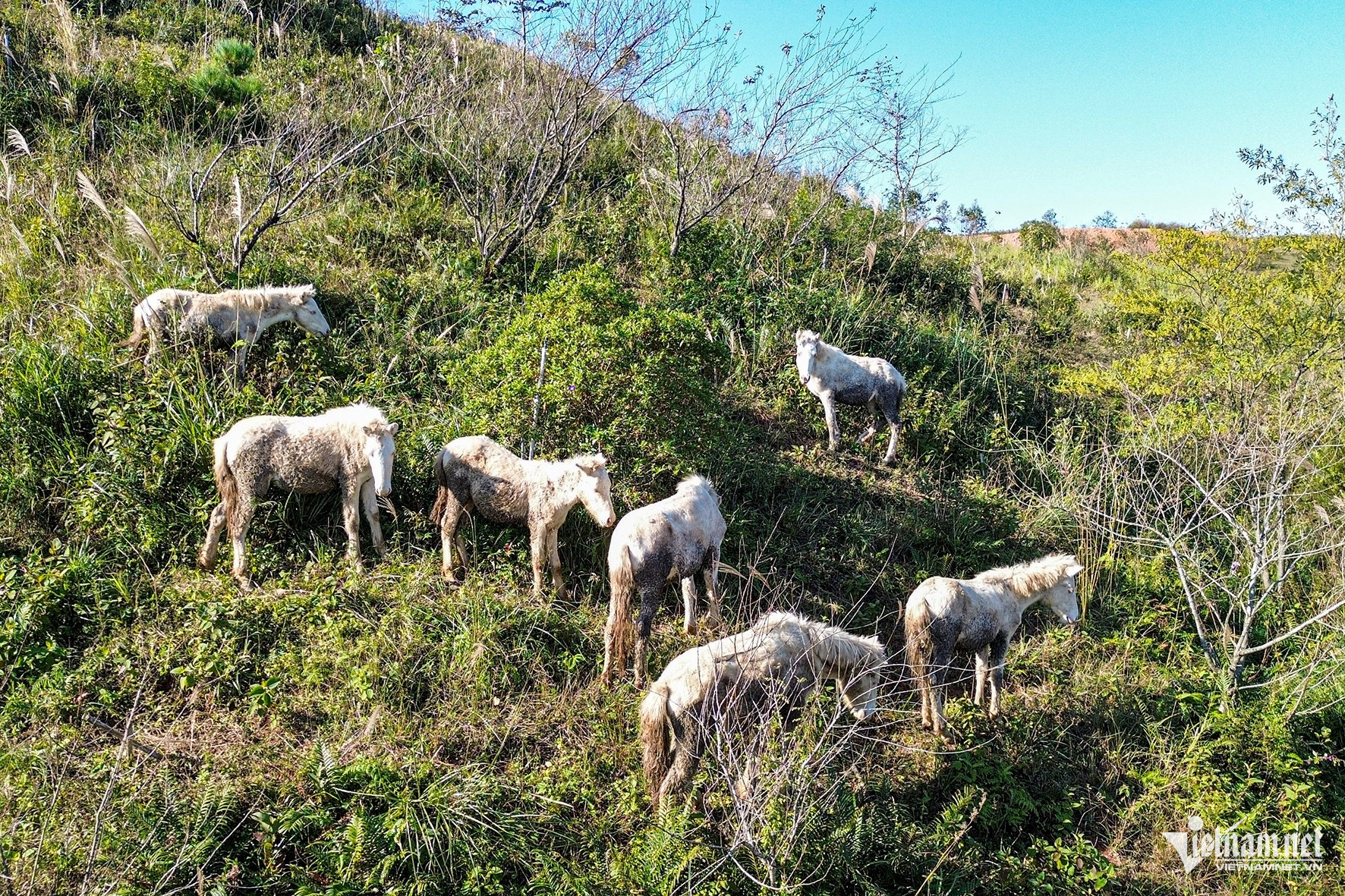
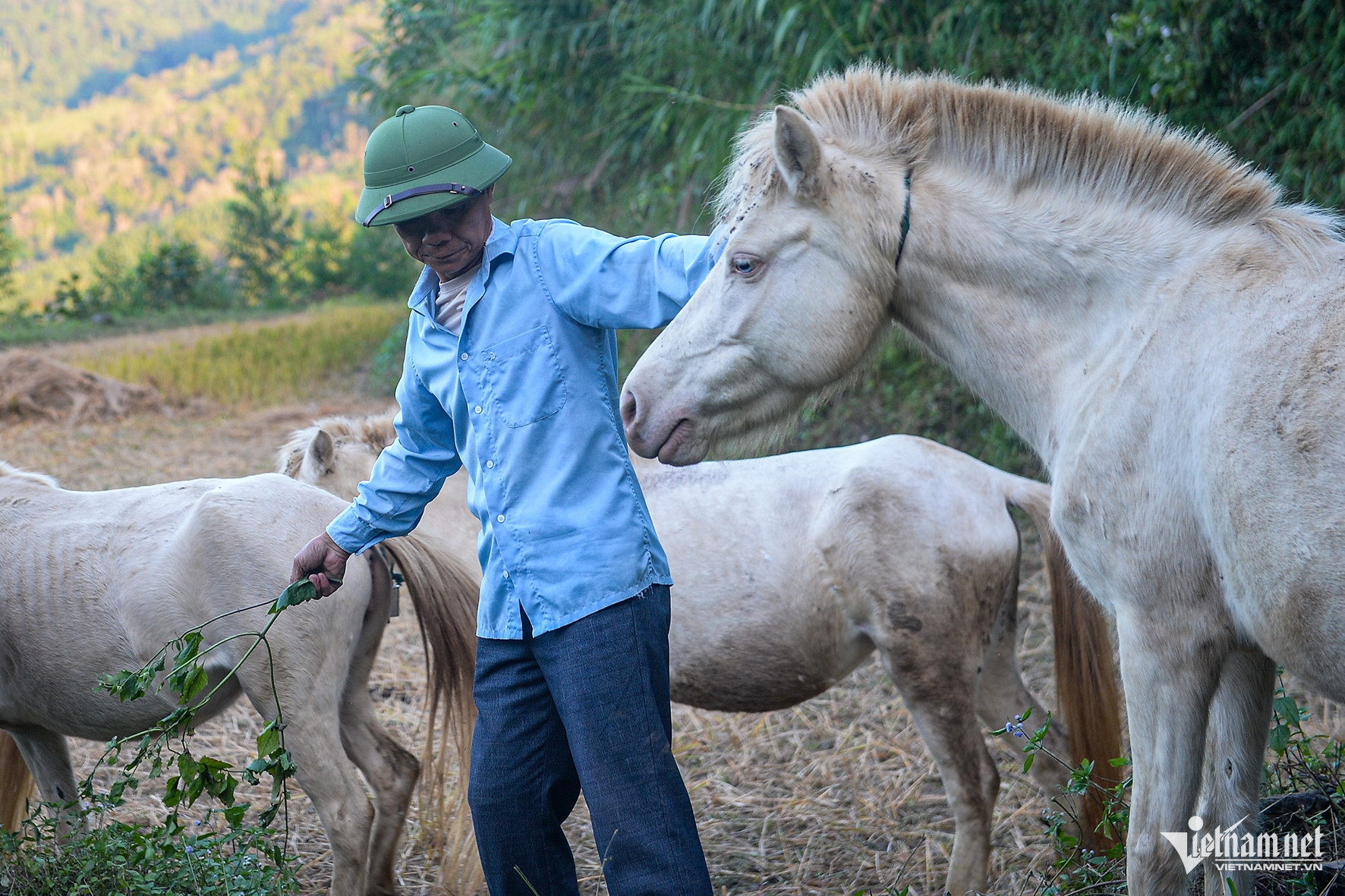
White horses are naturally grazed on high mountains with favorable climate conditions and clean grass sources.
Quietly mastering the craft, safeguarding the herd through disease
The path to prosperity has not always been smooth. There were times when disease struck the herd, causing significant losses.
“Watching the horses fall ill and refuse to eat was heartbreaking. At one point, I thought I might have to give up,” he recalled.
Instead of retreating, he resolved to learn more, studying technical materials and attending husbandry training sessions. He invested in upgrading the stables to ensure ventilation and cleanliness, keeping them dry during the rainy season and warm in cold weather. Feed sources were also improved, prioritizing natural grass supplemented with maize to strengthen the animals.
Through persistent refinement of his breeding process, the family’s herd has grown increasingly robust, producing high quality pure white horses associated with the Huu Kien area.
According to Tho, caring for white horses requires meticulous attention at every stage of development. Each day, he releases them onto high hillsides to graze freely and exercise naturally. In the evening, the herd is led back to the stable and given additional maize to ensure proper nutrition. This semi free range method helps the horses develop well, suffer fewer illnesses and maintain firm physiques.
Nguyen Van Vui, Vice Chairman of the Farmers’ Association of Quan Son commune, told VietNamNet that the commune currently has nearly 2,800 horses raised by local households.
“White horse breeding has been helping many families develop their economy, increase income and gradually change living standards. In the past, many households struggled, but now they have built new houses and purchased additional machinery and household equipment,” Vui said.
He added that local authorities are encouraging residents to develop livestock production on a commercial scale, with greater attention to disease prevention and the quality of breeding stock.
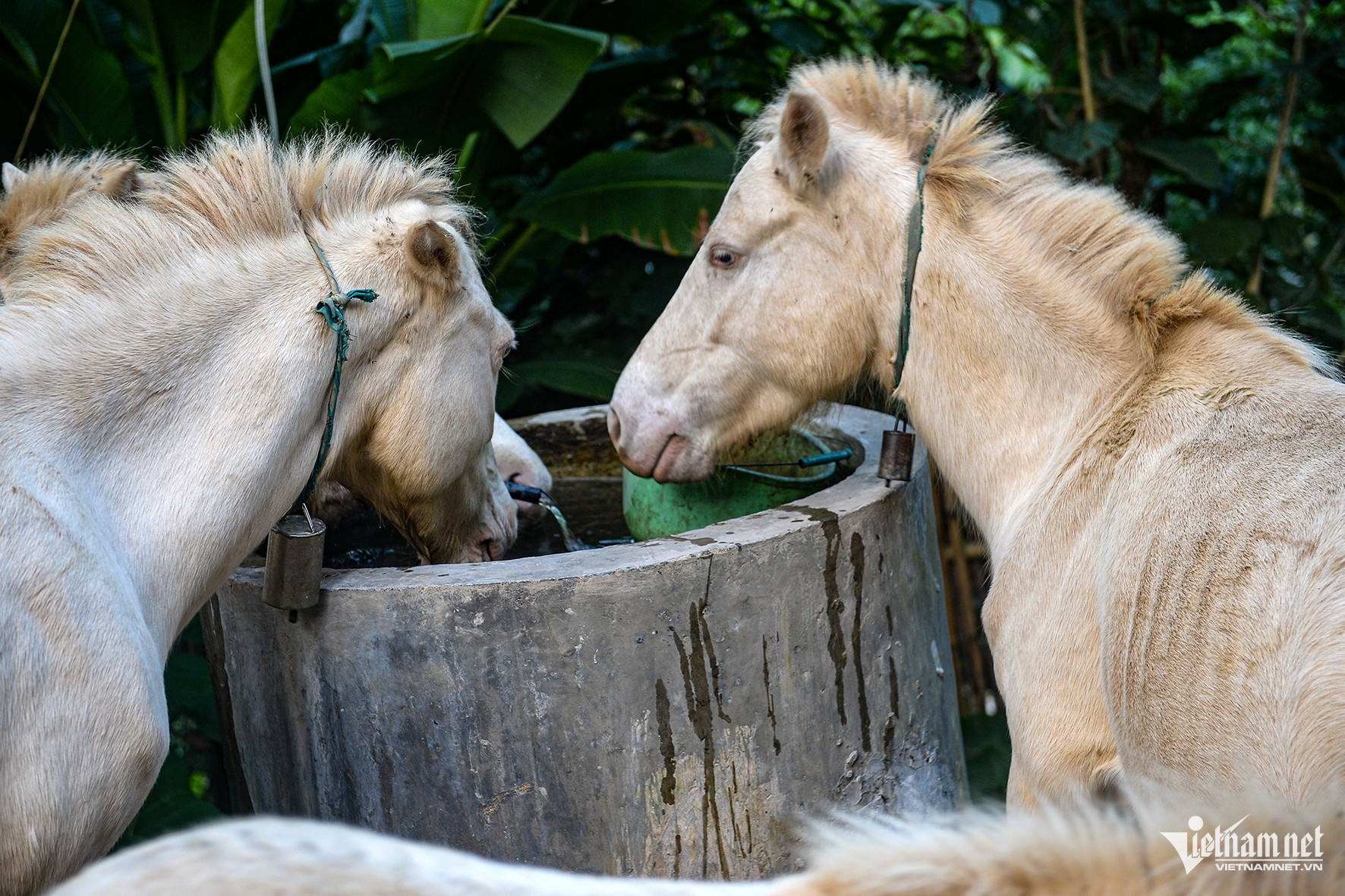
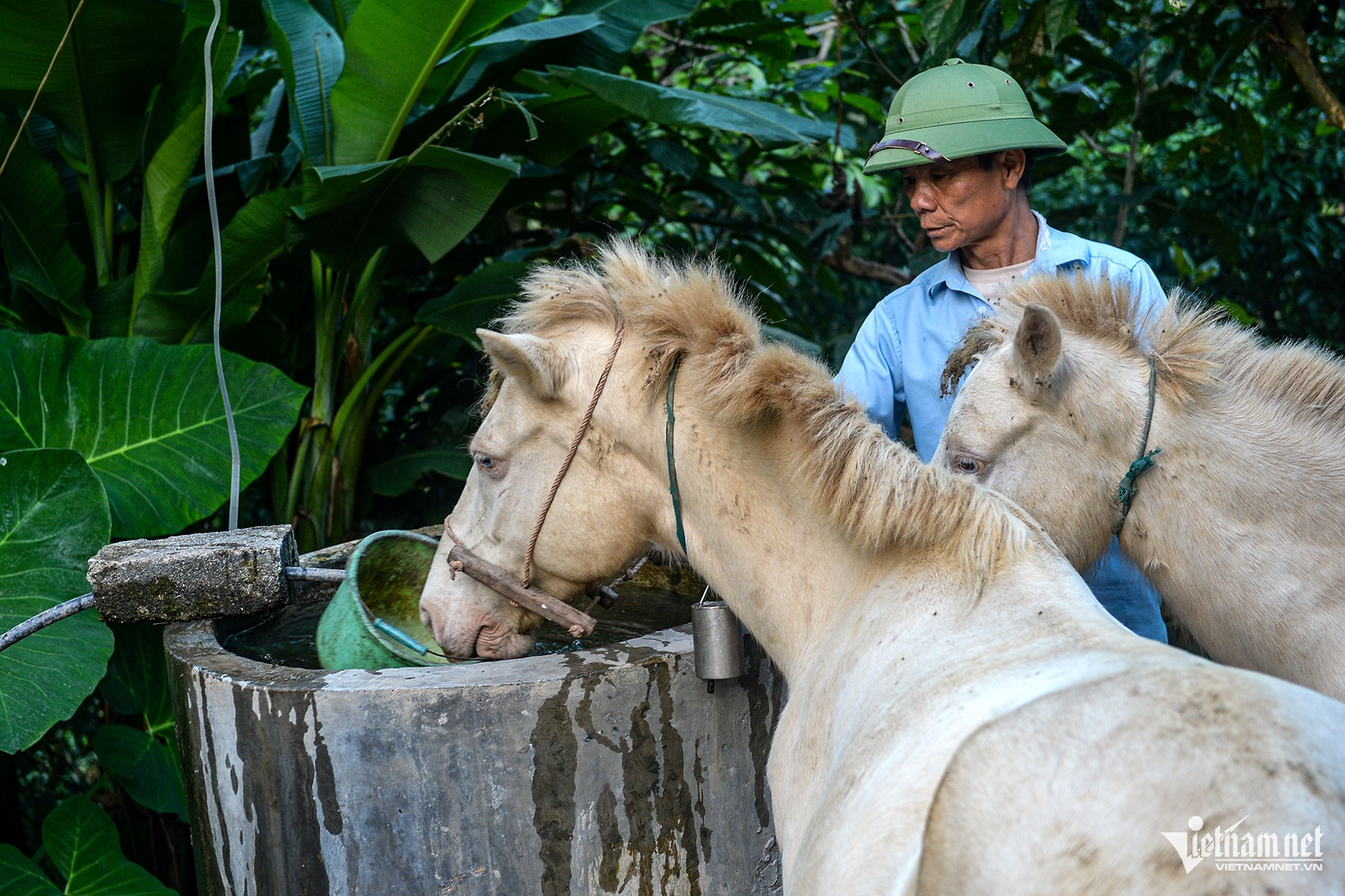
In addition to natural grazing, white horses are supplemented with maize when they return to the stable to enhance their health.
White horse breeding is becoming a new direction for economic development in the highland areas of Lang Son province.
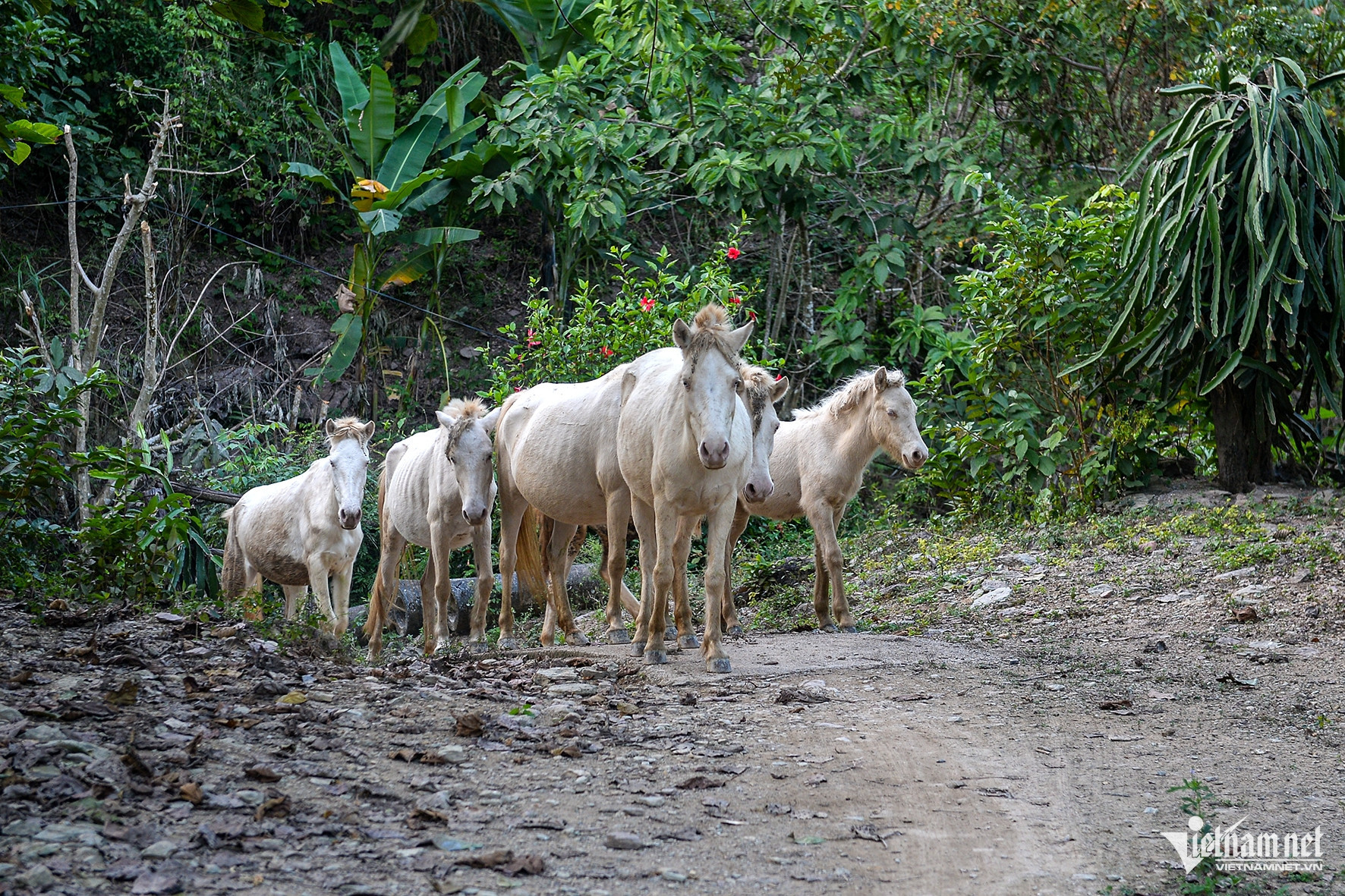
Herds of white horses in Quan Son commune. Photo: Vu Hai
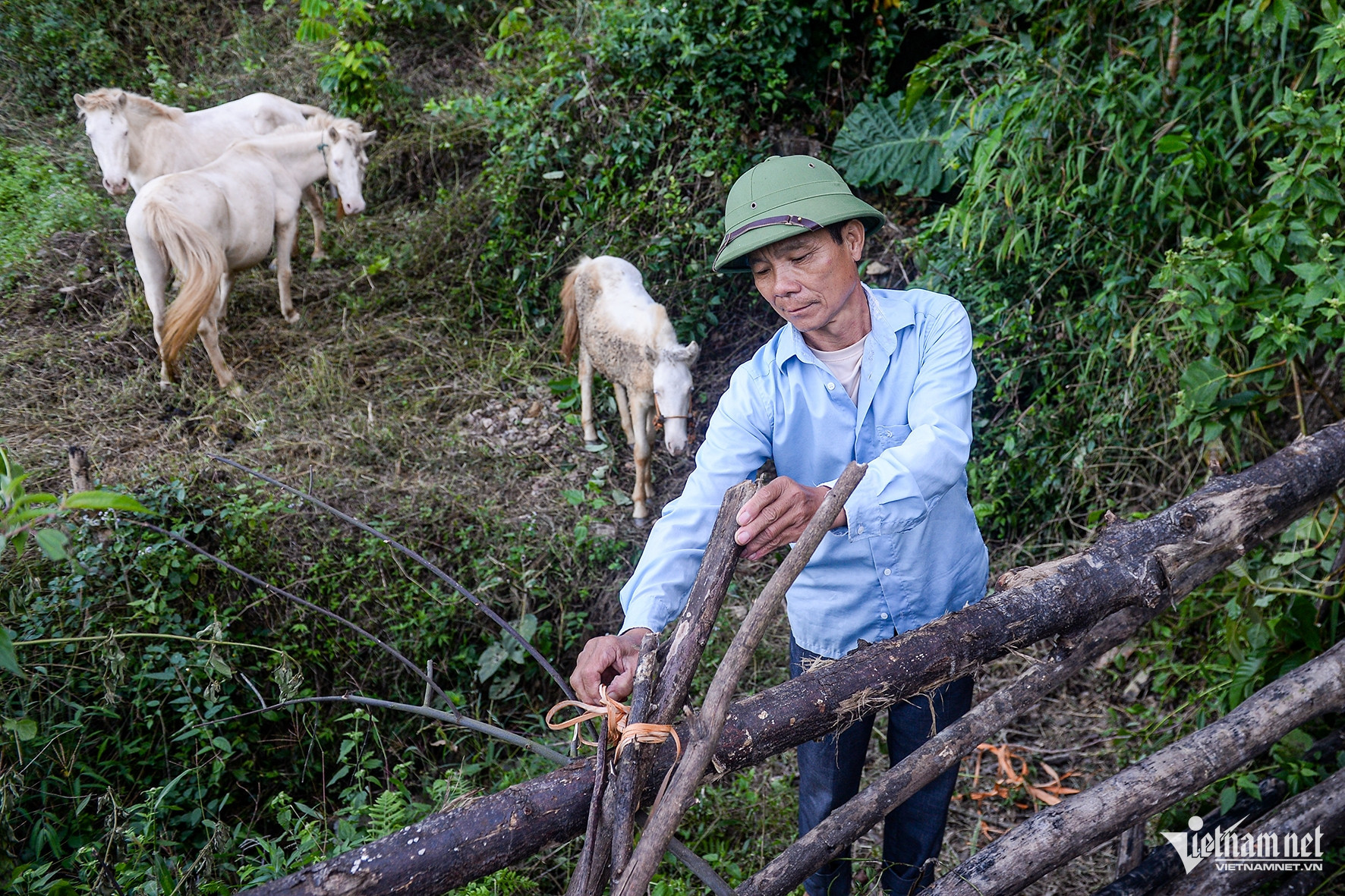
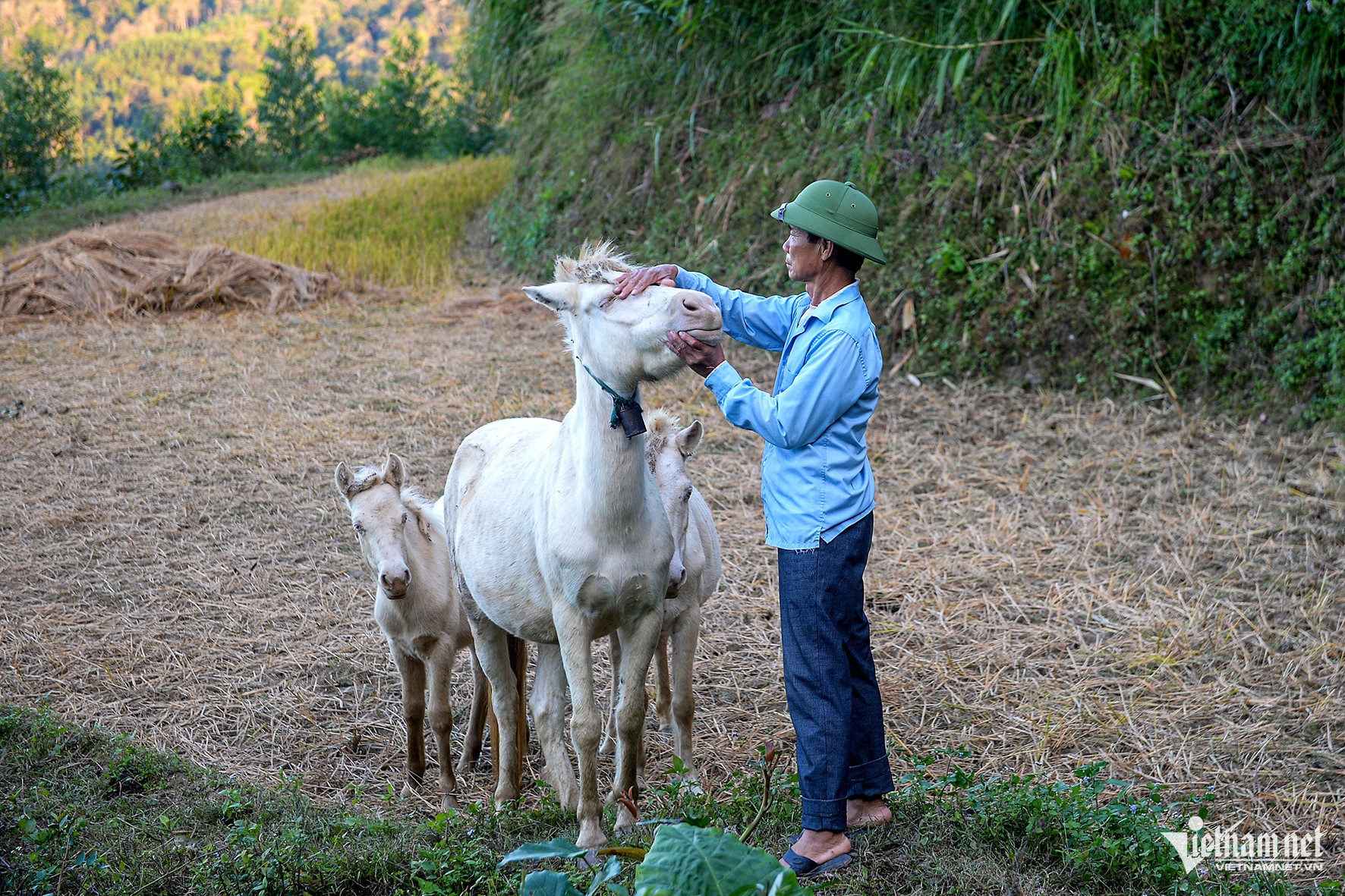
Nong Duc Tho tends to his horses during daily grazing. Photo: Vu Hai
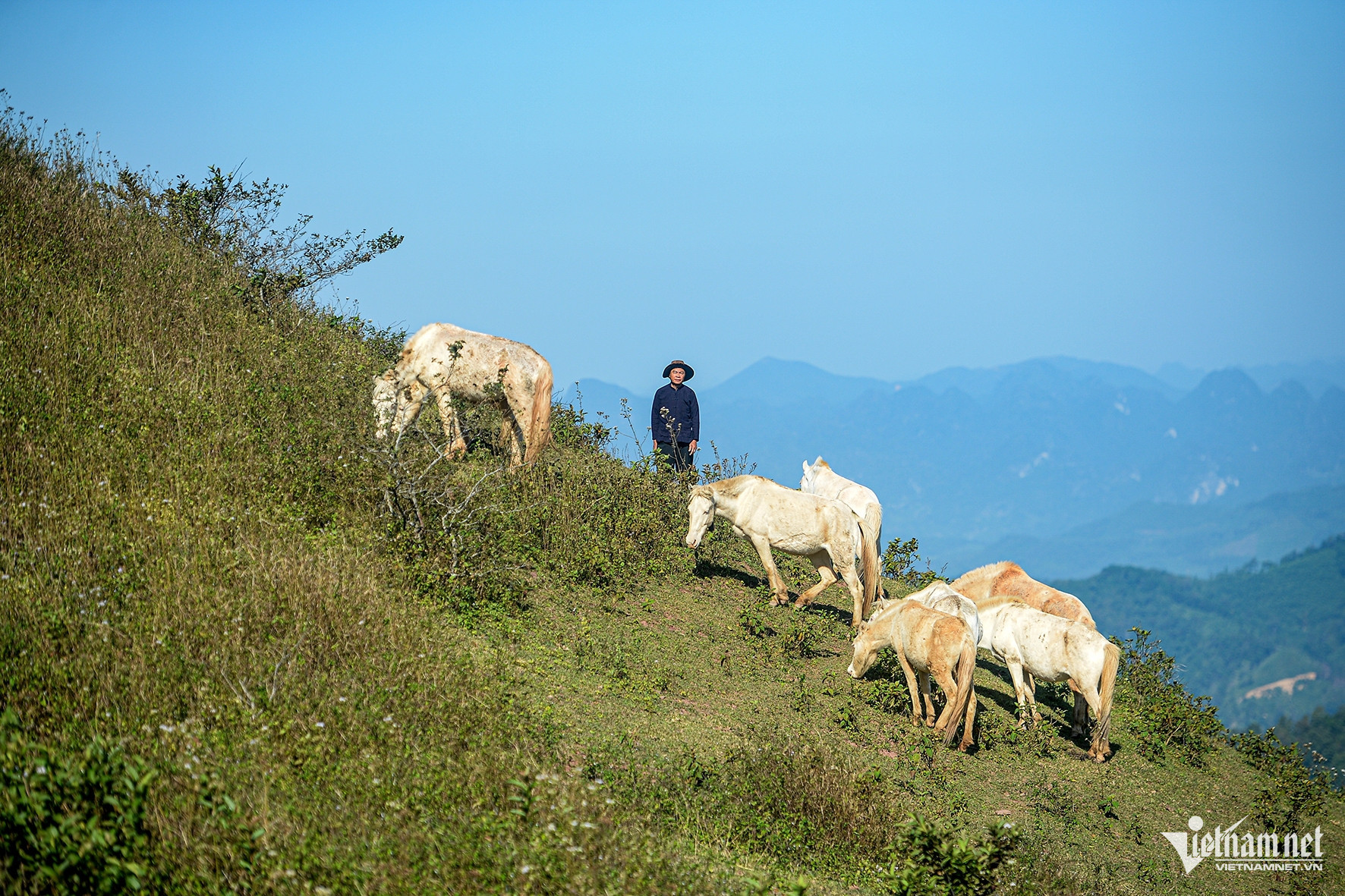
White horses are naturally grazed on high mountains with clean grass sources. Photo: Vu Hai
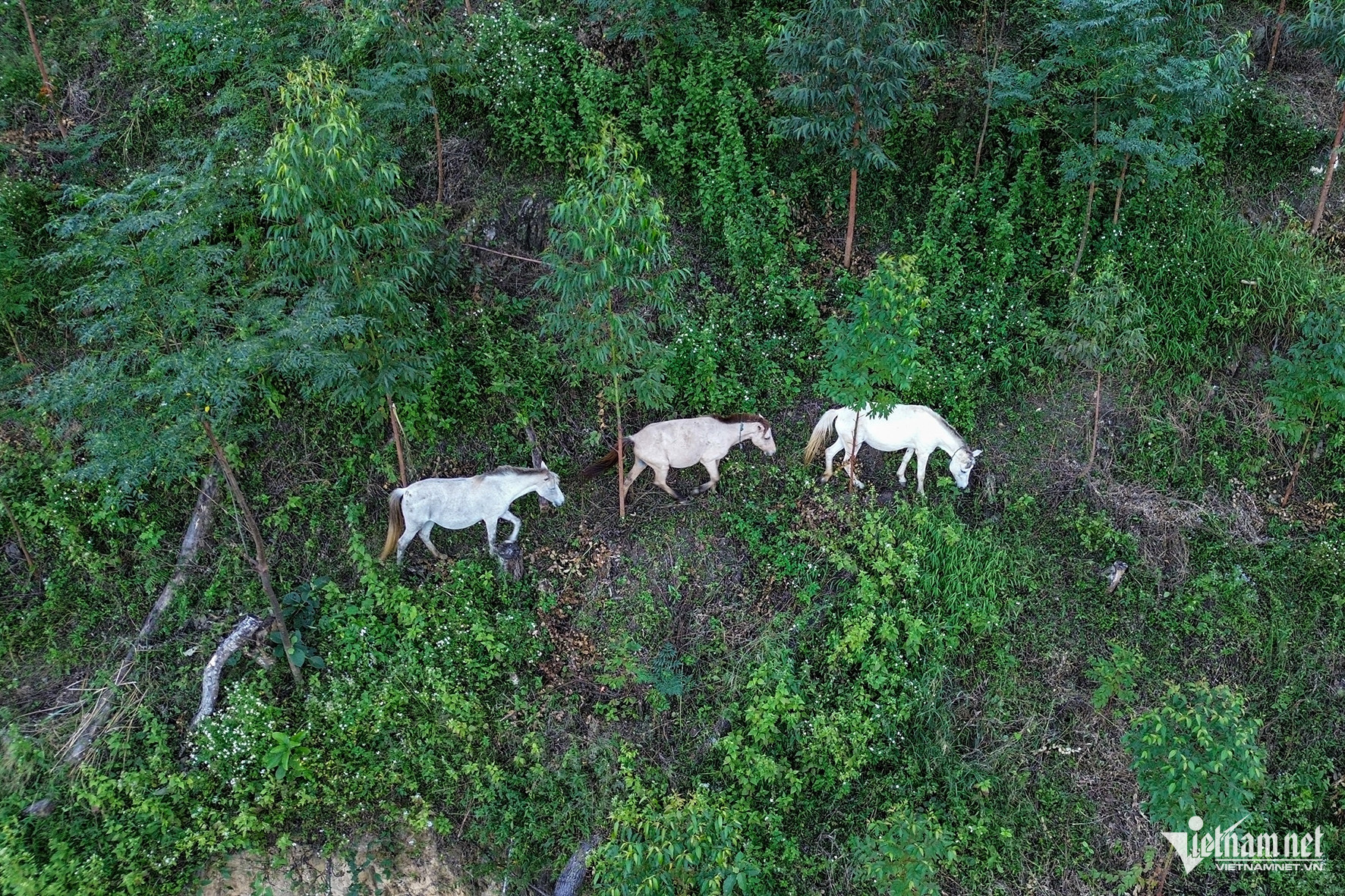
Tho values white horses for transforming his family’s economy and changing the face of the highlands. Photo: Vu Hai
Tho’s spacious house after many years of raising white horses. Photo: Vu Hai
White horses are given additional maize in the stable to boost their health. Photo: Vu Hai
Pham Cong
.svg)
