 Vietnamnet.vn

 Podcast



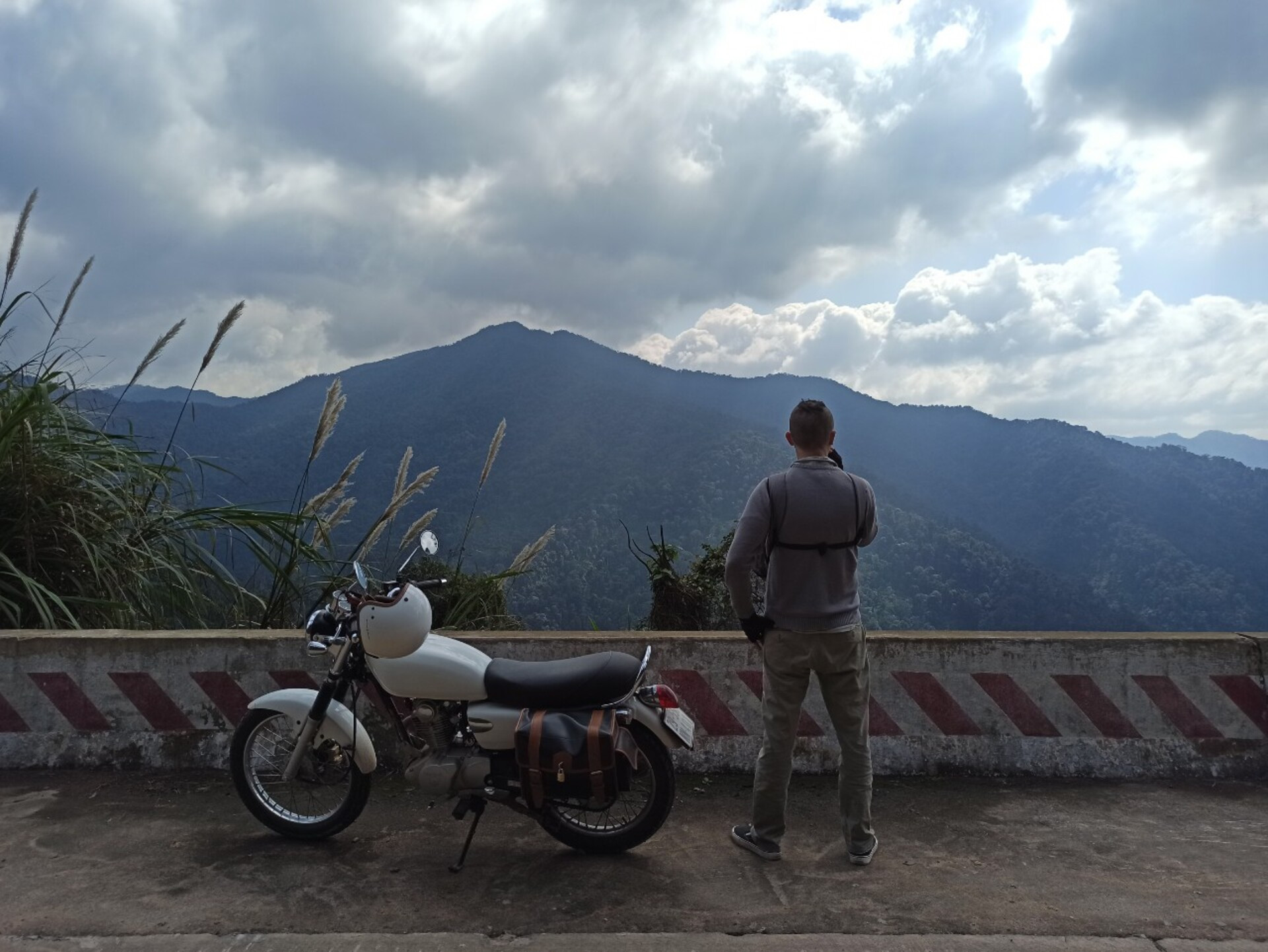
Mihai has visited all 34/34 provinces and cities in Vietnam (50/64 before administrative mergers). He’s crossed Hai Van Pass 20 times, knows the coastal route from Quy Nhon to Phan Thiet like the back of his hand, conquered three of the four “great mountain passes,” and explored famous islands like Cat Ba, Con Dao, Phu Quy, and Ly Son.
“I’ve traveled over 25,000km across Vietnam by motorbike (not counting city commutes),” Mihai told VietNamNet.
Mihai said in his childhood he often heard stories about Vietnam from his uncle, a diplomat, translator, and former Romanian ambassador to Vietnam. Young Mihai was captivated by books and films about the history of this resilient Southeast Asian nation.
He said he was determined to get a scholarship to study in Vietnam.
“In 2008, I arrived in Hanoi. After a year of learning Vietnamese, I studied graphic design at Hanoi’s University of Industrial Fine Arts.
I lived in Hanoi for 14 years before moving to HCMC. Passionate about teaching, I studied pedagogy and began teaching English to Vietnamese students,” he said.
Mihai’s first motorbike adventure in Vietnam was during his second year at university, a field trip to Mai Chau (Phu Tho) near Lunar New Year. While others took buses, he chose a motorbike to fully experience the route’s beauty.
“It was my first time crossing Thung Khe Pass in thick fog and freezing cold. Before setting off, I checked maps and asked friends about the route. Along the way, I relied on locals for directions.
“Once, fog obscured everything, and a truck suddenly appeared in front of me. I braked just in time, safe but shaken. That was my first biking lesson. The majestic yet poetic Northwest mountains kept drawing me back,” he recalled.
Beyond scenery, Mihai is fascinated by Vietnam’s history. He spent time at historical sites, particularly impressed by Dien Bien, the western branch of the Ho Chi Minh Trail through Quang Tri.
Seventeen years in Vietnam has left him fluent in Vietnamese, an advantage for travel and a source of amusing moments.
Riding with a helmet, glasses, and mask, Mihai often greeted shop owners and ordered before removing his gear.
“The shop owners prepared coffee and brought it to my table. When I took off my mask, they were stunned, and some even flinched, nearly dropping my drink, exclaiming, ‘You’re a foreigner? How do you speak Vietnamese so well?’ Then we’d all burst out laughing,” Mihai recalled.
He’s lost count of how many times people asked, “Are you mixed race?” or “Were you born in Vietnam?” Some wanted to take pictures to show their friends “a white, high-nosed Westerner speaking Vietnamese like a local.”
Traveling for ‘energy recharging’
In 2018 and 2021, Mihai made two cross-country trips with friends.
“In 2022, I decided to travel solo from Hanoi to HCMC. The journey took about two weeks at a leisurely pace. Afterward, I shipped my bike back by train and flew home,” he said.
Since 2018, Mihai has taken annual two-week trips of 1,500-2,000km, usually during Tet or summer, and some shorter trips to “recharge.”
The more he travels, the more confident he becomes, as “Vietnamese are friendly and always ready to help.”
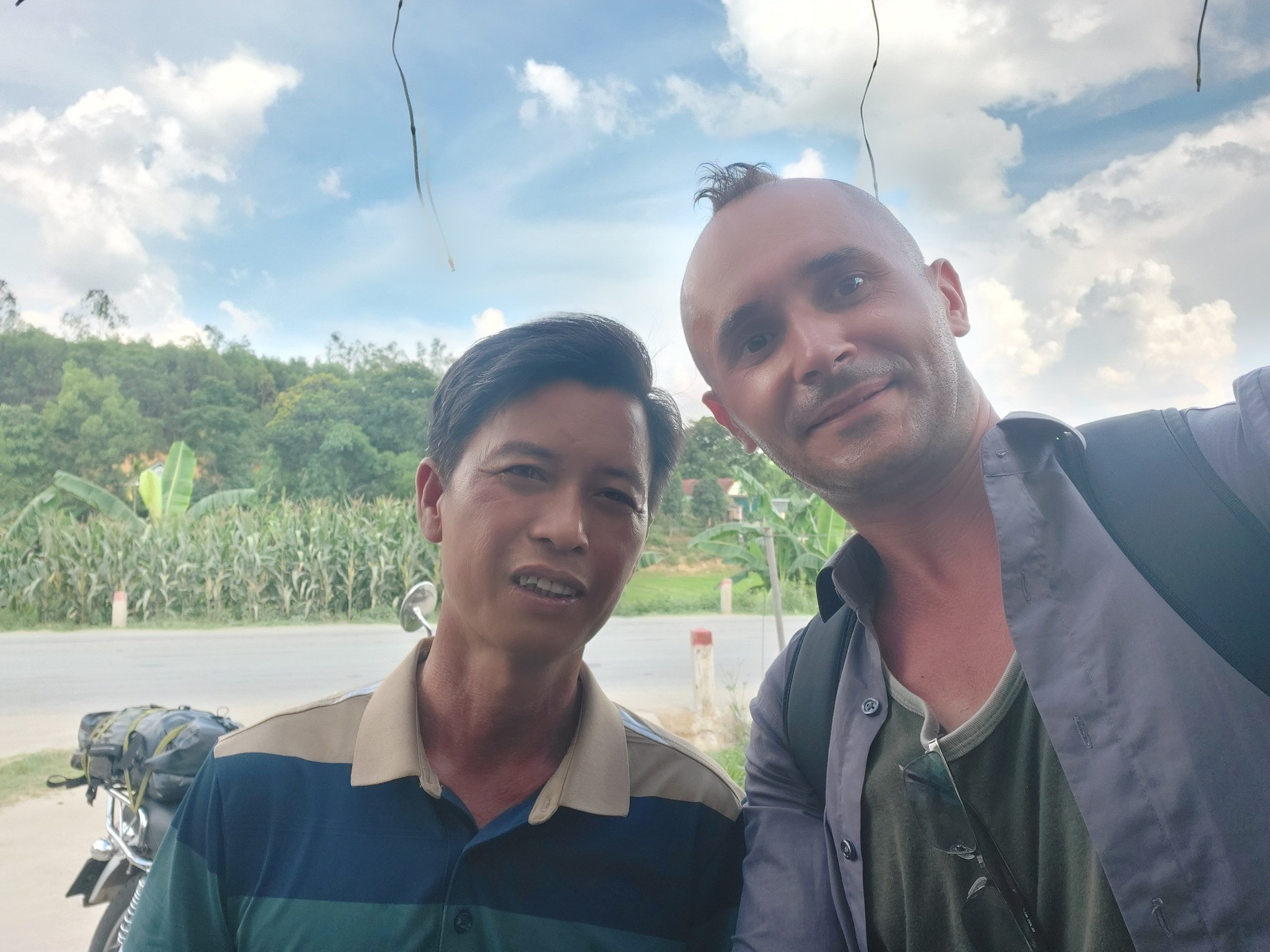
Last June, on the Ho Chi Minh Trail to Nghe An, his bike ran out of fuel due to a broken gauge. A local named Bac shared a liter of gasoline and refused payment.
“That’s how Vietnamese people are. They are ready to help without expecting anything in return. I’ve encountered this often,” Mihai said.
For Mihai, staying at village homestays feels like “coming home.” He’s warmly welcomed, enjoys close conversations, and savors delicious meals. The person he remembers most is Ho Khanh, the discoverer of Son Doong Cave.
In 2021, during a cross-country trip amid the Covid-19 outbreak, many homestays were hesitant to host guests, especially foreigners. By chance, Mihai and his friend found Ho Khanh’s homestay near Phong Nha.
“At first, he apologized, saying they were closed for Tet. But when he heard we couldn’t find a place to stay or eat, he changed his mind,” Mihai recalled. “That night, I was amazed to learn he discovered Son Doong Cave. I read up on him and felt honored to meet such a humble, kind man.”
Linh Trang
.svg)
