 Vietnamnet.vn

 Podcast



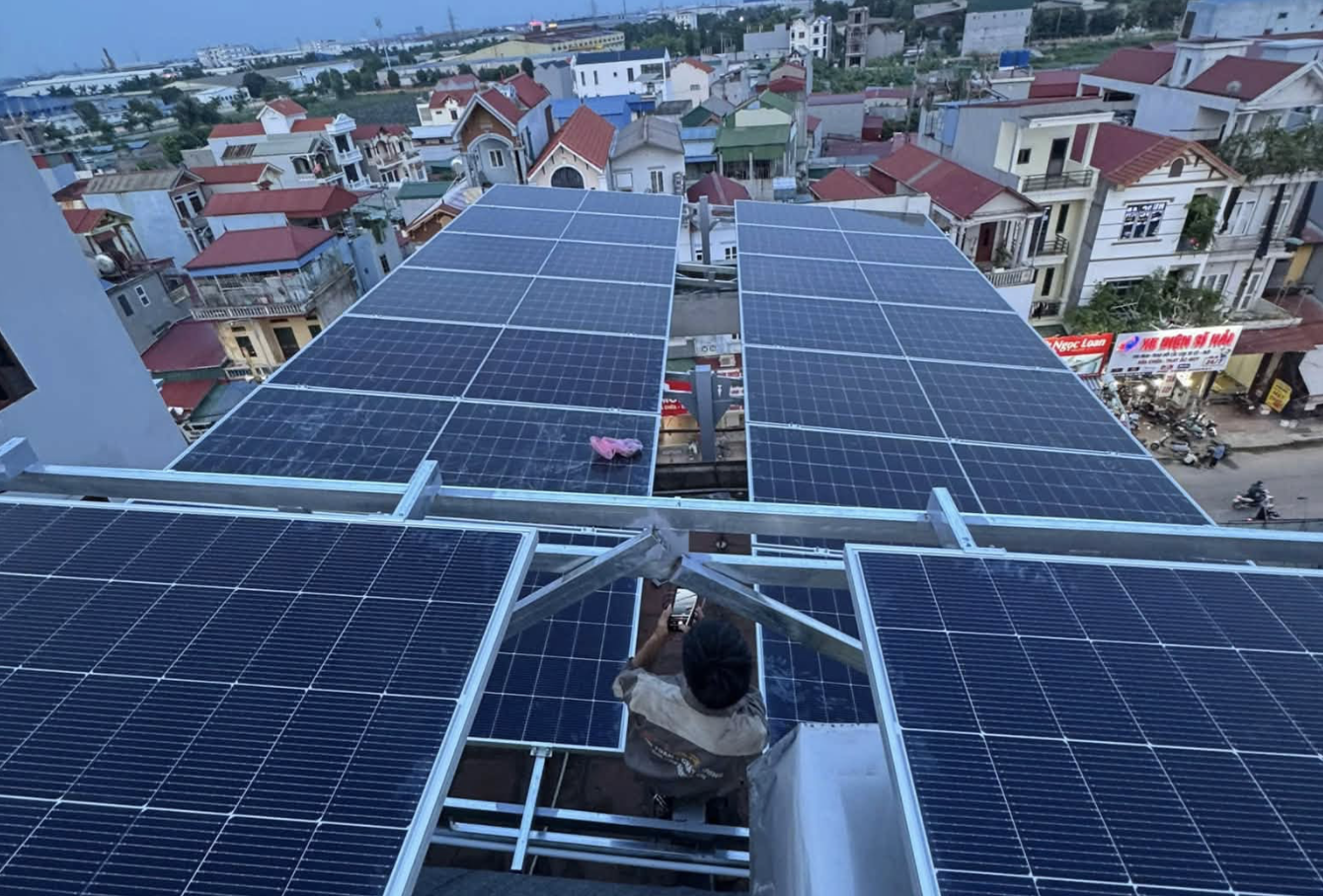
According to Northern Power Corporation (EVNNPC), the development of self-generated, self-consumed rooftop solar continues to deliver positive results, with investment by both households and businesses rising strongly.
In July alone, another 2,981 customers installed rooftop solar systems with a combined capacity of 105.3 MW, reaching 186% of the monthly target. In the first seven months of 2026, 11,481 customers across northern Vietnam, excluding Hanoi, installed rooftop solar systems with a total capacity of 499.9 MW.
As of July 31, 2026, the cumulative number of customers across EVNNPC’s service area had reached 13,080, with total installed capacity of 823.7 MW.
According to EVNNPC, Decree No. 58/2025/ND-CP has established a clearer legal framework, helping accelerate the development of self-generated, self-consumed rooftop solar nationwide. Prime Ministerial Directives No. 09 and No. 10 also clearly define the responsibilities of provincial and municipal People’s Committees in directing electricity conservation, managing power demand and developing rooftop solar, helping ensure consistency in implementation.
At the same time, the power sector has issued comprehensive procedures, regulations, standard forms and unified guidelines, making implementation easier for both electricity providers and customers.
Investment costs for rooftop solar systems have also been trending downward, while equipment and technologies have become increasingly diverse, making the systems more accessible to households and businesses.
In practice, rooftop solar installations can significantly reduce households’ monthly electricity bills, while some businesses save tens of billions of Vietnamese dong in annual electricity costs. Awareness among households and businesses of the benefits of rooftop solar and more efficient electricity use has also improved.
Many local authorities have actively introduced plans and action programs while strengthening coordination with the power sector to provide information, guidance and support to organizations and individuals completing procedures for self-generated, self-consumed rooftop solar projects.
Provinces and cities have also incorporated rooftop solar development targets into green transition and sustainable development programs. At the same time, they are increasingly exploring battery energy storage systems (BESS) to improve the efficiency of renewable energy utilization and increase on-site electricity consumption.
In late July 2026, for example, the Chair of the Bac Ninh Provincial People’s Council signed Resolution No. 21, introducing support policies for households installing self-generated, self-consumed rooftop solar and battery storage systems at private homes during the 2026-2030 period. The resolution took effect on August 1, 2026, and will remain in force through December 31, 2030.
Under the policy, rooftop solar installations are subsidized at approximately $38 per kWp, capped at around $115 per household. Households that install an integrated battery storage system can receive an additional subsidy of about $38 per kWh, also capped at roughly $115 per household.
This means the combined subsidy for rooftop solar and BESS installations in Bac Ninh is capped at approximately $230 per household.
In late April this year, the Lai Chau Provincial People’s Council also adopted Resolution No. 09, setting out support policies for self-generated, self-consumed solar power systems and electrical equipment installed downstream of electricity meters in the province.
Eligible beneficiaries include ethnic minority households as well as poor and near-poor households, as recognized by competent authorities in Lai Chau, that live in areas already served by a low-voltage 0.4 kV grid but do not yet have access to the national electricity network.
Households that remain without national-grid electricity because the power sector is unable to invest in 0.4 kV low-voltage distribution infrastructure are also eligible for support.
Specifically, Lai Chau provides support for self-generated, self-consumed solar systems worth up to approximately $1,920 per household, covering equipment, transportation and installation costs. The province also provides support for post-meter electrical equipment of up to about $190 per household. The policy took effect on April 22, 2026.
In addition, several localities have introduced green credit and preferential financing programs to support investment in rooftop solar. Some provinces have also adopted a “60% green lane” mechanism, cutting processing times for rooftop solar project procedures by 60%, according to EVNNPC.
Tam An
.svg)
