 Vietnamnet.vn

 Podcast



In the guest feasts of Duong Lam Ancient Village on Hanoi’s outskirts, one dish is always placed at the center of the table alongside chicken, braised fish, roast pork, stir-fried dried radish with chicken gizzards, and crab soup with pickled eggplant: a bowl of thick, amber-colored glutinous rice soy sauce.
In the village, there’s a saying passed down through generations: "As long as there’s land, sky, clouds, and water spinach ponds - there’ll be full jars of soy sauce."
The people of Duong Lam are known for their hereditary craft of making soy sauce. Once a humble everyday dish, it has become a specialty thanks to its meticulous, time-intensive process and unforgettable aroma.
“Every meal, whether it’s daily fare or a holiday banquet, must have a bowl of soy sauce to be complete. It’s the soul of our dining table, passed down for generations,” said Ha Huu The, 73, of Mong Phu hamlet in Duong Lam.
Mr. The’s family is one of the few that continues to produce soy sauce in large quantities for visitors. Each year, he and his wife make 3,000–4,000 liters. In their younger years, the couple could produce up to 7,000 liters annually.
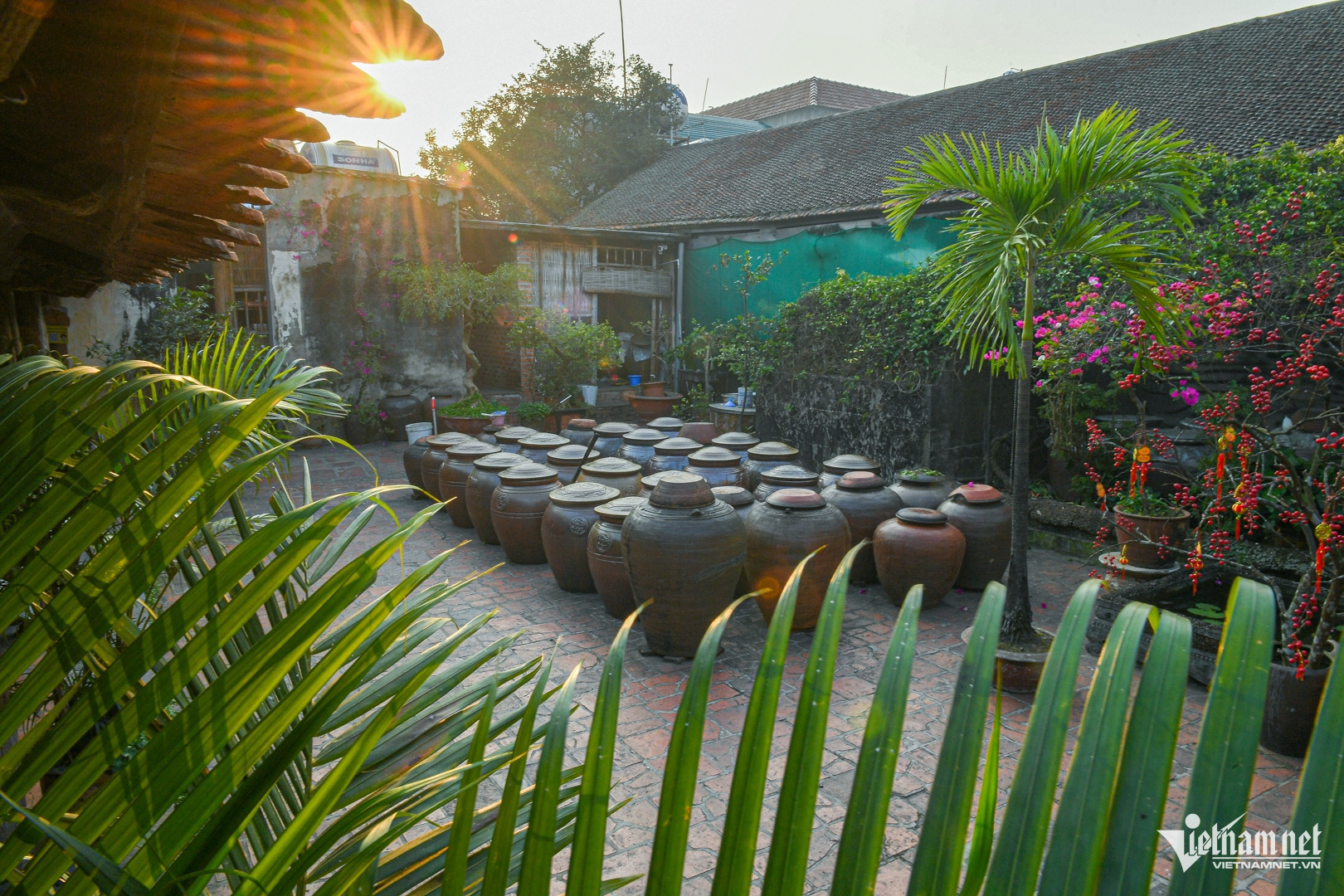
Soy sauce jars, aged 8 months, in the courtyard of Mr. The’s 300-year-old ancestral home.
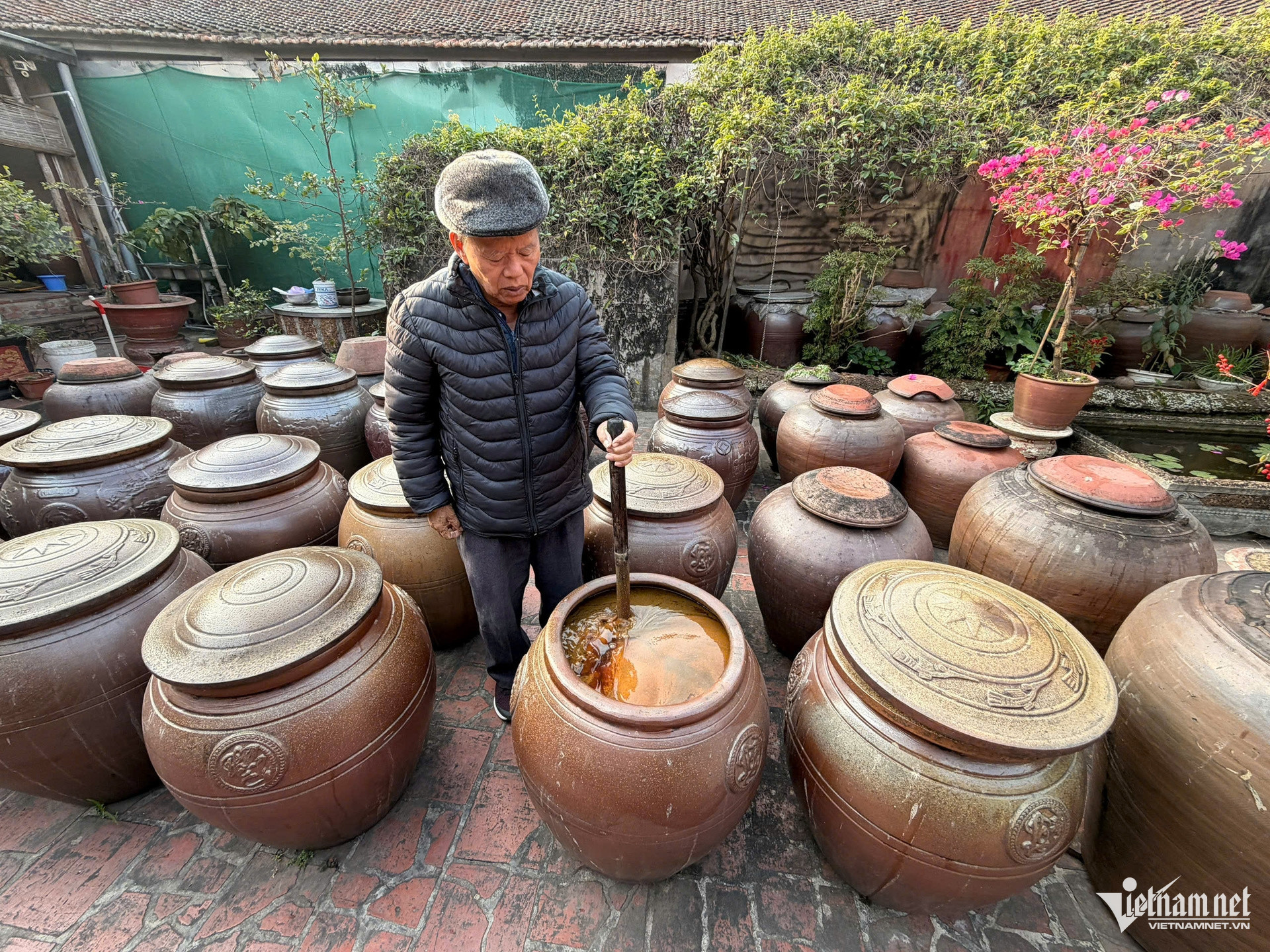
Mr. The inherited the soy sauce craft from his grandparents and parents.
Sun, time, and sacred wells
According to Mr. The, soy sauce can only be brewed from April to July on the lunar calendar, when Hanoi gets abundant sunshine - crucial for mold formation and fermentation.
The ingredients are simple: glutinous rice, soybeans, green beans, salt, and water. But quality matters - each element is chosen with care, and the process involves numerous intricate steps.
The rice must be Nep Cai Hoa Vang, a fragrant, plump-grained variety prized in northern Vietnam. After being steamed into sticky rice, it’s spread out on bamboo trays and left to naturally develop green mold.
“We usually keep rice from the previous harvest to prevent clumping when steamed. This helps the mold form evenly,” Mr. The explained.
The beans - both green and soybean - must be plump, glossy, and free of mold. After washing and draining, they are gently roasted while still moist. This helps preserve structure and flavor.
The beans are then ground, spread to dry overnight, and combined using a secret ratio unique to each family. While roasting was once done by hand, modern families now use machines for consistency and efficiency.
Even the salt must be specially chosen - only clean, natural sea salt will do.
A sacred brew in ancient jars
After achieving the right mold, Mr. The and his wife begin the mixing process: salted water is poured into the clay jar, followed by the soybean mixture, and finally the mold. All are stirred until fully blended into a thick, fermenting sauce.
Importantly, the water must come from a traditional laterite well - cool, clear, and unique to Duong Lam’s geography.
The clay jar itself is critical. It must be aged, fired properly, and ring like a bell when tapped. Each one is scrubbed and sun-dried before use.
“Fermentation depends heavily on the weather. We can’t say exactly how long it’ll take. Dry heat speeds it up; dampness slows it down. We have to monitor it constantly to get the right aroma and color,” Mr. The said.
Over time, the mold scent fades. Solids settle to the bottom. The sauce turns golden-brown, thickens, and shines like lacquer.
Duong Lam soy sauce can be kept in its jar for a year if properly sealed and sun-dried. The longer it sits, the thicker and more flavorful it becomes.
Aroma of memory

Fermented soybeans set out on bamboo trays
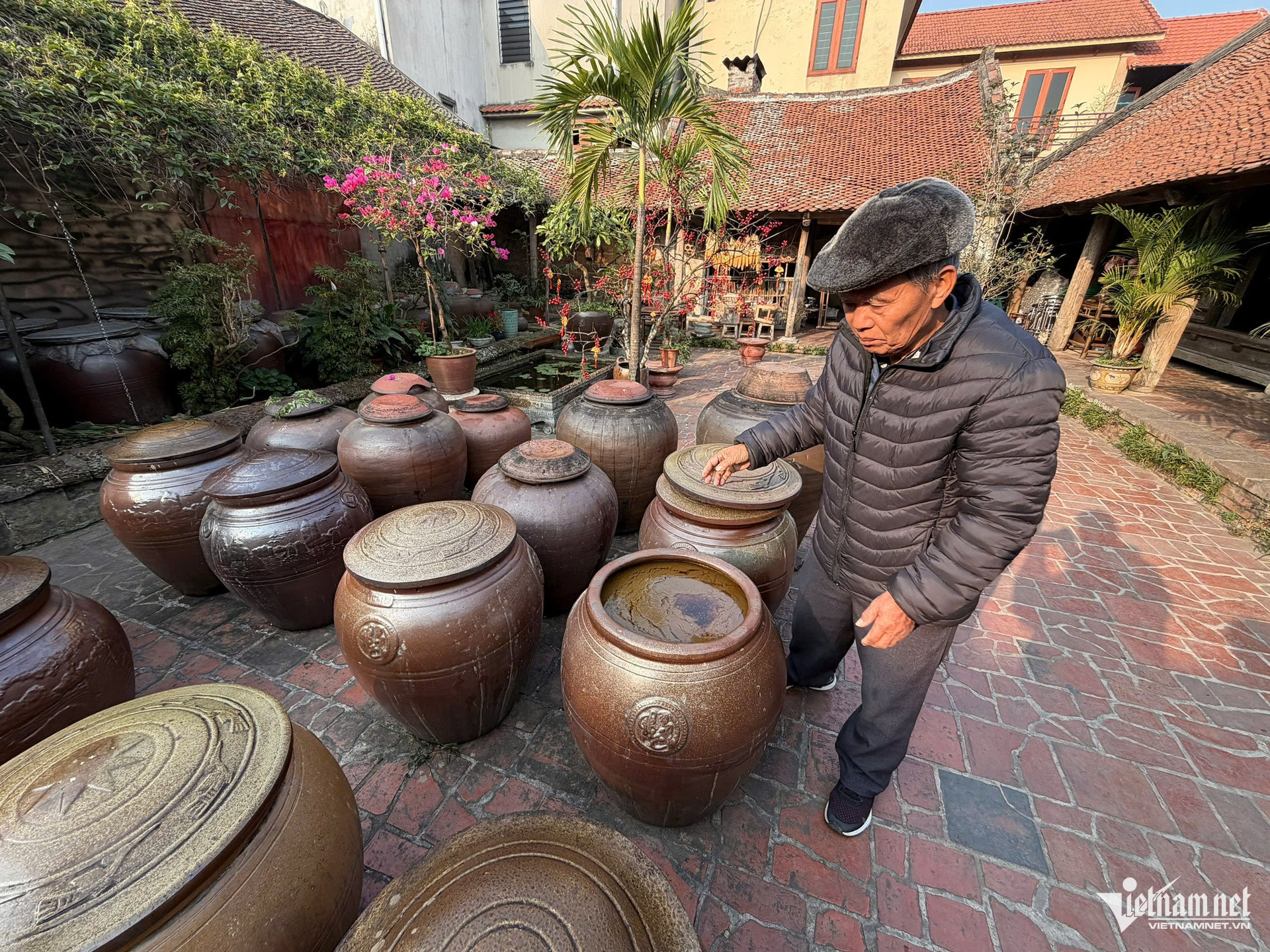
When opened, the jars fill the air with a rich aroma.
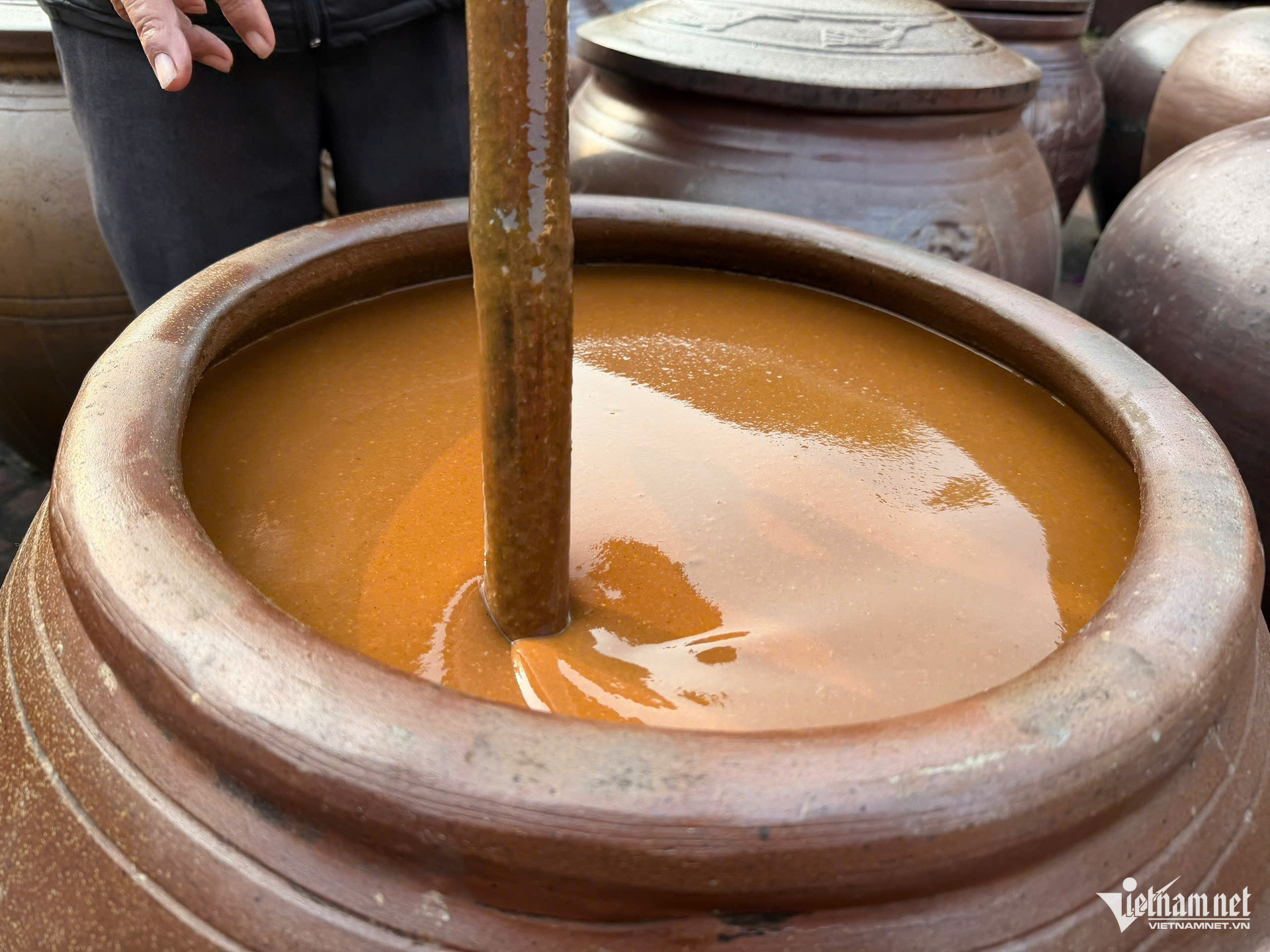
Golden, glossy, thickened soy sauce after months of natural fermentation.
When poured into a bowl, the sauce releases an aroma so distinctive it fills the whole house.
“Sometimes we joke,” Mr. The said, “if someone’s stir-frying beef or buffalo with soy sauce, there’s no hiding it - the neighbors all know because the smell is irresistible.”
The flavor starts mildly salty, then shifts to a lingering sweetness. “Dip it with water spinach, pickled eggplant, or pork belly - it’s delicious with just the simplest foods,” he said. It’s also the key ingredient in braised fish, one of the village’s best-known dishes.
Soy-braised carp: A tourist favorite
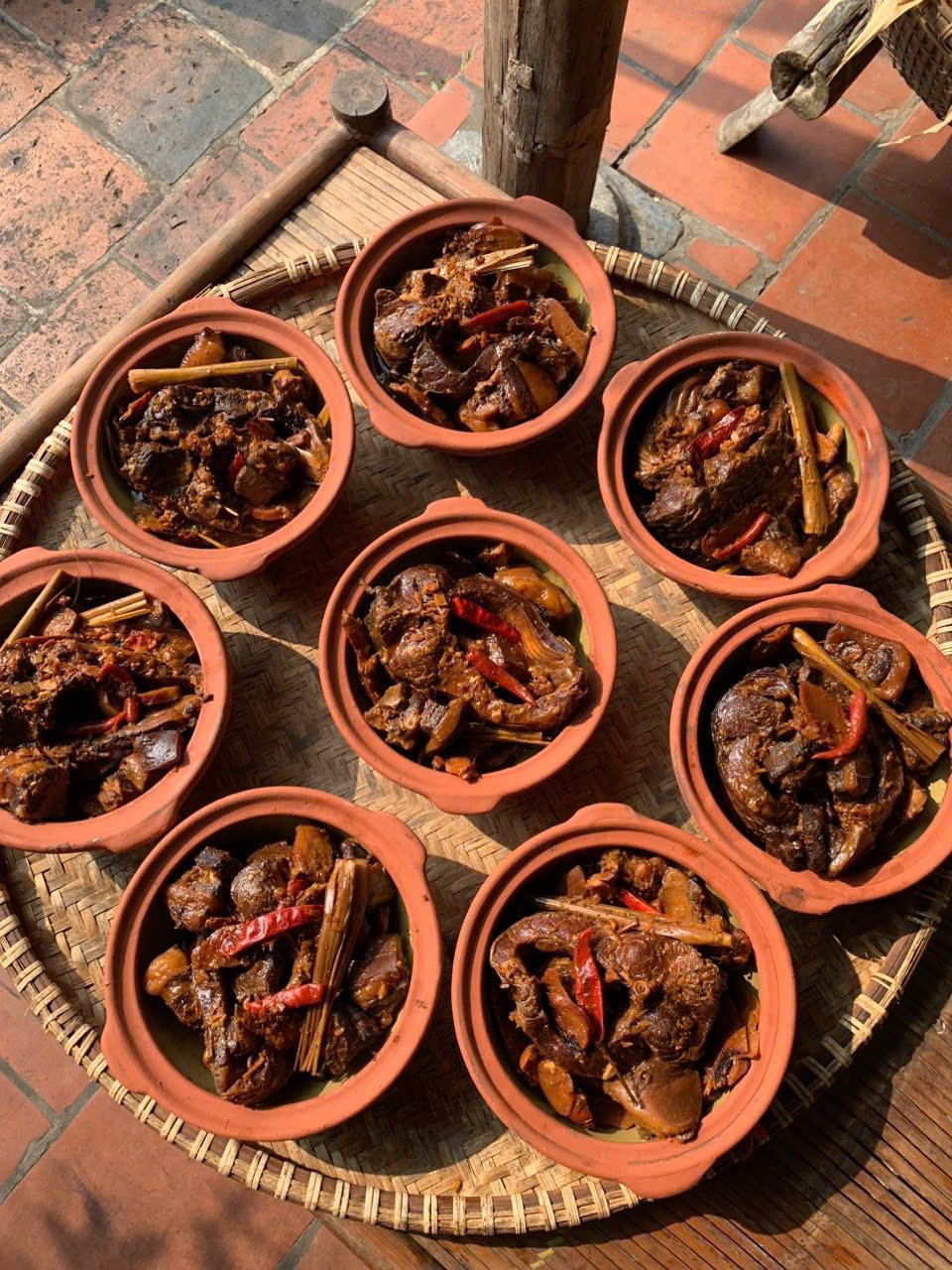
Mr. The’s family regularly prepares soy-braised carp for tourists. Large chunks of fish are cleaned and layered in a cast-iron pot with galangal, lemongrass, pork fat, green bananas - and, of course, soy sauce.
The pot is slow-cooked over a wood fire for 12–14 hours, often through two separate simmering sessions, until the fish becomes tender and the bones soften.
“The fish turns a beautiful caramel color, the texture rich and sticky, and the aroma instantly recognizable. Every visitor loves it,” he shared.
Beyond its centuries-old architecture, Duong Lam (Son Tay Ward, Hanoi) is also defined by its traditional cuisine. In 2024, its food experience tour - “Traditional Cuisine of the Northern Delta – Duong Lam Ancient Village” - was honored with the ASEAN Sustainable Tourism Product Award, one of only two Vietnamese products to receive the recognition.
Linh Trang
.svg)
