 Vietnamnet.vn

 Podcast



Editor's note: Nearly eight years after the adoption of Resolution 36-NQ/TW on Vietnam's sustainable marine economic development, the Party Central Committee is preparing to issue a new resolution on maritime development.
As Vietnam enters a new phase of development with the goal of becoming a developed country by 2045, a new approach is required. While Resolution 36 focused primarily on developing marine economic sectors, the upcoming resolution aims to strengthen governance of Vietnam's national maritime space as a strategic engine for future growth.
This special report examines the evolution of Vietnam's development thinking - from focusing on the marine economy to building a maritime nation - and explores the role of the sea in the country's long-term development strategy through 2045.
Rather than examining individual sectors such as ports, offshore wind, fisheries, logistics or coastal tourism, these industries are used only as examples to illustrate broader strategic arguments.
What distinguishes this series is its institutional and strategic perspective. It views the sea not simply as an economic sector but as an integrated national development space. In doing so, it reflects Vietnam's evolving development philosophy: from resource extraction to creating new growth drivers; from developing marine industries to governing maritime space; and from pursuing prosperity from the sea to building a strong maritime nation for the twenty-first century.
Part 1: Why Vietnam must move beyond the traditional blue economy
Part 2: Beyond the sea economy: Vietnam's path to maritime power
Part 3: Rethinking the sea as Vietnam's next development frontier
Vietnam will need not only modern institutions but also globally competitive maritime enterprises if it is to become a leading maritime nation, according to Dr. Tran Dinh Thien, Former Head of the Vietnam Institute of Economics.
He argues that the sea should become a testing ground for institutional reform, a platform for new growth drivers, and a space where economic development and national sovereignty reinforce one another.
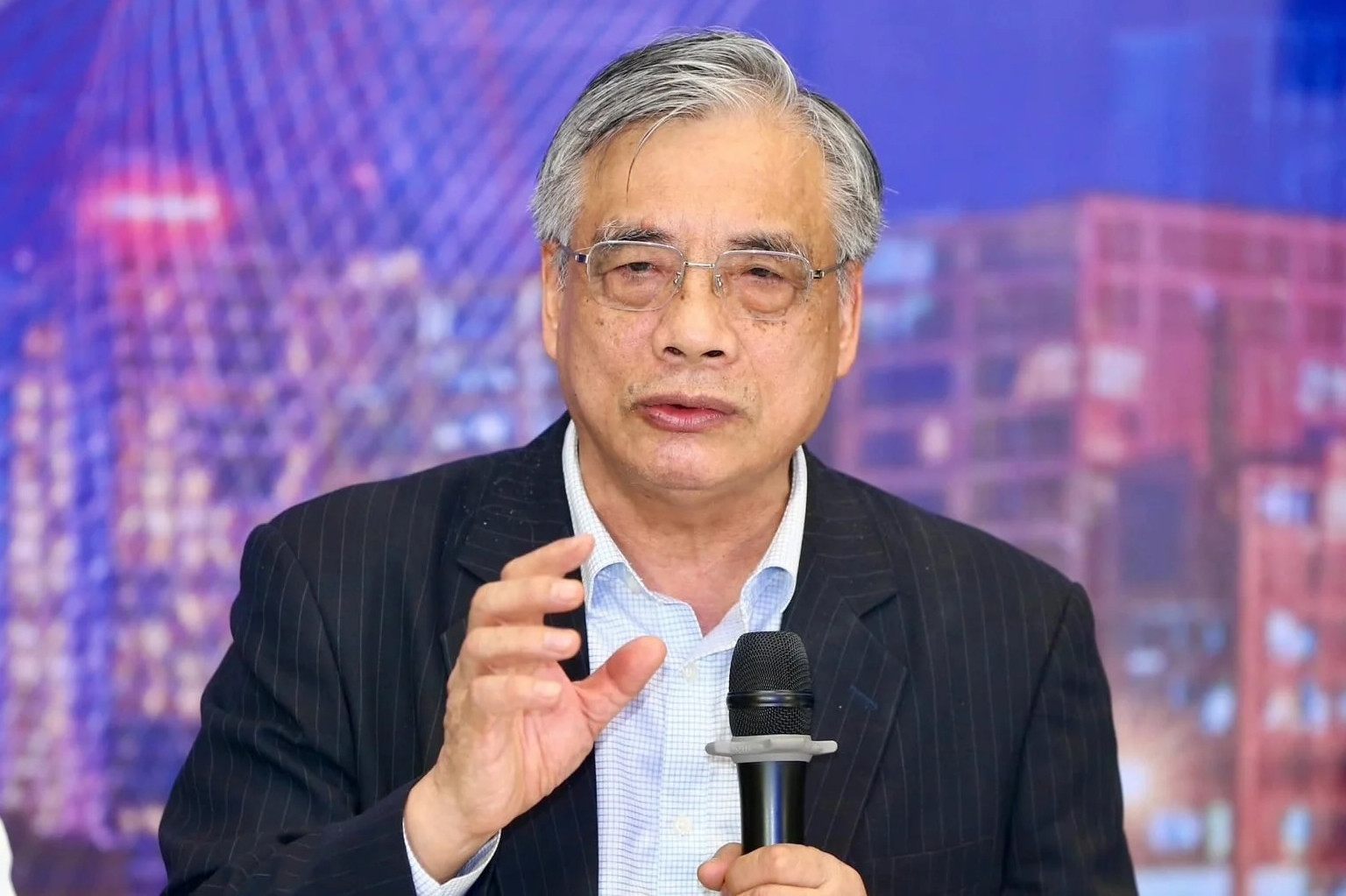
Who will be the driving force behind Vietnam's ambition to become a strong maritime nation?
Dr. Tran Dinh Thien: I do not believe the answer lies simply in how much the government invests.
The state has an indispensable role in strategic planning, institutional design, infrastructure development, and safeguarding national defense and security. But when it comes to building a dynamic, innovative and internationally competitive maritime economy, businesses must be at its center.
The experience of every major maritime power illustrates this clearly. No strong maritime nation has relied solely on public investment. Behind every major seaport, ocean-going fleet, logistics hub and integrated maritime supply chain stand globally competitive enterprises and powerful maritime corporations.
Vietnam must follow the same path.
Yet this is precisely where we remain weak.
Vietnam needs companies capable of investing in logistics, ports, international shipping, shipbuilding, offshore energy, high-tech marine aquaculture, maritime services and ocean technologies.
Resolution 68 identifies the private sector as one of the country's most important engines of growth. In my view, that same spirit should guide Vietnam's maritime development strategy.
A strong maritime nation should not be measured simply by the length of its coastline or the number of its ports. More importantly, it should be measured by the number of businesses capable of expanding into - and competing successfully across - the world's oceans.
If Vietnamese companies remain concentrated near the coast while higher value-added maritime activities continue to be dominated by foreign firms, Vietnam will capture only a small portion of its own maritime advantages.
Many experts argue that Vietnam's greatest challenge is not a lack of ports or coastal economic zones but the absence of institutions capable of supporting a modern maritime economy. Do you agree?
I do. In development, institutions always come before infrastructure.
Without an appropriate institutional framework, building additional ports or coastal economic zones will deliver only limited results. Conversely, effective institutions can transform an ordinary geographic location into an internationally competitive economic center.
Singapore, Dubai and Rotterdam did not become global maritime hubs simply because they possess ports.
Their competitiveness stems from open institutions, business-friendly environments, strong international connectivity and policies capable of attracting global capital, technology and enterprises.
That is the lesson Vietnam should reflect upon.
A modern maritime economy cannot be governed using the same administrative mechanisms designed for conventional industrial parks, let alone those inherited from an agrarian economy or an early-stage market system.
Free trade zones, free ports, international logistics centers and modern coastal cities require modern institutions.
For a country that is entering the maritime economy later than many of its competitors, pursuing institutional innovation ahead of development - institutions capable of competing with the region's leading maritime centers - should become a strategic priority.
In my view, the sea offers Vietnam the ideal setting to experiment with new institutional models.
It is no coincidence that many countries have chosen port cities and coastal economic zones as the first places to liberalize markets, introduce reforms and deepen international integration.
If Vietnam seizes this opportunity, the sea will create not only a new economic space but also a new space for institutional transformation.
That, I believe, is the deeper significance of Vietnam's maritime development strategy today.
The country is not simply searching for another source of growth.
It is searching for a new development model - one in which institutions, businesses, science, technology and international integration converge within the largest strategic space Vietnam possesses.
General Secretary and President To Lam recently called for renewed thinking on maritime development and for the marine economy to become one of Vietnam's principal growth drivers. How should Vietnam's maritime vision evolve beyond Resolution 36?
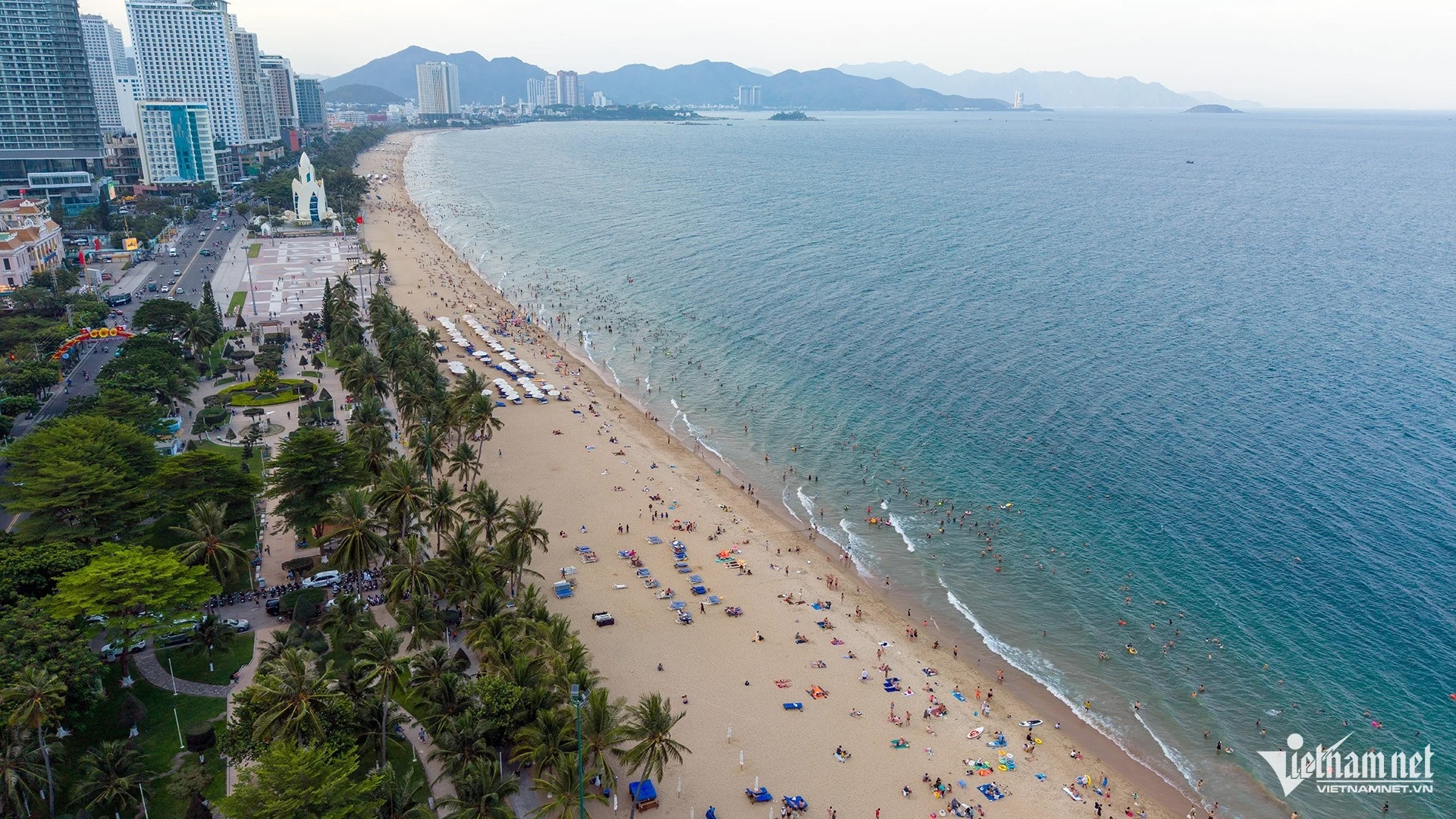
The most important task is not to revise a few targets or add several new maritime industries.
What must change is how the sea fits within Vietnam's overall development strategy.
When Resolution 36 was adopted in 2018, its greatest breakthrough was shifting the focus from resource extraction to sustainable development.
For the first time, the sea was viewed as a development space integrating economic growth, environmental protection, national defense, security and foreign affairs.
Today, however, the world is changing rapidly.
Strategic competition at sea among major powers is intensifying.
Global supply chains are being reorganized.
The energy transition, digital transformation, artificial intelligence and ocean technologies are creating entirely new industries that barely existed a decade ago.
Under these circumstances, treating the marine economy simply as another economic sector is no longer sufficient.
Vietnam must reorganize its entire development strategy from a maritime perspective.
The sea should no longer be viewed merely as a location for additional investment projects.
It must become the place where new growth engines converge: international logistics, offshore energy industries, marine technologies, ocean data, maritime services, finance, innovation and international cooperation.
As the strategic importance of the marine economy continues to grow, international cooperation in maritime development should also become a priority for strengthening national security and achieving sustainable development.
I believe General Secretary and President To Lam's recent remarks are significant precisely because they emphasize this broader vision.
The objective is no longer to expand a handful of maritime industries but to recognize the sea as one of Vietnam's defining strategic spaces.
Once that mindset changes, planning, resource allocation and institutional reform must inevitably evolve as well.
How can the sea contribute to Vietnam's goal of achieving sustained double-digit economic growth?
Sustaining double-digit growth over a long period cannot rely simply on expanding existing growth drivers.
Vietnam needs more than additional capital or labor.
It must create entirely new development spaces built on advanced technologies capable of generating higher productivity, greater value added and stronger international connectivity.
The sea offers precisely those conditions.
However, Vietnam must also rethink what growth from the sea actually means.
If maritime development is limited to extracting more oil, catching more fish or expanding coastal tourism, its contribution will inevitably remain constrained.
The sea offers far greater possibilities.
It can support entirely new industries, including international transshipment hubs, logistics, shipping, offshore renewable energy, high-tech marine aquaculture, marine biotechnology and digital services connected to the ocean.
More importantly, these industries generate benefits far beyond their own output.
They reduce logistics costs, strengthen the competitiveness of domestic manufacturing, attract high-quality investment and deepen Vietnam's integration into the global economy.
In other words, the sea contributes not only additional GDP but also higher productivity across the entire economy.
If double-digit growth is viewed solely through the lenses of credit expansion, investment or exports, achieving it will be extremely difficult.
Creating a new growth cycle requires unlocking entirely new engines of development.
The sea, in my view, is among the most important.
You have often argued that economic presence is itself a way of asserting sovereignty. How should economic development and maritime sovereignty be viewed today?
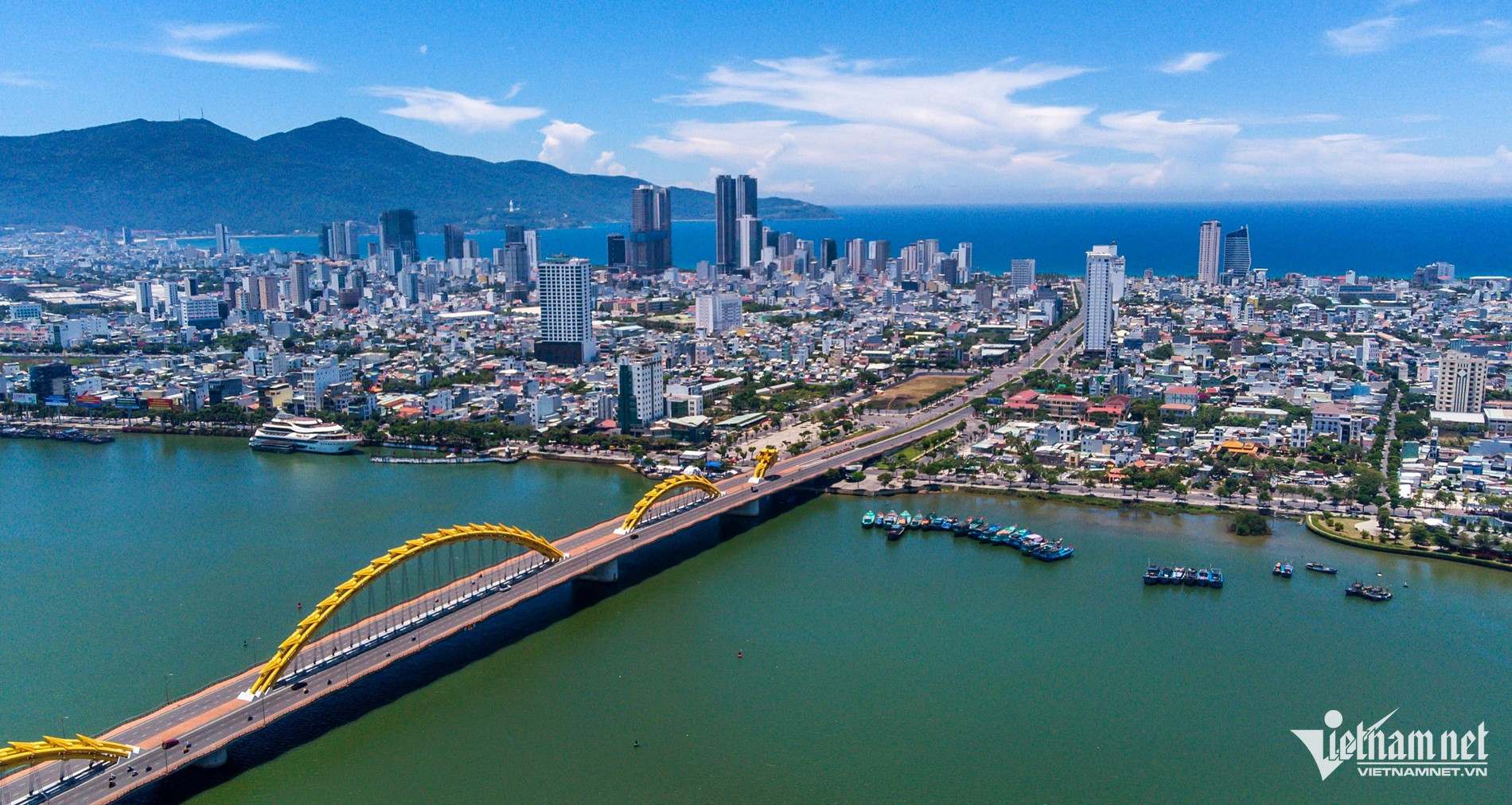
In an increasingly interconnected world - one characterized by both competition and cooperation - economic development and national sovereignty should not be viewed as competing objectives.
A strong maritime nation is not built solely through military capabilities or maritime law enforcement.
It also depends on economic strength, scientific and technological capacity, and the vitality of its business community.
When a country possesses modern ports, a competitive shipping fleet, internationally capable logistics companies, world-class marine research institutions, offshore energy projects and stable coastal communities, that very presence strengthens its ability to safeguard sovereignty.
A robust maritime economy creates its own strategic influence while fostering global connectivity and cooperation.
This forms the foundation for both maritime security and sustainable development.
Sovereignty is not demonstrated only through official declarations or administrative control.
It is also reflected in a nation's ability to organize, develop and manage its maritime domain effectively, peacefully and sustainably.
That is why I have always believed economic development and sovereignty protection are two sides of the same strategy.
A weak maritime economy cannot provide the long-term material foundation needed to safeguard sovereignty.
Conversely, a secure and stable maritime environment gives businesses the confidence to invest, enables coastal communities to remain at sea, and supports sustainable economic development.
This is precisely why Resolution 36 integrates economic development with national defense, security and foreign affairs within a single strategic framework.
How do you envision Vietnam as a maritime nation by 2045?
I hope that by 2045, the world will recognize Vietnam not merely as a country blessed with a long coastline and beautiful beaches.
More importantly, it should be known as a nation with genuine maritime capability - one able to harness the oceans, generate substantial value from them, and occupy a respected position within the global maritime economy.
I hope Vietnam will possess internationally significant transshipment ports, modern logistics centers, advanced maritime financial and shipping services, globally competitive companies participating in international shipping, offshore energy and marine technologies, and world-class ocean research institutes leading innovation in marine development, conservation and governance.
But above all, I hope Vietnam's development model itself will have changed.
For decades, the country's growth has been driven largely by land-based expansion.
In the decades ahead, the sea must become the economy's new frontier - a space connecting Vietnam directly to global flows of trade, technology, capital and knowledge.
At that point, Vietnam will no longer be merely a country beside the sea, dreaming of venturing outward.
It will truly have become a strong maritime nation.
To me, that is the deeper meaning of Vietnam's aspiration to become a leading maritime nation in the Century of the Ocean - a country enriched by its maritime culture and empowered by its ability to master the oceans.
The sea will not simply make Vietnam more prosperous.
It will help determine the country's place within the global economic order of the 21st century.
To reach that destination, Vietnam must begin today - with a sufficiently ambitious vision, institutions that are open and forward-looking, and businesses strong enough to expand confidently into the oceans.
Tu Giang - Lan Anh
.svg)
