 Vietnamnet.vn

 Podcast



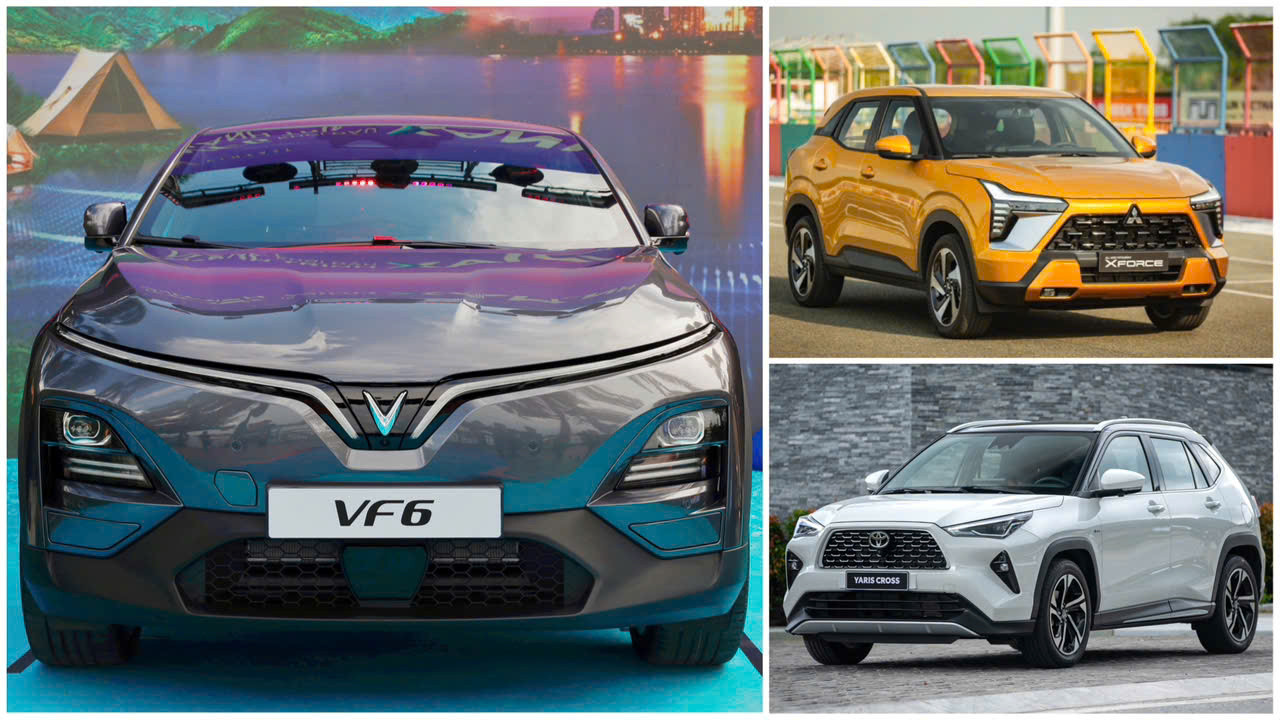
In the affordable price range starting from around USD 24,000, B-size SUVs are taking over Vietnam’s roads, driven by high ground clearance, modern features, and versatility. In 2025, these compact crossovers emerged as the “people’s choice” for Vietnamese consumers.
Top players in the B-SUV segment
Vietnam’s auto market showed significant signs of recovery in 2025 after a quiet period. Demand picked up markedly during the year-end peak season, fueled by a more stable economy and generous promotions from carmakers and dealers.
According to data from the Vietnam Automobile Manufacturers Association (VAMA), 375,739 vehicles were sold by its members in 2025 - a 10.5% increase compared to 2024.
When factoring in sales from VinFast (175,099 units) and Hyundai Thanh Cong (53,299 units), the total auto sales in Vietnam reached approximately 604,064 vehicles - an increase of over 15% year-over-year.
This marks one of the strongest growth periods for Vietnam’s auto industry in recent years.
Notably, six of the ten best-selling models in the entire market were SUVs or crossovers. Among them, three belonged to the B-SUV category: VinFast VF 6, Mitsubishi Xforce, and Toyota Yaris Cross.
Other standout performers in this segment included Hyundai Creta, Toyota Corolla Cross, and Honda HR-V - regulars on the monthly best-seller charts.
VinFast led the pack with the VF 6 selling over 23,000 units in 2025. (No separate VF 6 sales data was published for 2024.)
Among internal combustion models, Mitsubishi Xforce topped the B-SUV chart with 15,254 units sold - up 5.9% from 2024. Toyota Yaris Cross followed closely with 14,601 units, marking a sharp 30.7% increase.
Next in line were Hyundai Creta (9,046 units, +4.7%), Toyota Corolla Cross (8,708 units, +13.9%), Honda HR-V (6,665 units, +7.0%), and Kia Seltos (6,577 units, -3.7%).
An increasingly crowded segment carving out new territory
The B-SUV segment is relatively new in Vietnam, only truly taking shape in the past decade with Ford’s introduction of the EcoSport in late 2014. Between 2015 and 2018, the EcoSport enjoyed little competition. But Hyundai’s launch of the Kona in 2018 changed the game.
Since 2020, recognizing the segment’s potential, automakers including Toyota, KIA, Mazda, Nissan, Honda, Peugeot, Volkswagen, Subaru, Skoda, and several Chinese brands like BYD, Omoda & Jaecoo, Lynk & Co, and Geely have jumped into the fray.
VietNamNet reports that at least six new B-SUV models were introduced in the past year alone: Subaru Crosstrek, Haval Jolion, Geely Coolray, Omoda C5, Skoda Kushaq, and BYD Atto 2. Existing models also saw key upgrades, such as the Hyundai Creta, Honda HR-V, Peugeot 2008, and Mazda CX-3.
Beyond traditional combustion engines, the segment now includes a growing range of electric and hybrid vehicles. Leading the pack is the VinFast VF 6, launched in September 2023 with a price range of USD 27,600–30,000 (including standard battery). It quickly became the top-selling B-SUV in 2025.
All told, Vietnam’s B-SUV market now features over 25 competing models, making it one of the most dynamic and fiercely competitive segments in the country.
The variety of brands - from Vietnam, Japan, Korea, Europe, and China - spanning gasoline, hybrid, and electric powertrains, underscores the segment’s broad appeal to local buyers.
Squeezing out sedans and smaller MPVs
As the B-SUV category grows in both product range and sales, it is eating into the market share of other segments - especially C-size sedans, small MPVs, and A/C-segment crossovers.
Sedans in the C-segment, priced similarly between USD 24,000 and 32,000, have been hit hardest. Once popular for their driving feel and sturdiness, these sedans are now losing favor due to changing consumer preferences and evolving needs.
Only 6–7 models remain active in the C-sedan segment, most of which have seen little innovation in recent years.
Sales have dropped sharply. Mazda3 led the segment in 2025 with only 2,969 units sold, a steep 40.1% decline from 2024 (4,958 units). KIA K3 followed with 1,682 units, down 53.3% from 3,603 units the previous year.
Meanwhile, Honda Civic (767 units), Hyundai Elantra (665 units), and Toyota Corolla Altis (285 units) posted dismal figures, all falling between 40–200% compared to 2024.
Why B-SUVs win over Vietnamese buyers
Experts point to several factors behind the B-SUV boom: youthful designs, increasingly premium safety and tech features, urban-friendly dimensions, and the ability to handle longer drives or rough terrain.
Electric and hybrid variants are also gaining favor, offering fuel efficiency without sacrificing performance - meeting the evolving tastes of modern consumers.
"The rapid rise of B-SUVs isn’t a passing trend. They are clearly replacing C-size sedans within the same price range," one automotive analyst noted. "As drivers now prioritize versatility, adaptability, and suitability for diverse conditions, the traditional sedan perks like drive feel and solidity are no longer strong enough to hold buyer interest."
Hoang Hiep
.svg)
