 Vietnamnet.vn

 Podcast



The pilot model of “socialist wards and communes” is not about building a larger administrative apparatus, but about developing people - with the goal of shaping a new generation of citizens who are self-reliant, creative, socially responsible, committed to lifelong learning and equipped with digital capabilities.

Nearly a year after Vietnam began operating under a two-tier local government model nationwide, governance power has increasingly shifted toward the grassroots level. Wards and communes - the levels of government closest to the people - are now expected to become spaces where socialist principles and values are translated from strategic visions into tangible results in daily life.
The development of socialist wards and communes is also viewed as an inevitable response to modern governance demands, where local authorities are no longer limited to administrative management but must move toward community-based development governance and more effective public service delivery.
Turning the 2045 national vision into reality
Associate Professor and Dr. Nguyen Viet Thong, former Secretary General of the Central Theoretical Council, said socialist wards and communes must reflect the eight core characteristics of a socialist society outlined in Vietnam’s 2011 Platform on National Construction during the Transition to Socialism.
According to him, each locality may define the concept differently, but all models should ultimately adapt those eight defining characteristics to local conditions.
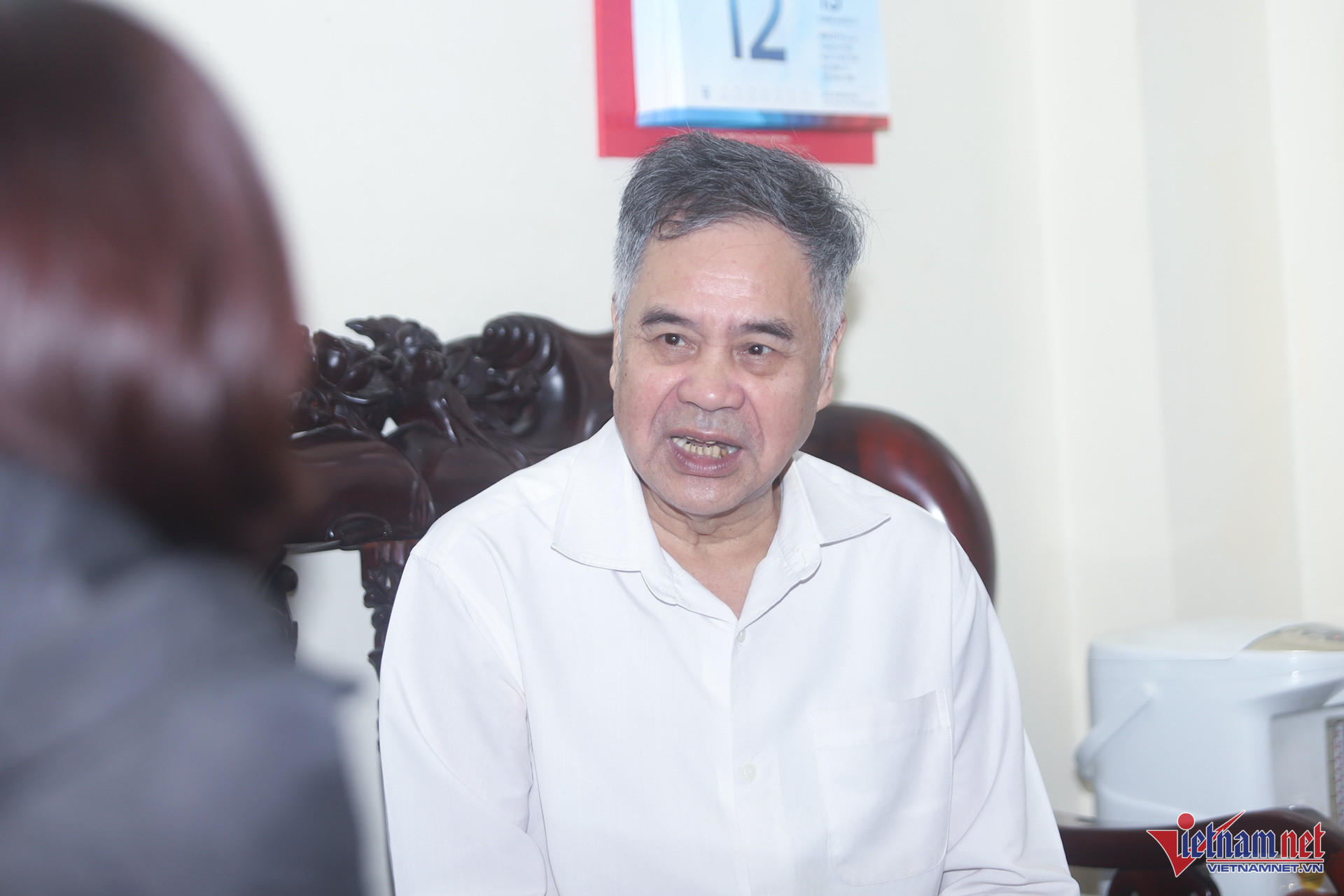
The eight characteristics include:
A prosperous people and a strong, democratic, equitable and civilized nation.
Governance under the people’s ownership.
A highly developed economy based on modern productive forces and progressive production relations.
An advanced culture deeply rooted in national identity.
Citizens enjoying prosperity, freedom, happiness and opportunities for comprehensive development.
Equality, solidarity and mutual respect among ethnic communities.
A socialist rule-of-law state of the people, by the people and for the people under the leadership of the Communist Party.
Friendly and cooperative relations with people around the world.
Hanoi is expected to pilot the model in two neighboring communes with a combined population of around 700,000 people and 54 evaluation criteria. In Lao Cai Province, pilots are planned for Lao Cai Ward and Tran Yen Commune with around 60-70 criteria.
Thong stressed that pilot implementation is necessary whenever new governance ideas remain unclear or untested.
“Throughout the Party’s history, whenever an issue was not fully understood, pilot programs were introduced. Vietnam has carried out many pilot models since the Party came to power,” he said.
He cited earlier experiments during the subsidy era involving model districts, as well as later reforms such as the pilot removal of People’s Councils at district and ward levels in several localities.
“Some pilots did not succeed and had to revert to old models, but that is normal in political science, just as in natural and social sciences,” he said.
“We conduct pilot programs to gain experience. We cannot be careless or rush because this is a politically sensitive issue. Building socialist wards and communes is necessary, but because it is still new, pilot implementation should remain limited and adapted to each province.”
Thong said lessons learned from pilot programs could later be expanded nationwide as Vietnam moves toward its long-term goal of completing the transition period and advancing toward socialism by 2045.
“The evaluation criteria all revolve around the eight socialist characteristics. Economic, social, security and defense indicators may differ from place to place, but ultimately the highest goal remains the happiness of the people,” he said.
He described the initiative as a practical step toward realizing Vietnam’s 2045 development aspirations, ensuring that broader goals related to growth, fairness and social progress become visible in local communities and daily life.
Thong also suggested that local governments align their pilot models with the long-term visions expected to emerge from the 14th National Party Congress, including development targets through 2030 and 2045.
He pointed to Hanoi’s own ambitious vision for 2065, which aims for gross regional domestic product (GRDP) to reach around $1.92 trillion and per capita GRDP to exceed $95,000.
Not a return to old-style governance
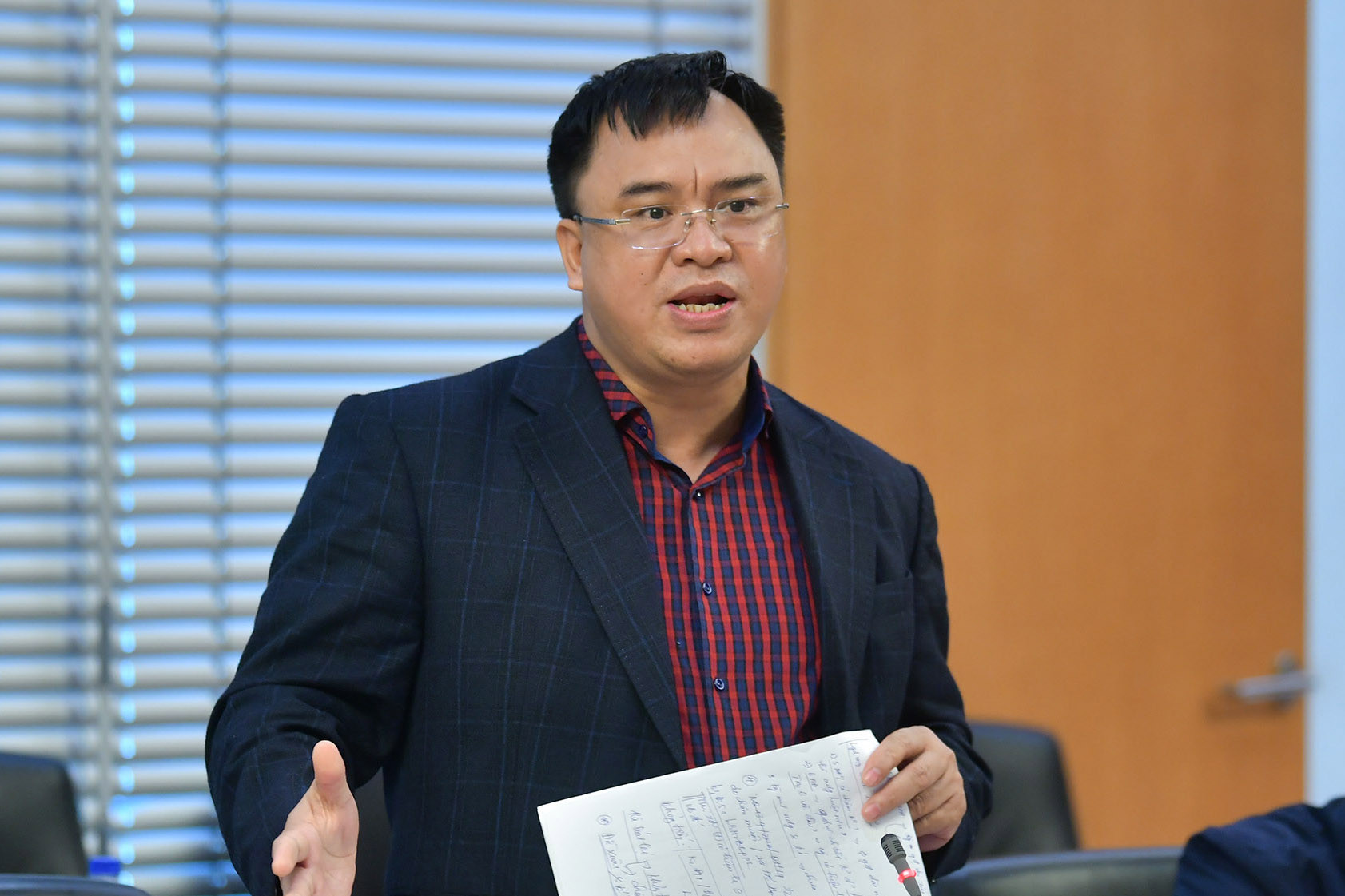
Professor and Dr. Nguyen Quoc Suu, assistant to the director of the Ho Chi Minh National Academy of Politics, said Vietnam’s rapid development is creating challenges involving inequality, urban pressure, pollution, weakening social cohesion and rising demands for modern governance and quality of life.
“We are facing many questions,” he said. “How can growth go hand in hand with fairness? How can economic development avoid sacrificing the environment and cultural values? How can modernization occur without weakening communities? And how can people not only earn higher incomes but also truly enjoy better, safer and happier lives with more opportunities for development?”
According to Suu, socialist wards and communes should not be viewed as administrative labels or old-style management models, but as development models through which people can directly experience socialist values in everyday life.
“People do not experience socialism through slogans,” he said. “They experience it through the schools their children attend, the healthcare system they rely on, the environment they live in, transparency, opportunities for advancement, public service attitudes and the feeling of being respected.”
Suu argued that the socialist commune and ward model of the 21st century differs fundamentally from the centralized subsidy-era socialist model.
The new approach, he said, is built on a socialist-oriented market economy, innovation, digital transformation, modern governance and greater public participation.
Under this framework, the economy must encourage innovation, legitimate wealth creation, private sector development, scientific advancement and digital transformation, while ensuring equal access to jobs, education, public services and opportunities for upward mobility.
“I strongly agree with the idea that the economy is not the final goal, but a tool to improve people’s quality of life,” Suu said.
The second pillar, he explained, is digital government and modern governance - a model based on data governance, transparency, accountability, rapid response mechanisms and citizen-centered administration.
“This is the foundation for building a government that is closer to the people, more transparent, more effective and more humane,” he said.

The third pillar focuses on comprehensive human development. Suu emphasized that the highest objective of socialism is not building institutions, but developing people.
The model aims to create a new type of citizen characterized by independence, creativity, social responsibility, lifelong learning and digital competence.
The fourth pillar involves building strong, self-governing communities. Socialist wards and communes should not only have effective local governments but also communities capable of building trust, working together for the common good and solving internal challenges collectively.
The fifth pillar centers on green and humane living environments. Economic growth, Suu said, must not come at the expense of the environment or human dignity.
The final pillar is substantive democracy.
“A modern socialist model cannot exist without democracy,” he said. “People must have access to transparent information, participate in policy discussions, contribute to community decisions and supervise government activities. Democracy does not weaken governance - it improves its quality.”
Suu stressed that building socialist wards and communes cannot become a symbolic campaign, but must be a systematic and adaptable process grounded in real-world conditions.
He proposed the use of institutional “sandboxes” to create safe spaces for policy experimentation without placing the broader system at risk.
“We should begin on a small scale, collect practical data, evaluate outcomes and gradually expand successful models,” he said. “Rather than searching for a perfect model from the beginning, we should build one capable of learning and improving itself.”
Tran Thuong
.svg)
