 Vietnamnet.vn

 Podcast



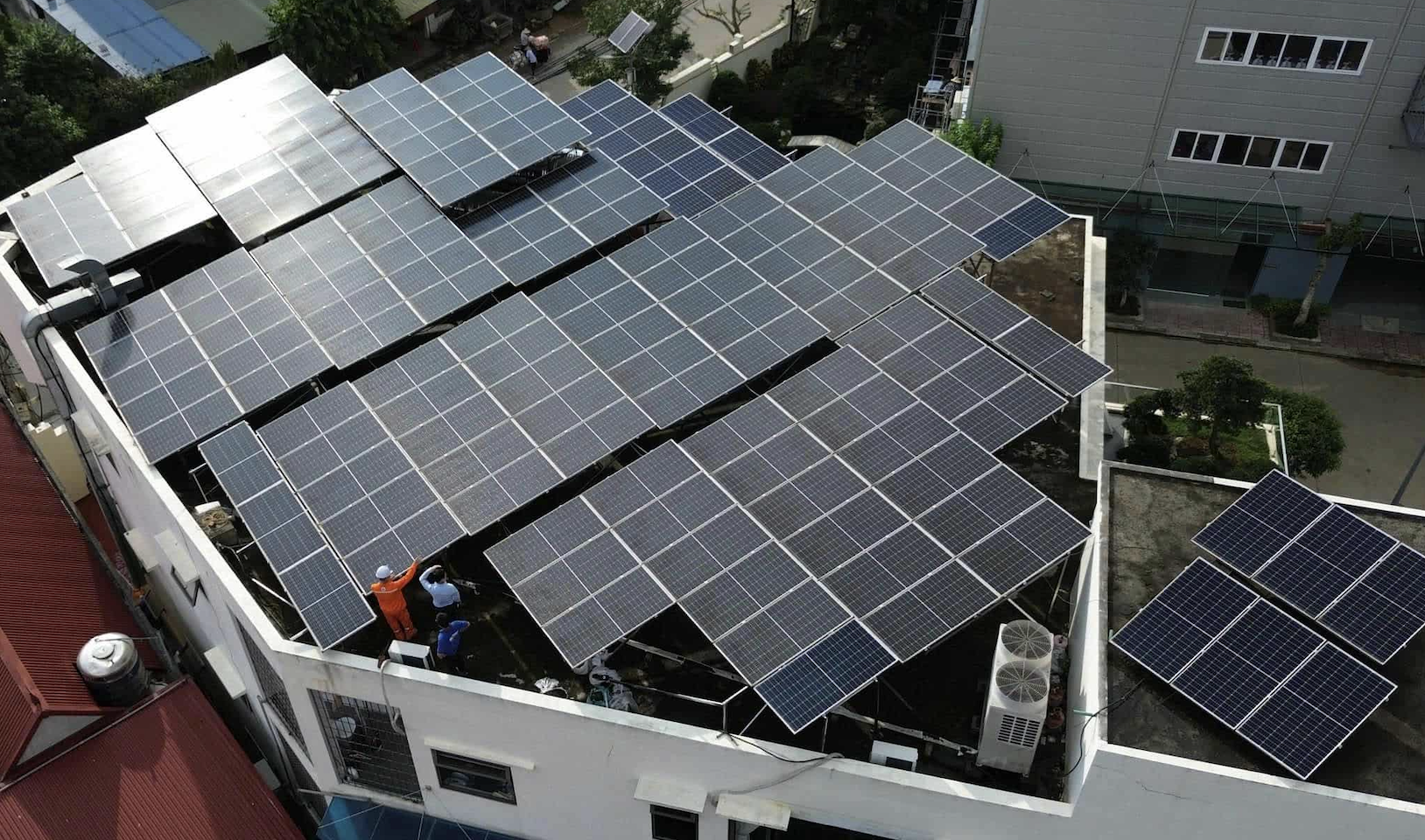
The amount would be determined based on the capacity and storage specifications stated in the equipment’s technical documentation and could not exceed the household’s legitimate actual expenditure after deducting any other state support for the same investment.
To qualify, a rooftop solar installation, excluding BESS, would need a total rated photovoltaic capacity of at least 1 kWp. A battery system installed together with rooftop solar would need a total storage capacity of at least 2 kWh.
Each detached house would be eligible for the subsidy only once during the period in which the resolution remains in force.
Households would also have to complete procedures for notifying authorities of the development of the power source or obtain a registration certificate for self-generated, self-consumed rooftop solar in accordance with existing regulations.
Recipients would be required to commit to operating and using their solar systems for the intended purpose for at least three years after receiving the subsidy. They would also be responsible for electrical and fire safety, structural safety, environmental protection and the management and disposal of equipment after use.
The proposed incentives come as rooftop solar is already widespread in Vietnam. The country currently has 130,811 rooftop solar systems installed and operating.
The Government has also introduced a mechanism allowing owners of self-generated, self-consumed rooftop solar systems to sell surplus electricity.
Under Decree 243/2026/ND-CP, surplus electricity eligible for sale includes excess output from rooftop solar as well as electricity discharged from storage systems that were charged by the rooftop solar source, if applicable.
The volume sold is subject to agreement between the parties but generally cannot exceed 50% of electricity generated at the output of the rooftop solar source based on solar irradiation, compared with a previous limit of 20%.
From the decree’s effective date through December 31, 2030, the parties may agree on a proportion above 50% if the local grid has sufficient capacity to absorb the electricity and power-system safety can be guaranteed.
For mountainous, border and island areas not yet connected to the national power grid, there is no limit on the amount of surplus electricity that can be sold. All electricity fed into the grid and recorded by meters can be paid for.
The policy changes are not confined to household rooftop systems.
The Ministry of Industry and Trade is seeking public feedback on draft amendments to Circular 09/2025 governing the documentation, procedures and methodology for determining and approving electricity generation price frameworks, as well as the framework for imported electricity prices.
One of the most notable proposals would change how generation price frameworks are determined for solar and wind power plants.
Instead of calculating them according to Vietnam’s northern, central and southern regions as at present, the ministry is considering setting the frameworks according to socioeconomic regions or individual provinces and centrally governed cities.
For solar power plants, the drafting agency has proposed two options. The first would calculate the generation price framework according to the socioeconomic regions identified in the national master plan applicable in each period. The second would establish the framework for individual provinces and centrally governed cities.
For onshore and nearshore wind power plants, the proposal is to determine the price framework according to the socioeconomic regions defined under the national master plan.
The drafting agency said opinions had been raised that calculating generation price frameworks for solar and wind plants according to the northern, central and southern regions was “no longer appropriate following provincial mergers or adjustments to administrative boundaries.”
There is also an underlying technical reason for a more localized approach.
Solar and wind power generation depends heavily on solar irradiation and wind speeds, which can vary considerably between localities. Calculating price frameworks by province or socioeconomic region, the drafting agency said, would therefore improve accuracy, better reflect actual investment costs and help attract investors to renewable energy projects.
The draft also provides a clearer definition of floating solar power plants. These are plants connected to the national power system with photovoltaic panels installed on floating structures on water surfaces, excluding solar systems installed above irrigation canals.
According to the drafting agency, solar installations over irrigation canals have structures similar to ground-mounted solar projects. Clarifying the definition is intended to facilitate implementation of the revised Power Development Plan VIII.
Another potentially significant change concerns who calculates Vietnam’s annual electricity generation price frameworks.
The ministry proposes transferring responsibility for calculating and submitting the annual generation price framework from Vietnam Electricity (EVN) to the Electricity System and Market Operator.
The drafting agency said transferring the task from the electricity buyer to a neutral entity would help improve objectivity, better align the framework with the needs of the power system and reduce potential conflicts of interest between electricity buyers and sellers.
The draft also sets out two options for calculating electricity prices for waste-to-energy plants.
Under the first option, the electricity price would exclude subsidies for waste collection, transportation and treatment. The waste fuel supplied to a plant would consequently be assigned a cost of zero.
The plant would determine an electricity selling price for negotiation and contracting with the electricity buyer based on its total investment and technical specifications.
Under this approach, a plant would have two separate revenue streams: income from electricity sales and payments from local authorities for waste treatment.
Waste-treatment prices would be determined by provincial or municipal People’s Committees at appropriate levels, ensuring that infrastructure, labor, materials and profit already included in the electricity price were not counted twice.
Under the second option, the electricity price would take waste-treatment subsidies into account.
If this method were applied, payments made by local authorities to plants for waste treatment would be deducted from electricity sales revenue because that revenue would already include the recovery of infrastructure, material and labor costs associated with treating waste.
Taken together, the proposals show Vietnam moving toward a more differentiated approach to renewable energy development: encouraging households to generate and store their own electricity, expanding opportunities to sell surplus rooftop power, and considering electricity pricing that more closely reflects the conditions facing renewable projects in individual regions and localities.
Tam An
.svg)
