 Vietnamnet.vn

 Podcast



Building an ecosystem
In China's Ili Valley in Xinjiang, there is a thought-provoking example of how culture can become part of economic growth.
In Huocheng County, fields of lavender were already an attractive landscape. But the local economy did not stop at selling tickets to see the flowers or a few bottles of essential oil.
A destination named after Princess Jieyou - a historical figure from China's Western Han Dynasty who spent many years in the country's ancient Western Regions - has become a bridge connecting historical memory, local identity and contemporary experiences.
Visitors pass through a lavender museum and learn how the plant is grown and its essential oil distilled before moving on to the flower fields, production facilities and accommodation. By 2025, the "Princess Jieyou" brand had developed more than 300 products, while its tourism complex welcomed more than 1 million visitors a year.
A field of flowers, given a cultural narrative, has become an entire value chain.
That story offers a broader perspective as Vietnam considers its ambition of achieving double-digit economic growth.
High growth cannot come simply from building more factories and roads or attracting more investment. In a knowledge economy, an increasing share of value comes from things that are physically "light" but intellectually "heavy": ideas, stories, design, music, images, intellectual property, experiences and identity.
If Vietnam wants to grow faster and more sustainably, it needs to make better use of its cultural resources and the creativity of its people.
Culture's contribution, first and foremost, cannot be measured solely by GDP.
Culture shapes the people who drive development. A society characterized by patriotism, trust, discipline, responsibility and the aspiration to advance will be more resilient.
Double-digit growth requires not only more capital but people who work more efficiently, innovate more and understand how individual interests fit within the common good. At this deeper level, culture is the "soft infrastructure" of development.
Vietnamese Party General Secretary and State President To Lam has said: "It is the enduring vitality of culture that has sustained the vitality of the nation."
During the most difficult periods in Vietnam's history, patriotism, solidarity, ethical values and national resilience helped Vietnamese people overcome adversity. In peacetime, those values can continue to translate into trust, responsibility and aspirations for development.
These resources are difficult to measure in monetary terms, but they can determine the quality of growth.
Culture can also generate direct economic value.
Vietnam's Resolution 80-NQ/TW identifies the development of culture and people as a foundation, an important internal resource and a major driver of development, while setting a target for cultural industries to contribute 7% of GDP by 2030.
At the second meeting of the Central Steering Committee for the Development of Vietnamese Culture on July 13, 2026, To Lam called for the country to "develop cultural industries into a new engine of growth, transforming cultural strength into national competitiveness."
Culture, therefore, needs to become part of the value-creation process itself.
The example of Huocheng shows in concrete terms how multiple layers of value can be built around an existing resource: lavender can support agriculture, landscapes, tourism, museums, creative products and experiences.
The value lies not only in the flower itself, but in the story built around it.
On a broader scale, revenue from China's emerging cultural business models grew 14.3% in 2025, illustrating the momentum that can be generated by new combinations of content, technology and consumption.
South Korea, meanwhile, demonstrates the power of content when it is developed as a fully fledged industry.
In 2024, the country's content industry generated around 157.4 trillion won in revenue and more than $14 billion in exports.
K-pop, television dramas, video games and webtoons do more than generate licensing revenue. They also stimulate tourism and demand for cosmetics, fashion, food and language learning while strengthening the country's international image.
A television series can turn a filming location into a destination. Culture goes first; economic activity follows.
Japan demonstrates the power of intellectual property accumulated over decades.
Anime, manga, games and characters such as Hello Kitty, Doraemon and Pokémon are intellectual properties that can remain commercially relevant for decades, repeatedly adapted into new formats and generating new revenue.
Japan's overseas content sales reached approximately ¥5.8 trillion ($39 billion) in 2023, exceeding the value of the country's steel or semiconductor exports.
In many cases, the greatest value lies not in the physical materials used to make a product, but in the ideas and intellectual property behind it.
The statistical methodologies used by China, South Korea and Japan are not entirely comparable, but their broader message is clear: culture generates significant growth only when it is organized into an ecosystem connecting creativity, technology, businesses, intellectual property, finance, markets and international promotion.
Cultural resources do not create economic value automatically.
Heritage becomes a development resource when it is retold in the language of its time. A story becomes an asset when creators develop it, businesses invest in it, technology amplifies it and an effective system protects the resulting intellectual property.
It starts with a different way of thinking
Vietnam has no shortage of raw material for such a journey.
The country has thousands of years of history, a rich heritage, diverse cuisine, sophisticated traditional crafts, cities with distinctive identities, a younger generation quick to embrace technology and a domestic market of more than 100 million people.
What remains lacking is the ability to connect these resources and turn them into competitive products.
Vietnam has many compelling stories but relatively few powerful intellectual properties. It has abundant heritage, but revenue generated from experiences, design, intellectual property and derivative products remains modest.
For culture to make a meaningful contribution to double-digit growth, Vietnam needs to begin by changing the way it sees these assets.
Every piece of heritage should be regarded not only as something to preserve but as a creative resource. Every artist, designer, programmer and filmmaker is a potential creator of added value.
Every museum, theater and public space can become part of the experience economy. Every historical story, folk character, dish and craft village has the potential to become intellectual property if it receives systematic investment.
The state needs to clear the path through institutions, data and infrastructure. Businesses need to organize markets. Creators need to be protected.
Ultimately, double-digit growth is not simply about producing more. It is about creating greater value from what Vietnam already has.
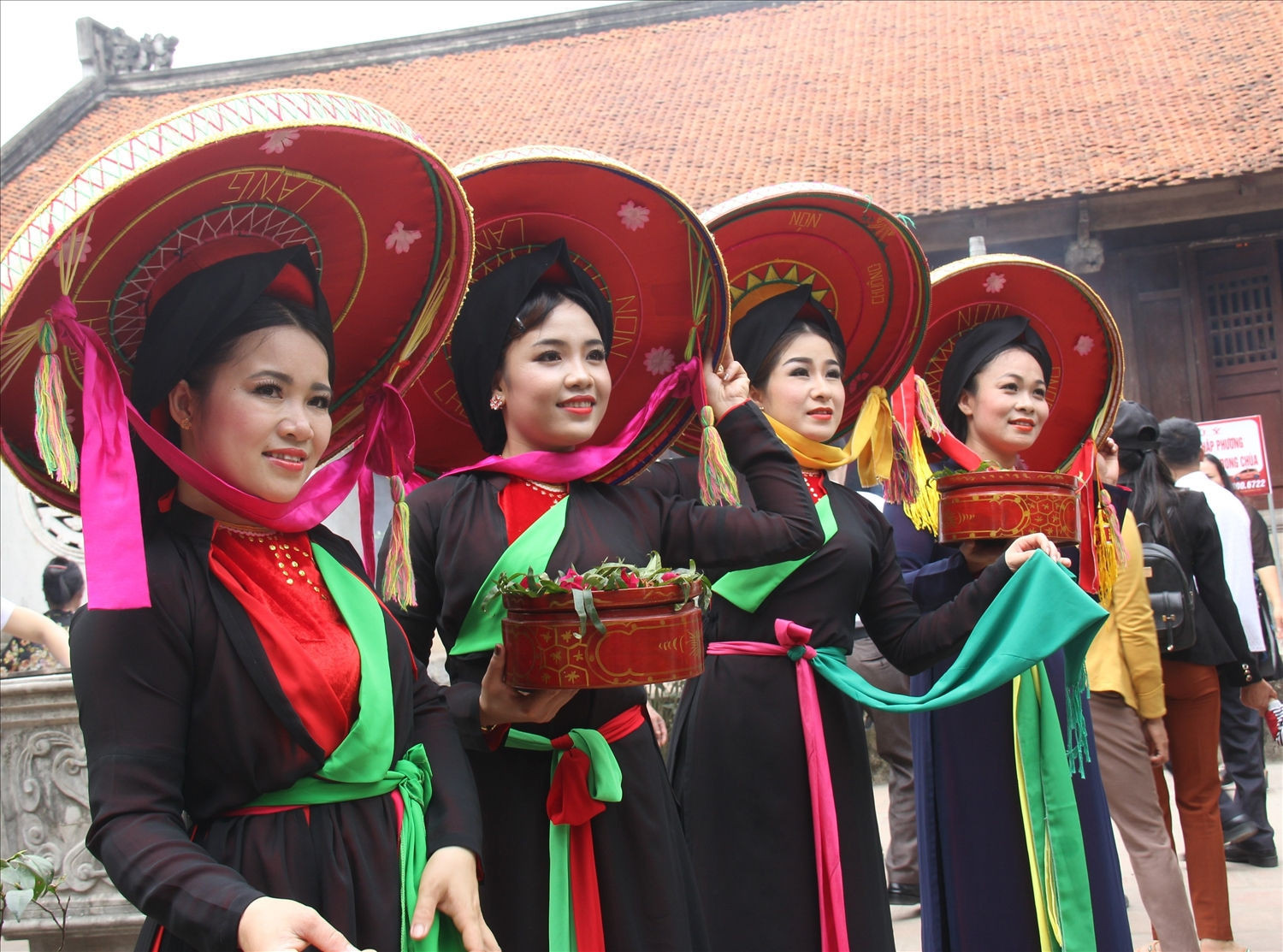
When a Vietnamese story becomes a film watched around the world, a traditional motif enters fashion, a historical figure becomes a video game, a craft village becomes a destination or a dish becomes a global brand, the country creates more than revenue. It also creates pride, identity and a stronger national image.
If Vietnam is looking for new drivers of double-digit growth, it should take culture more seriously.
This is not a choice between culture and economics. It is about allowing culture to become an economic force without losing its depth and human values, while making economic growth more distinctive, sustainable and meaningful.
When cultural strength can be transformed into competitiveness, Vietnam will have another path to reaching further into the world - through its own stories, creativity and identity.
Associate Professor, Dr. Bui Hoai Son
.svg)
