 Vietnamnet.vn

 Podcast



On the morning of May 25, 2026, at the Party Central Committee headquarters, General Secretary and President To Lam chaired a working session on fundamental scientific research serving national development in the new phase.
From that meeting emerges a deeply important question: In its journey toward the future, Vietnam needs not only modern laboratories, core technologies and inventions measurable by products and indicators, but also a social sciences and humanities foundation strong enough to understand itself, understand others, understand the times and chart the most suitable path for the nation’s history, culture and people.
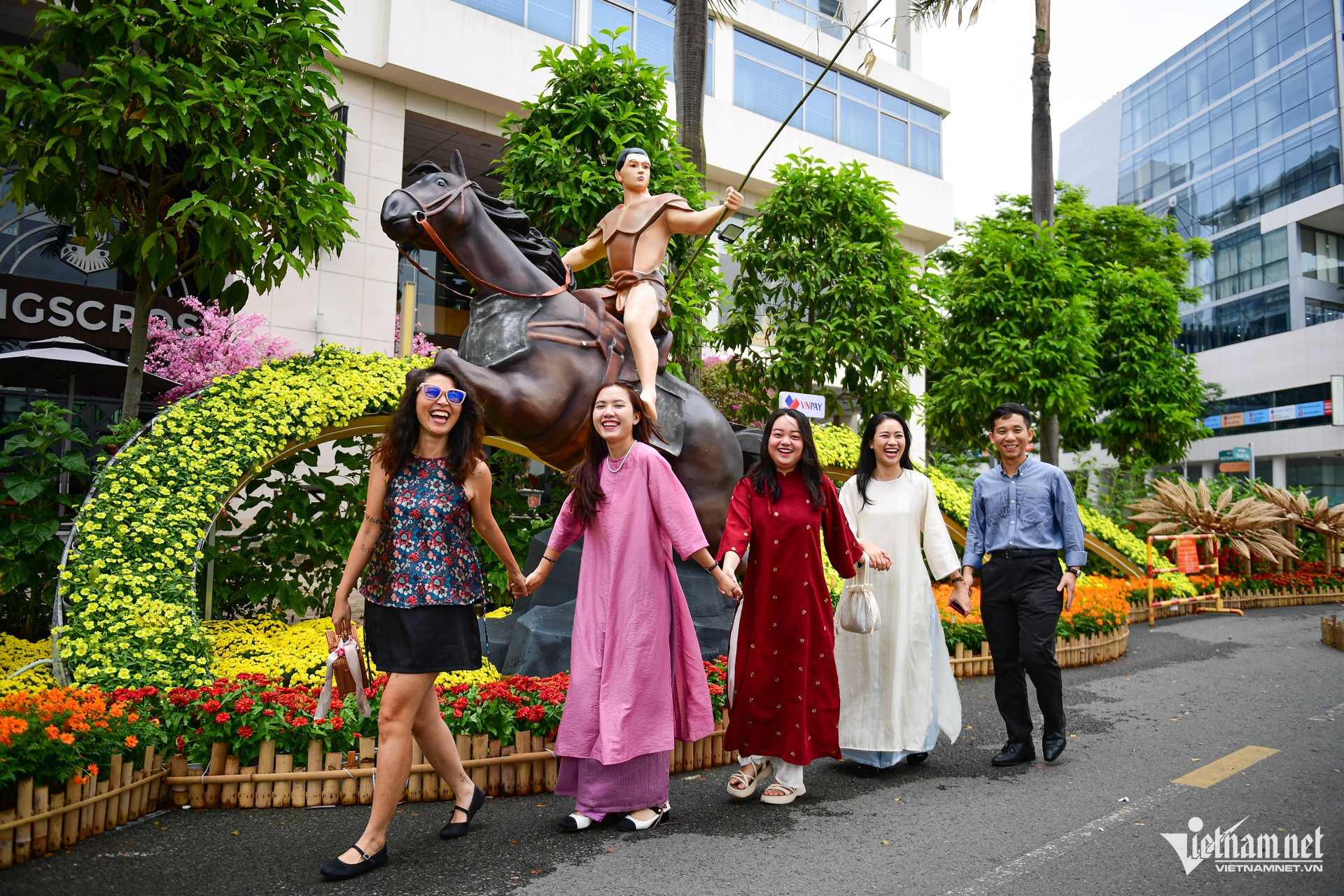
The social sciences and humanities preserve memory, interpret the present and open pathways to the future.
Some countries move very quickly thanks to technology. But to go far, they also need a solid cultural foundation, a shared system of values, institutions capable of unlocking creativity and citizens with courage, responsibility and aspiration. Technology can create speed, but culture creates depth. Engineering may help a country break through during a certain phase, but it is the social sciences and humanities that help answer the more difficult questions: Break through toward what? Develop for whom? Modernize in what way while still preserving national identity and human dignity?
We are living in an era in which artificial intelligence, big data, biotechnology, semiconductors and new energy technologies are fundamentally reshaping production, governance and social interaction. Yet precisely in this age - where everything seems driven by technology - human-centered questions have become more urgent than ever. How do we ensure that people are not left behind amid the whirlwind of digital transformation? How can children grow up in online environments while still developing healthy character, emotional clarity and moral judgment? How can a modern city preserve its memory? How can a fast-growing economy avoid eroding human connection? How can a digital society avoid becoming a lonely society?
These questions cannot be answered by machines, algorithms or production lines alone. They require the knowledge of history, cultural studies, sociology, anthropology, psychology, law, political science, education, philosophy and ethics. They require attentiveness to real life, empathy toward people and respect for the cultural layers that have shaped Vietnamese identity through thousands of years of nation-building and defense.
That is precisely why the social sciences and humanities must be recognized as a pillar of fundamental science - not as something soft, secondary or trailing behind technological disciplines.
A nation may import equipment, purchase technologies and learn governance models from abroad, but it cannot import the soul of its own development. No one else can answer for Vietnam what kind of country it should become in the 21st century. No one else can define Vietnamese values in an age of globalization. No one else can determine how to modernize while remaining humane, integrated yet rooted in identity. That path must be built from Vietnamese intellect, Vietnamese experience, Vietnamese culture and Vietnamese aspiration.
The social sciences and humanities, therefore, are first and foremost a nation’s capacity for self-understanding. A people disconnected from its history will struggle to navigate the future. A society that does not understand changes in family structures, communities, lifestyles, beliefs, psychology and values will struggle to formulate sound policies. Governance disconnected from social data and cultural knowledge risks treating symptoms while missing root causes. And development that does not place people at the center may still produce impressive growth figures while leaving behind voids in happiness, trust and social cohesion.
Seen from that depth, investment in the social sciences and humanities is not investment in luxury. It is investment in the spiritual foundation of the nation. It means ensuring that every policy is grounded in an understanding of people; that every urban plan considers not only land, infrastructure and capital, but also community memory, local identity, cultural space and quality of life; that every education program develops not only skills, but also character, patriotism, social responsibility and creativity; that every development strategy aims not only for wealth, but also for civility, compassion and happiness.
For many years, the products of the social sciences and humanities have at times been undervalued because they are difficult to measure through patents, manufacturing lines or technology transfer contracts. Yet a strong study on family culture may help prevent fractures in social life. A serious study on adolescent psychology may contribute to better education and child protection policies. In-depth research on heritage may open sustainable heritage economy models for local communities. Research on social trust, public ethics, digital culture, regional identity, migration, urbanization and population aging can provide the intellectual foundation for decisions affecting millions of lives.
The value of the social sciences and humanities is often quiet, but profound. It may not always produce visible products immediately, but it can lead to sound policy, humane legislation, visionary development strategies and action plans aligned with the people’s aspirations. It not only helps solve immediate challenges, but also helps the country avoid long-term mistakes. In development, technical mistakes can often be corrected with money. But mistakes involving culture, people, institutions and social trust may cost generations.
That is why Vietnam urgently needs a development mechanism for the social sciences and humanities that matches their true role. The country needs long-term research programs on Vietnamese people, Vietnamese values, Vietnamese families, communities, digital culture, cultural industries, national soft power and social governance in the context of digital transformation and international integration. It needs large-scale, reliable and continuously updated social and cultural databases so that policymaking is based not on instinct, but on scientific evidence. It needs research commissioning mechanisms directly connected to the drafting of resolutions, laws, strategies, master plans and national policies.
Vietnam also needs a healthy academic environment where scholars are encouraged to think independently, debate honestly, offer responsible criticism and engage with the country’s major issues. The social sciences and humanities can only thrive when they do not shy away from difficult realities; when they listen to the people; when they remain loyal both to national interests and to scientific integrity; when every research project is pursued not merely for institutional approval, but to improve life itself.
Most importantly, Vietnam must value intellectuals in the social sciences and humanities as those who preserve and unlock the country’s developmental depth. They are the ones capable of reading subtle social shifts, identifying transformations in collective consciousness, recognizing early signs of value fragmentation and uncovering cultural resources that can become engines of growth. They must be entrusted with major responsibilities, supported in long-term research and protected from the fear of difference, fear of responsibility and fear of speaking difficult truths necessary for national progress.
Vietnam is entering a new phase of development with enormous aspirations. The country speaks often about double-digit growth, digital transformation, innovation, artificial intelligence, semiconductors, green economy and circular economy. All of these are important and necessary. But if these ambitions are not supported by a solid cultural foundation, a healthy value system and Vietnamese citizens who are confident, compassionate, creative and responsible, development will lack depth.
A strong country is not defined solely by advanced technology, but by people capable of using that technology for humane purposes. A powerful nation is not measured only by economic scale, but also by a culture strong enough to bind communities together, uplift people and project a positive image to the world.
The social sciences and humanities, therefore, are where memory is preserved, the present is interpreted and the future is opened. They are sciences of people, for people and in service of people. They form the body of knowledge that enables Vietnam not merely to chase the world, but to move forward with its own confidence; not merely to absorb the new, but to choose what is appropriate; not merely to integrate, but to contribute to human civilization through Vietnamese identity, intellect and spirit.
In the new era, Vietnam must move fast with science and technology - but it can only go far with cultural depth and human wisdom. Investing in the social sciences and humanities means investing in the nation’s capacity for self-directed development, national soft power, social trust and a sustainable future. It is the path toward ensuring that every step forward is not only more productive and materially prosperous, but also more culturally refined, more humane and more resilient in affirming Vietnam’s place on the global map.
Dr. Bui Hoai Son
.svg)
