 Vietnamnet.vn

 Podcast



An unpaid seafood bill worth more than VND16 million (about USD620) has become one of Vietnam's most talked-about stories after a dinner in northern Vietnam ended with one diner left behind, a police investigation and growing legal debate over who should ultimately bear responsibility.
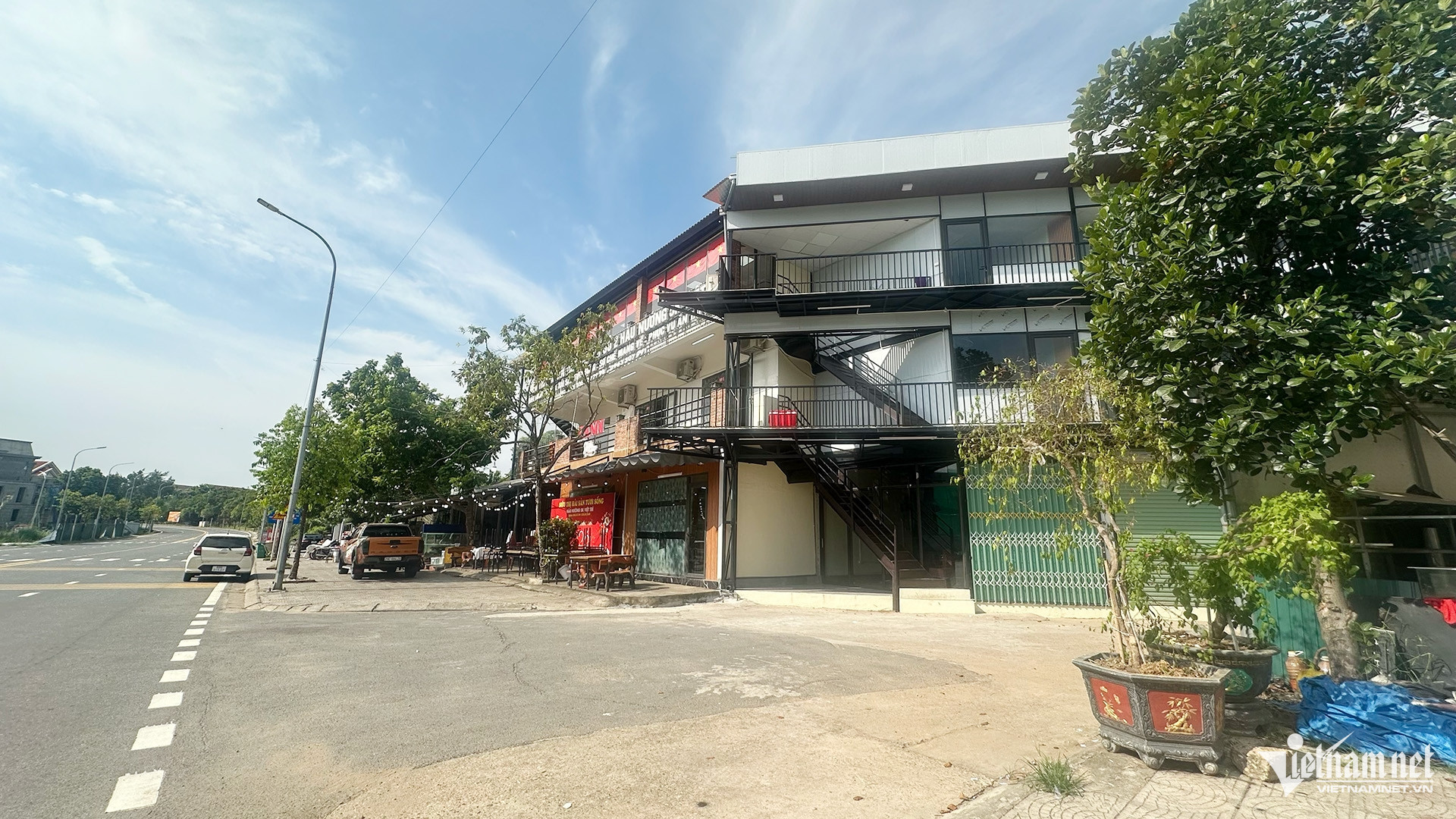
The incident occurred at around 9pm on June 24 at Hai San Viet Tri (Viet Tri Seafood) restaurant on Vu The Lang Street in Viet Tri Ward, Phu Tho Province.
According to police, a man identified only as T., from Tam Duong Commune, had met a woman through social media before inviting her and her companions to dinner.
Restaurant owner H. said T. arrived with five women and around seven children, who occupied two tables.
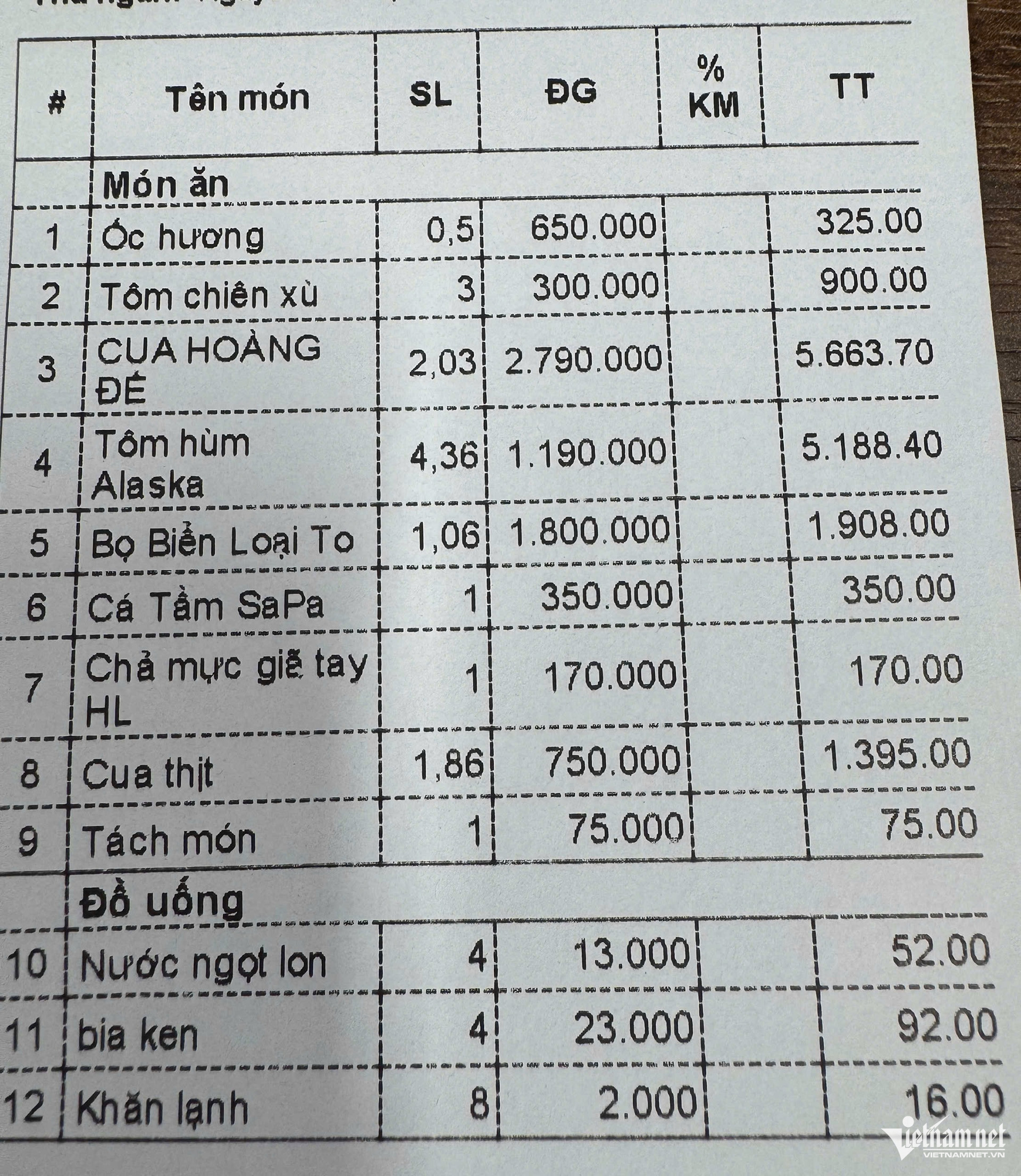
The group ordered an extensive selection of premium seafood, including king crab, Alaska lobster, horseshoe crab, Ca Mau crab, spotted babylon snails and beverages. Some of the seafood weighed as much as 4kg. After the meal, they also asked restaurant staff to pack the leftovers to take home for the children.
The final bill totalled more than VND16 million (about USD620).
According to the restaurant owner, the evening initially appeared entirely normal.
However, around 30 to 40 minutes into the meal, T. suddenly lay on the restaurant floor, shouted loudly and began speaking incoherently.
"At that point we hadn't even prepared the bill," H. said. "He lay on the floor shouting and talking incoherently. The women and children who were with him gradually left the restaurant, leaving him behind."
Restaurant staff immediately contacted Viet Tri Ward Police, who brought T. to the station for questioning.
Police said T. refused to cooperate during questioning, declined to sign official documents and appeared confused.
His family later told investigators that he had shown signs of psychological problems before the incident.
Investigators have since disclosed another detail provided by T.'s parents. According to the family, he had allegedly been involved in similar incidents in southern Vietnam, where he reportedly used services without paying. Police said they are continuing to verify this information alongside his medical condition.
Authorities also examined the restaurant's pricing and found no indication of price manipulation. Officials said the seafood prices were consistent with prevailing market rates and reflected the premium products ordered, together with the large quantity of food packed for takeaway.
Restaurant owner H. said he had concluded it would likely be difficult to recover the money.
"After speaking with police, we realised there was little chance of collecting the payment, so we prepared to accept the loss ourselves," he said.
The case took another turn on the evening of June 25 when a woman identifying herself as one of the dinner guests contacted the restaurant.
According to H., she said the incident had happened against the group's wishes and insisted not everyone present had behaved irresponsibly.
She told the restaurant she would discuss the matter with the others before giving an official response and also asked about the progress of the police investigation.
The woman additionally expressed concern after photographs of the group circulated on social media, believing they had originated from the restaurant.
H. denied publishing any customer photographs and said he deliberately chose not to release any images because several children had been present.
"We wanted to protect the children's privacy," he said.
As of the morning of June 26, however, nobody from the group had returned to settle the outstanding bill.
Who is legally responsible?
The case has also prompted debate among legal experts over who ultimately bears responsibility for payment.
Nguyen Thanh Hai, Director of An Hoang Gia Law Firm and a member of the Hanoi Bar Association, said that if investigators determine the diners left only because they were frightened by T.'s behaviour and later voluntarily contacted the restaurant to resolve the matter, such actions would demonstrate goodwill and could support settlement through civil negotiation.
According to Hai, responsibility should be considered in stages.
The first priority should be for the restaurant and those involved to reach a voluntary agreement, which would provide the quickest and least costly resolution while reflecting the principle of mutual consent in civil transactions.
If no agreement can be reached, authorities should determine who actually entered into the transaction with the restaurant. Should T. be found to have lacked the capacity to understand or control his actions when ordering the meal, legal responsibility may extend to his guardian or legal representative, in accordance with Vietnamese law.
Hai also noted that the other diners could potentially bear proportional responsibility if evidence shows they jointly participated in the transaction or directly benefited from the services provided.
"The restaurant's legitimate rights and interests must also be protected," Hai said. "The business provided the goods and services in full, displayed its prices publicly, and the customers consumed the food and even took some of it home."
He argued that T.'s apparent psychological condition alone should not automatically transfer the entire financial loss to the business.
"Even if the person placing the order has a medical condition, the obligation to pay does not simply disappear," Hai said. "The law protects vulnerable individuals, but it must also protect businesses and individuals who lawfully provide goods and services. Determining who ultimately bears responsibility should depend on an objective investigation and applicable legal provisions, not public opinion."
Duc Phong - Duc Hoang
.svg)
