 Vietnamnet.vn

 Podcast



The Tet season has reignited a fierce cultural debate as ao dai designs featuring Chinese-style frog buttons and Mandarin collars flood the market. What began as a stylistic concern has evolved into a larger conversation about cultural integrity and national identity.
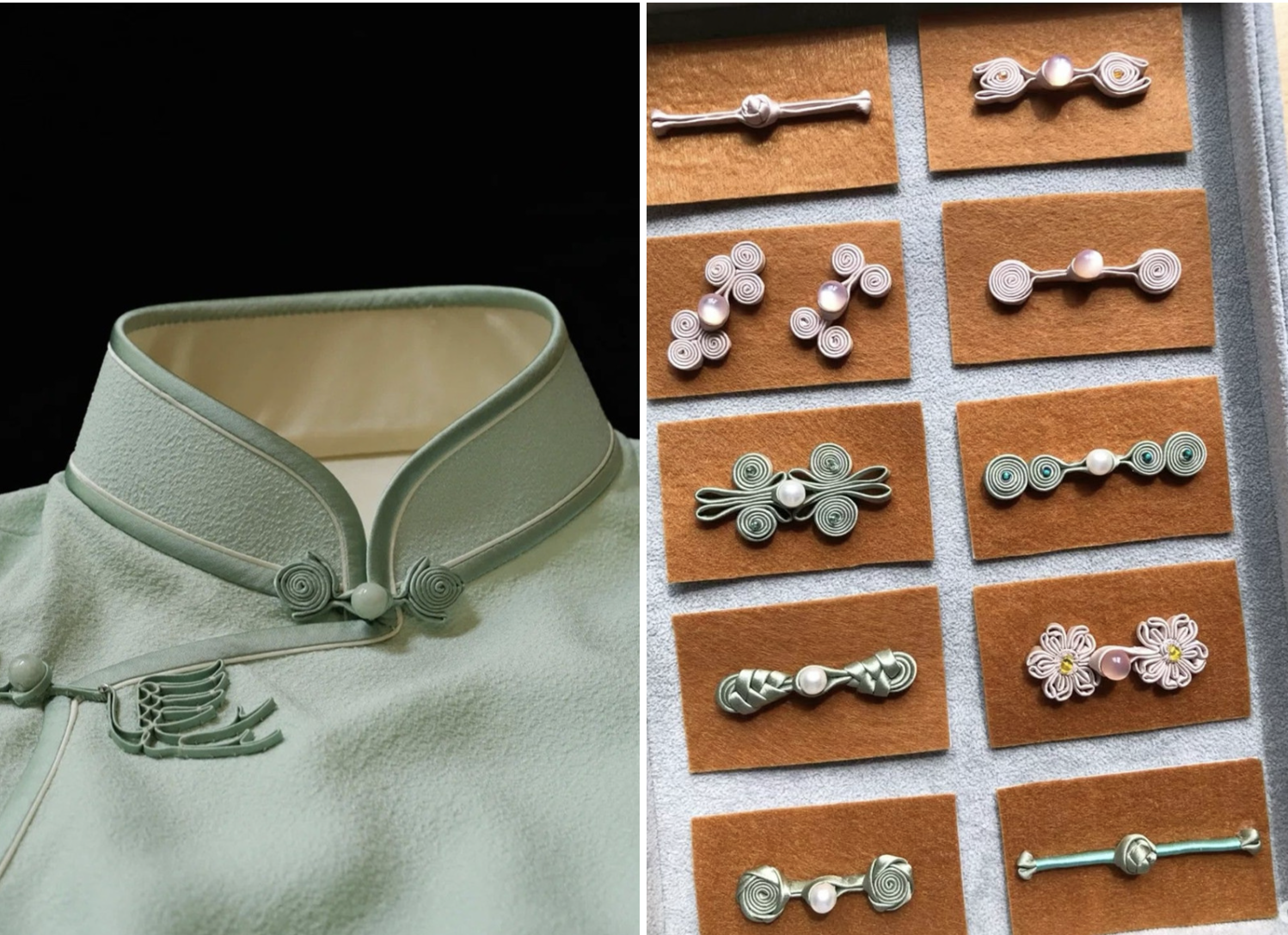
Types of buttons commonly found on the Chinese qipao. (Photo: Archive)
When ao dai loses its roots
Online platforms and ao dai rental shops are showcasing designs with bold frog buttons, strikingly similar to those found on Chinese qipao. Some even combine them with Mandarin collars, creating a hybrid style that has drawn criticism from traditionalists.
“It’s not an ao dai just because it has long panels,” one reader protested. Many young shoppers, however, are eager to follow trends and dismiss the controversy - choosing designs simply for their aesthetic appeal, regardless of their cultural implications.
More troubling still is the growing use of Chinese accessories - such as round fans and paper parasols - in ao dai photo shoots. These elements further blur the line between Vietnamese tradition and Chinese influence.
Between commerce and culture
Many fashion brands and rental services import designs or copy them from Chinese platforms like Taobao, offering them at low prices to meet rising demand. In this price-driven market, few question how buttons, collars, or motifs are reshaping the identity of the ao dai.
“I believe the Ministry of Culture should define a standard for ao dai and register it as a national brand. Without that, young people today, exposed to too many variations, won’t know what the traditional ao dai actually looks like,” reader Cam Tu Cau suggested.
The lack of official criteria has made it difficult to distinguish between creative innovation and cultural distortion. “Without regulation, it’s hard to blame designers for pushing boundaries,” added reader Bui Thanh Duong.
Designer Trung Dinh: Identity lies in the structure, not decoration

Designer Trung Dinh
Responding to the criticism, designer Trung Dinh - known for pioneering ombre dyeing techniques on traditional silk ao dai - offered his perspective in an interview with VietNamNet.
He believes that ao dai is a cultural symbol rooted in centuries of tradition and cannot be undone by minor decorative changes. For Trung Dinh, frog buttons are mere embellishments and don’t alter the essence of the garment.
He draws a comparison: using China’s national flower, the peony, on ao dai doesn’t turn it into Chinese clothing. What matters, he emphasized, is the structure.
According to him, ao dai is defined by long sleeves, a form-fitting waist, two panels, side slits, and raglan sleeves. As long as these structural features remain, the ao dai retains its identity.
Though he avoids oversized frog buttons in his own designs for aesthetic reasons, Trung Dinh favors the traditional silhouette and remains cautious about overly modernized forms. He cited the example of artist Cat Tuong’s early 20th-century Lemur ao dai, which was eventually abandoned, as proof that unsuitable innovations fade on their own.
To him, modernization can coexist with heritage - but it should remain a subcategory of fashion, not replace the national dress. The popularity of raglan-style ao dai today does not erase the historical value of older five-paneled styles.
In his words, individuals are free to reject what they feel is inappropriate - as long as the ao dai’s form and cultural core are preserved.
When theory meets reality
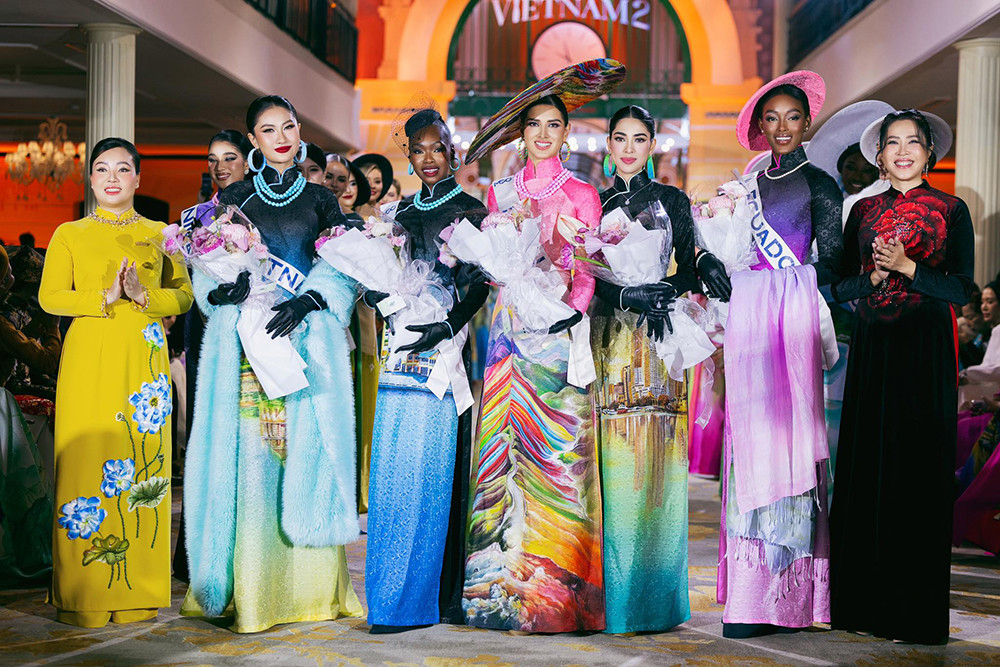
While Trung Dinh’s structural definition has merit, critics argue that culture is eroded not only through form but through repeated exposure to foreign elements. If young generations grow up seeing ao dai with Chinese fastenings and accessories, they may eventually normalize those elements as Vietnamese.
“This is what cultural invasion looks like,” wrote reader Phan Thanh Phuong. “Some sellers prioritize sales and trends over national pride.”
Concerns about cultural dilution are far from theoretical. Observers pointed to how South Korea and Japan enforce strict standards for Hanbok and Kimono - ensuring both are protected and promoted at a national level.
Who holds the responsibility?
The debate over frog buttons is more than a matter of fashion - it’s about how a nation defends its heritage amid globalization and commercial pressures.
Three primary viewpoints have emerged:
First, the Ministry of Culture, Sports and Tourism is urged to act decisively. “Vietnam needs to make ao dai a symbol of cultural diplomacy and national pride. The ministry must take responsibility,” said reader Pham Le.
There’s growing support for creating a Vietnamese Standard for ao dai, defining essential features and allowing creative leeway within limits. Sanctions could follow for mislabeling or misrepresenting ao dai.
Second, designers and merchants must act with greater accountability. “We cannot accept ao dai designs that dilute our cultural identity,” stated reader Manh Ha. Creative freedom must be rooted in cultural respect - not indiscriminately borrowing foreign styles.
Third, consumers themselves must become more informed and conscientious. “Without protective strategies, ao dai risks becoming assimilated - like many smaller cultures lost in globalization. Young people today prefer novelty and simplicity,” warned reader Ha Xuan Linh.
Experts agree that meaningful preservation will require cooperation across all levels - from state agencies to designers, sellers, and buyers. Alongside formal standards, education and cultural awareness must be strengthened to ensure ao dai remains a true emblem of Vietnam.
Huy Minh
.svg)
