 Vietnamnet.vn

 Podcast



Hoai Thanh
A new crop
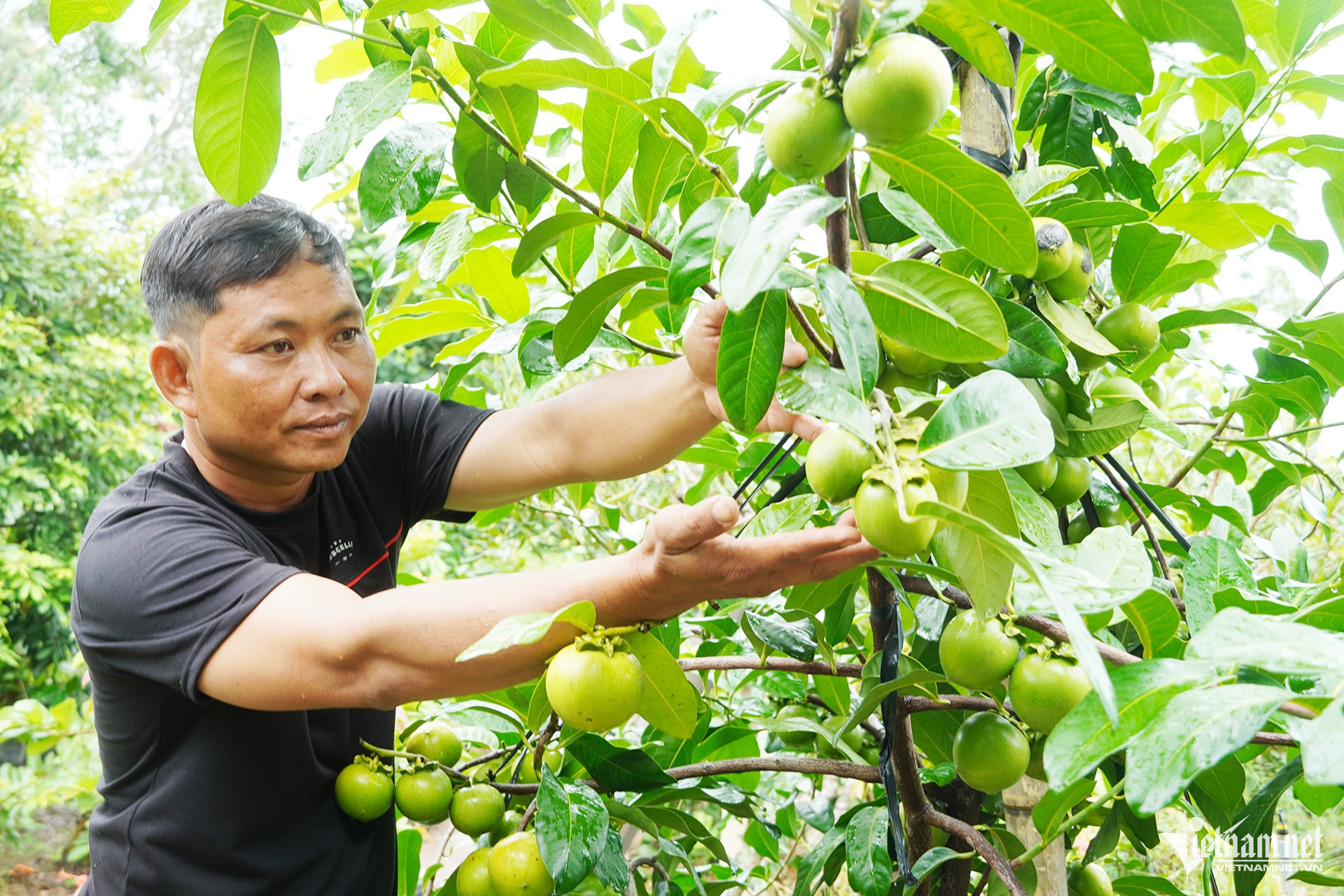
In mid-August, Tran Huu Thang, 48, carefully inspected the fruiting chocolate persimmon trees across his orchard of more than one hectare on My Phuoc Islet in Nhon My Commune, Can Tho.
From just a handful of initial saplings, Thang has expanded his orchard to around 500 trees. Some are little more than a year old, while others are now in their second or third year.
After more than 20 years of farming on My Phuoc Islet, Thang has constantly looked for new crops that could generate greater economic value.
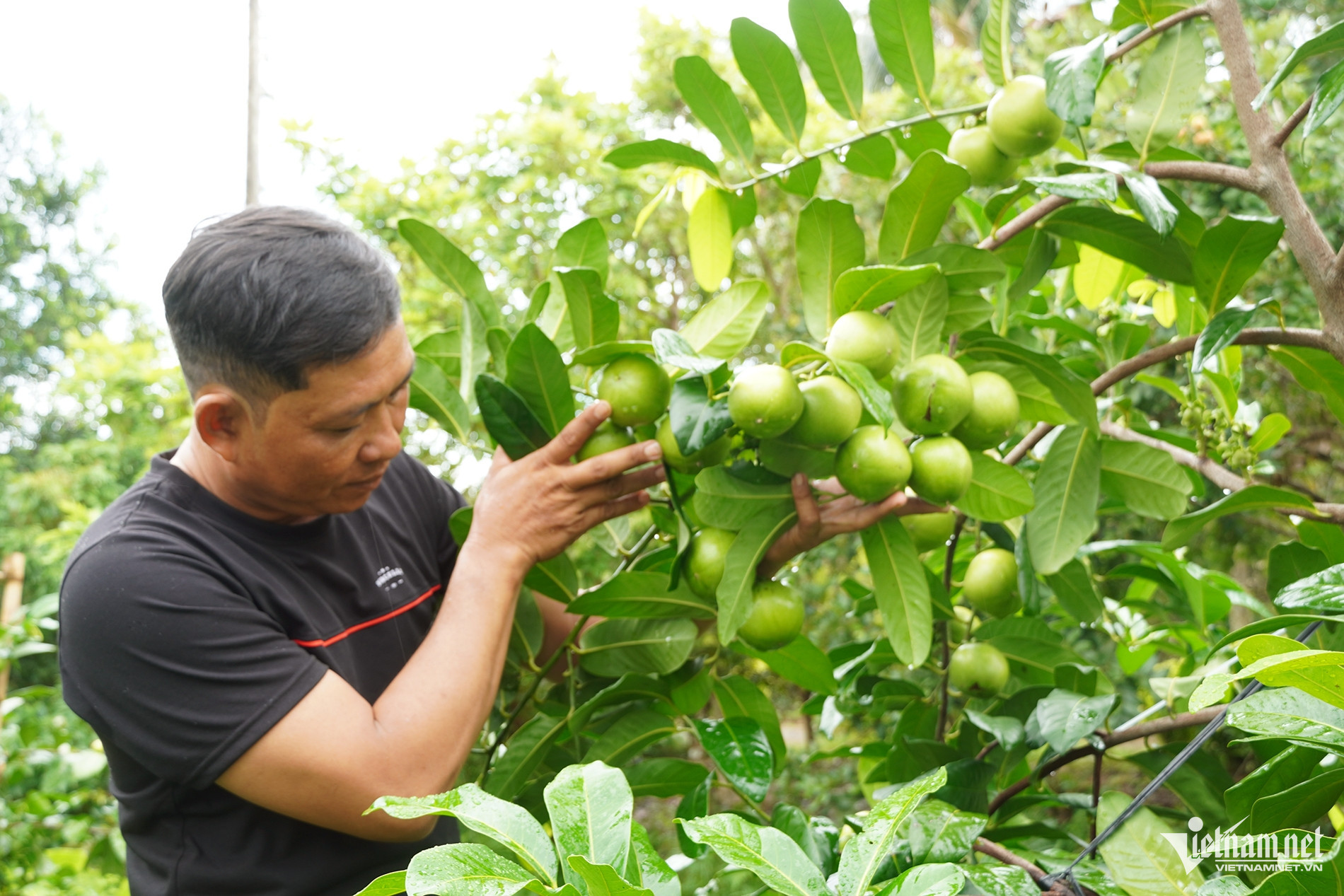
Tran Huu Thang checks a chocolate persimmon tree in his orchard of more than one hectare on My Phuoc Islet in Can Tho.
Three years ago, friends invited him to try a chocolate persimmon. Intrigued by its unusual flavor, he researched the plant’s growing characteristics and decided to experiment with five trees to see whether they could adapt to conditions on the islet.
“I thought it was a fairly new variety, so I bought a few trees to try,” Thang said. “When I first brought them home, many people advised me against it because the plant was so unfamiliar. But after monitoring them, I found they were well suited to the soil on My Phuoc Islet, so I expanded the orchard.”
According to Thang, chocolate persimmons are relatively easy to care for, suffer from few pests and diseases, adapt well to tropical climates and can tolerate salinity. He uses almost no pesticides, relying mainly on regular applications of organic fertilizer to nourish the trees.
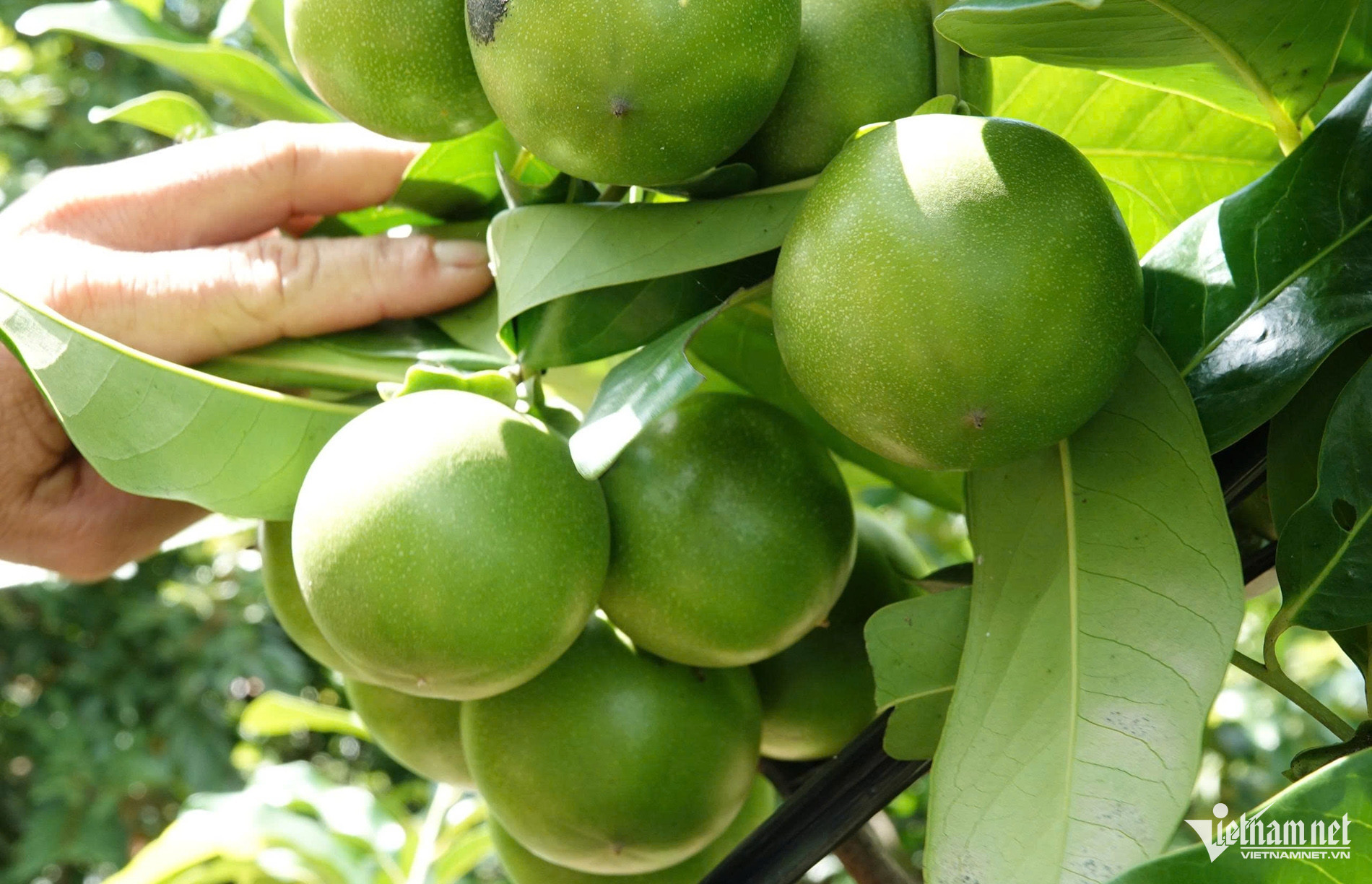
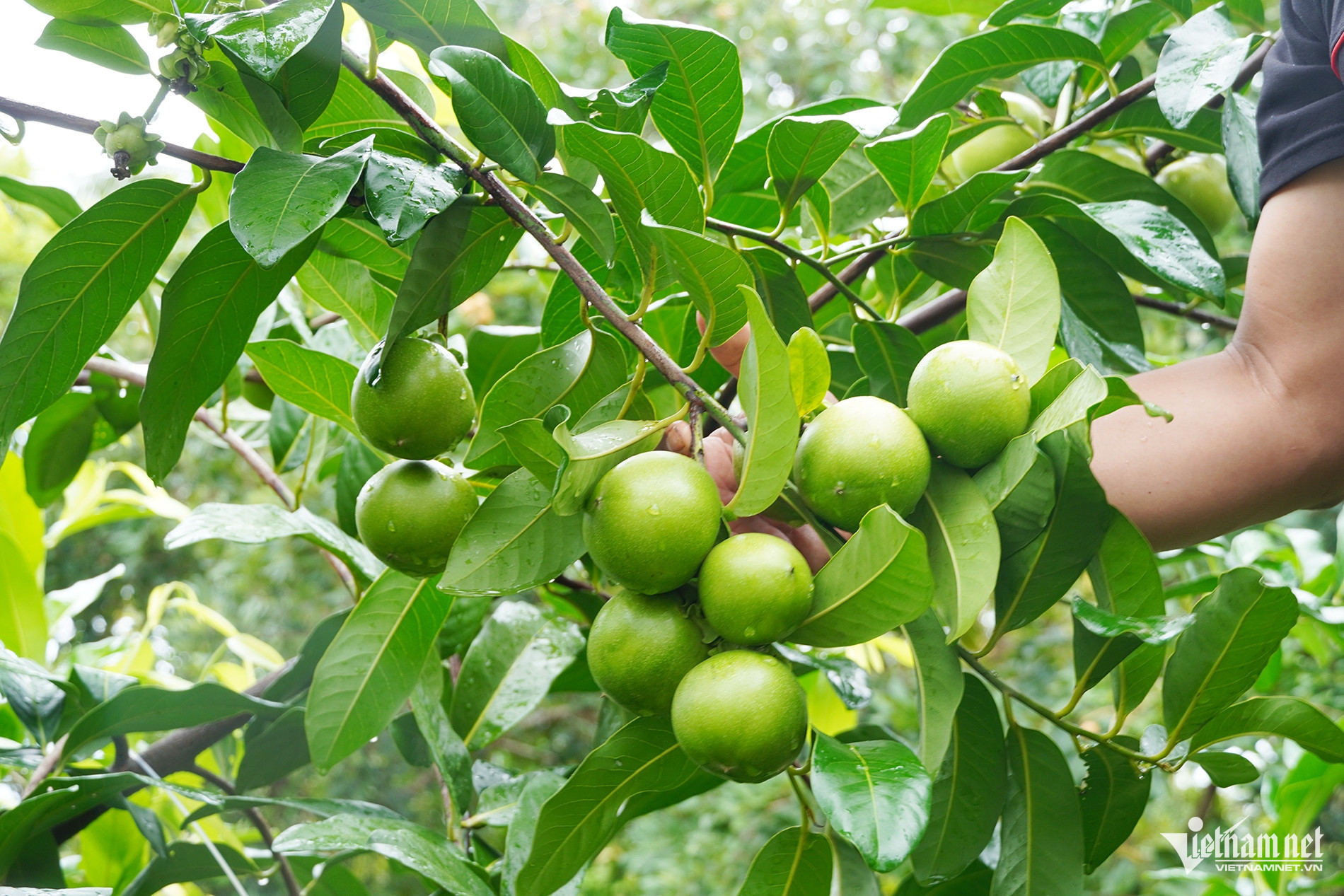
Thang said the trees are generally planted 3.5-4 meters apart. Where more land is available, growers can leave around five meters between trees to give them additional room to develop.
After about a year, a tree can produce around 5-7kg of fruit. From the second year onward, well-maintained trees can yield 40-50kg each.
One distinctive characteristic is their ability to bear fruit throughout the year. The fruit takes a relatively long time to mature, around six to seven months from fruit set to ripening.
As it ripens, the skin changes from green to pale yellow and remains very thin. Cut open, the fruit reveals its characteristic dark brown flesh, with a soft, chewy texture, gentle sweetness, subtle richness and a hint of flavor reminiscent of chocolate.
“Many people are surprised when they see one for the first time because they don’t expect a persimmon to be brown inside,” Thang said. “The flavor is also quite unusual and unlike ordinary persimmons.”
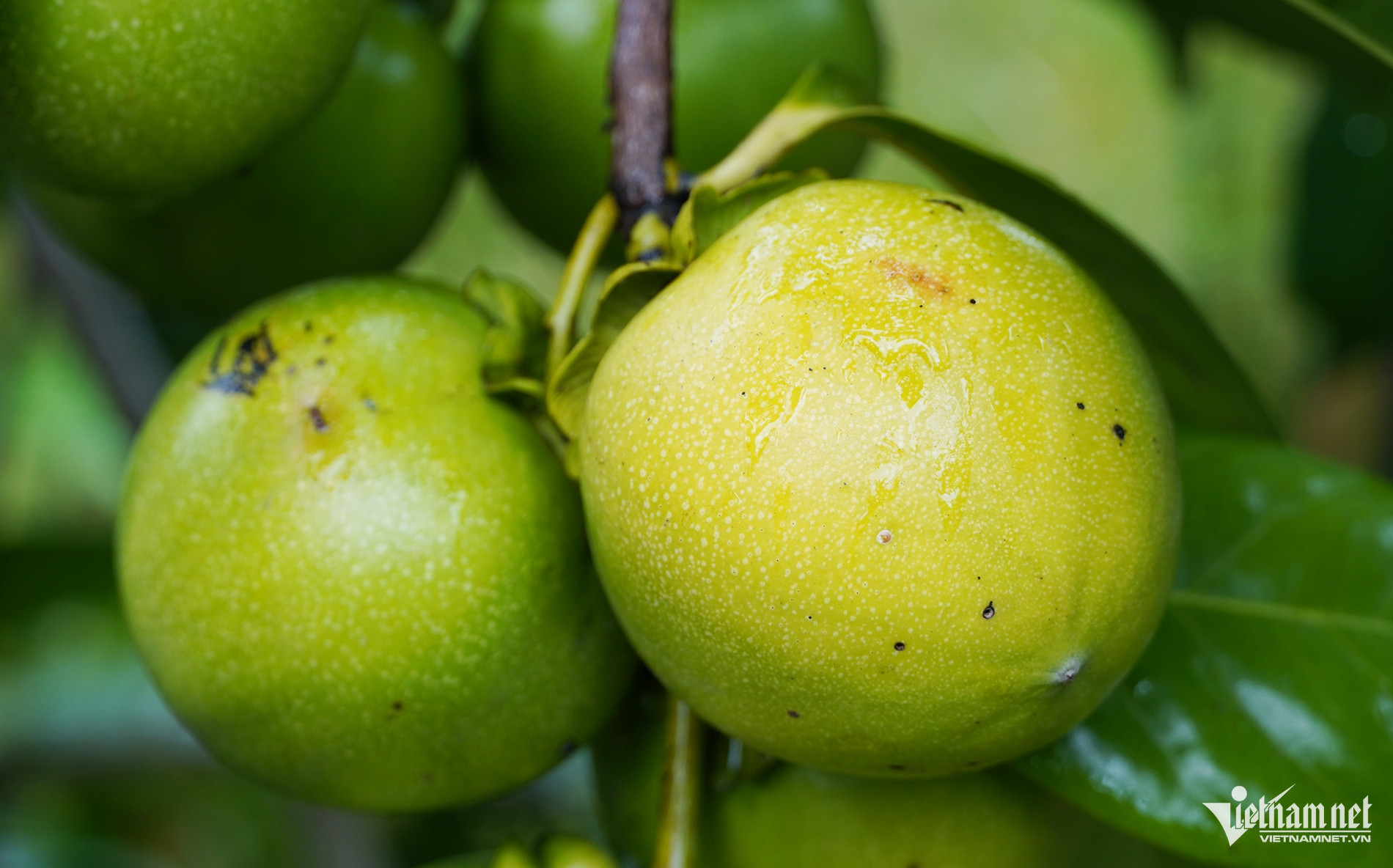
Chocolate persimmons typically weigh 300-400g each, although some can reach 700g to 1kg. Once ripe, they can remain on the tree for around a month without falling, allowing growers greater flexibility over harvesting.
Thang currently grows three chocolate persimmon varieties: two seeded varieties, one with pointed fruit and another with a round, flattened shape, as well as a seedless variety.
He said the pointed variety tends to contain more seeds and therefore less flesh. The round, flattened fruit has a soft, chewy texture well suited to eating fresh, although the overall flesh quality is broadly similar across the varieties.
In 2025, Thang’s orchard produced more than three tons of chocolate persimmons, which sold at the farm for around VND300,000 ($11.40) per kilogram.
“Fresh fruit production is not yet high enough for us to supply the market consistently,” Thang said. “I mainly use it for visitors to experience at the orchard and to make other products.”
Chocolate persimmons are not particularly high in sugar, he said, but their soft, rich flesh and distinctive dark brown color make them suitable for processing.
Blending the fresh fruit with condensed milk and ice produces a noticeably different flavor somewhat reminiscent of avocado. When made into ice cream with fresh milk and peanuts, the result develops a richer taste similar to chocolate.
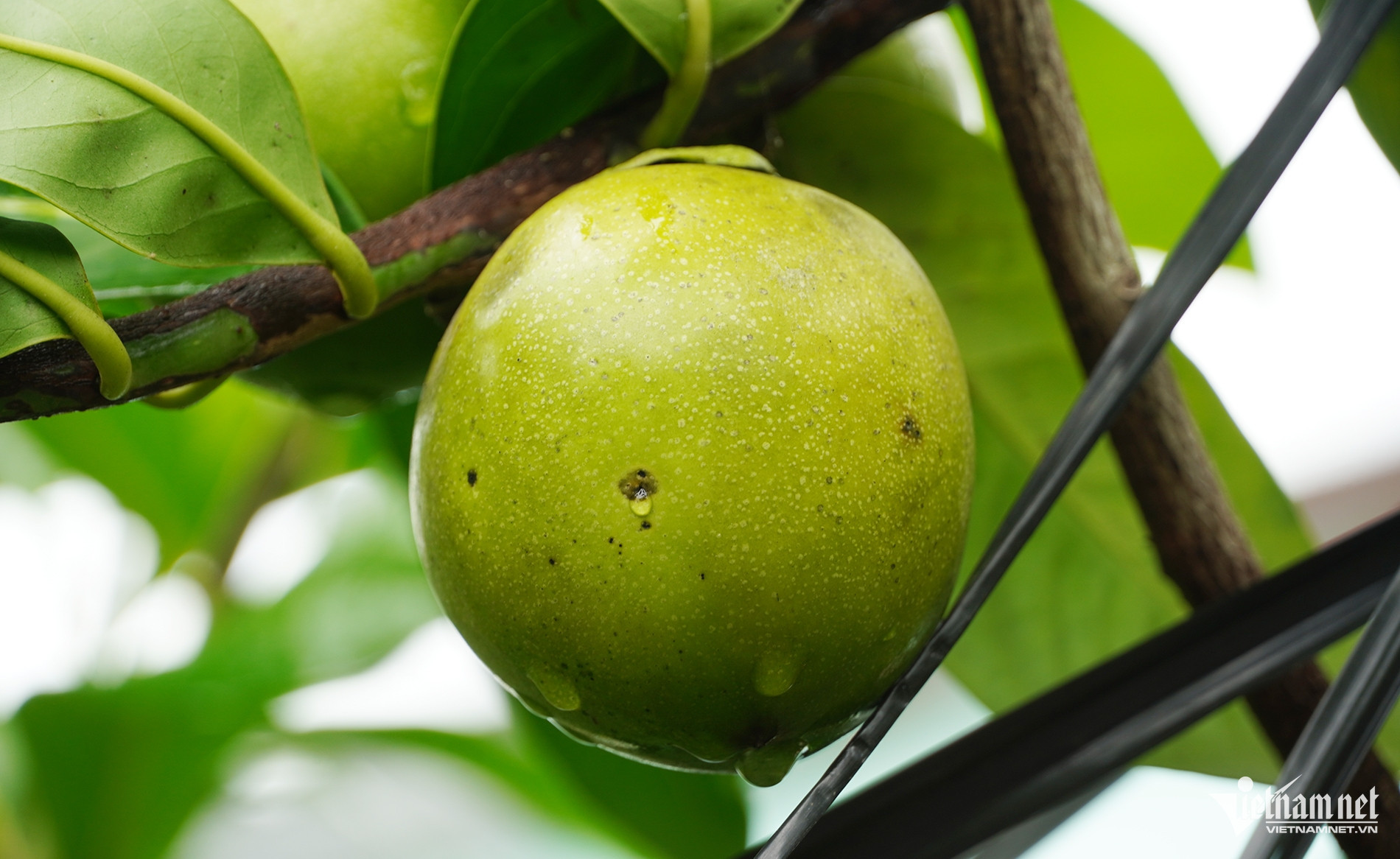
The fruit changes from green to pale yellow as it ripens.
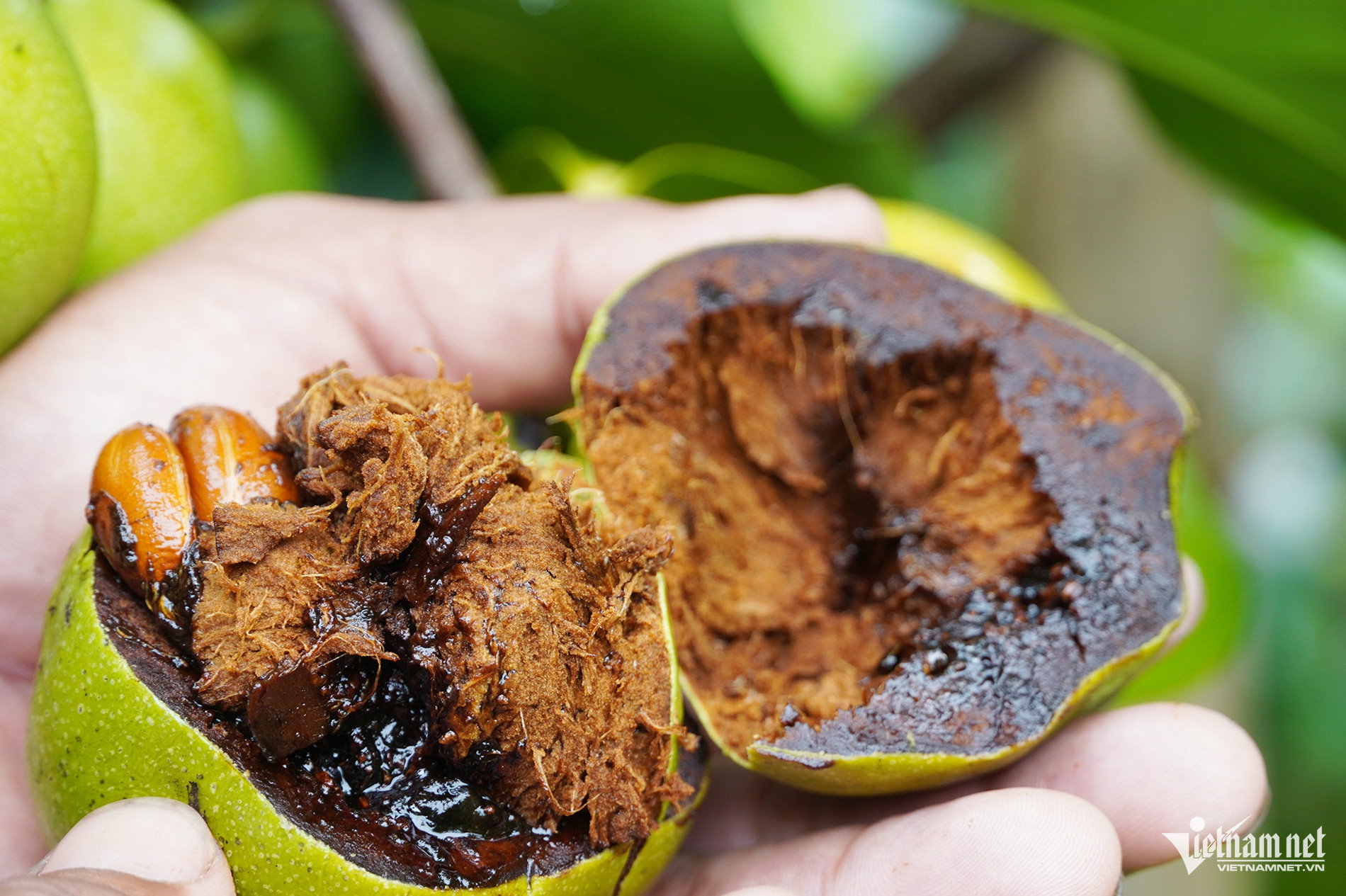
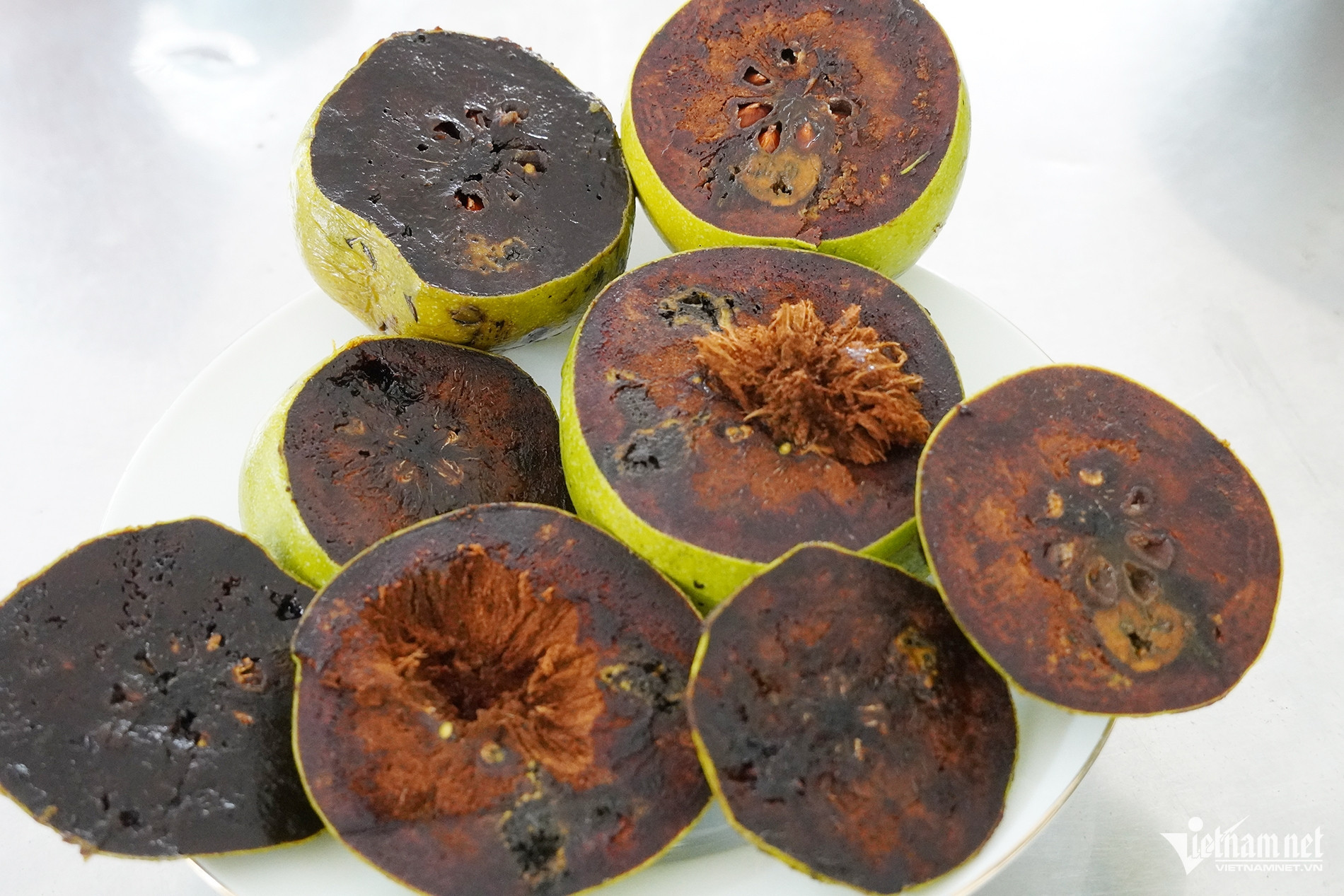
Thang has used those characteristics to turn the orchard into an agritourism destination. Admission is free, and visitors can tour the garden, take photographs, learn how the trees are grown and cared for, taste ripe fruit straight from the orchard, or try products including smoothies, ice cream and desserts made from chocolate persimmons.
“Many visitors from other provinces and cities come to My Phuoc Islet and stop by the orchard to see for themselves a type of persimmon they previously knew only from social media,” he said.
Beyond selling fruit, Thang has also begun supplying saplings. More than 1,000 trees have so far been sold to customers, priced at around VND200,000-800,000 ($7.60-$30.40) each depending on their size and quality.
After expenses, Thang said his combined annual profit from commercial fruit and sapling sales is around VND700 million, or approximately $26,600.
Promising new model needs further evaluation
Tran An Vien, deputy head of the Economic Division of Nhon My Commune, described Thang’s chocolate persimmon orchard as a promising approach to crop diversification.
Initial results suggest that the trees can adapt to local natural conditions while also responding to consumer demand for higher-value agricultural products.
However, Vien cautioned that the model remains new and should continue to be monitored and evaluated before being considered for wider adoption.
“In the coming period, the local authorities will work with specialized agencies to provide technical support, develop OCOP products, establish market connections and assess the potential for expansion based on actual results, avoiding development driven simply by trends,” Vien said.
.svg)
