 Vietnamnet.vn

 Podcast



Hoai Thanh
Instead of being cut down or burned after each harvest, pineapple leaves in Can Tho are now being used to produce strong natural fiber, opening up a new way to increase the value of agricultural by-products while helping protect the environment in the Mekong Delta.
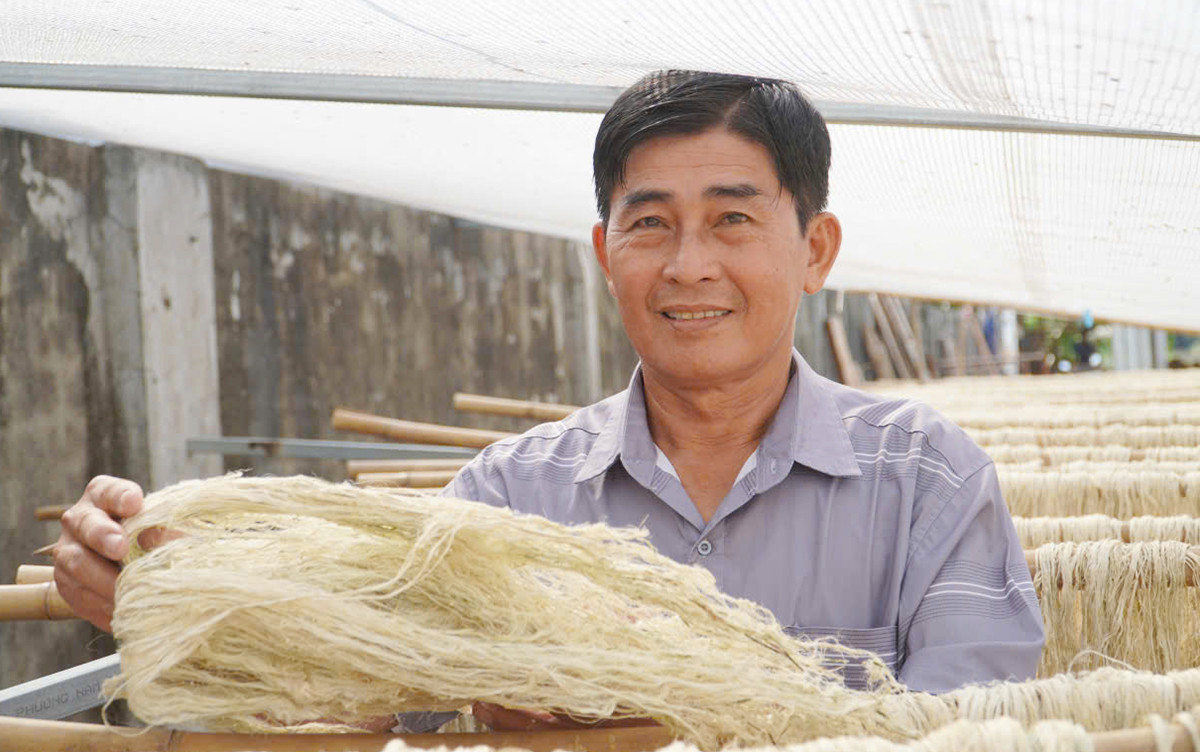
Across the vast pineapple fields of Hoa Luu commune in Can Tho city, a quiet transformation is taking place. Leaves that were once considered waste are being turned into valuable raw material for the textile industry.
At the Can Tho Farm production, trading and services cooperative, Pham Van Nuong - the cooperative’s manager - together with local members has found a way to convert the sharp pineapple leaves that once troubled farmers into useful fiber.
According to Nuong, in the past, after harvesting pineapples farmers had to spend significant money to clear old plantations. The most common method was spraying herbicide to dry the leaves or cutting them down and throwing them into nearby canals.
“If farmers want to clear a field, they must cut everything down. It costs money for labor and requires chemicals that affect the soil and people’s health,” Nuong said.
Seeing the growing demand for natural fiber, Nuong began researching technologies to make use of the discarded pineapple leaves. Although the idea itself was not entirely new - in the past people had soaked and beaten pineapple leaves to extract fibers for sewing or repairing clothes - producing fibers that meet industrial textile standards was another matter.
The idea soon took shape when he and local farmers established the Can Tho Farm cooperative, invested in machinery and organized the collection of pineapple leaves directly from plantations.
In the early days, the model faced many challenges. Many farmers were hesitant because cutting leaves required extra effort while the income seemed uncertain. Transportation was also difficult because many pineapple fields are located deep in rural areas.
To change their thinking, Nuong personally guided farmers on how to harvest the leaves and began buying them at VND1,000 per kilogram (US$0.04).
“At first people didn’t believe it. But when they saw real money coming in - sometimes even better than working as hired laborers - they started to participate,” he said.
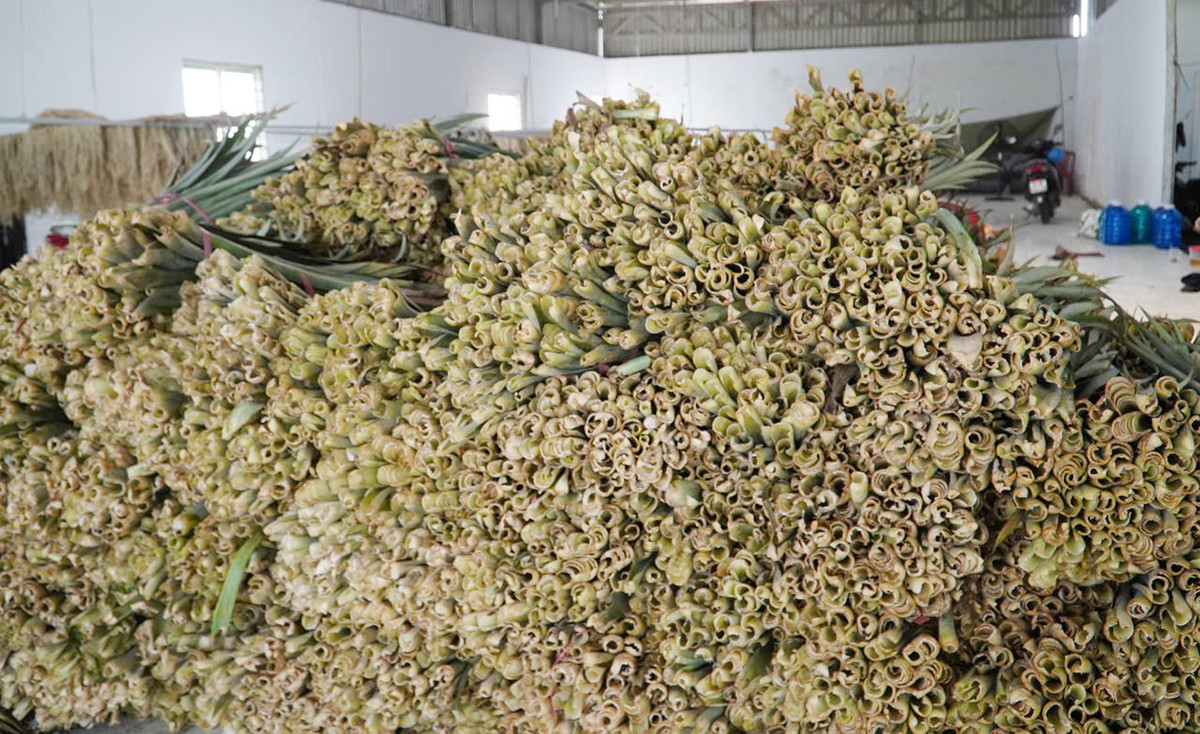
To produce high-quality fiber, the raw material must be carefully selected. Pineapple leaves should come from plants that are three to four years old and must be mature leaves measuring at least 45 centimeters in length.
In particular, the traditional Cau Duc pineapple variety produces stronger and better-quality fiber than many other varieties.
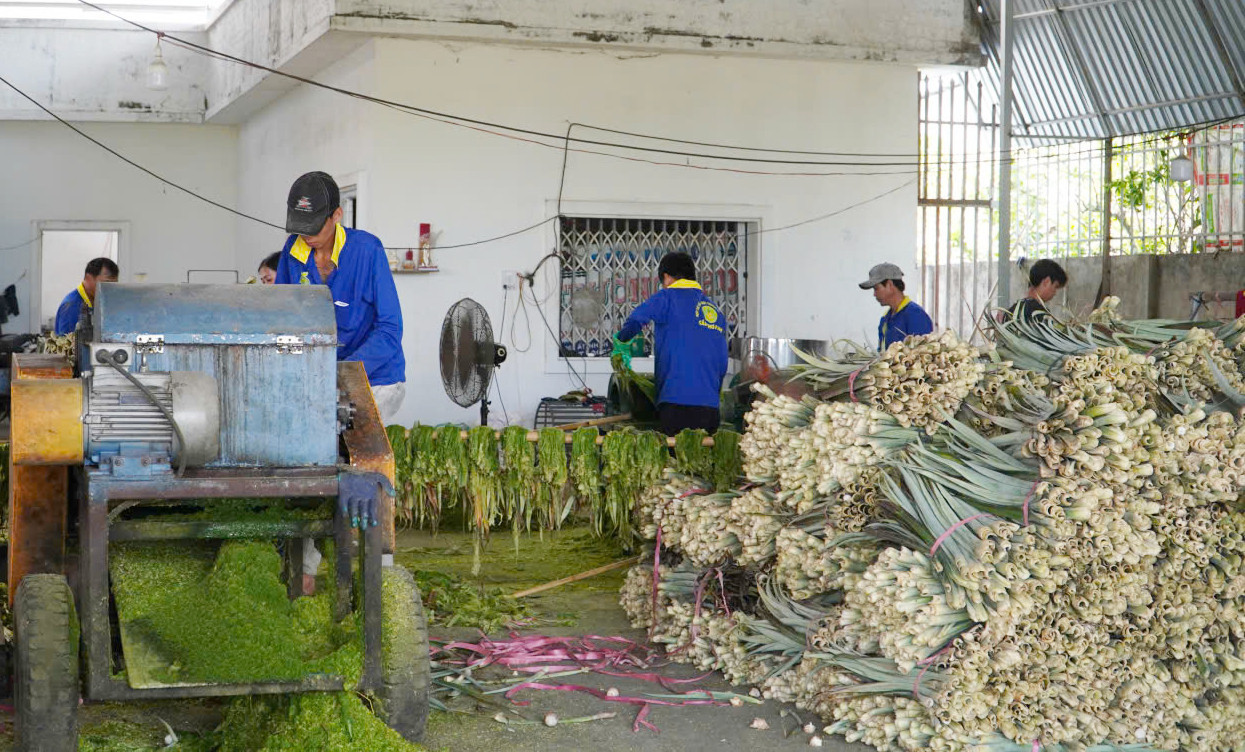
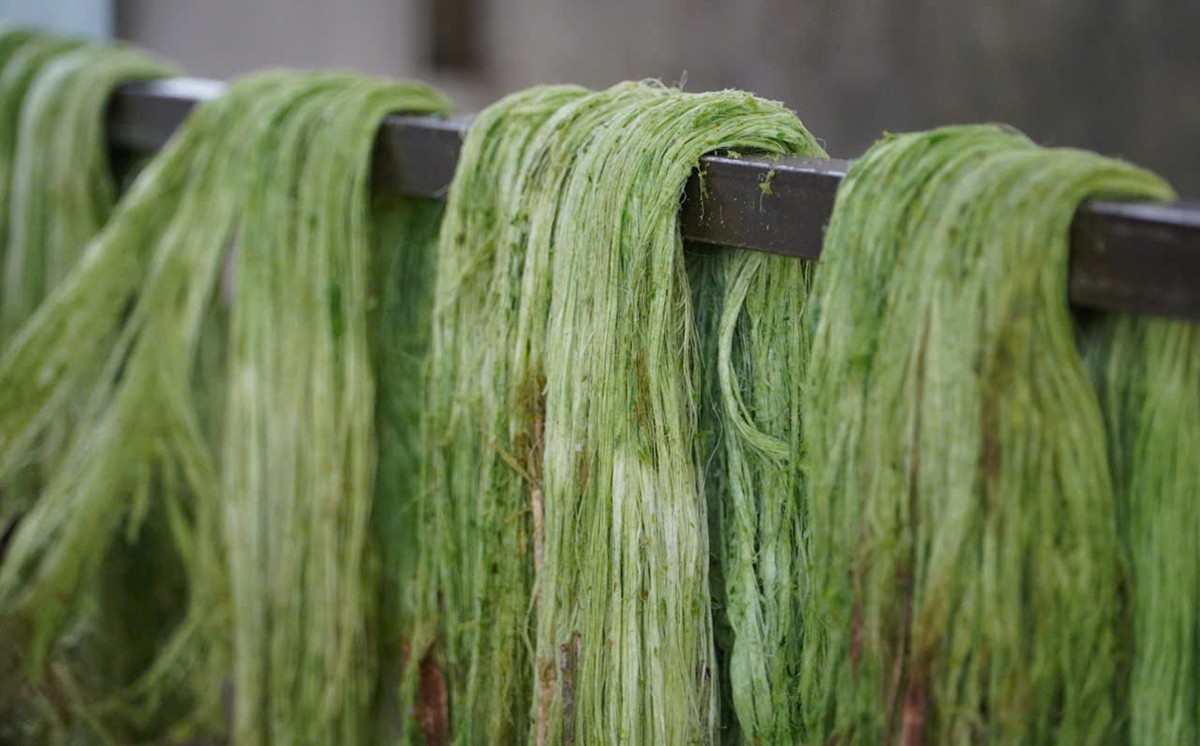
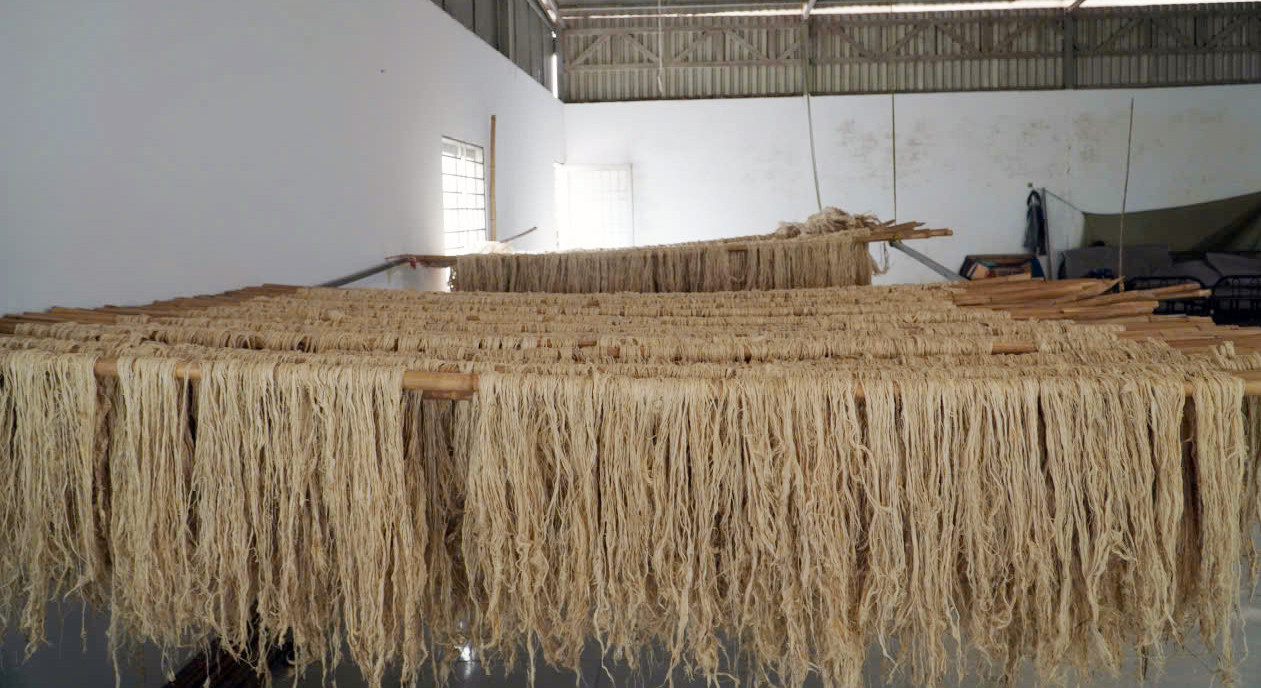
Nuong explained that the fiber production process involves five main stages: pressing and crushing the leaves to extract fibers, trimming to remove impurities, washing, centrifugal drying and sun-drying. If the weather is favorable, the fiber can be fully dried and ready for packaging within about 24 hours.
On average, 60 kilograms of fresh pineapple leaves produce around one kilogram of raw fiber. The fiber is then sold to companies at VND160,000-170,000 per kilogram (US$6.50-6.90) for further processing, polishing and industrial textile use.
With the purchase price of VND1,000 per kilogram of leaves, each 1,000 square meter pineapple plot can yield about 2.5-3 tons of leaves, allowing farmers to earn an additional VND2.5-3 million (US$100-120).
More importantly, they no longer have to spend VND800,000 to VND1 million (US$32-41) to clear the fields as they did before.
“In the past, clearing a plantation cost quite a lot. Now the fields are cleaned while we also earn extra income,” said a pineapple farmer in Hoa Luu.
Beyond benefiting farmers, the model has also created stable jobs for local workers. The cooperative currently provides employment for many laborers with daily earnings of VND250,000-300,000 (US$10-12).
Seasonal workers - mostly women - can also earn around VND300,000 (US$12) per day by cutting and bundling pineapple leaves.
“The work is light, close to home and the income is stable, so many women are very happy,” said Nguyen Thi Hoai, a worker at the facility.
Notably, no part of the pineapple plant goes to waste in the process. The leftover pulp after fiber extraction is fermented with microorganisms to raise earthworms. The worms are used as feed for fish and eels, while the worm compost is returned to fertilize crops, creating a nearly closed production cycle with minimal waste.
Nuong is also planning another step - extracting bromelain enzyme from pineapple cores, a valuable compound used in food processing and agriculture.
“This approach saves resources and avoids environmental pollution. Pineapple leaves are no longer thrown into canals,” he said.
Hoa Luu commune currently has nearly 2,200 hectares of pineapple fields - the largest pineapple-growing area in Can Tho. Pineapple cultivation has been associated with the region for nearly 100 years, forming the well-known Cau Duc pineapple brand.
According to Hoa Luu Party Secretary Nguyen Thanh Phong, the commune produces about 16.5 tons of pineapple per hectare, with total output reaching nearly 2,000 tons.
Cau Duc pineapple is famous for its naturally sweet flavor and relatively low water content, making it suitable for processing and export.
The commune currently has five OCOP-certified products made from pineapple, including jam, wine, caramel sauce, cakes and fresh fruit.
Local authorities say the pineapple fiber model delivers multiple benefits, including reducing environmental pollution, increasing farmers’ income, creating local jobs and aligning with the development of green and sustainable agriculture.
“In the past, pineapple leaves were almost entirely discarded. Collecting them to produce fiber helps farmers earn more income and gain additional resources to reinvest in their plantations,” Phong said.
In the coming time, the commune plans to call for more businesses to invest, expand raw material areas and upgrade machinery to increase pineapple fiber production alongside local agricultural processing.

.svg)
