 Vietnamnet.vn

 Podcast



Linh Trang
On Lunar New Year’s Eve and the first day of Tet, large numbers of Hanoi residents visited temples and pagodas to offer incense and pray for peace, prosperity and good fortune in the year ahead.
Quan Su Pagoda
Every New Year’s Eve and first day of Tet, Quan Su Pagoda remains one of the capital’s most crowded spiritual destinations.
Built in the 15th century, Quan Su Pagoda is an ancient and sacred site and serves as the headquarters of the Vietnam Buddhist Sangha in Hanoi. It draws visitors seeking peace and blessings during major occasions such as Vu Lan Festival and Lunar New Year.
In the early hours of the first day of Tet, throngs of worshippers and tourists gathered at the pagoda to pray for good fortune.
Inside the Quan Am hall stands a life-sized statue of Most Venerable Thich Thanh Tu, former Vice Chairman of the Executive Council of the Vietnam Buddhist Sangha and former abbot of Quan Su Pagoda.
At the beginning of spring, many visitors are astonished by the statue’s lifelike craftsmanship, from the skin tone and hair to the veins on the hands, eyebrows and facial expressions.
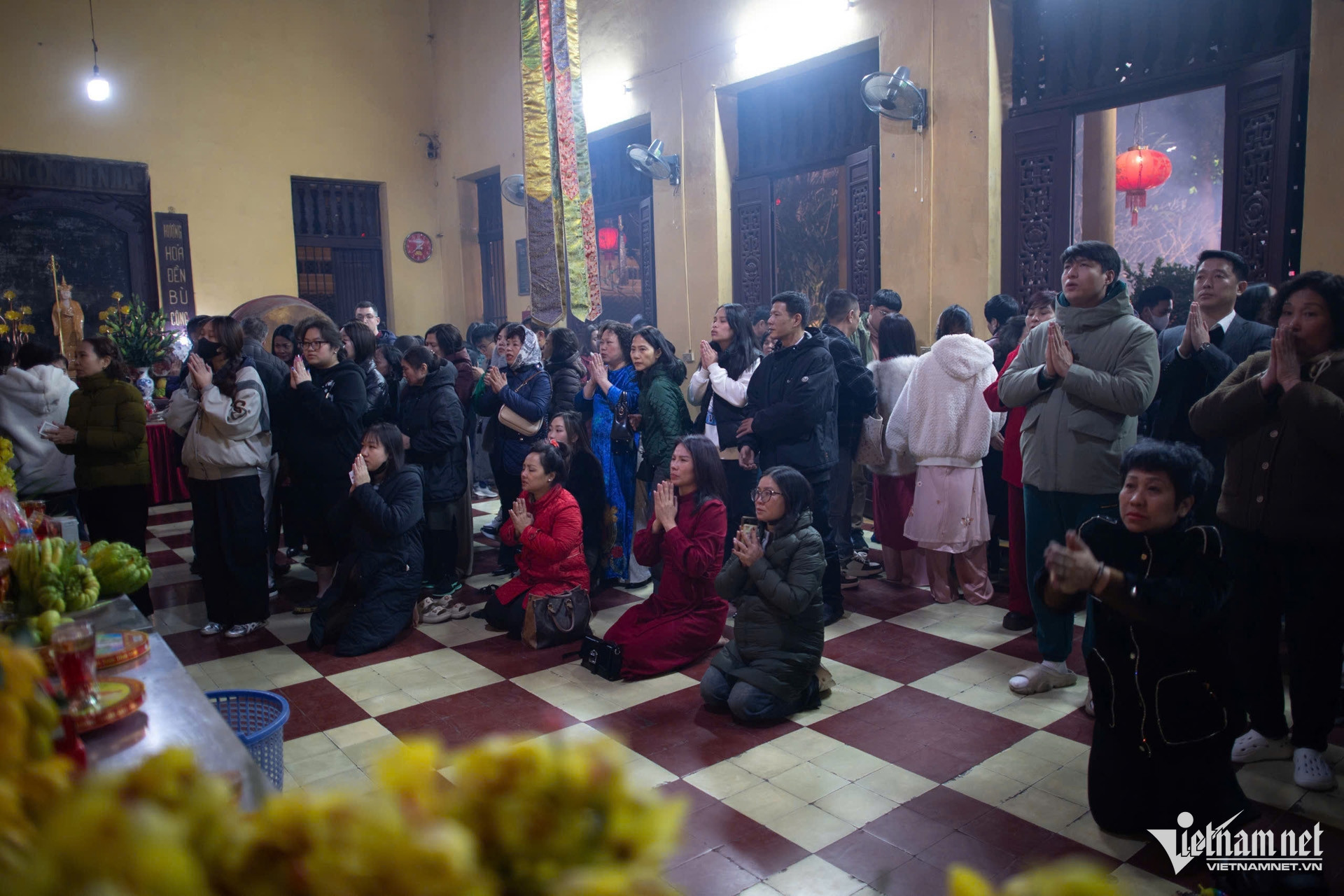
Large crowds gather at Quan Su Pagoda in the early hours of the first day of Tet. Photo: Linh Trang
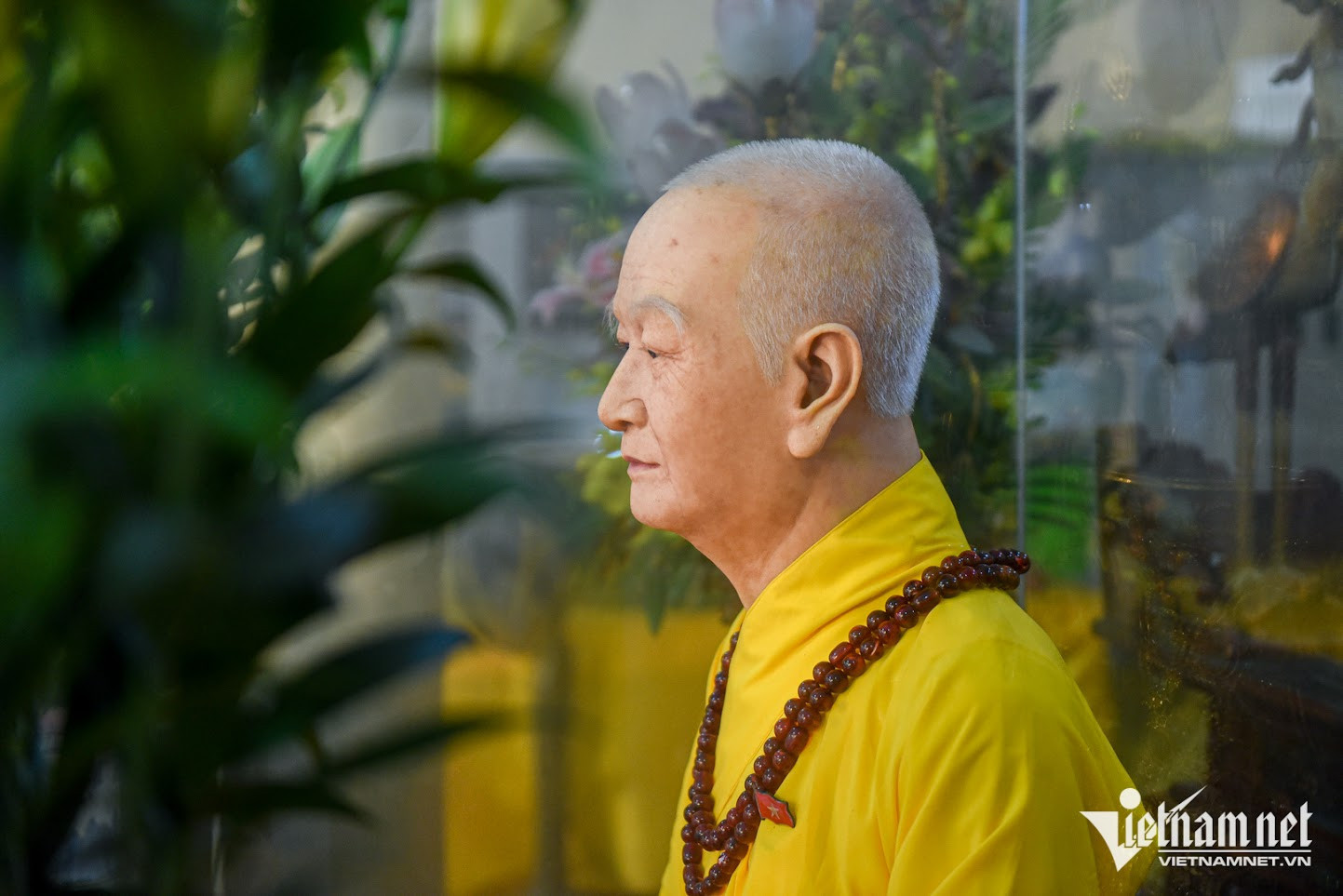
The lifelike statue at Quan Su Pagoda surprises many visitors.
Phu Tay Ho
Phu Tay Ho is dedicated to Chu Lieu Hanh, who was conferred the title “Mother of the Nation” by the Nguyen Dynasty and is one of Vietnam’s Four Immortals, alongside Son Tinh, Thanh Giong and Chu Dong Tu.
On full moon days, the first day of the lunar month and during major festivals such as Tet, residents and visitors from across the country come here to pray for luck, peace and wealth while enjoying the scenic beauty of West Lake.
On New Year’s Eve and in the early hours of the first day of Tet, the site was packed with visitors.
Phu Tay Ho is noted for its traditional architecture imbued with Vietnamese folk culture. Architectural highlights include the inner sanctuary and Son Trang grotto, featuring three large chambers built with brown-toned faux antique concrete, creating a timeless aesthetic.
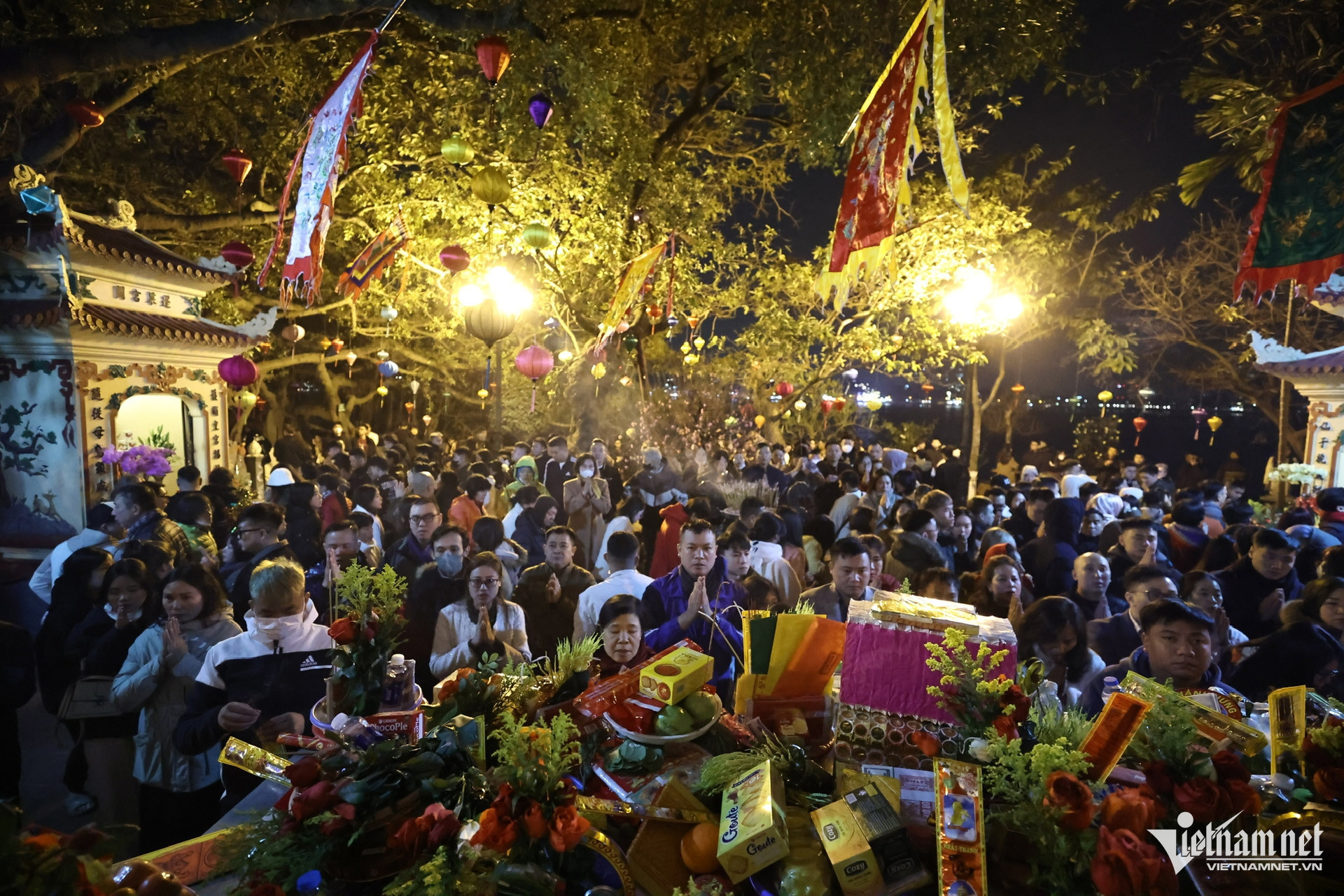
Phu Tay Ho is packed with worshippers on New Year’s Eve and the first morning of Tet.
Tran Quoc Pagoda
Tran Quoc Pagoda is among the most popular spiritual destinations on the morning of the first day of Tet.
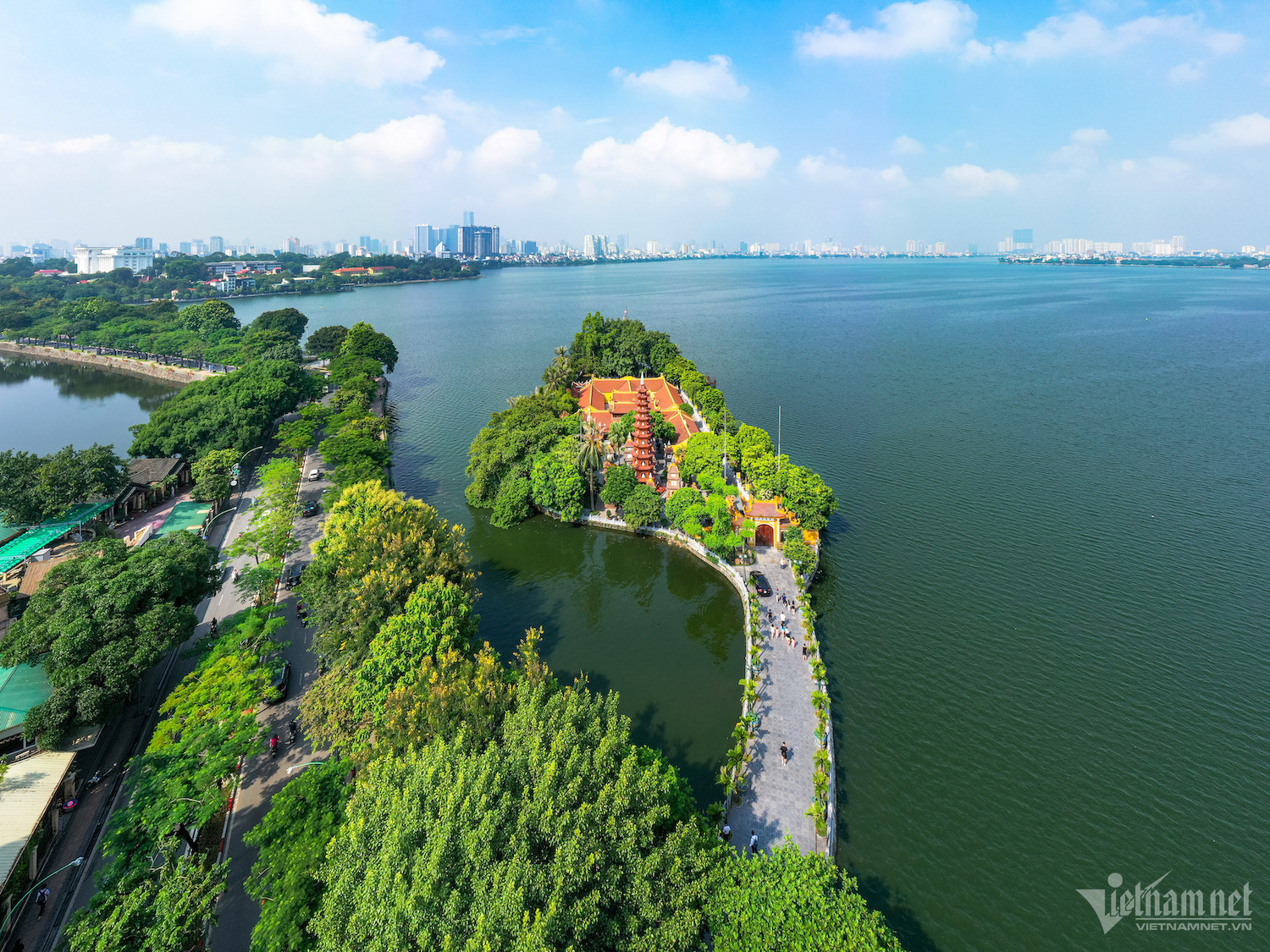
Located on the eastern side of West Lake, the pagoda is more than 1,500 years old and covers an area of over 3,000 square meters, including a stupa garden, ancestral house and main sanctuary. It is considered one of Hanoi’s oldest and most sacred pagodas and once served as a Buddhist center of Thang Long during the Ly and Tran dynasties.
In 2016, Tran Quoc Pagoda was listed among the world’s 16 most beautiful pagodas by the UK’s Daily Mail.
A distinctive feature of the site is the 15-meter-high Lotus Tower, built in 1998, with 11 stories in striking brick red.
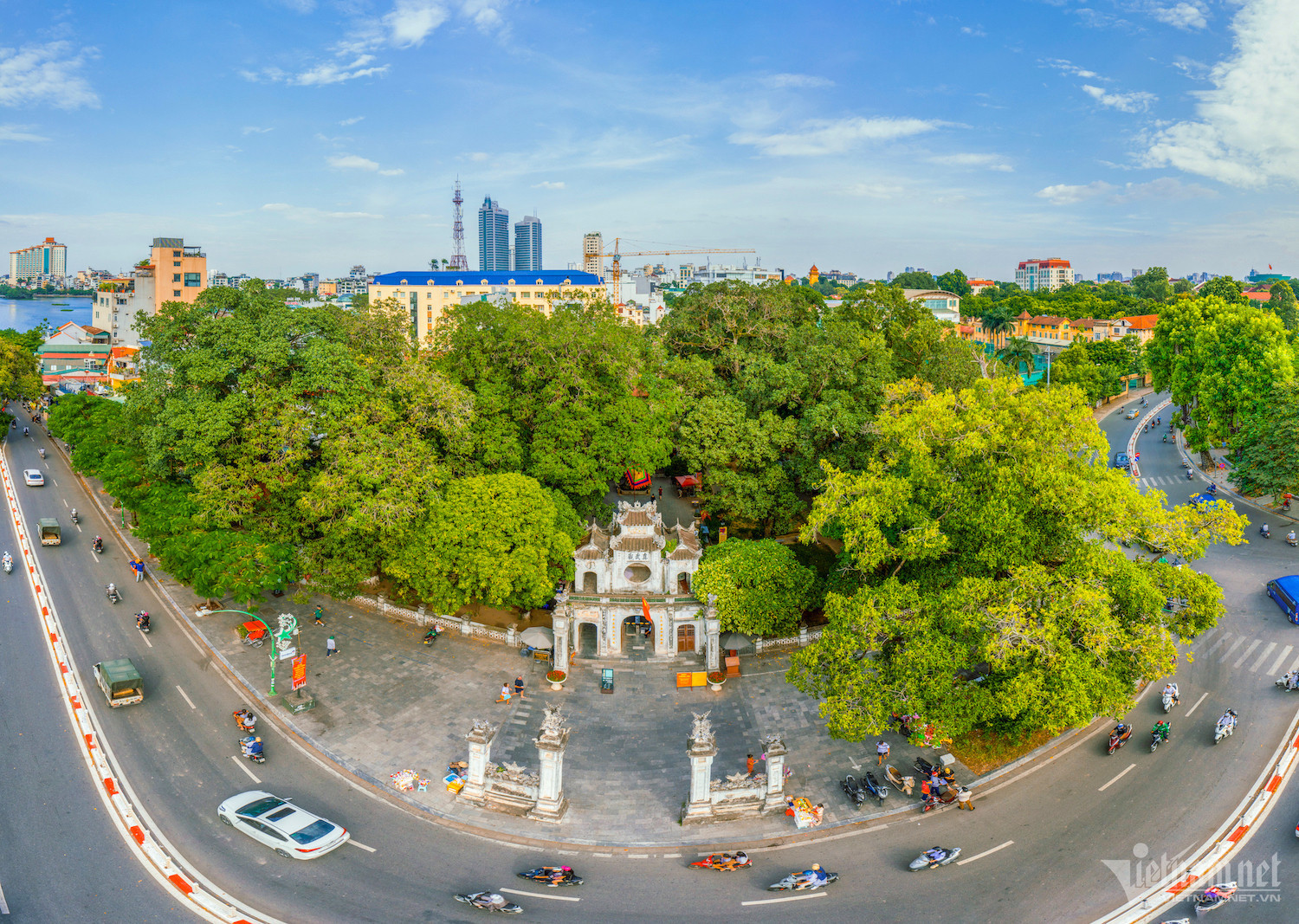
Quan Thanh Temple
Also located on Thanh Nien Street, near Tran Quoc Pagoda, Quan Thanh Temple attracts large crowds seeking blessings at the start of the year.
The temple is dedicated to Huyen Thien Tran Vu, whose nearly four-meter-tall, four-ton statue is one of four deities enshrined to guard the ancient gates of Thang Long.
According to inscriptions and historical documents, Quan Thanh Temple was first built during the Ly Dynasty and has undergone multiple restorations. It also houses many valuable artifacts dating back more than three centuries.
Ngoc Son Temple
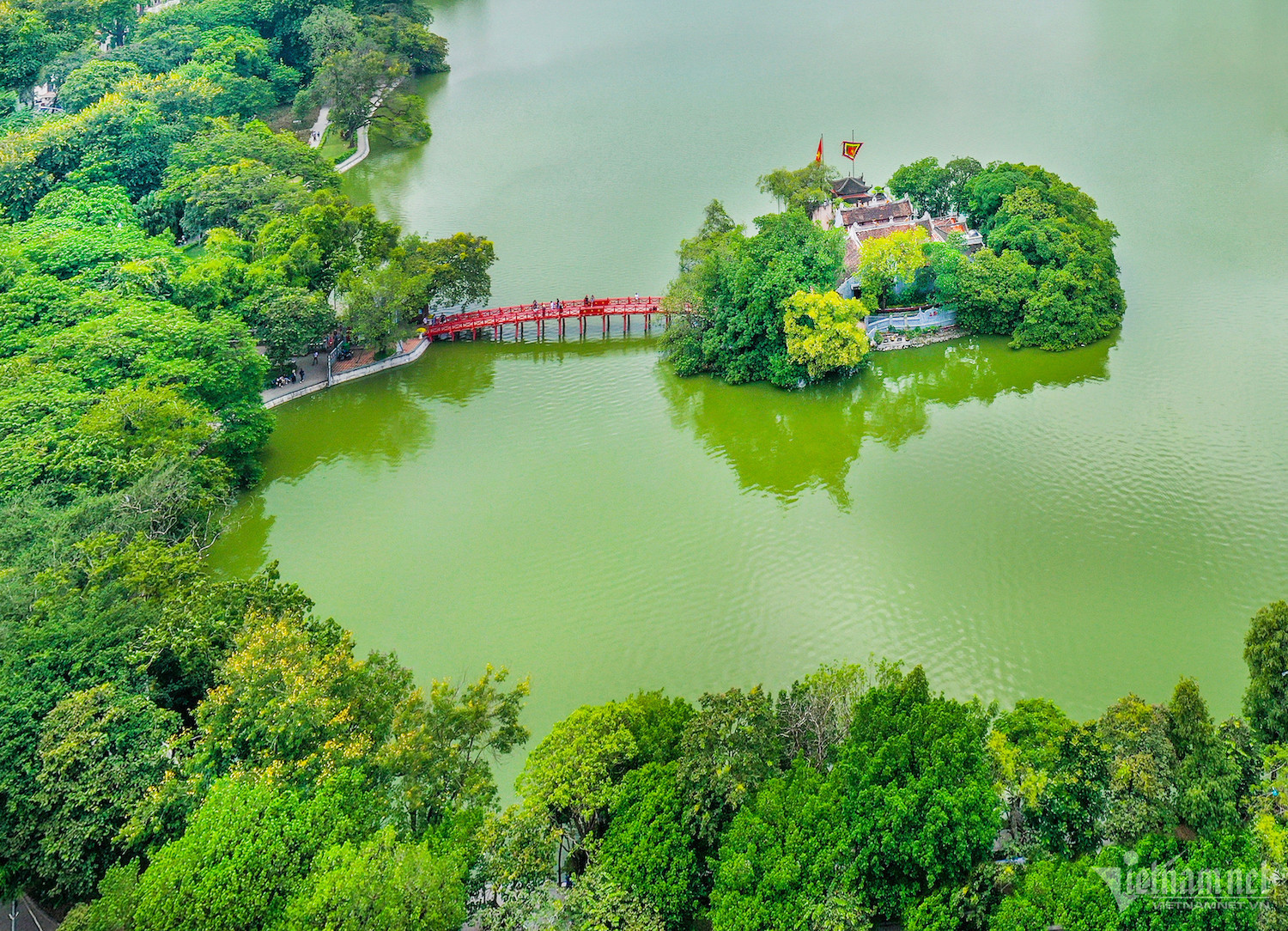
Ngoc Son Temple is another well-known spring destination in Hanoi. Situated within the Hoan Kiem Lake complex, it is dedicated to national hero Hung Dao Dai Vuong - Tran Quoc Tuan and Van Xuong De Quan, the deity of literature and examinations. The temple also features Buddhist and other spiritual altars.
The site underwent its most comprehensive restoration in 1865 under the direction of Nguyen Van Sieu, a renowned Confucian scholar of Thang Long. During that renovation, several iconic structures were added, forming the harmonious architectural ensemble of Ngoc Son Temple, The Huc Bridge, But Tower and Nghien Pavilion.
Ngoc Son Temple remains a distinctive cultural and historical landmark and a prominent tourist attraction in the thousand-year-old capital.
.svg)
