 Vietnamnet.vn

 Podcast


Editor's note: In line with Politburo Resolution No. 80-NQ/TW, Hanoi is working to transform its extensive cultural heritage into a powerful resource for the creative economy. This series explores the capital's evolving cultural industries through artistic experiences that combine tradition with modern technology, alongside expert perspectives on policies, institutional mechanisms and creative talent development.
Politburo Resolution No. 80-NQ/TW identifies culture as an internal resource, a source of soft power and a driving force for national development. It emphasizes the need to fully recognize and effectively harness cultural resources, placing heritage at the center of efforts to develop cultural industries. This approach is particularly relevant to Hanoi, where layers of Vietnam's cultural history and traditions have accumulated over centuries.
Heritage as the foundation of cultural industries
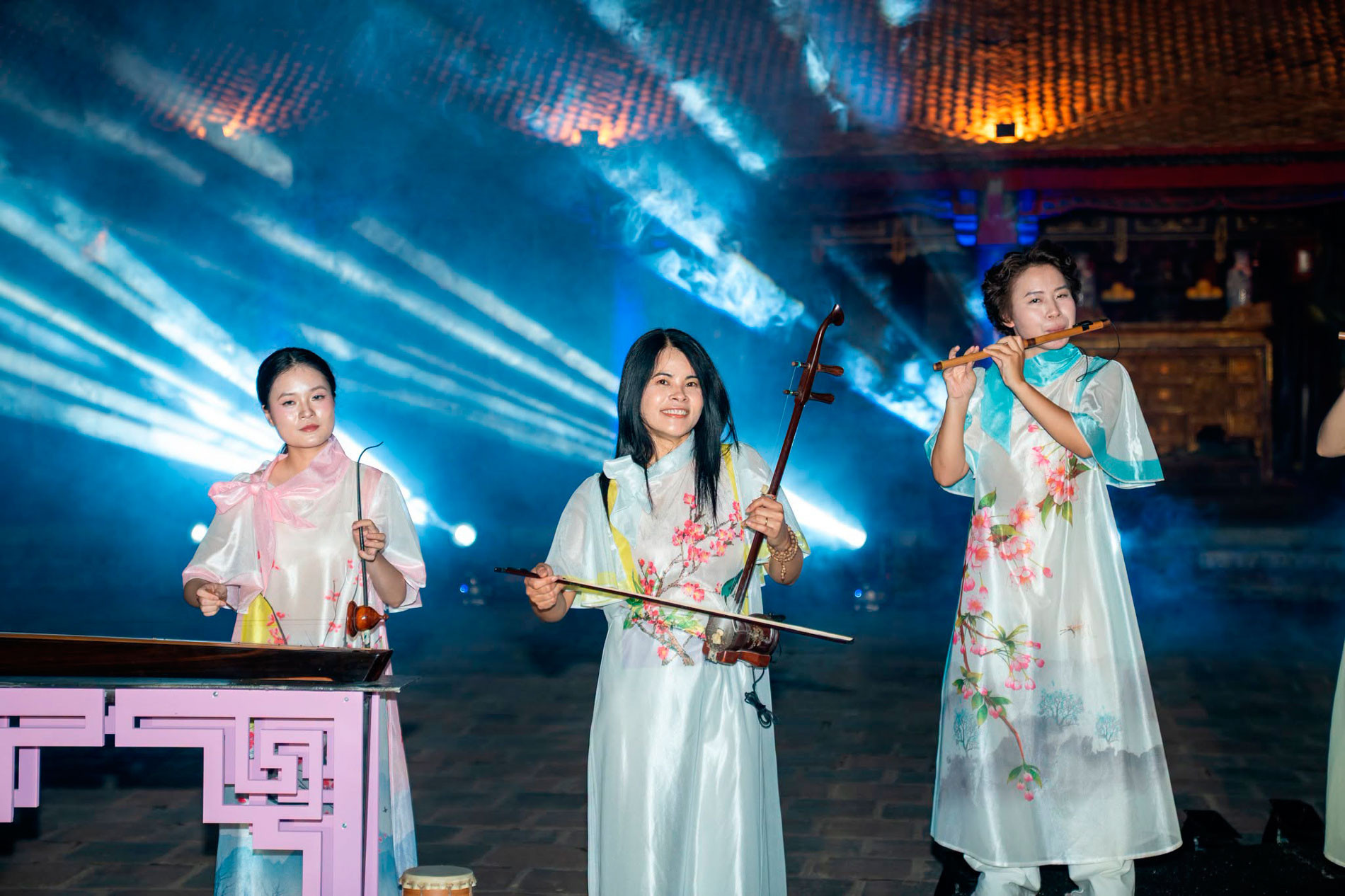
Promoting artistic products rooted in heritage and folk culture does more than generate direct revenue. It also helps create a dynamic cultural industry ecosystem in Hanoi. Close cooperation between the municipal Department of Culture and Sports, private creative spaces and startups working at the intersection of culture and technology has provided an environment where young talent can develop.
Speaking to VietNamNet about the challenges of innovation, Dr. Bui Nhu Lai, Meritorious Artist and Rector of the Hanoi Academy of Theatre and Cinema, said the greatest breakthrough would come from using technology and contemporary theatrical thinking to celebrate the beauty of traditional arts rather than allowing technology to overwhelm or erase their original character.
"When traditional art takes on a contemporary form that resonates with the times, heritage can speak for itself and reaffirm its place in society," he said.
Associate Professor Dr. Bui Xuan Dinh of the Hanoi Folk Arts Association believes heritage should be understood through the relationship between preservation and development.
He explained that cultural heritage encompasses tangible assets such as architecture, artworks, ritual objects, antiques and national treasures, as well as intangible traditions including ceremonies, processions, folk performances and performing arts such as water puppetry, ca tru ceremonial singing, cheo traditional opera and tuong classical theater, all passed down through generations.
For Dinh, the crucial point is to recognize heritage as the primary resource from which cultural industries can grow. It provides the stories, materials and inspiration needed to create new cultural products that are compact, accessible and appealing to modern audiences.
Combining artistic creativity with science, technology and modern visual effects can help traditional art forms reach wider audiences. In return, cultural industries offer new ways to preserve and promote heritage, turning cultural values into products and assets capable of reaching the market.
Dinh therefore argues that efforts to reinvent heritage do not necessarily need to begin with major construction projects.
An old cultural center, a former cooperative office or an unused warehouse left vacant after administrative restructuring could be converted into a community creative hub. Such spaces could host classes, water puppetry training, traditional woodworking workshops, tea appreciation sessions and exchanges with artisans.
Technology, meanwhile, could help tell heritage stories in ways that feel more familiar and engaging to contemporary audiences.
Money alone cannot guarantee artistic quality

Sharing this view, People's Artist Trung Hieu, Director of the Hanoi Drama Theater, stressed that funding is necessary but does not determine the quality of an artistic work, even when a production involves expensive modern technology.
"Many people believe that having money guarantees a good production, but that is a mistake and reflects short-term thinking. In the arts, spending ten times as much does not make a work ten times better," he said.
"Look at international cinema. Many blockbusters costing hundreds of millions of dollars leave the Oscars empty-handed, while films made for just a few million dollars manage to address some of humanity's most profound issues."
According to Trung Hieu, the key to developing cultural industries lies in sustained, long-term investment rather than simply increasing production budgets.
Financial resources should be allocated strategically to training creative teams, directors, screenwriters, sound engineers, lighting technicians and other professionals.
He proposed sending talented personnel to major arts institutions in Vietnam and abroad for three to five years to develop their expertise and creative capabilities.
South Korea, Japan and China have successfully applied similar approaches to build strong generations of artists who have helped elevate their national cinema and theater industries.
Alongside investment in people, upgrading facilities, technical equipment and infrastructure also requires time and a carefully planned roadmap.
Trung Hieu believes that combining the skills of professionally trained young artists with the experience of older generations is essential to overcoming the challenges facing traditional theater.
Looking ahead to more ambitious projects, he expressed optimism about the strong support offered by Hanoi's cultural authorities.
City leaders, he said, have made clear that they are willing to back convincing, high-quality proposals with funding and favorable policy mechanisms.
"Hanoi's leaders are more concerned about theaters running out of ideas than about finding money for worthwhile projects. Having the city's support in terms of policies and funding gives us a strong foundation," Trung Hieu said.
"What happens next depends entirely on the capabilities, passion and professional responsibility of each artist."
Tinh Le

