 Vietnamnet.vn

 Podcast



For 20 years, a tiny Hanoi eatery specializing in humble bean porridge with pickled eggplant - once known as “poor man’s porridge” - has drawn a steady stream of customers. Owner Oanh says the dish looks simple, but getting it right is anything but easy.
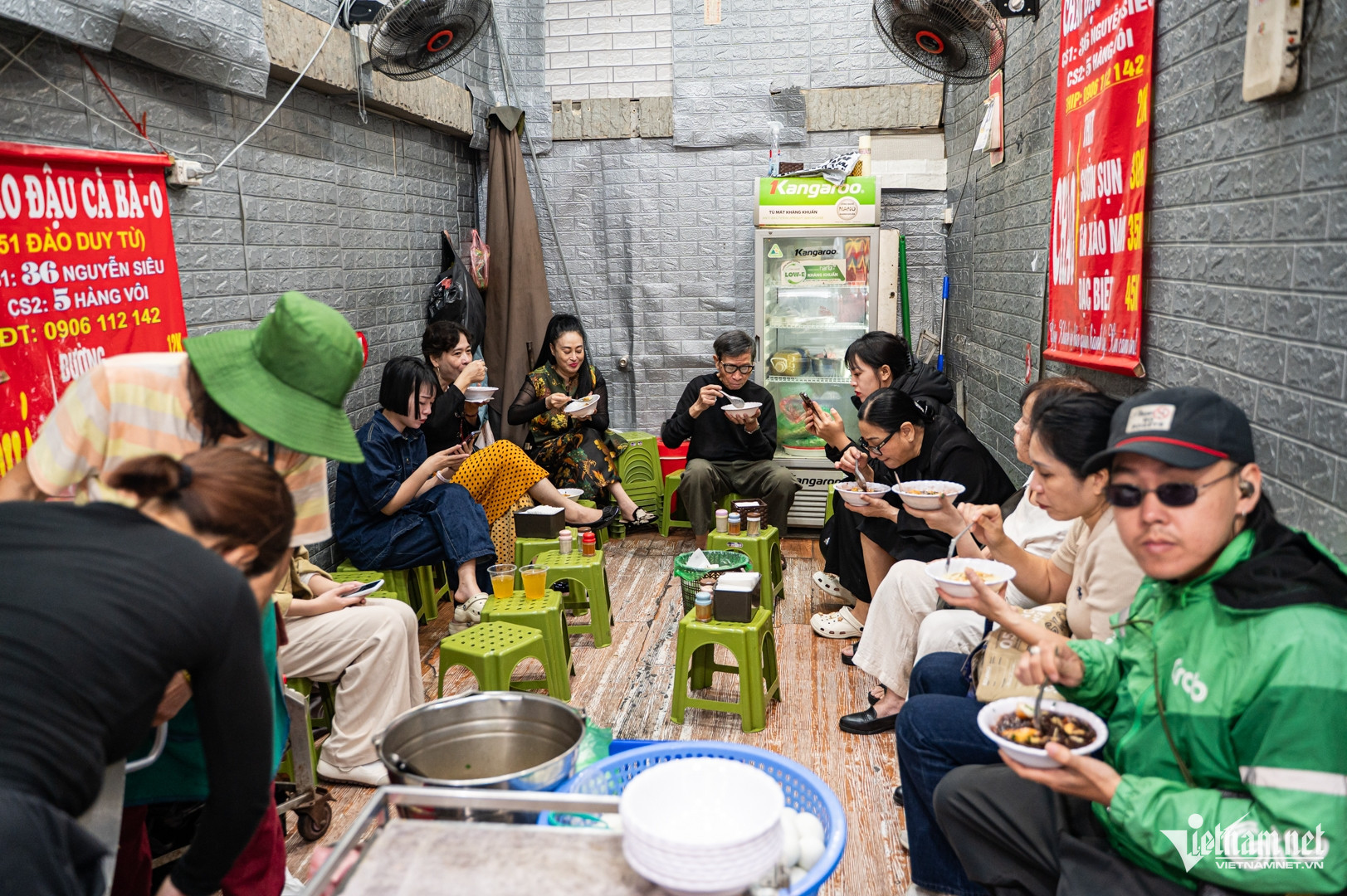
At 11:30 a.m., nearly 20 plastic stools inside the small bean porridge shop on Nguyen Sieu Street in Hanoi are all occupied. As soon as one customer pays and leaves, another takes the empty seat.
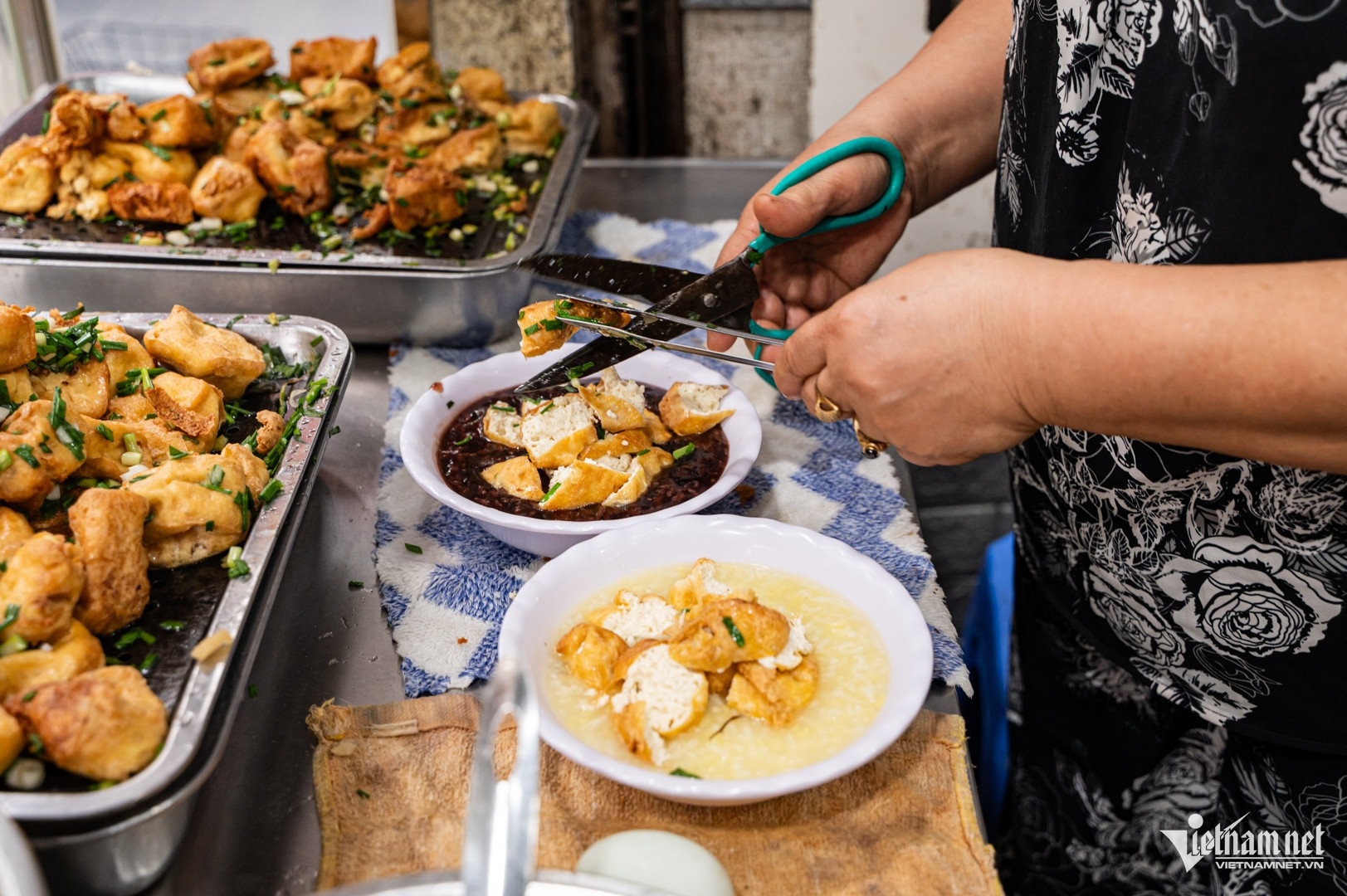
“One green - tofu - eggplant - egg”; “One black - tofu - ca la thau (pickled radish) to eat here”; “Two black -tofu - eggplant to go, extra tofu,” customers call out, using the shorthand familiar to regulars.
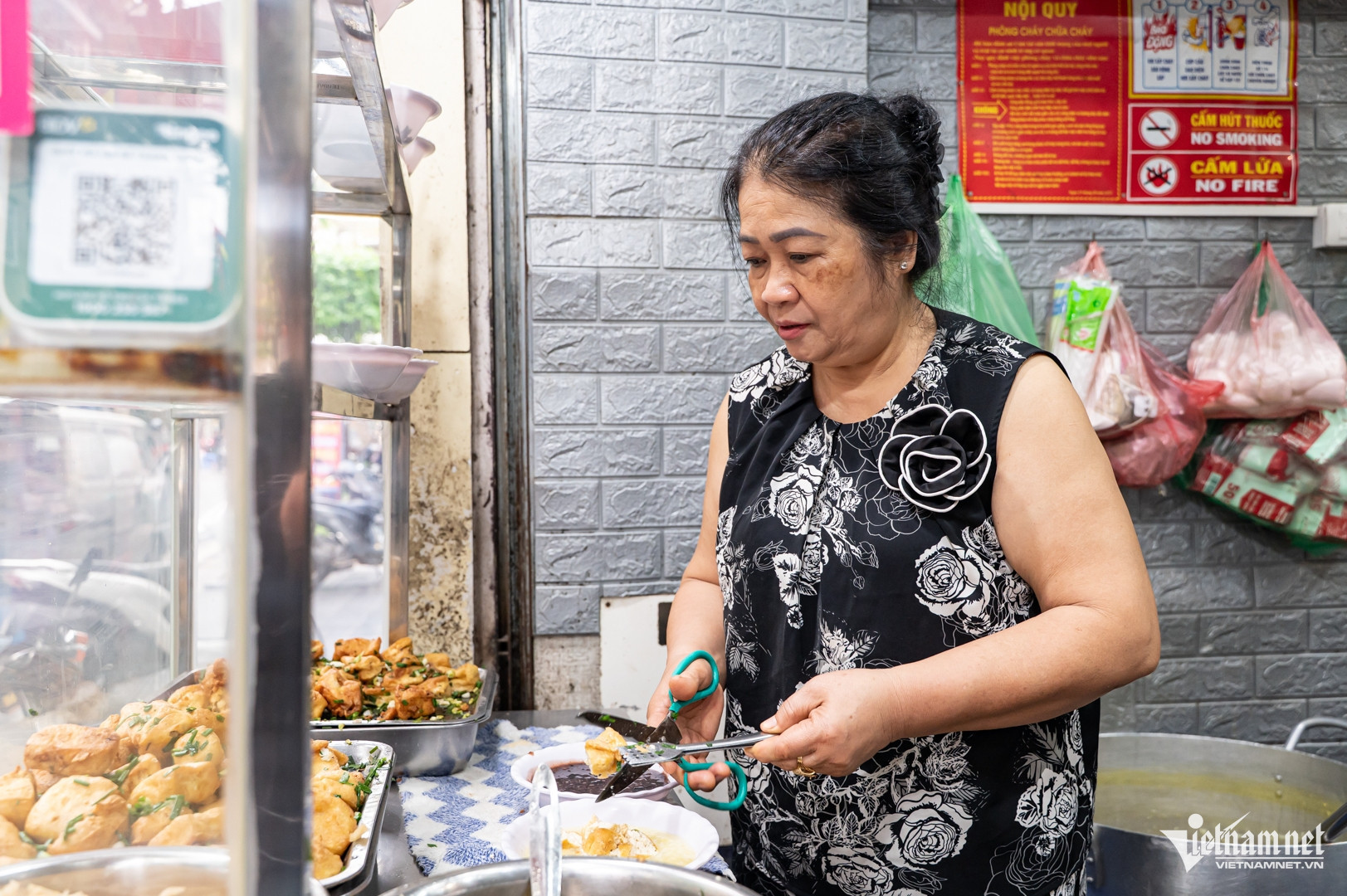
As the orders come in, the owner and her daughter-in-law ladle out porridge, slice tofu and serve pickled eggplant with practiced speed.
“Everyone is in a hurry at lunchtime and has little time to wait, so we have to serve them quickly. I’m getting older now, so I mainly do the preparation and leave the selling to my children. But on the first and 15th days of the lunar month, I usually have to come out and help because customers arrive in such large numbers,” said Vo Thi Kim Oanh, 64, the shop’s owner.
Bean porridge with tofu and pickled eggplant is a dish closely associated with Hanoi residents born in the 1980s and early 1990s. It was once dubbed “poor man’s porridge” because it was made entirely from inexpensive, everyday ingredients such as rice, eggplant and tofu. It was also once widely sold by street vendors, though today it is found mainly in traditional markets.
Few places in Hanoi’s Old Quarter still serve bean porridge with pickled eggplant all day, and fewer still have been around as long or draw as many customers as Oanh’s shop.
Oanh recalled that 20 years ago, she set out to learn the trade as a way to earn a living and support her children’s education.
“It took me two years to learn. I can’t even remember how many pots of burnt or ruined porridge I had to throw away,” she said. “I used to sell porridge on a sidewalk corner on Dao Duy Tu Street before eventually renting premises on Nguyen Sieu and Hang Voi streets.”
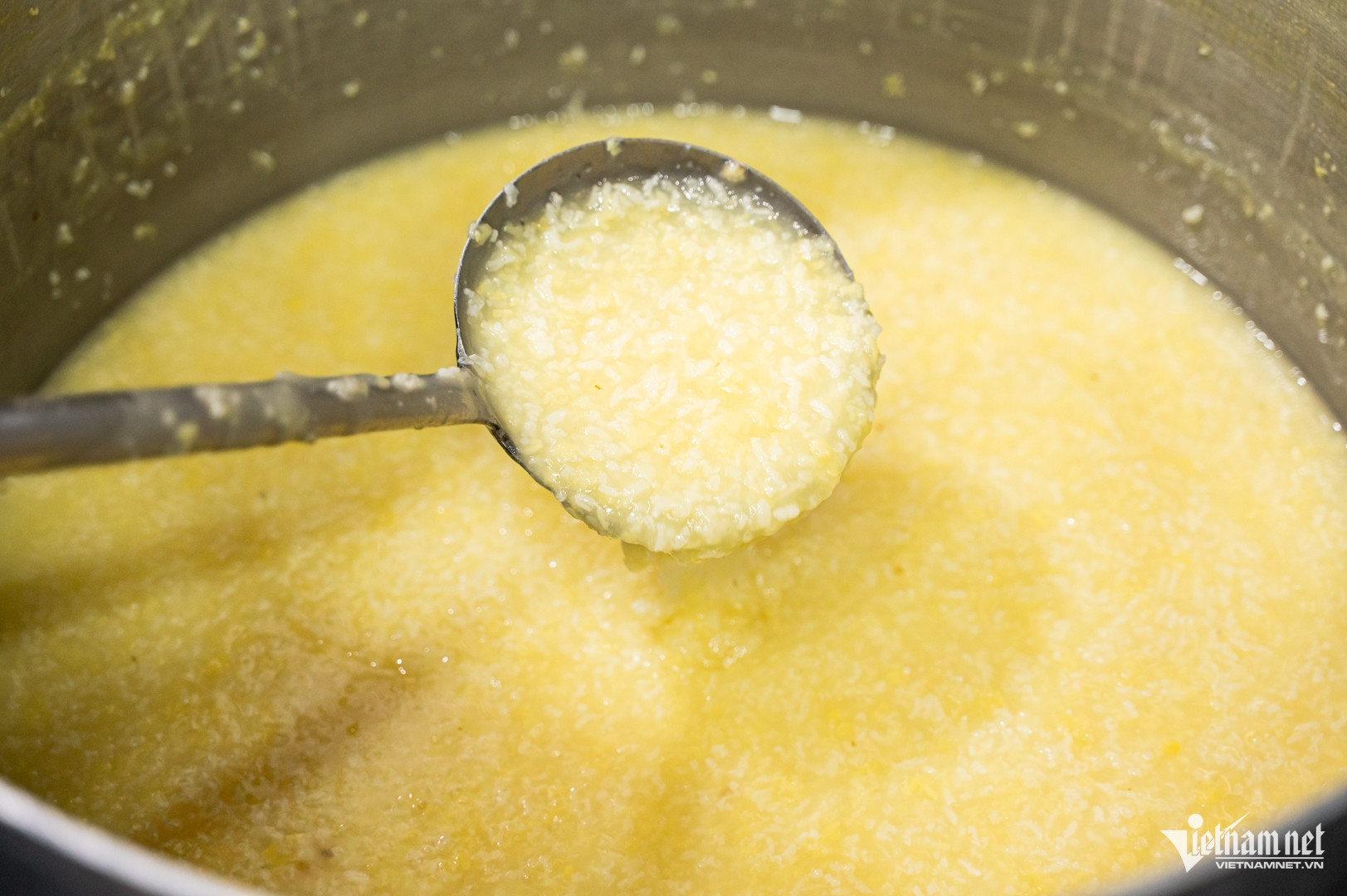
Oanh said the porridge should be relatively thin, while every grain of rice remains soft and smooth, giving the dish a gently silky consistency.
For the past 20 years, she has bought rice from the same trusted supplier in Hung Yen. The rice must be freshly harvested, fragrant and naturally sticky, and is combined with quality black beans or mung beans to make the two varieties of bean porridge.
“The two kinds of beans have to be cooked differently. Black beans are harder, so I have to simmer them for half a day first. I cook them slowly over low heat until they become tender and produce a smooth, dark broth. Only then do I add the rice and cook it for more than another hour. Mung beans take less time, about 120 minutes,” Oanh said.
“When cooking, I have to watch the heat very carefully because too high a temperature will burn the porridge. Stirring it is also an art that takes experience. I stir very gently in one direction so the porridge does not stick to the pot. Stirring too much will break down the grains of rice and turn the porridge mushy,” she added.
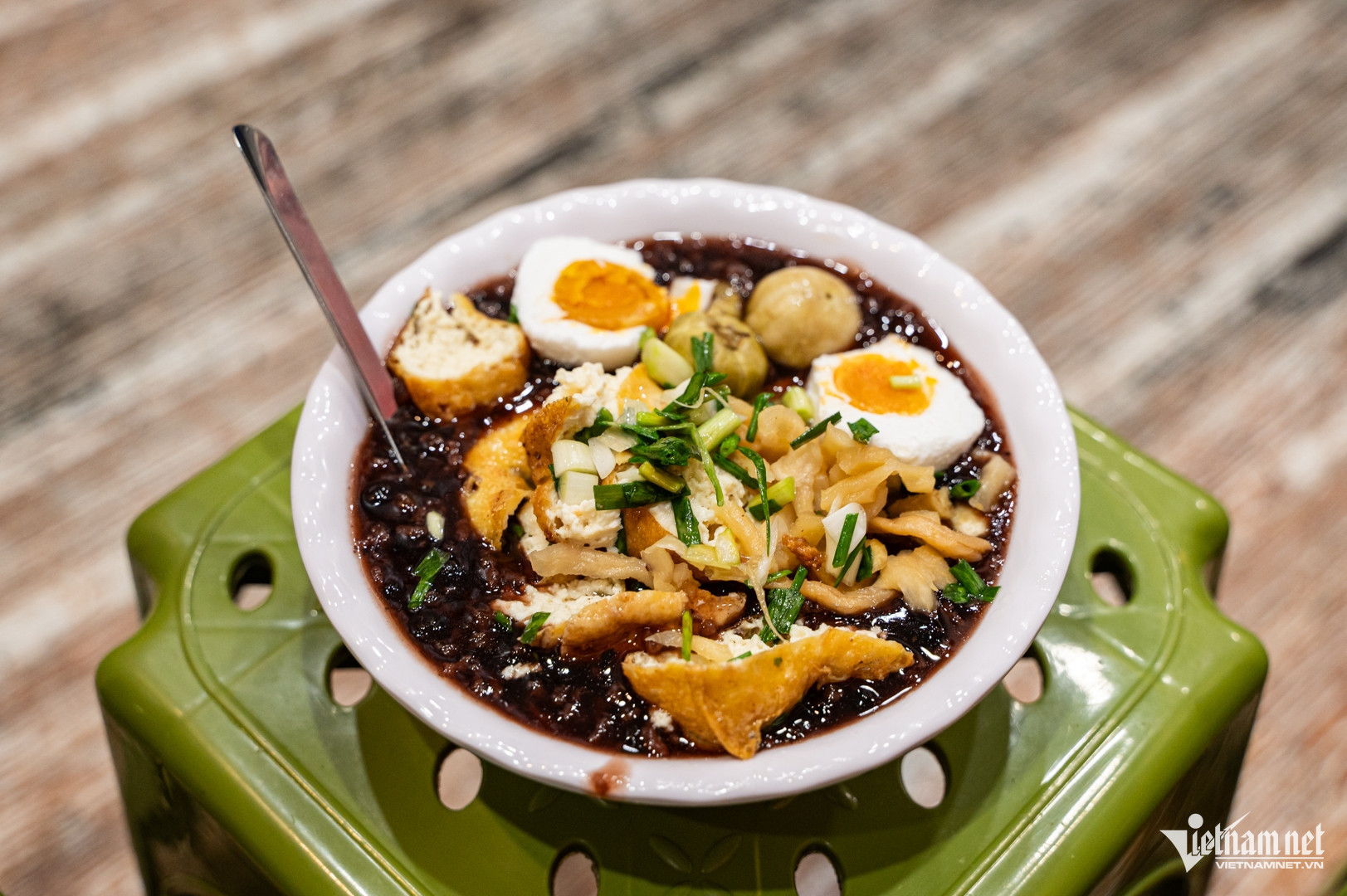
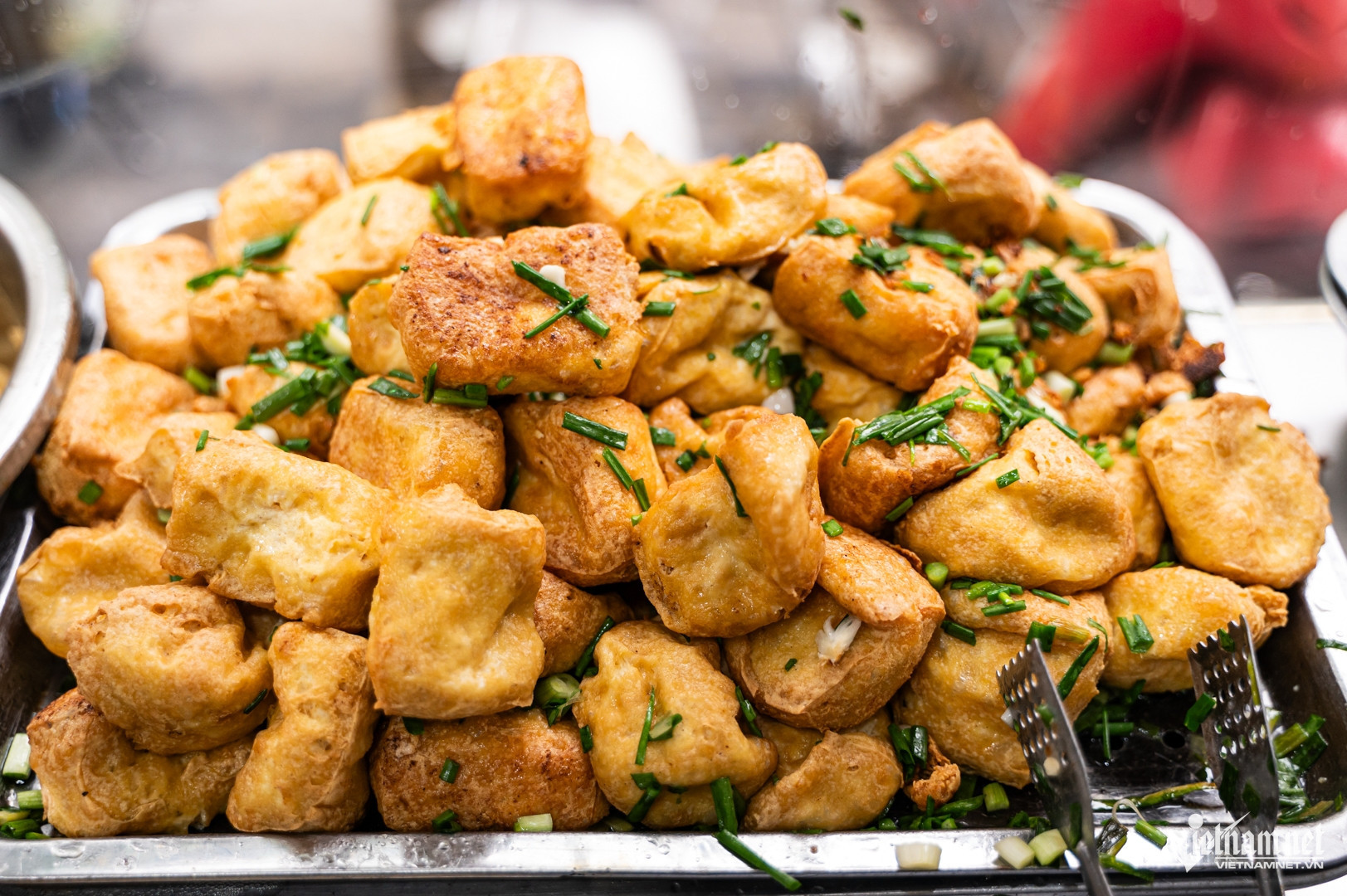
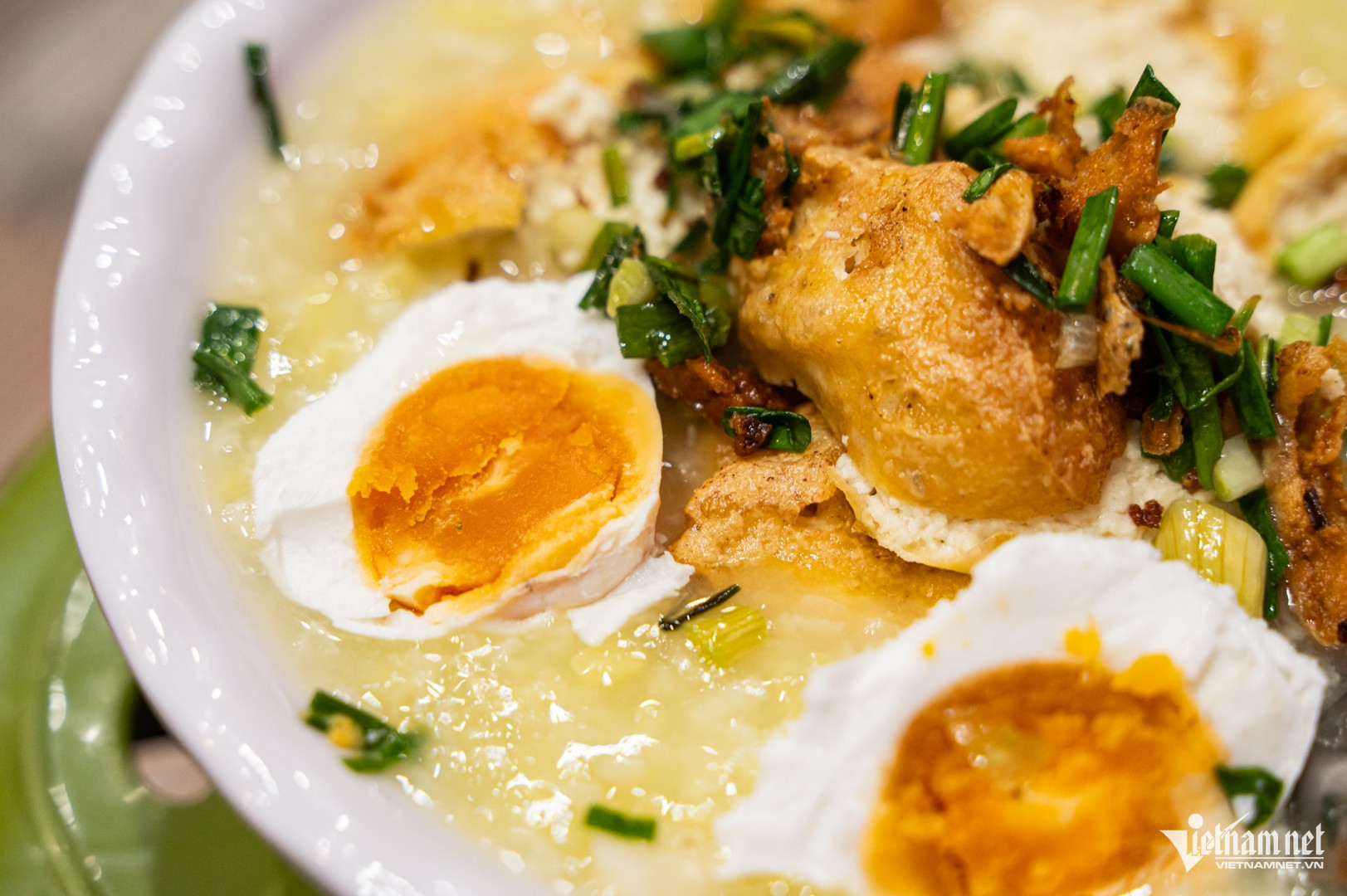
Fried tofu is the “soul” of the dish. According to Oanh, her family uses a dense variety of tofu made specially to order. It must be deep-fried over high heat until golden on the outside while remaining soft and airy inside without becoming greasy.
After frying, the tofu is seasoned with fish sauce and scallions for extra fragrance and flavor. When served, the large pieces are cut up and eaten with the light, delicate taste of the bean porridge.
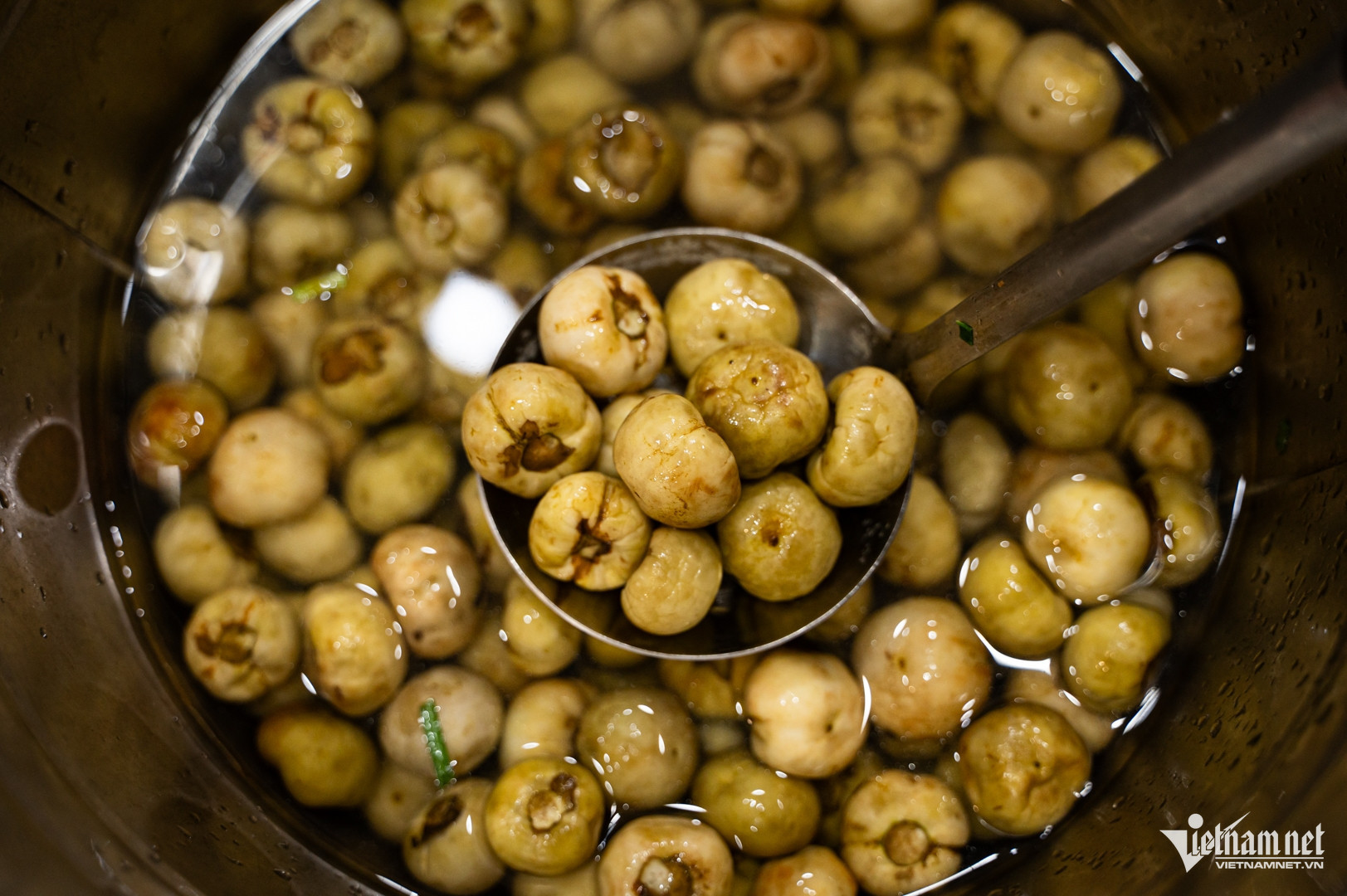
Sour pickled eggplant is another highlight of the dish. Oanh said the eggplants must first be left to dry before being tightly packed and pickled for at least four days. Good pickled eggplant should have a balanced salty and sour flavor, with crisp skin that is never tough. The brine should remain perfectly clear, without becoming slimy.
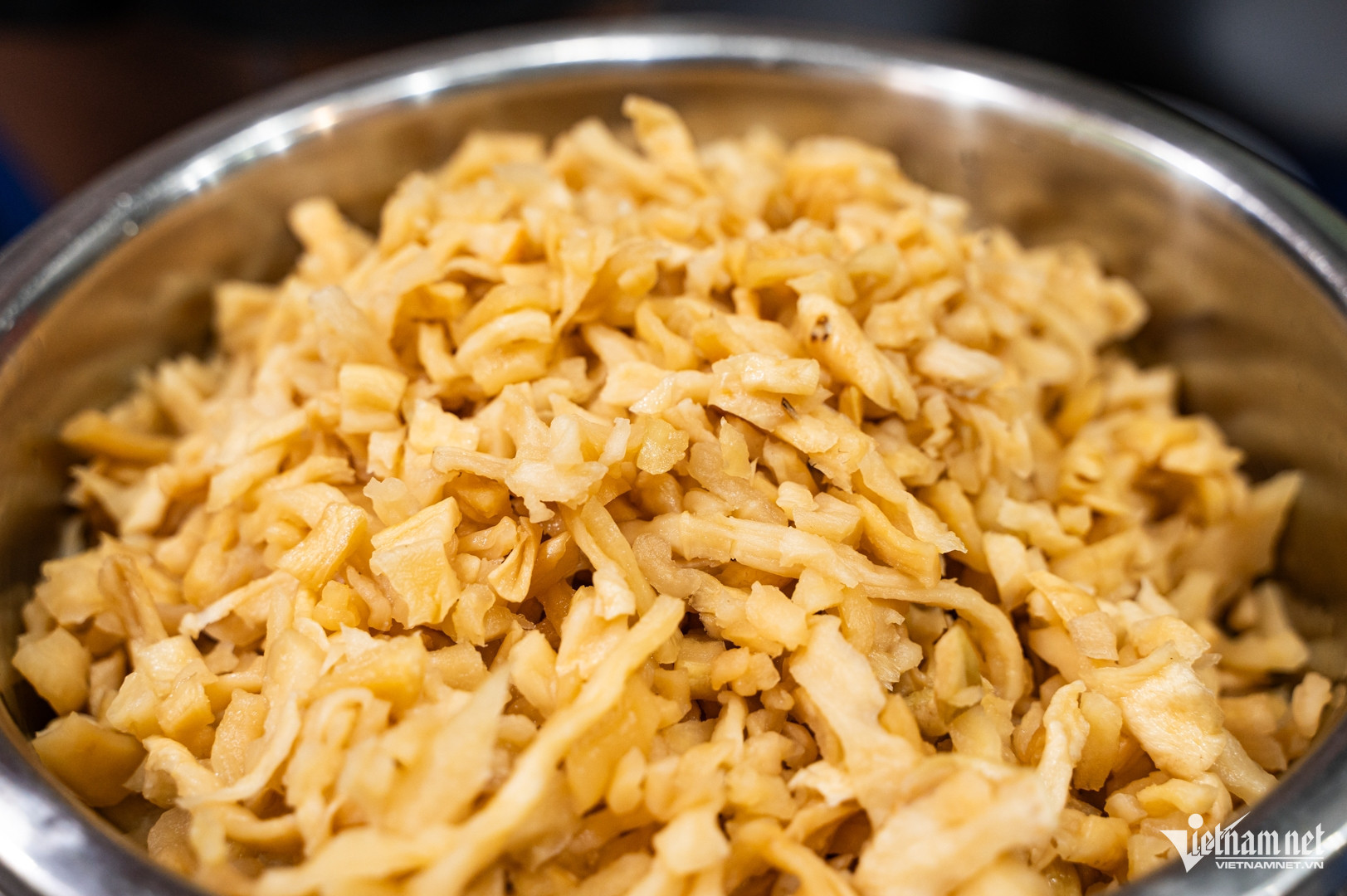
The shop initially served only bean porridge with tofu and pickled eggplant, but later added ca la thau, or pickled radish, and salted eggs to give customers more choice.
“I prepare all the dishes myself. Apart from the 10 days we close for Tet, I get up at 3 a.m. every day to cook the porridge and prepare everything for the shop,” Oanh said. “The work is hard, but it makes me happy and gives my family a stable income. Now I’m also teaching my children the trade.”
Oanh recalled once reading an article about her porridge shop in a magazine while on a flight, a moment that left her both proud and emotional.
“I don’t think what I make is particularly elaborate or complicated. Even so, I always believe everything should be done carefully and thoughtfully,” she said.
The shop is open daily from 6 a.m. to 6 p.m. On the first and 15th days of the lunar month, customers sometimes have to queue.
Pham Nguyet Thu Trang, 32, who lives on Nguyen Huu Huan Street, regularly visits the shop at the beginning of the lunar month. She loves the traditional flavor of its porridge: light and refreshing, paired with fragrant, crispy tofu and offered at an affordable price.
Linh Trang - Ngoc Ha - Nguyen Huy
.svg)
