 Vietnamnet.vn

 Podcast



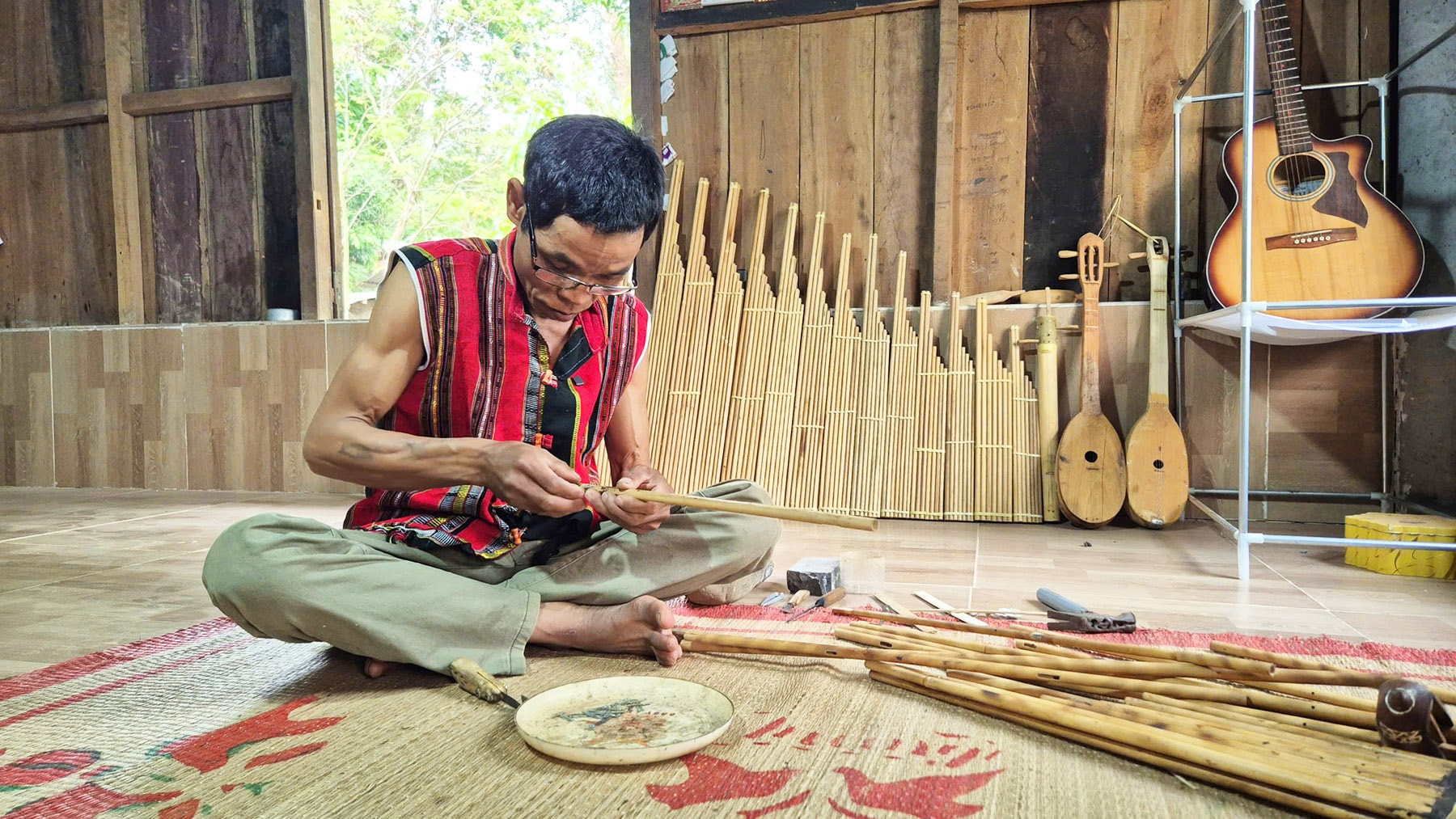
As modern music sweeps through the youth community, his tireless dedication ensures that the Bru-Van Kieu cultural soul never fades.
Pa Hoi believes that as long as young people continue to cherish the sounds of their ancestors' lutes and reed pipes, the culture of the local people will live on for generations.
At 65 years old, Pa Hoi from Ka Tang Village in Lao Bao Commune, Quang Tri Province, continues to work tirelessly to preserve the traditional melodies of the Ta Lu lute and the khen be (a traditional reed pipe).
From a young age, Pa Hoi was captivated by the sounds of traditional instruments echoing through village festivals. Nights spent by the fire watching local artisans perform sparked in him a deep love for the musical heritage of his people.
As he grew older, he became determined to preserve and pass down both the performance techniques and craftsmanship behind the traditional instruments of the Bru Van Kieu ethnic group.
The Bru Van Kieu people live throughout the Truong Son–Highlands region in the western parts of Quang Tri and Hue. Villages are typically close-knit communities, with each family living in its own stilt house where the cooking fire is located inside the home.
According to Pa Hoi, the Ta Lu lute and khen be are far more than simple musical instruments. Their melodies are inseparable from festivals, new rice celebrations, and the spiritual life of the Bru Van Kieu community, having accompanied generations of villagers.
"In the past, no one taught me how to play the Ta Lu lute or the khen be. I learned entirely by myself, little by little. After mastering the instruments, I began teaching myself how to make them. I failed many times before I could produce the correct sounds," Pa Hoi said.
Crafting a traditional Ta Lu lute requires considerable effort, beginning with the selection of materials. The instrument is typically made from aged jackfruit wood or moc wood. After selected, the wood must be dried for months to prevent warping or cracking, which would affect sound quality.
The body of the lute is carved entirely by hand. If it is even slightly too thick or too thin, the sound will lose its warmth and resonance. Steel strings are now commonly used to improve durability.
The most challenging instrument to make is the khen be. A traditional Bru Van Kieu reed pipe consists of 14 bamboo tubes joined together. The most important component is the part that produces the sound.
"You have to use old silver or pure copper, hammer it extremely thin, and then shape it by hand. Even the slightest error will make the instrument sound off-key. When completed, the khen must produce a clear, resonant sound, like the wind flowing through the mountains," Pa Hoi explained.
Passing the tradition on to younger generations
After many years of dedication, Pa Hoi has crafted dozens of Ta Lu lutes and khen be instruments for community activities and traditional festivals in the area. Many of his creations have accompanied cultural performance groups to events throughout Vietnam.
What concerns him most is the declining interest among younger generations in traditional musical instruments. Many young people today are more attracted to modern music than the sounds passed down by their ancestors.
Driven by a strong sense of responsibility and passion, Pa Hoi has made it his mission to teach anyone interested in learning. He offers instruction free of charge and encourages his children and grandchildren to learn both the performance and crafting techniques of the Ta Lu lute and khen be.
"The Ta Lu lute and khen be are the cultural soul of the Bru Van Kieu people. If there is no one to carry on the tradition, they will eventually disappear," he said.
At every festival and community gathering, Pa Hoi performs and teaches local youth how to play the instruments. For him, this is the best way to ensure that traditional music maintains a meaningful place in the hearts of younger generations.
"I believe that as long as young people continue to love the sounds of their ancestors' lutes and reed pipes, the cultural spirit of the Bru Van Kieu people will continue to resonate throughout the Truong Son Mountains," he said.
Sy Hao
.svg)
