 Vietnamnet.vn

 Podcast



For the 2026-2030 period, the central priorities must be institutional reform, renewal of the growth model and consolidation of macroeconomic stability to build resilience. Only through substantive reform can Vietnam enter a new phase of development with greater proactivity and confidence.
At the beginning of the Year of the Horse 2026, VietNamNet spoke with Dr. Nguyen Dinh Cung, former President of the Central Institute for Economic Management, about the foundations and key conditions for renewing Vietnam’s growth model in the coming years.
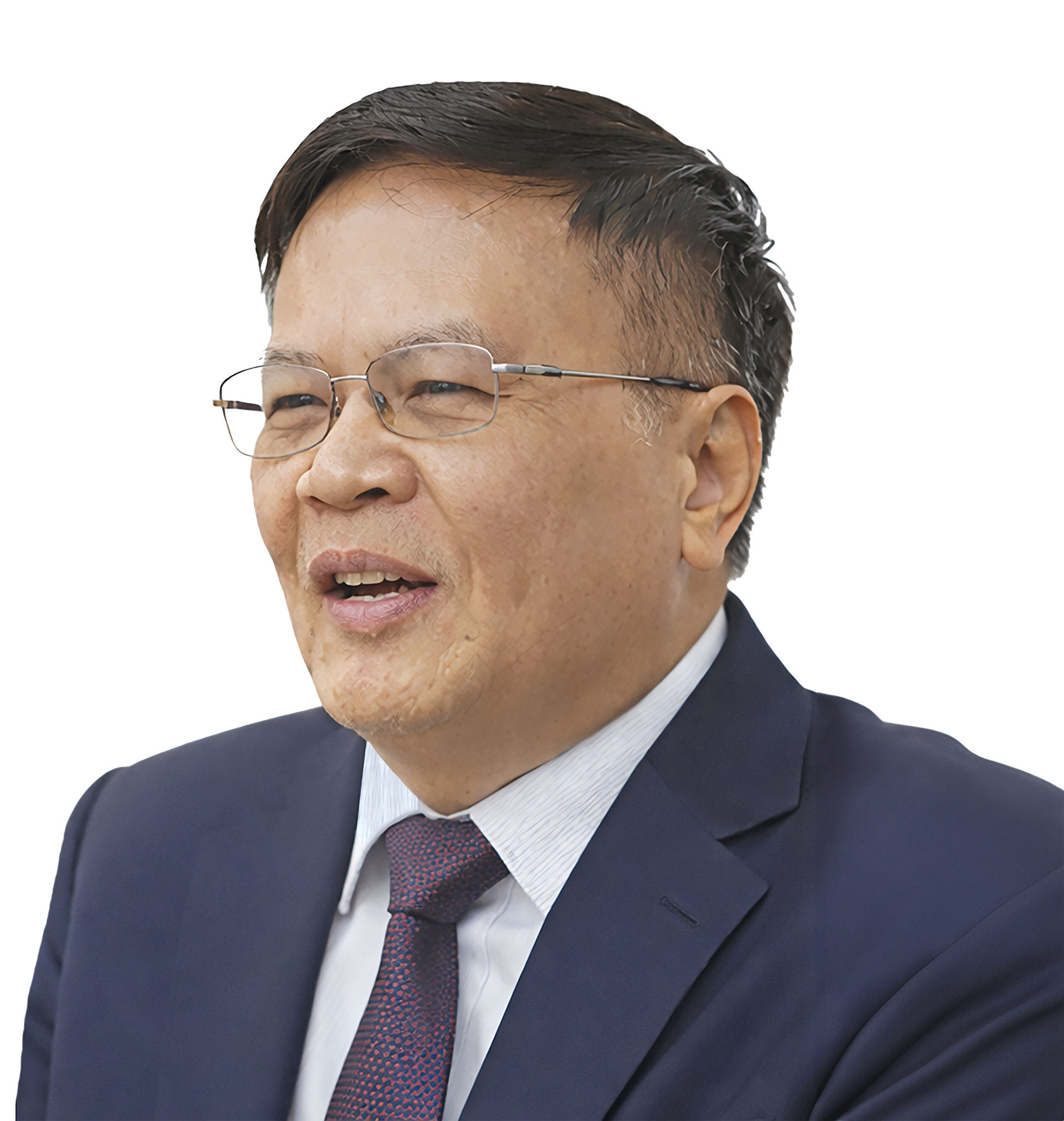
High growth expectations for 2026-2030 are becoming a major national objective. What internal foundations will enable Vietnam to enter a new development phase with greater confidence?
Dr. Nguyen Dinh Cung: Political stability and social order remain Vietnam’s fundamental advantages, creating a safe environment for investment, business and innovation - something not all emerging economies can ensure.
A new system of Politburo resolutions, built on a facilitative mindset and clear reform objectives, is opening up a development space fundamentally different from the past. These documents go beyond technical policy adjustments; they propose a new, coherent and forceful approach to improving state management, allowing markets to operate according to their rules and unlocking social resources.
Vietnam is still in its “golden population” period. A young, skilled and adaptable workforce provides a long-term advantage. This creates the basis to move directly into modern industry and a technology-driven economy, rather than following a traditional trajectory.
The economy is highly open, with 16 - possibly up to 18 - free trade agreements and a network of strategic and comprehensive strategic partnerships with major markets. This expands access to markets, technology, capital and supply chains.
Geographically, Vietnam sits on international trade routes between two major production hubs - China and ASEAN. This is a rare advantage to become a logistics, manufacturing and transshipment center as global supply chains are restructured.
You have consistently emphasized macroeconomic stability as a prerequisite for high growth. How should Vietnam operate fiscal and monetary policy in the new context?
Macroeconomic stability, preserving the value of the Vietnamese dong and maintaining major economic balances are prerequisites for high and sustainable growth. This is not an option; it is the indispensable foundation of any development strategy.
In macro management, monetary policy must play the central role in maintaining currency stability and controlling inflation in line with targets. We should not use monetary policy to chase growth. If it is used to support growth, that should be limited and short-term. For an economy like Vietnam, the main growth driver must come from fiscal policy.
But that does not mean merely increasing public investment or expanding state spending. More importantly, it means easing the burden on citizens and enterprises, encouraging their investment and consumption through appropriate tax policies and support tools. Growth must originate from the private sector and production capacity, not simply from public expenditure.
Regarding major economic balances, special attention must be given to food security, energy security and foreign exchange reserves. These are core conditions for maintaining stability amid international volatility, creating policy space for long-term programs and reducing macroeconomic risks.
What is the key factor for ensuring both macro stability and high growth in a volatile global context?
To prevent shocks and macro instability, the most important task is building a resilient economic foundation. If we fully implement macro stability measures, institutional reform and growth model renewal as discussed, the economy itself will become stronger, more stable and better able to absorb external shocks.
At the same time, we must build institutions that enable citizens and businesses to respond flexibly and adjust quickly to change. Resilience lies not only in economic scale but also in the responsiveness of each economic actor.
Policy buffers are also essential. Fiscal and monetary policy must have sufficient room to counter adverse external impacts: budget deficits must be controlled, public and external debt kept at safe levels, foreign exchange reserves strengthened. National reserves should be maintained at appropriate levels and managed effectively.
Another often underestimated factor is risk management and risk communication. We must disseminate principles of disaster and external risk management, providing concrete guidance for businesses and citizens to mitigate impacts. Especially for large enterprises, risk management must be a mandatory component of corporate governance, not a voluntary choice.
You have repeatedly said that removing institutional bottlenecks is the number one solution. How do we distinguish between necessary state management tools and barriers that hinder business opportunities? And what is the hardest change required when removing legal barriers?
The first and most important solution is to remove institutional bottlenecks. This must be done immediately, as it directly affects investor and business confidence. When institutions are adjusted in the right direction, the business environment improves, opportunities open up and social resources are activated.
We must clarify what constitutes a “barrier” or “bottleneck.” A regulation becomes a barrier when it increases transaction costs, prolongs procedures, creates legal risks or obstructs business opportunities. A regulation is a legitimate management tool only if it achieves its management objective without imposing unreasonable burdens on society.
The current problem is that many regulations perceived by citizens and enterprises as barriers are viewed by regulators as management tools. If removed, they fear losing control. Therefore, eliminating legal barriers means assessing regulations from the perspective of citizens and businesses. When barriers are removed, state agencies must change their mindset, methods and management instruments.
To create growth breakthroughs, science, technology and innovation must become the main drivers of the economy. What are the prerequisites for Vietnamese enterprises to shift from a resource- and capital-based model to one based on technology, data and productivity?
Growth breakthroughs must begin with improving resource efficiency and labor productivity. The extensive growth model has exhausted its space and must give way to one based on productivity, quality, technology and competitiveness. Science, technology, innovation and digital transformation must become the principal drivers of growth. This requires raising the contribution of total factor productivity to 50-60 percent.
To achieve this, two major Party orientations must be fully implemented. First, develop factor markets so they play the decisive role in resource allocation. Second, make science, technology, innovation and digital transformation the core growth drivers to continuously raise productivity.
Implementing Resolution 57 and Resolution 68 must be substantive. The implementation apparatus must be streamlined and supported by capable advisors who can act, not merely comment.
Turning policy into reality means enterprises must increase revenue and reduce costs through technology, digitalization, R&D and new business models - not through exploiting resources or capital. The economic structure must shift toward high-tech industry and services, smart manufacturing and green transformation. Labor productivity must rise through technological innovation, automation and data.
Science, technology and innovation must become endogenous drivers of the entire economy, not just a group of tech firms.
To create and expand demand for innovation, markets must be truly competitive, free from “ask-give” mechanisms. The Government should design national standards on energy, emissions, product quality and traceability, and prioritize public procurement of technological products to stimulate innovation.
What is the biggest bottleneck preventing a true science and technology market from forming in Vietnam? Where should reform begin?
On the supply side of science, technology and innovation, the most important task is designing policies that ensure technology supply is available, high-quality and accessible. First and foremost, intellectual property rights must be fully and effectively protected. Without secure property rights, no one will invest in research and development.
At the same time, the capacity of research institutes, universities and consulting organizations must be strengthened, alongside sufficiently strong incentives to encourage organizations, enterprises and individuals to invest in R&D, innovation and technology transfer. Building an innovation ecosystem, developing technology enterprises and training high-quality human resources must be seen as long-term tasks. A national data infrastructure that is live, clean, accurate, complete, unified and shared is also indispensable.
Equally important is an institutional framework that connects technology supply and demand quickly, affordably and safely. Except for a few special technologies requiring control, others should be freely traded and transferred. Technology transfer contracts should take effect immediately without prior approval, except in limited cases.
These solutions are already outlined in Resolution 57 on breakthroughs in science, technology, innovation and digital transformation. The issue now is not a lack of solutions, but the need for full and consistent institutionalization through legal documents so that the resolutions truly come to life.
Tu Giang - Lan Anh
.svg)
